In cat breeding, fundamental knowledge of genetics is essential. From coat color inheritance patterns to lethal gene risks and health problems from inbreeding, developing a breeding plan based on scientific understanding allows breeders to produce healthy and beautiful kittens. This article comprehensively covers genetics knowledge that breeders can apply in practice.
Fundamentals of Feline Coat Color Genetics
Cat coat color is determined by multiple gene loci. Major loci include the Agouti gene (A locus), Dilute gene (D locus), Black/Chocolate gene (B locus), and Orange gene (O locus).
The Agouti gene (A locus) determines coat stripe patterns. Cats carrying the dominant A allele are tabby (striped), while those with the recessive aa genotype are solid. However, in orange-colored cats, tabby patterns appear visually regardless of genotype.
The Dilute gene (D locus) controls color intensity. The dominant D allele produces intense colors, while the recessive dd genotype produces dilute colors. Black becomes blue (gray), orange becomes cream, and chocolate becomes lilac. Breeding dilute cats together always produces dilute kittens.
The White Spotting gene (S locus) determines the extent of white patches. Depending on the number of gene copies, white coverage ranges from tuxedo (small amount of white), through bicolor (roughly half white), to van (nearly all-white). This gene shows incomplete dominance, with significant individual variation in expression.
The Tabby Pattern gene (T locus) controls stripe types. There are four main patterns: mackerel (striped), classic (swirled), spotted (spotted), and ticked (nearly solid). The dominance hierarchy is ticked > mackerel > classic.
Predicting Kitten Coat Colors from Parental Colors
Organizing information for each gene locus in practical breeding terms allows you to estimate "what could be born from this pairing" before breeding.
First, Understand That the Orange Gene (O Locus) Is Located on the X Chromosome
The key difference in cat coat color genetics is that the gene controlling red (orange) colors is located on the X chromosome. This explains both how calico and tortoiseshell cats arise and why males and females can produce different colors.
- Males (XY) have only one X chromosome, so they can express only one of orange or non-orange (black-based) colors
- Females (XX) have two X chromosomes, so if one carries orange and the other carries black, both colors appear on their bodies
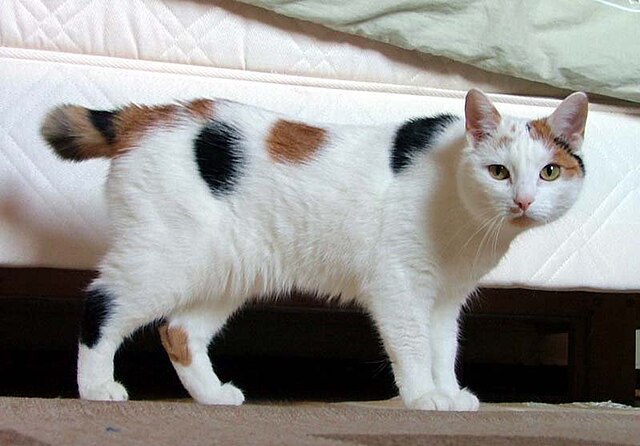
When both colors appear in females, this is because each cell inactivates one or the other X chromosome, resulting in orange and black being randomly distributed across the body. When white spotting (S locus) is added, the cat is calico; without white spotting, it's a tortoiseshell.
In other words, calico and tortoiseshell are the same phenomenon separated only by the presence or absence of white spotting. To produce calicoes, you need not only a pairing that produces females with both orange and black, but also the addition of white spotting.
Note that the nature of the orange gene was unknown for a long time, but in May 2025, a research team at Kyushu University identified it as the ARHGAP36 gene, finding that this gene on the X chromosome contains a deletion of approximately 5,000 base pairs, and that in the individuals tested, the presence or absence of the deletion perfectly correlated with the presence or absence of orange fur.
Quick-Reference Chart by Paternal and Maternal Combinations
Organizing the possible offspring by sex when combining orange (red/cream) with non-orange (black/brown/blue, etc.) parents:
| Father | Mother | Male Kittens | Female Kittens |
|---|
| Orange | Orange | Orange | Orange |
| Orange | Non-orange | Non-orange only | Both color carriers (calico/tortoiseshell) only |
| Non-orange | Orange | Orange only | Both color carriers (calico/tortoiseshell) only |
| Non-orange | Non-orange | Non-orange | Non-orange |
| Orange | Both color carrier (calico/tortoiseshell) | Orange/Non-orange | Orange/Both carriers |
|
Two practically important points emerge from this chart.
1. Male kitten color is determined solely by the mother. Since males inherit their X chromosome only from the mother, the father's coat color does not pass to male offspring. The assumption "because father is orange, male kittens will be orange" is incorrect; conversely, even if the father is non-orange, if the mother is orange, male kittens will be orange.
2. To produce calicoes or tortoiseshells, one parent must be orange and the other non-orange. However, only females are born with these patterns. Male calicoes arise from exceptional chromosomal configurations like XXY and cannot be intentionally produced; most lack breeding capability. They should not be considered part of breeding plans.
Dilute (color intensity) is recessive, making prediction straightforward
The D locus follows recessive inheritance, so this is simple.
| Parents | Kittens |
|---|
| Dilute × Dilute | All kittens are always dilute (blue/cream/lilac) |
| Dilute × Intense (no dd carrier) | All kittens are intense (but all carry one dd copy) |
| Intense carrier (Dd) × Intense carrier (Dd) | Intense and dilute appear in 3:1 ratio |
To reliably produce blues or creams, breeding both parents as dilute is most certain. Conversely, if dilute kittens appear from two intense parents, both parents are confirmed as carriers.
White (W locus) and White Spotting (S locus) Are Different
This is often confused, so distinguish them clearly.
- White Spotting (S locus) — parts of the body become white. Tuxedo, bicolor, van, etc., with white coverage varying by degree. The "white" in calico is this type
- Dominant White (W locus) — covers the entire body white, masking all other coat colors. A cat carrying this gene appears entirely white regardless of what color it carries underneath
When using a dominant white cat in breeding, the original coat color cannot be determined from appearance, and hidden colors only become apparent in offspring. For herd management, estimating the underlying color from the white individual's pedigree and past litters helps with predictions.
Additionally, dominant white presents more than just color issues. Cats carrying this gene can develop congenital hearing loss, occurring more frequently in blue-eyed individuals. Since the retina, coat color, and inner ear all involve melanocytes in their development, the connection between white fur, blue eyes, and deafness operates through this mechanism. Single-ear hearing loss can also occur and may go unnoticed in daily observation.
Incidence varies by study, but white cats with both blue eyes show a substantial incidence rate, with some loss occurring even in individuals without blue eyes. If using them for breeding, verify hearing status and always disclose this to buyers (accurate diagnosis requires auditory brainstem response testing at a veterinary facility). In odd-eyed cats, only the ear on the blue side may have hearing loss.
Avoid breeding solely for coat color
While rare coat colors command premium prices, prioritizing coat color and intensifying related bloodlines increases the risks of lethal genes and genetic diseases covered in the next section. Coat color is one element of a breeding plan, never taking priority over health and temperament.
Lethal Genes and Genetic Diseases
Some breeds or coat colors carry risks of lethal genes or serious genetic diseases. Responsible breeding requires correctly understanding and avoiding these risks.
The taillessness gene in Manx cats is the most famous example of a lethal gene. This gene (M), when heterozygous (Mm), produces short or absent tails, but when homozygous (MM) is lethal in utero. Manx-to-Manx breeding theoretically results in 25% embryonic loss, with surviving kittens at higher risk of spinal and nervous system abnormalities (Manx syndrome). Responsible breeders select crosses between Manx and normal-tailed cats.
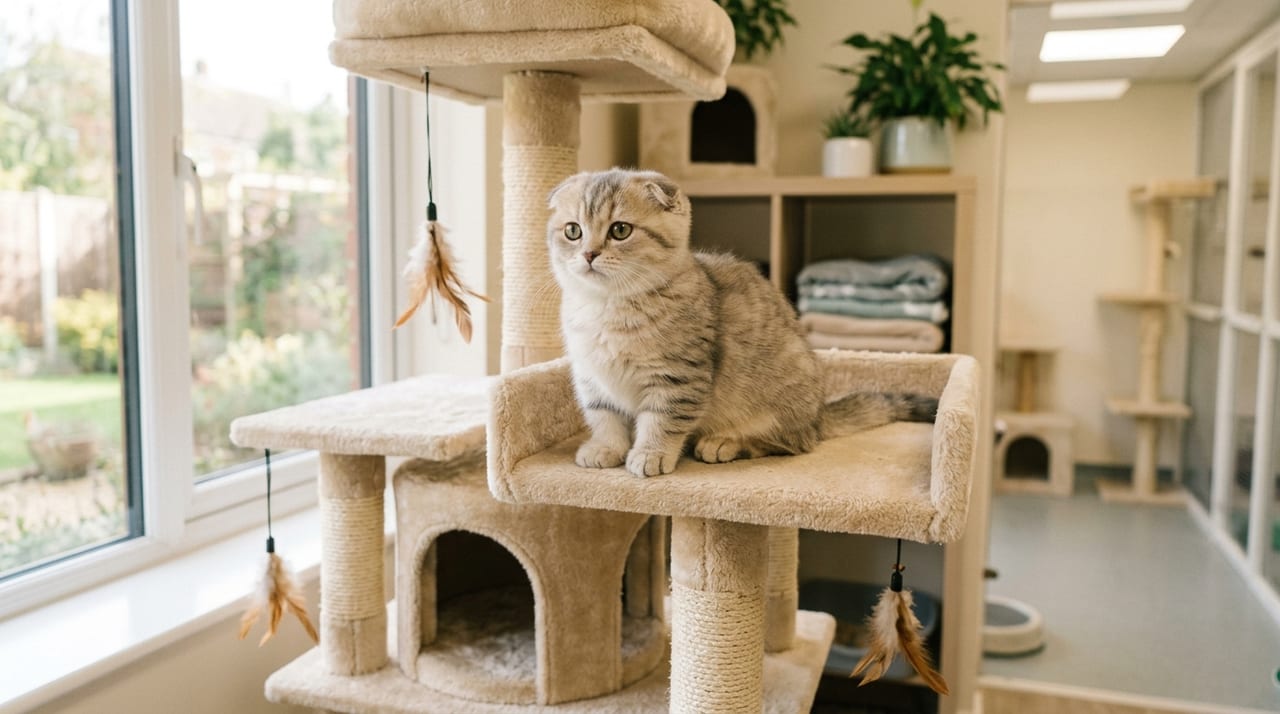
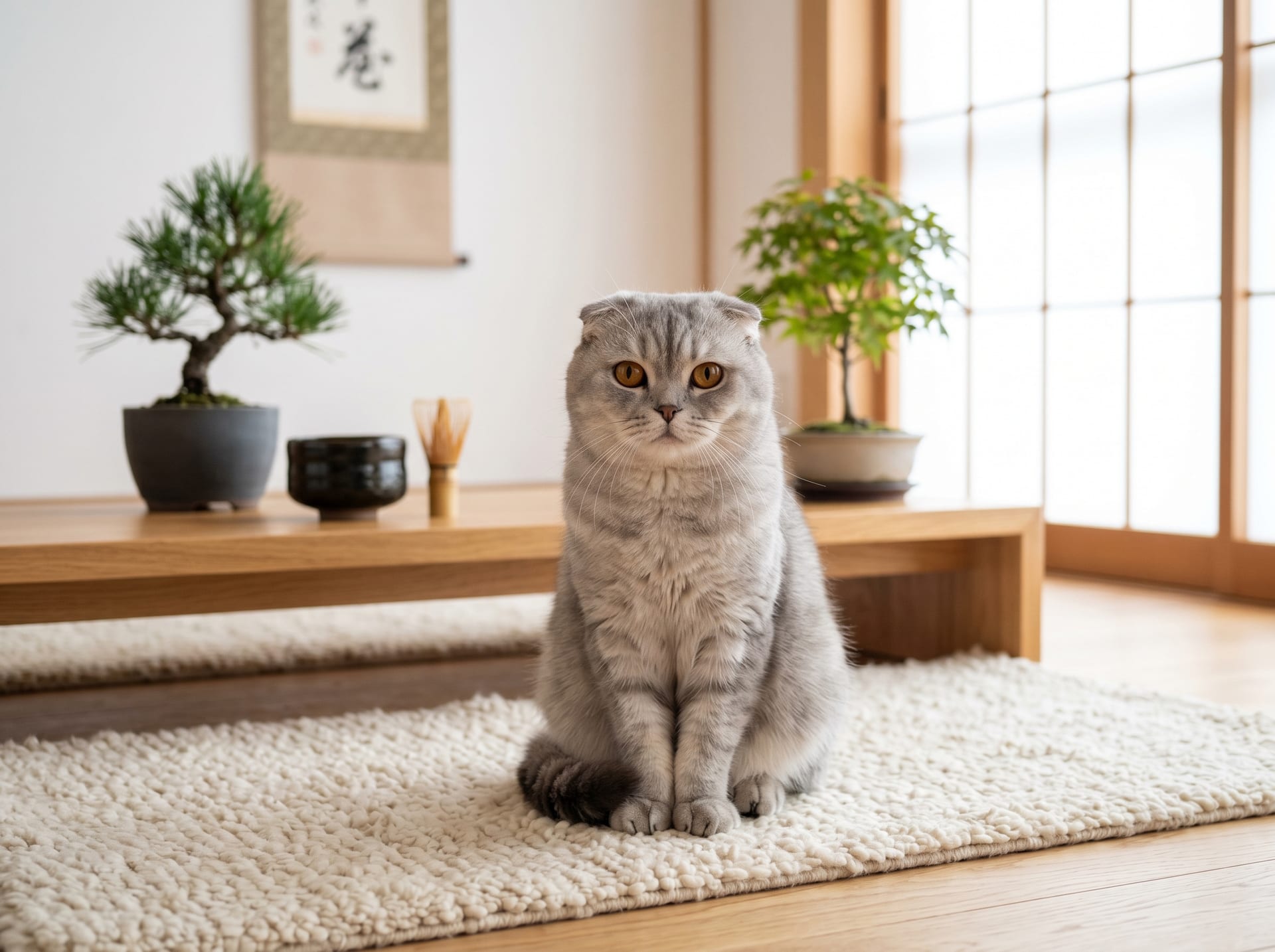
The folded-ear gene in Scottish Folds presents similar problems. The cartilage defect gene (Fd) producing folded ears causes severe osteochondrodysplasia when homozygous (FdFd), resulting in joint pain and deformities. Fold-to-Fold breeding is prohibited in some countries, and crosses with straight-eared Scots (Straights) or British Shorthairs are recommended.
Polycystic Kidney Disease (PKD) is an autosomal dominant hereditary disease common in Persian-descended breeds. Mutations in the PKD1 gene cause cyst formation in kidneys, leading to progressive kidney failure. Genetic testing is now available, and breeding cats should be screened beforehand. Since even one copy causes disease, positive cats must be excluded from breeding.
Hypertrophic Cardiomyopathy (HCM) is a heart disease common in Maine Coons, Ragdolls, and American Shorthairs. Multiple genes are involved, and specific mutations (MYBPC3) have been identified in Maine Coons and Ragdolls. Screening combining ultrasound and genetic testing is recommended, and affected or carrier individuals should be excluded from breeding.
Inbreeding Coefficient (COI) and Pedigree Management
The Coefficient of Inbreeding (COI) is a numerical value indicating how closely related two parents are. Higher COI increases the number of homozygous gene loci in offspring, elevating risks of recessive genetic diseases and immune compromise.
Calculating COI requires identifying all pathways sharing a common ancestor, then calculating (1/2)^n × (1 + FA) for each pathway and summing them. n is the number of generations from each parent back to the common ancestor, and FA is the COI of the common ancestor itself. For example, parent-offspring crosses (1 generation) yield COI = 25%, as do full-sibling crosses, while half-sibling crosses yield 12.5%.
Recommended COI values vary by breed and pedigree status, but generally 5% or less is ideal, with crosses exceeding 10% considered inadvisable. Rare breeds or bloodlines may have genetically diverse maintenance challenges, sometimes making higher COI unavoidable; in such cases, rigorous health screening becomes essential.
Pedigree management software automates complex COI calculations. Tools like PawPeds, Breeders Assistant, and ZooEasy support multi-generational pedigree analysis, COI calculation, and tracking of genetic disease carriers. Inputting accurate pedigree data allows scientific evaluation of breeding candidates.
Outcrossing (crossing unrelated lines) is an effective means of restoring genetic diversity. Even within the same breed, crossing with individuals from different bloodlines or regions reduces COI while maintaining breed characteristics. However, prior research into genetic disease risks present in both lines is necessary.
Breeding Plans That Avoid Genetic Disease
Scientific breeding plans make it possible to minimize genetic disease risk while producing kittens with desirable traits.
Genetic testing utilization has become essential in modern breeding. Testing is available for many genetic diseases including PKD, HCM, progressive retinal atrophy (PRA), and pyruvate kinase deficiency (PK Deficiency). Breeding cats should be screened beforehand for genetic diseases relevant to their breed, with positive individuals either excluded from breeding or bred only to negative individuals.
Carrier management strategy must balance competing goals: completely excluding recessive disease heterozygotes (carriers) can reduce genetic diversity. In such cases, breeder-to-non-carrier pairings are acceptable, but all kittens must be tested; when using carriers, a plan to lower the carrier rate across generations becomes essential. Carrier-to-carrier breeding must absolutely be avoided.
Phenotypic screening is equally important. For HCM, genetic testing cannot detect all variants, so regular cardiac ultrasound screening is recommended. Breeding cats should be screened at ages 1–2, 3–4, and 6–7 years, with immediate exclusion from breeding if abnormalities are found.
Record-keeping and transparency contribute to health improvements across the breeding community. Accurately recording all genetic test results, health records, and pedigree information, then sharing them with buyers and other breeders, improves breed-wide genetic health. Registration in international breed association databases (TICA, CFA, FIFe, etc.) is also recommended.
Breeding Ethics and Future Prospects
Responsible breeding requires not merely producing beautiful cats, but prioritizing feline welfare above all.
The health-first principle means prioritizing health and quality of life over aesthetic traits. Extreme flat-faced morphology (Persian short-heads), excessively short legs (Munchkin), or folded ears (Scottish Fold)—careful consideration of health-compromising trait fixation is warranted. Some countries restrict breeding of these breeds from an animal welfare perspective.
Avoiding overbreeding is an important ethical concern. Breeding beyond demand leads to cat commodification and animals not receiving proper care. Breeders must take responsibility for each kitten and establish systems providing lifetime support. Appropriate care for retired breeding cats and proper rehoming are also duties.
Preservation of genetic diversity is essential for long-term breed health. Concentration on popular bloodlines or extreme inbreeding causes genetic disease proliferation and immune system decline. Breed clubs and registries should encourage diverse bloodline maintenance and support rare lineage preservation programs.
Leveraging cutting-edge science continues refining breeding. Advances in whole-genome sequencing, SNP (single nucleotide polymorphism) analysis, and epigenetic research enable increasingly sophisticated prediction of previously undetectable genetic risks. Continuously learning scientific advances and incorporating them into practice is what modern breeders require.
Feline genetics is complex, but understanding and applying fundamentals allows production of healthy, happy cats. Scientific approaches combining genetic testing, pedigree management, and ethical judgment must become the foundation of contemporary breeding.