Budgerigar Color Genetics | How Color Variations and Breeding Work
Explaining budgerigar color genetics and the mechanisms behind color inheritance. Introducing genetic patterns such as green, blue, and yellow-faced varieties.
Key Takeaways
Explaining budgerigar color genetics and the mechanisms behind color inheritance. Introducing genetic patterns such as green, blue, and yellow-faced varieties.
Related Species
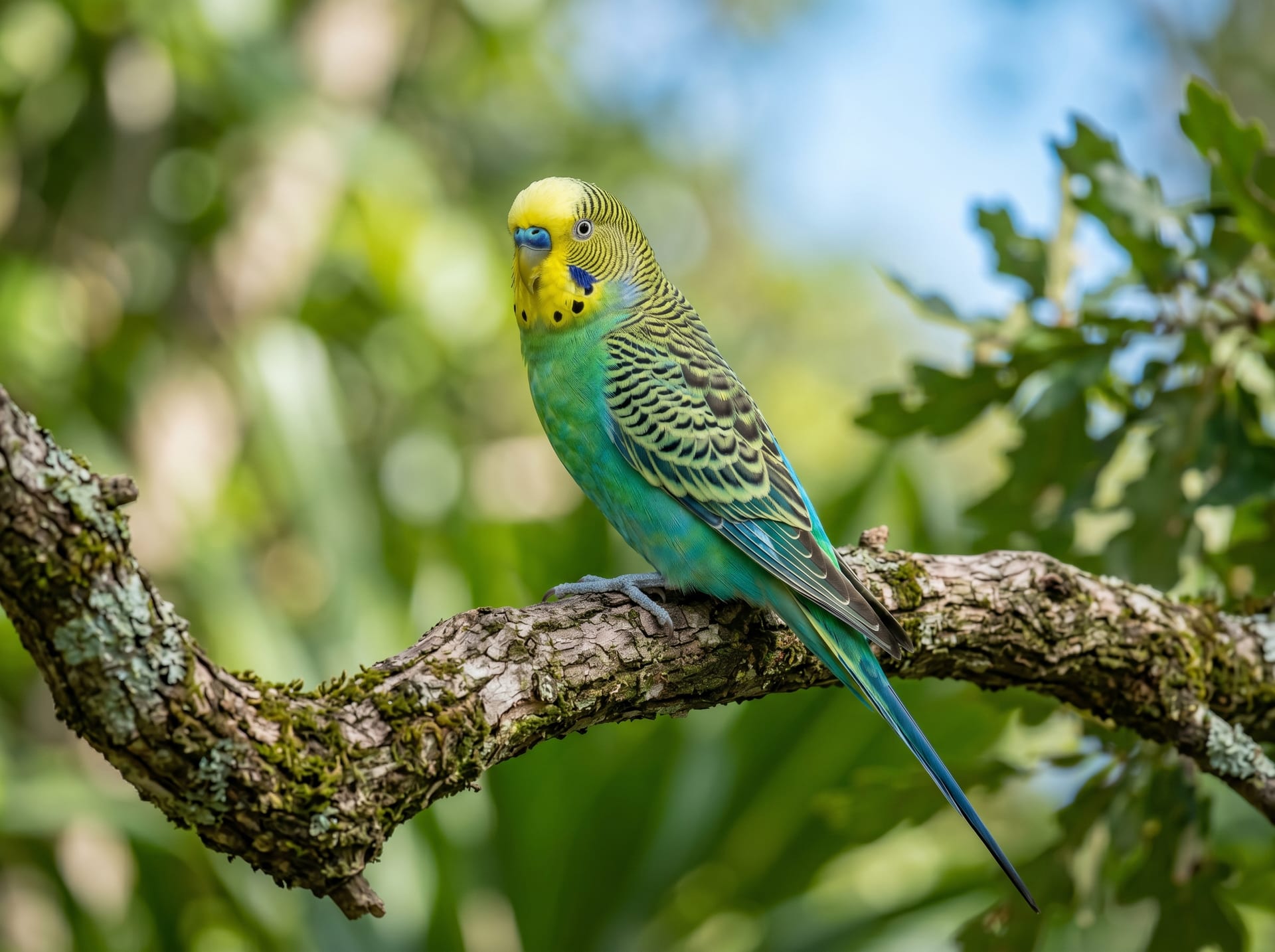
Budgerigars are among the bird species boasting the greatest diversity in body coloration as pet birds. Looking at the individuals lined up in pet shops and exhibitions, you'll see a rainbow of colors—greens, blues, yellows, whites, grays, and more. These color variations are not the result of chance; they are determined entirely by genetic combinations. This article explains the fundamentals of budgerigar color genetics and provides knowledge useful for breeding plans.
Two Elements That Determine Budgerigar Feather Color
Budgerigar body color is formed by two main mechanisms: pigment color and structural color.
Pigment Color: Chemical Coloration
Pigment color is produced by chemical compounds contained in feathers. In budgerigars, primarily two types of pigments are involved:
- Psittacin (yellow-to-red pigment): A pigment unique to budgerigars that produces the yellow component responsible for green body coloration
- Melanin (black-to-brown pigment): Forms feather edges, patterns, and dark areas
Structural Color: Coloration Through Light Interference
Structural color is produced when the microscopic structure of feathers scatters and interferes with light. Blue color results from this structural color—the pigment itself is not blue. The spongy microstructure of feathers reflects light at specific wavelengths, which appears blue to our eyes.
When these two mechanisms combine, yellow (psittacin) + blue (structural color) = green, which produces the basic color of wild-type budgerigars.
Basic Color Lines: Green and Blue Series
Green Series (Wild Type)
The green series is the most basic body color, possessing both psittacin and structural color. Wild budgerigars are this green color, and it serves as the "base" for all color mutations. Genetically, it is a dominant trait; even if an individual carries one blue-series gene, it will appear green externally (this is called "heterozygous").
Blue Series
The blue series is a recessive mutation in which the function to synthesize psittacin (yellow pigment) is lost. As a result of missing yellow, only the structural blue is expressed, making the body appear blue.
Examples of breeding predictions:
- Green (heterozygous blue) × Green (heterozygous blue) → Green : Blue = 3 : 1
- Green (heterozygous blue) × Blue → Green (heterozygous blue) : Blue = 1 : 1
- Blue × Blue → All blue
In this way, the blue series is expressed only when an individual inherits one recessive gene from each parent.
Genetic Mechanisms of Major Color Mutations
Budgerigars exhibit many color mutations, each with different inheritance patterns.
Lutino
A mutation in which melanin pigment is completely absent, characterized by a yellow body and red eyes. Because the gene producing melanin is located on the Z chromosome, it exhibits Z-linked recessive inheritance. As a result, lutino tends to appear more frequently in females than in males.
Albino
A combination mutation that combines the blue series and lutino. Both psittacin and melanin are absent, resulting in a white body with red eyes. Genetically, the individual must carry both the "blue gene" and the "lutino gene".
Yellow Face
A mutation in which only the facial region displays yellow on a blue body. There are Type 1 and Type 2 variations; Type 2 is characterized by yellow gradually spreading to the body as the bird matures. Most exhibit autosomal dominant (or incomplete dominant) inheritance.
Pied
A mutation in which melanin is absent in patches, creating a variegated or mottled pattern. Multiple inheritance patterns exist, broadly divided into Clear-Flight Pied (Z-linked) and Dominant Pied (autosomal dominant). Breeding outcomes are difficult to predict, making this a true test of a breeder's skill.
Spangle
A mutation in which feather edge patterns are reversed, exhibiting codominant inheritance. Single-factor (SF) individuals display a unique pattern with edging remaining on feathers, while double-factor (DF) individuals appear nearly plain, resembling a clear-wing phenotype.
Cinnamon
A mutation in which the chemical structure of melanin changes, causing black-to-gray melanin to be expressed as brown. Like lutino, it exhibits Z-linked recessive inheritance, making it more likely to appear in females.
Understanding Sex-Linked (Z-Linked) Inheritance
Bird sex chromosomes differ from mammals in adopting a ZW system. Males are ZZ, while females are ZW.
For Z-linked recessive mutations such as lutino and cinnamon:
- Males (ZZ): Require the mutation gene on both Z chromosomes → difficult to express
- Females (ZW): Possess only one Z chromosome, so a single mutation gene is sufficient for expression
In other words, a lutino female definitely carries the lutino gene, but a lutino male must carry two copies of the mutation gene. When establishing breeding plans, this sexual difference must always be taken into account. Since it is impossible to determine whether a male is a carrier simply by appearance, using DNA sex determination in conjunction with breeding planning ensures accuracy.
The concept of "carrier" is also important. A carrier male with a Z-linked mutation appears phenotypically normal but carries the mutation gene on one Z chromosome. When such a male is paired, the next generation may produce lutino or cinnamon females.
BreederDirect's Safe and Reliable System
To seriously pursue budgerigar color breeding, obtaining birds with clear genetic information directly from breeders is paramount. BreederDirect is a live animal direct-sale platform that connects you directly with passionate breeders.
- Genetic type confirmation is possible: You can ask breeders directly about whether birds are heterozygous carriers, their parents' genotypes, and more
- Breeding background transparency: You can confirm what cross produced the bird and what its rearing environment was like
- Safe for beginners: Breeders with expert knowledge provide careful guidance, so even first-time color budgerigar acquisitions proceed without worry
Many breeders practicing planned color breeding have their own pairing strategies and pedigree-based breeding plans. To learn about color genetics and enjoy planned breeding and encounters with birds of your ideal colors, we encourage you to take advantage of BreederDirect.