Source: Wikimedia Commons
Common Squirrel Monkey
AdvancedSaimiri sciureus
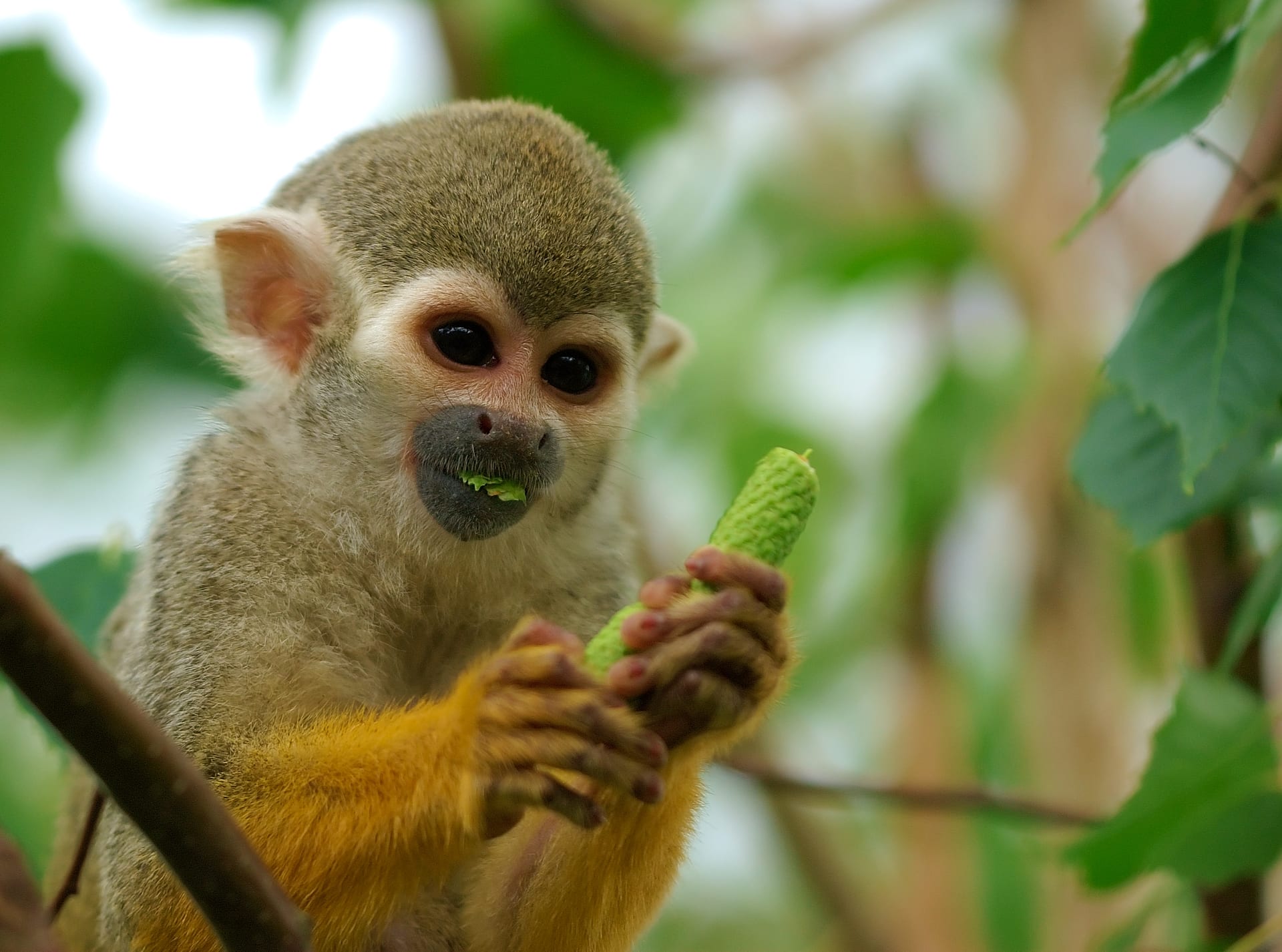
A small New World monkey of Amazonian forests, 25-35 cm with a 35-42 cm tail and 0.5-1.1 kg, living in large troops in the wild. CITES Appendix II; only captive-bred animals circulate in Japan.
Difficulty
Advanced
Temperature
18〜26℃
Lifespan
Over 20 years (in captivity)
Size
Body 25-35cm, tail 35-42cm, males 750-1,100g, females 500-750g
Humidity
40〜60%
Diet
Primate pellets, fruit, vegetables, insects
About
The common squirrel monkey, described by Linnaeus in 1758, is a small cebid monkey of the Amazon Basin in Brazil, Colombia, Ecuador, French Guiana, Guyana, Peru, Suriname and Venezuela. It has yellow-orange limbs, a white face and a black muzzle. The diet is mainly fruit and insects. Wild troops of 12-100, occasionally several hundred, are multi-male multi-female groups centred on adult females. The IUCN rates it Least Concern, though habitat loss and capture for pets and research are threats. All primates are on CITES Appendix I or II, and this species is on II. In Japan the Infectious Diseases Control Act restricts monkey imports to designated countries for research or exhibition, so pets cannot be imported and only domestically bred animals circulate, rarely, through licensed animal dealers.
Source: Wikipedia (CC BY-SA 4.0)
Lifespan of the Common Squirrel Monkey
The Common Squirrel Monkey lives Over 20 years (in captivity).
Captive lifespan exceeds 20 years, with a female record of 27.
Size of the Common Squirrel Monkey
The Common Squirrel Monkey grows to Body 25-35cm, tail 35-42cm, males 750-1,100g, females 500-750g.
Body length is 25-35 cm with a long 35-42 cm tail; males weigh 750-1,100 g and females 500-750 g.
Basic Info
Origin
Amazon Basin of South America (Brazil, Colombia, Ecuador, Peru, Venezuela, the Guianas)
Lifespan
Over 20 years (in captivity)
Care Specifications
References & Sources
Edited & verified by: BreederDirect editorial team
The taxonomic, regulatory, and husbandry data on this page are compiled and verified against the authoritative primary sources below.
Taxonomy & Authority
Accepted name: Saimiri sciureus (Linnaeus, 1758)
Authority databases: GBIF
Nomenclature follows global taxonomic authority databases.
Regulations & Conservation Status
CITES Appendix IIIUCN LC · Least Concern
Domestic law: 感染症法によりサル(霊長目)の輸入は指定国からの試験研究・展示目的に限られ、ペット目的の輸入は不可。国内繁殖個体のみ流通。
Sources: CITES Appendices (PRIMATES spp. Appendix II) / IUCN Red List / MHLW Animal Import Notification System (primate import ban)
Regulations may change. Always verify the latest information with the relevant authorities.
Common Squirrel Monkey Listings
Loading latest listingsFind listings for this species