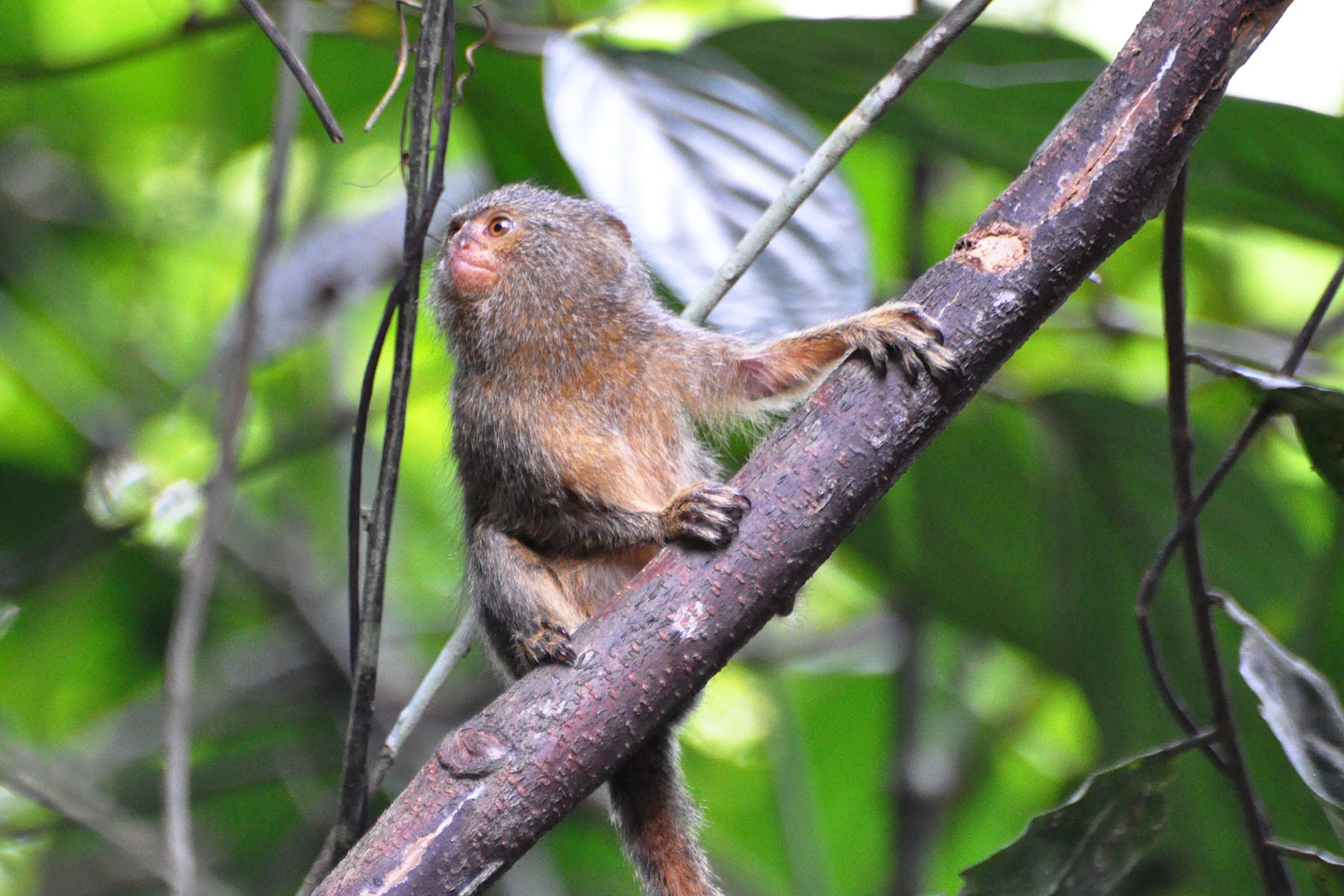
Source: Wikimedia Commons
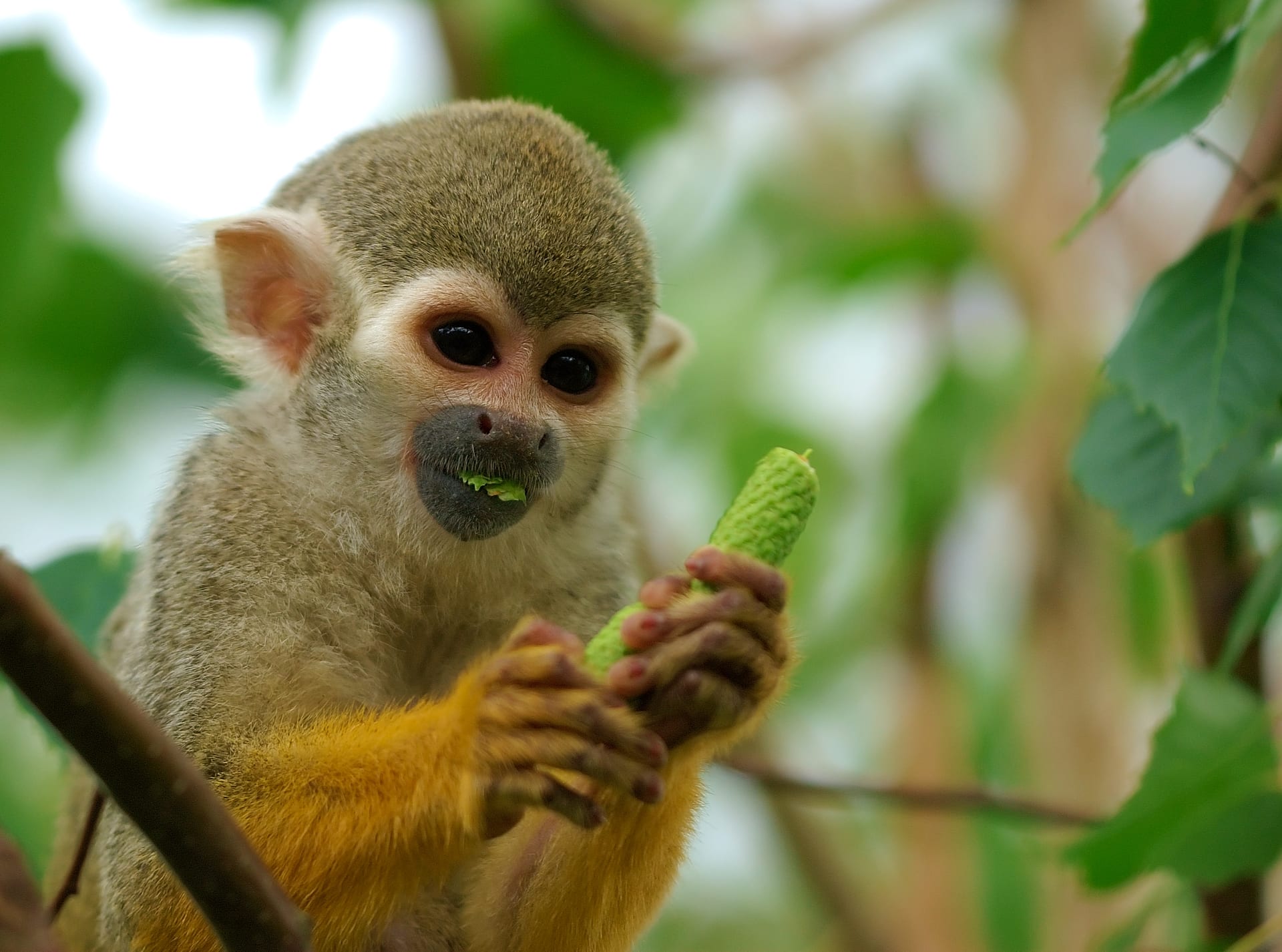
Pygmy Marmoset
AdvancedCebuella pygmaea
The world's smallest monkey at 12-16cm and 85-140g, a gum-feeder of the western Amazon canopy. CITES Appendix II; Japan bars pet imports of primates, so only rare captive-bred animals circulate.
Difficulty
Advanced
Temperature
18〜26℃
Lifespan
15-20 years
Size
Head-body 12-16cm / 85-140g
Humidity
40〜60%
Diet
Tree gum and sap, insects, fruit, marmoset diet
About
It gnaws holes in bark to release gum and draws about 70% of its calories from exudates, supplemented by insects, fruit and nectar. It lives in stable troops of 2-9 in which one dominant pair breeds, typically producing twins about twice a year. It is diurnal, and lives 15-20 years in captivity. A 2018 molecular study split the eastern populations off as Cebuella niveiventris, so identifying traded animals to species is not straightforward. Both species are Vulnerable. It was placed on CITES Appendix I in 1977 and has been on Appendix II under the order-wide primate listing since 1979. Japan does not permit primate imports for pet purposes under the Infectious Diseases Control Act, so only domestically bred animals circulate, and sellers need animal-handling business registration. As a troop-living animal it should not be kept alone, and it needs a tall enclosure and a diet that reproduces gum and insects. It is very rarely available in Japan.
Source: Wikipedia (CC BY-SA 4.0)
Lifespan of the Pygmy Marmoset
The Pygmy Marmoset lives 15-20 years.
Size of the Pygmy Marmoset
The Pygmy Marmoset grows to Head-body 12-16cm / 85-140g.
The pygmy marmoset (Cebuella pygmaea) of the western Amazon Basin in Ecuador, Colombia, Brazil, Peru and northern Bolivia is the smallest monkey, with a head-body length of 12-16 cm, tail 17-23 cm and weight 85-140 g.
Basic Info
Origin
Western Amazon Basin (Ecuador, Colombia, Brazil, Peru, northern Bolivia)
Lifespan
15-20 years
Care Specifications
References & Sources
Edited & verified by: BreederDirect editorial team
The taxonomic, regulatory, and husbandry data on this page are compiled and verified against the authoritative primary sources below.
Taxonomy & Authority
Accepted name: Cebuella pygmaea (Spix, 1823)
Synonyms: Callithrix pygmaea
Authority databases: GBIF
Nomenclature follows global taxonomic authority databases.
Regulations & Conservation Status
CITES Appendix IIIUCN VU · Vulnerable
Domestic law: Primates cannot be imported into Japan for pet purposes under the Infectious Diseases Control Act (Animal Quarantine Service); only domestically bred animals may be traded.
Sources: CITES Appendices (PRIMATES spp. Appendix II) / IUCN Red List Cebuella pygmaea / Animal Quarantine Service: other animals (primate import ban)
Regulations may change. Always verify the latest information with the relevant authorities.
Pygmy Marmoset Listings
Loading latest listingsFind listings for this species