Source: Wikimedia Commons
Fat-tailed Gerbil
IntermediatePachyuromys duprasi
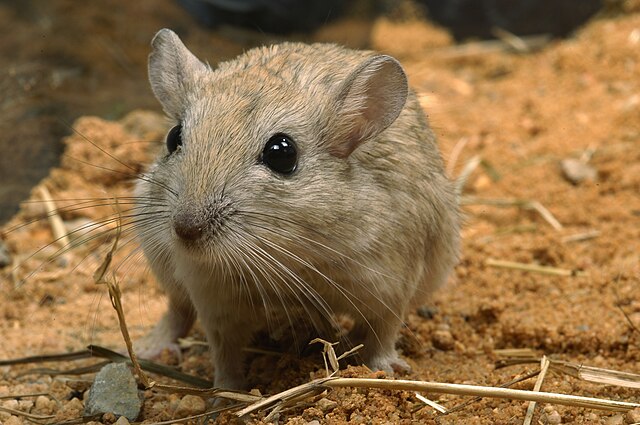
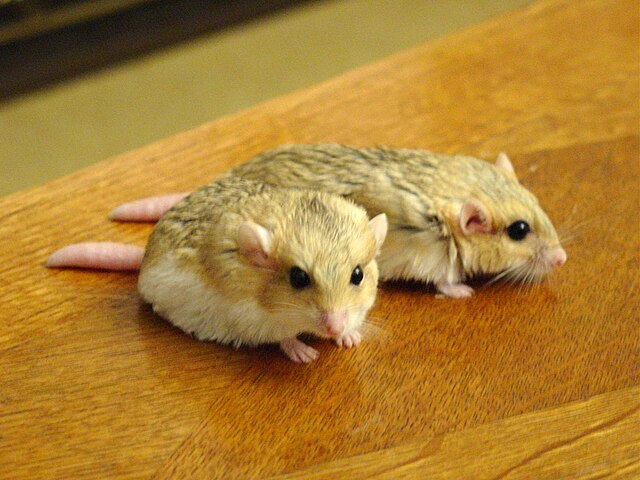
Gerbil with a distinctive fat, club-shaped tail. Also called Duprasi. Docile desert rodent that tames easily.
Difficulty
Intermediate
Temperature
18〜26℃
Lifespan
5-7 years
Size
10-12cm / 40-60g
Humidity
40〜60%
Diet
Gerbil pellets, seeds, dried vegetables, occasional insects
About
The fat-tailed gerbil (Pachyuromys duprasi), also known as the duprasi or bubble rat, is a small rodent native to the sandy deserts of North Africa, including Algeria, Morocco, and Tunisia. The defining feature is a short, club-shaped tail that stores fat reserves as an adaptation to desert food scarcity—analogous to the fat-tailed sheep or gecko. Compared to the Mongolian gerbil, fat-tailed gerbils are calmer and less prone to biting, making them relatively easy to handle. They are most active at dusk and dawn. Housing in a glass tank is recommended to prevent escapes and maintain the dry environment they prefer. A sand bath area and deep, diggable substrate should be provided. Diet consists of seed mix supplemented with small amounts of fresh vegetables; high-moisture foods should be limited. Common health concerns include neoplasia, dermatitis, and respiratory infections.
Source: Wikipedia (CC BY-SA 4.0)
Lifespan of the Fat-tailed Gerbil
The Fat-tailed Gerbil lives 5-7 years.
Lifespan is 5–7 years.
Size of the Fat-tailed Gerbil
The Fat-tailed Gerbil grows to 10-12cm / 40-60g.
Adults measure 10–12 cm in body length and weigh 40–60 g.
Temperature & humidity for the Fat-tailed Gerbil
Optimal temperature is 20–26 °C.
Basic Info
Origin
North Africa (Algeria, Morocco, Tunisia)
References & Sources
Edited & verified by: BreederDirect editorial team
The taxonomic, regulatory, and husbandry data on this page are compiled and verified against the authoritative primary sources below.
Primary sources
Taxonomy & Authority
Accepted name: Pachyuromys duprasi Lataste, 1880
Authority databases: GBIF
Nomenclature follows global taxonomic authority databases.
Regulations & Conservation Status
Not CITES-listedIUCN LC · Least Concern
Sources: Pachyuromys duprasi IUCN LC (not CITES-listed)
Regulations may change. Always verify the latest information with the relevant authorities.
Fat-tailed Gerbil Listings
Loading latest listingsFind listings for this species