Source: Wikimedia Commons
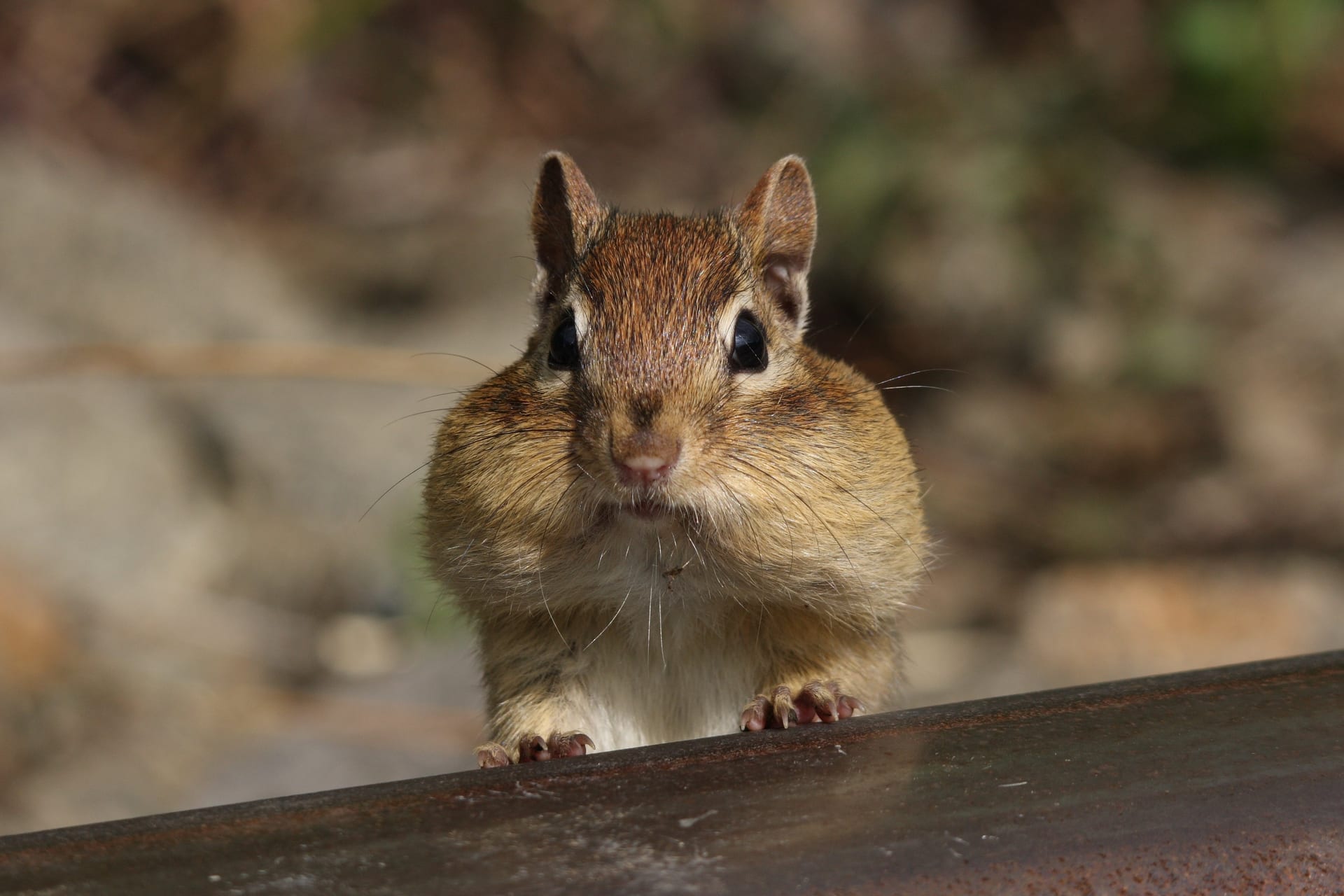
Eastern Chipmunk
IntermediateTamias striatus
A chipmunk of eastern North American woodland with five dark back stripes ending before a yellowish to reddish rump. It carries food in cheek pouches to cache in its burrow and is diurnal, solitary and territorial.
Difficulty
Intermediate
Temperature
18〜26℃
Lifespan
Usually under 2 years in the wild; captive record of 8 years
Size
About 30cm including tail; 66–115g
Humidity
40〜60%
Diet
Omnivore: mainly fruit, seeds and nuts, plus insects
About
The eastern chipmunk (Tamias striatus) is a ground squirrel found from the eastern United States to south-eastern Canada. It favours open deciduous woodland with stumps, logs or rocks, especially mature beech-maple forest. The fur is greyish to reddish brown with a white belly; five dark stripes run down the back and stop before a yellowish to reddish rump patch, and there are light and dark stripes around the eyes. The tail is hairy but not bushy and somewhat flattened. It is told from the least chipmunk by stripes that do not reach the tail base and by its larger size. It is diurnal, most active mid-morning and mid-afternoon, solitary, and defends the area around its burrow. It eats mainly fruit, seeds and nuts, plus insects, earthworms, birds' eggs and mushrooms, carrying food in its cheek pouches to caches. It does not store fat for hibernation; instead it alternates torpor with waking to eat its stores. Most wild animals live less than two years, with a captive record of eight. In Japan it is a North American species distinct from the Siberian chipmunk commonly kept, and captive-bred animals appear only occasionally at specialists.
Source: Wikipedia (CC BY-SA 4.0)
Lifespan of the Eastern Chipmunk
The Eastern Chipmunk lives Usually under 2 years in the wild; captive record of 8 years.
Size of the Eastern Chipmunk
The Eastern Chipmunk grows to About 30cm including tail; 66–115g.
It weighs 66–115g and is about 30cm long including the tail.
Basic Info
Origin
Deciduous woodland of the eastern United States and south-eastern Canada
Lifespan
References & Sources
Edited & verified by: BreederDirect editorial team
The taxonomic, regulatory, and husbandry data on this page are compiled and verified against the authoritative primary sources below.
Taxonomy & Authority
Accepted name: Tamias striatus (Linnaeus, 1758)
Authority databases: GBIF · GBIF: Tamias striatus
Nomenclature follows global taxonomic authority databases.
Regulations & Conservation Status
Not CITES-listedIUCN LC · Least Concern
Not covered by CITES or the specified-animal rules. As a member of the squirrel family, it needs a species-name certificate under the Invasive Alien Species Act when imported (it is not itself a designated or uncategorized invasive species). Imports fall under Japan's animal import notification system (Infectious Diseases Control Law, MHLW): a health certificate from the exporting country's government must be filed with the quarantine station, and rodents must come from a holding facility designated by that government. Animals bred in Japan can be sold and kept without notification. Never release captive animals into the wild.
Sources: Ministry of the Environment: Invasive Alien Species list, incl. species requiring a species-name certificate (JA) / MHLW: Animal import notification system (JA) / Species+ CITES query (not listed)
Regulations may change. Always verify the latest information with the relevant authorities.
Eastern Chipmunk Listings
Loading latest listingsFind listings for this species