Source: Wikimedia Commons
Northern Flying Squirrel
AdvancedGlaucomys sabrinus
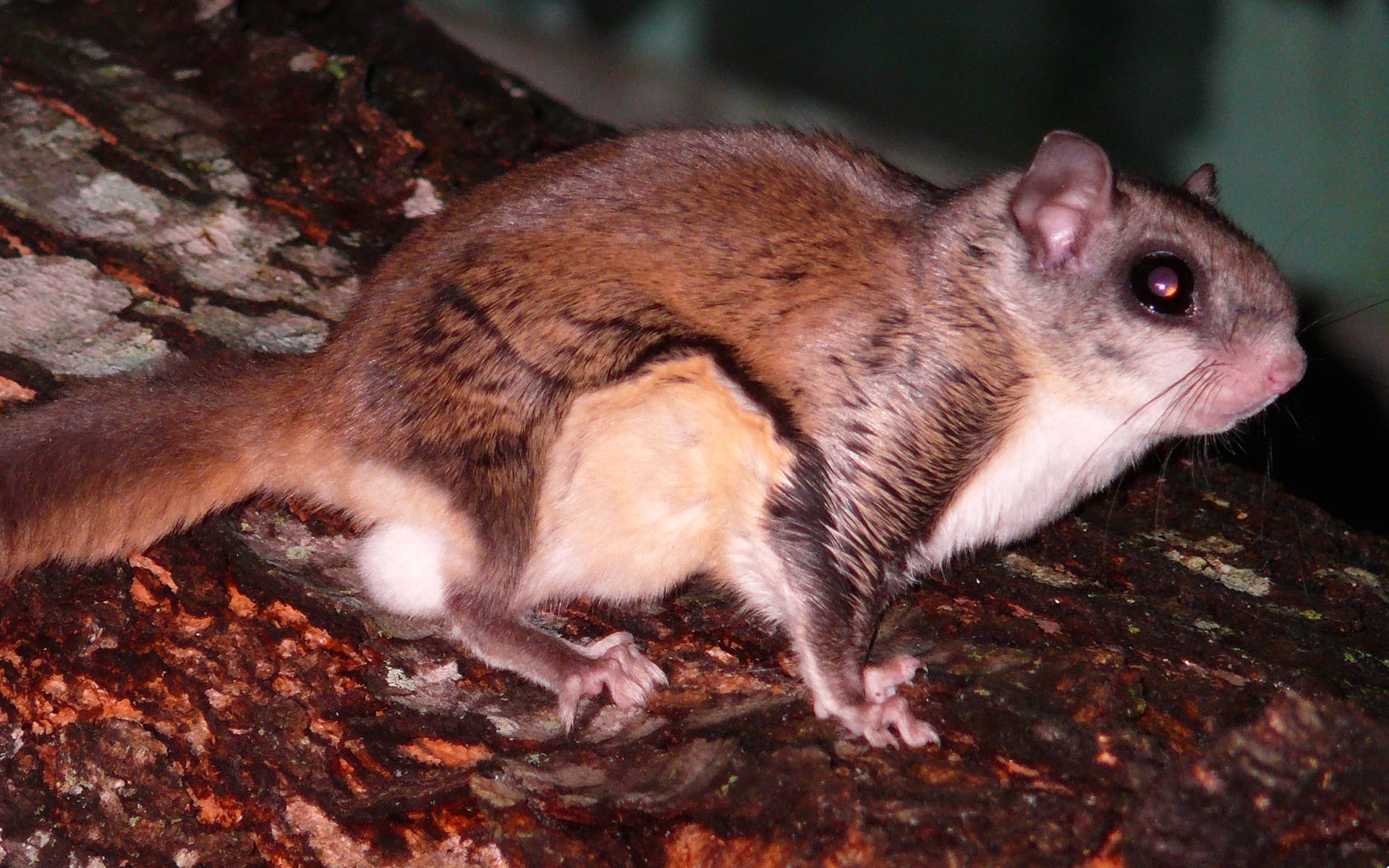
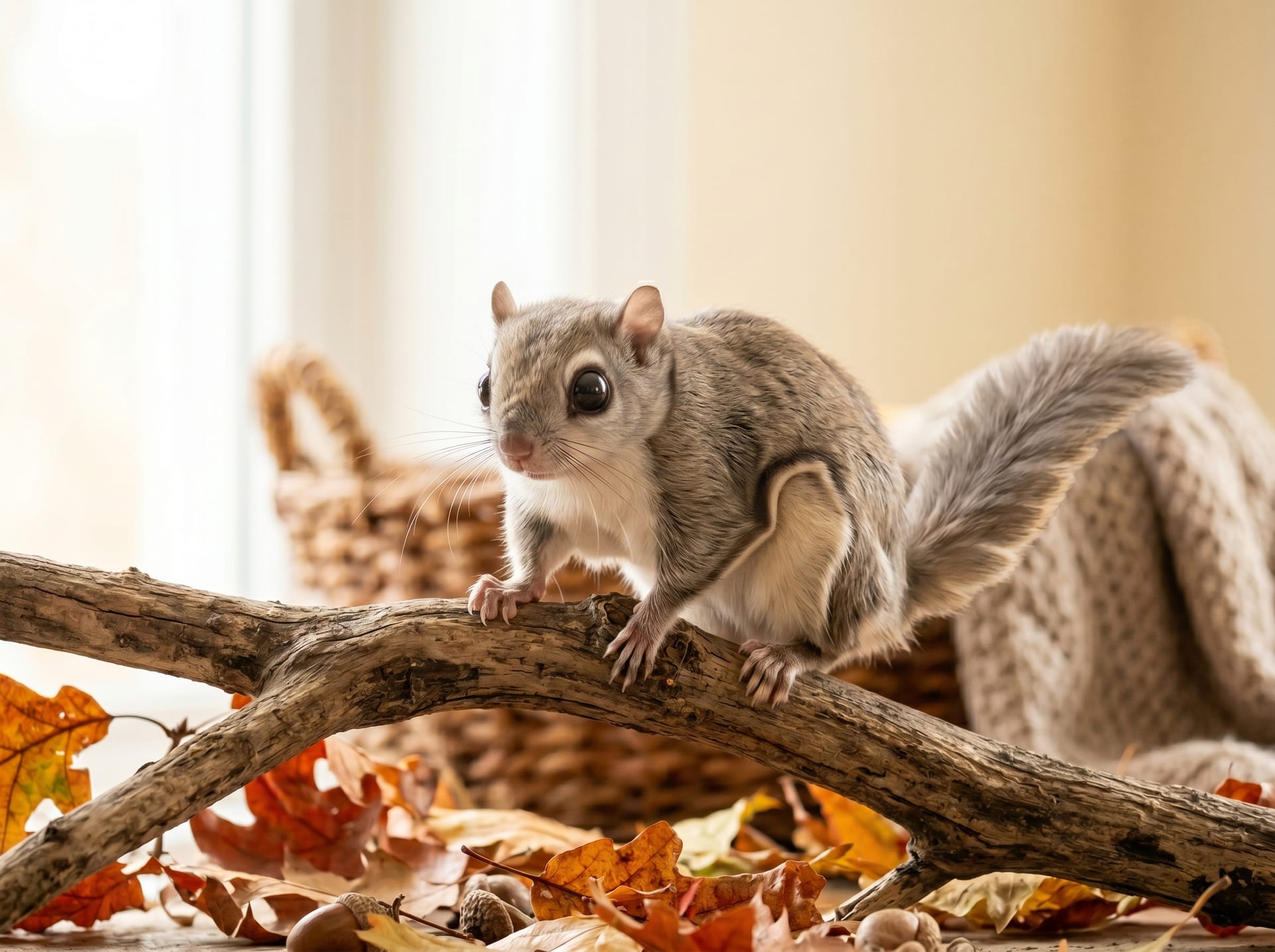
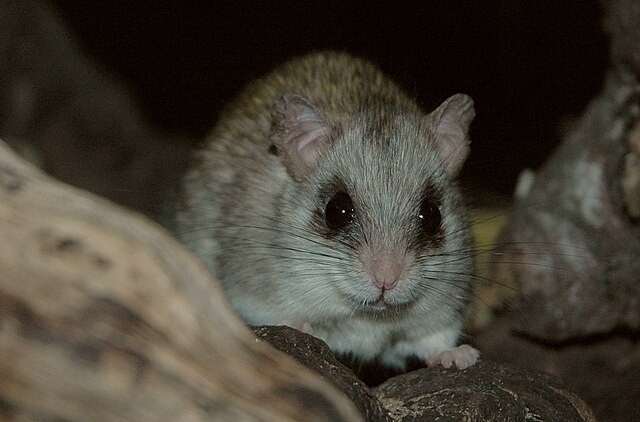
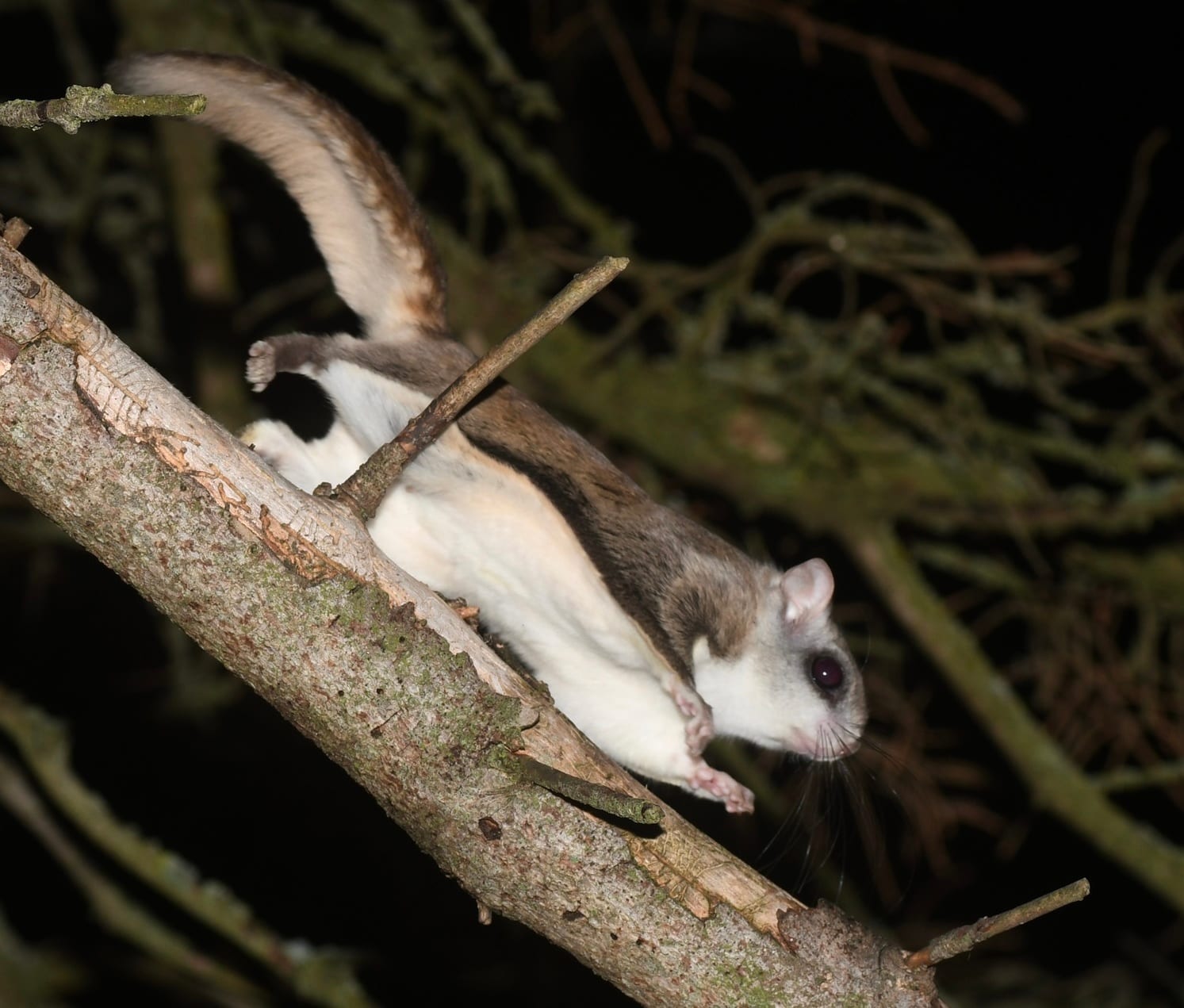
A large North American flying squirrel of northern conifer forest, with silky grey and cinnamon fur and belly hairs that are grey at the base. Strictly nocturnal, it glides between trees and eats many fungi and lichens.
Difficulty
Advanced
Temperature
18〜26℃
Lifespan
Usually under 4 years wild; about 13 on average in captivity
Size
27.5–34.2cm long; 75–140g
Humidity
40〜60%
Diet
Omnivore: nuts, acorns, fungi and lichens, plus fruit and insects
About
The northern flying squirrel (Glaucomys sabrinus) is a gliding squirrel ranging across northern North America from Alaska to Nova Scotia, south to the mountains of North Carolina and Tennessee and west to Utah. It prefers spruce and fir forest but also lives in deciduous and mixed woods. The silky fur is grey and cinnamon, and a furred gliding membrane runs from wrist to ankle. The flat, round-tipped tail is about 80% of head-and-body length, and the large black eyes suit night activity. It is told from the southern flying squirrel (G. volans) already kept in Japan by its larger size and belly hairs that are grey at the base (often white to the base in the southern species). It is strictly nocturnal, active for about two hours starting an hour after sunset and again before dawn. Clumsy on the ground, it glides gracefully between trees, and up to eight may share a nest. Besides nuts and acorns, fungi and lichens form a large part of its diet. Most wild animals live less than four years; the captive average is 13. In Japan, captive-bred animals appear only occasionally at specialists.
Source: Wikipedia (CC BY-SA 4.0)
Lifespan of the Northern Flying Squirrel
The Northern Flying Squirrel lives Usually under 4 years wild; about 13 on average in captivity.
Size of the Northern Flying Squirrel
The Northern Flying Squirrel grows to 27.5–34.2cm long; 75–140g.
It weighs 75–140g and is 27.5–34.2cm long.
Basic Info
Origin
Northern North America: Alaska to Nova Scotia, south to the mountains of North Carolina and Tennessee, west to Utah
Lifespan
References & Sources
Edited & verified by: BreederDirect editorial team
The taxonomic, regulatory, and husbandry data on this page are compiled and verified against the authoritative primary sources below.
Taxonomy & Authority
Accepted name: Glaucomys sabrinus (Shaw, 1801)
Authority databases: GBIF · GBIF: Glaucomys sabrinus
Nomenclature follows global taxonomic authority databases.
Regulations & Conservation Status
Not CITES-listedIUCN LC · Least Concern
Not covered by CITES or the specified-animal rules. As a member of the squirrel family, it needs a species-name certificate under the Invasive Alien Species Act when imported (it is not itself a designated or uncategorized invasive species). Imports fall under Japan's animal import notification system (Infectious Diseases Control Law, MHLW): a health certificate from the exporting country's government must be filed with the quarantine station, and rodents must come from a holding facility designated by that government. Animals bred in Japan can be sold and kept without notification. Never release captive animals into the wild.
Sources: Ministry of the Environment: Invasive Alien Species list, incl. species requiring a species-name certificate (JA) / MHLW: Animal import notification system (JA) / Species+ CITES query (not listed)
Regulations may change. Always verify the latest information with the relevant authorities.
Northern Flying Squirrel Listings
Loading latest listingsFind listings for this species