Marine Fish Encyclopedia — 80 Species Directory
Encyclopedia of popular marine fish species with care guides, traits, and water parameters.
Featured Marine Fish
Showing 43 of 80 species(25–43)
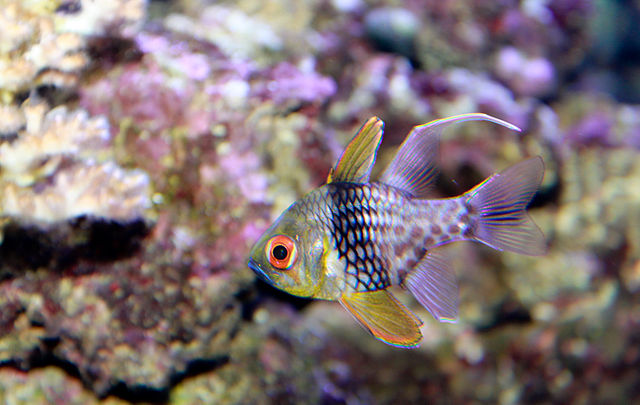 © Brian Gratwicke / CC BY 2.0
Pajama Cardinalfish
Sphaeramia nematoptera
Small marine fish with cute pajama-like polka dot pattern. Peaceful, hardy, beginner-friendly. Looks great in groups.
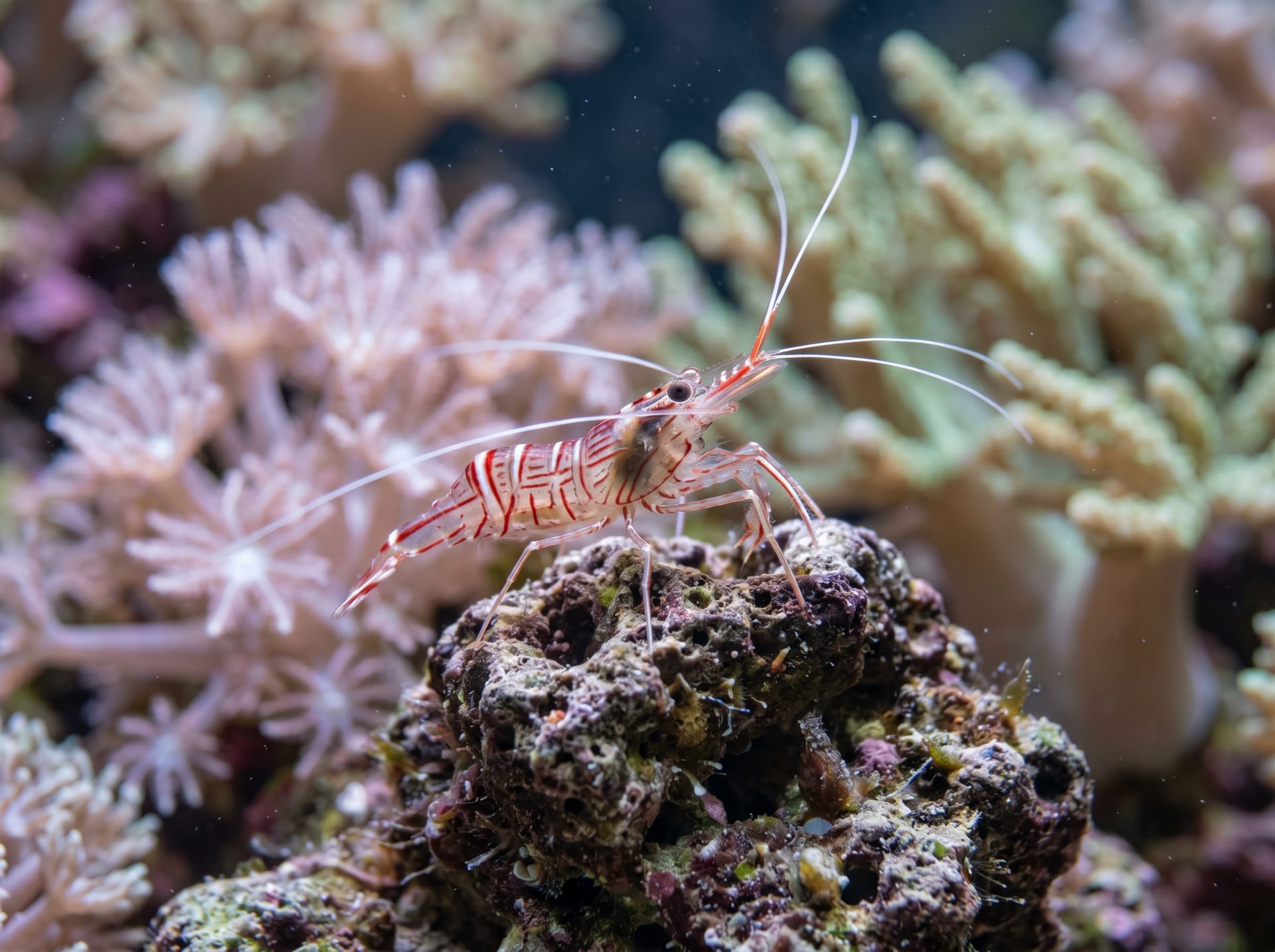
Peppermint Shrimp
Peppermint shrimp
Beautiful marine shrimp with red and white stripes. Valued for eating Aiptasia (pest anemone) — a beneficial cleaner.
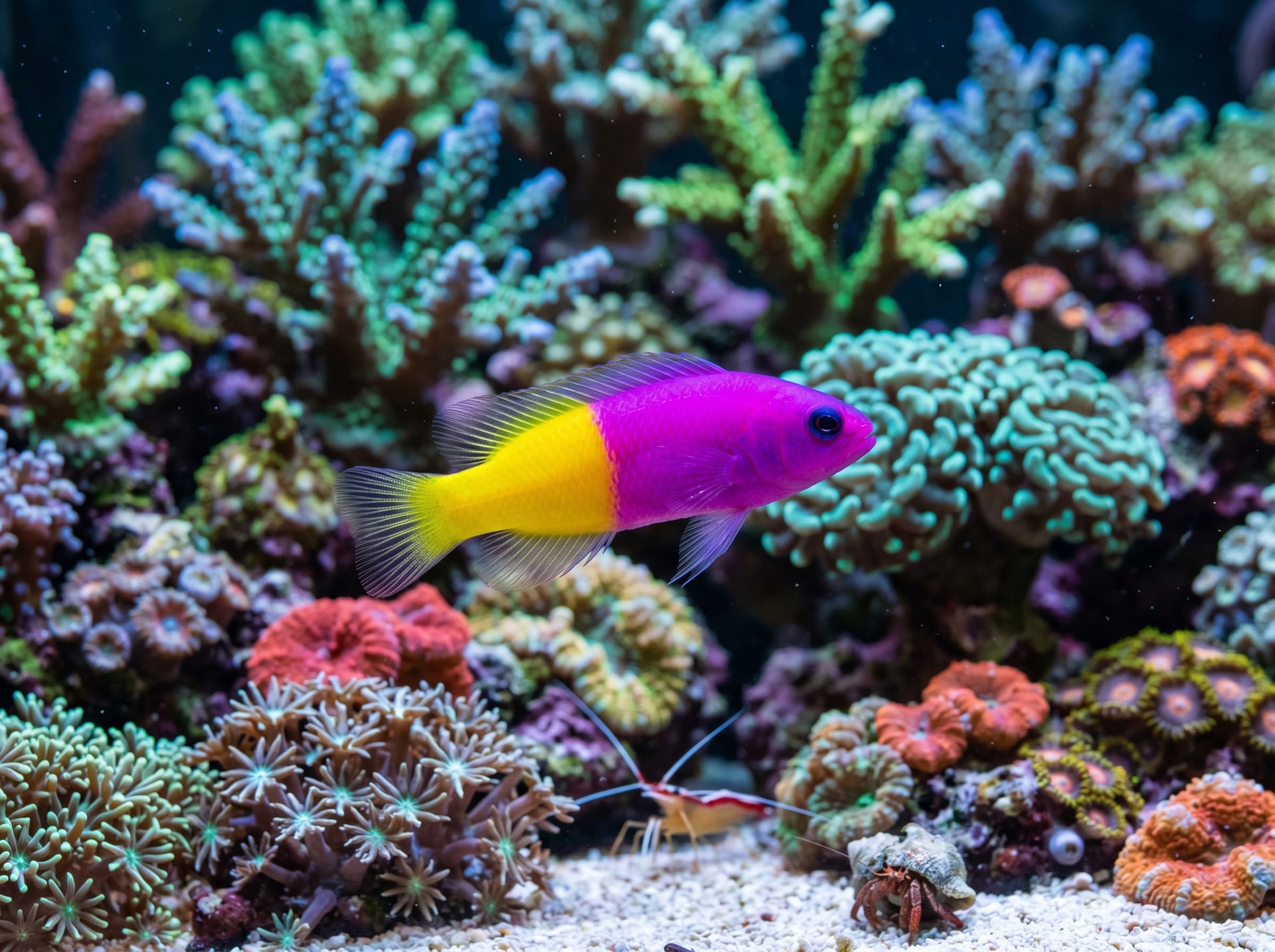
Royal Dottyback
Pictichromis paccagnellae
Striking bicolor — vivid purple front and bright yellow rear. Hardy and feeds well, but feisty temperament can be aggressive toward similar-sized fish.
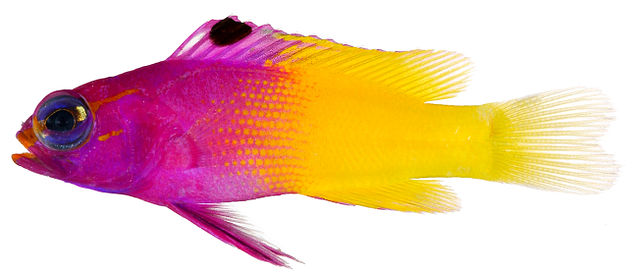 © Smithsonian Institution from United States / No restrictions
Royal Gramma
Royal gramma
Beautiful bicolor fish — purple front and yellow rear. Caribbean native. Cave-dweller that peeks from rock crevices.
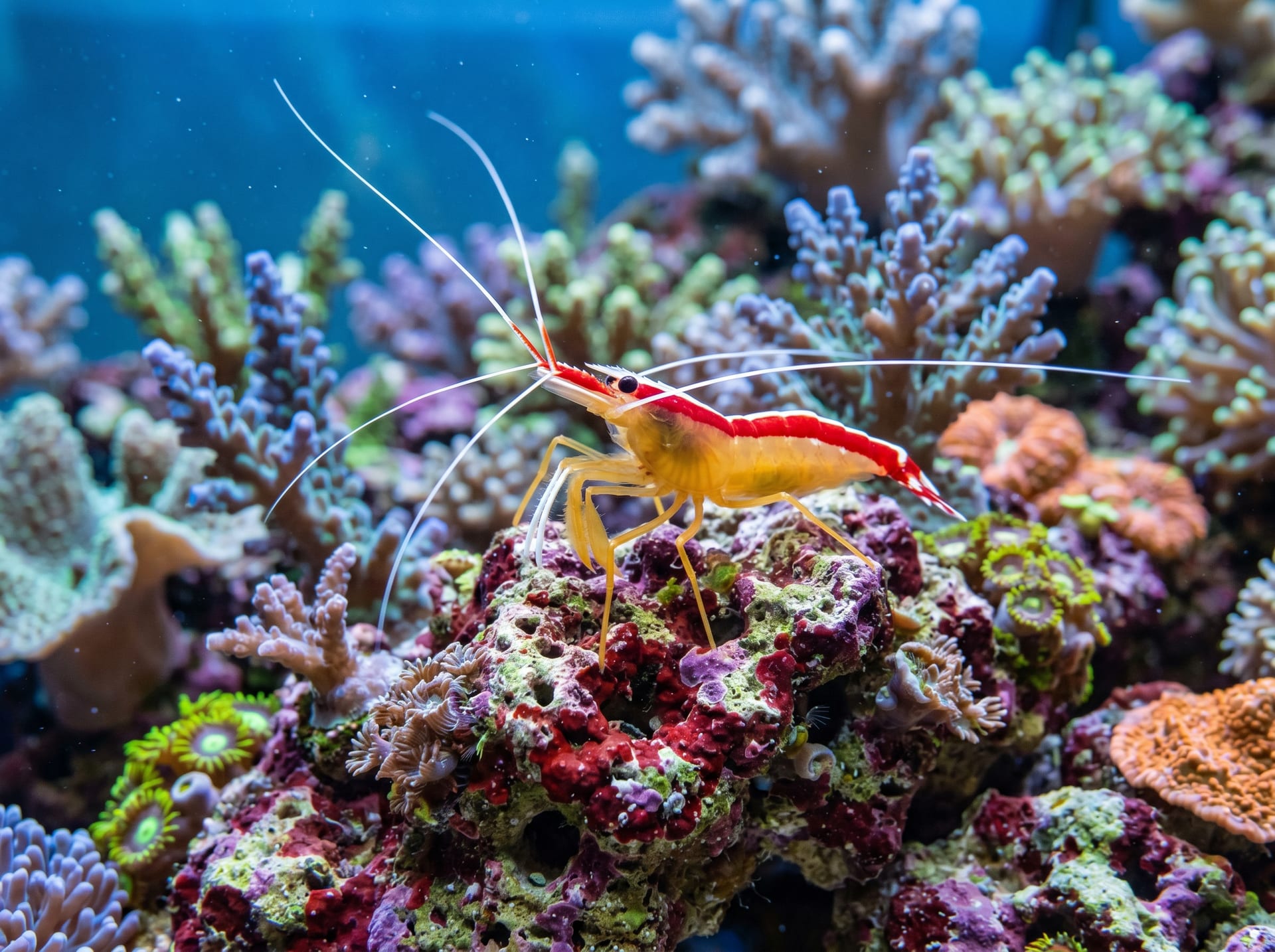
Scarlet Skunk Cleaner Shrimp
Lysmata amboinensis
Large cleaner shrimp with red body and white dorsal stripe. Famous for cleaning parasites off fish. Excellent tank cleaner. Hermaphroditic — breeding possible.
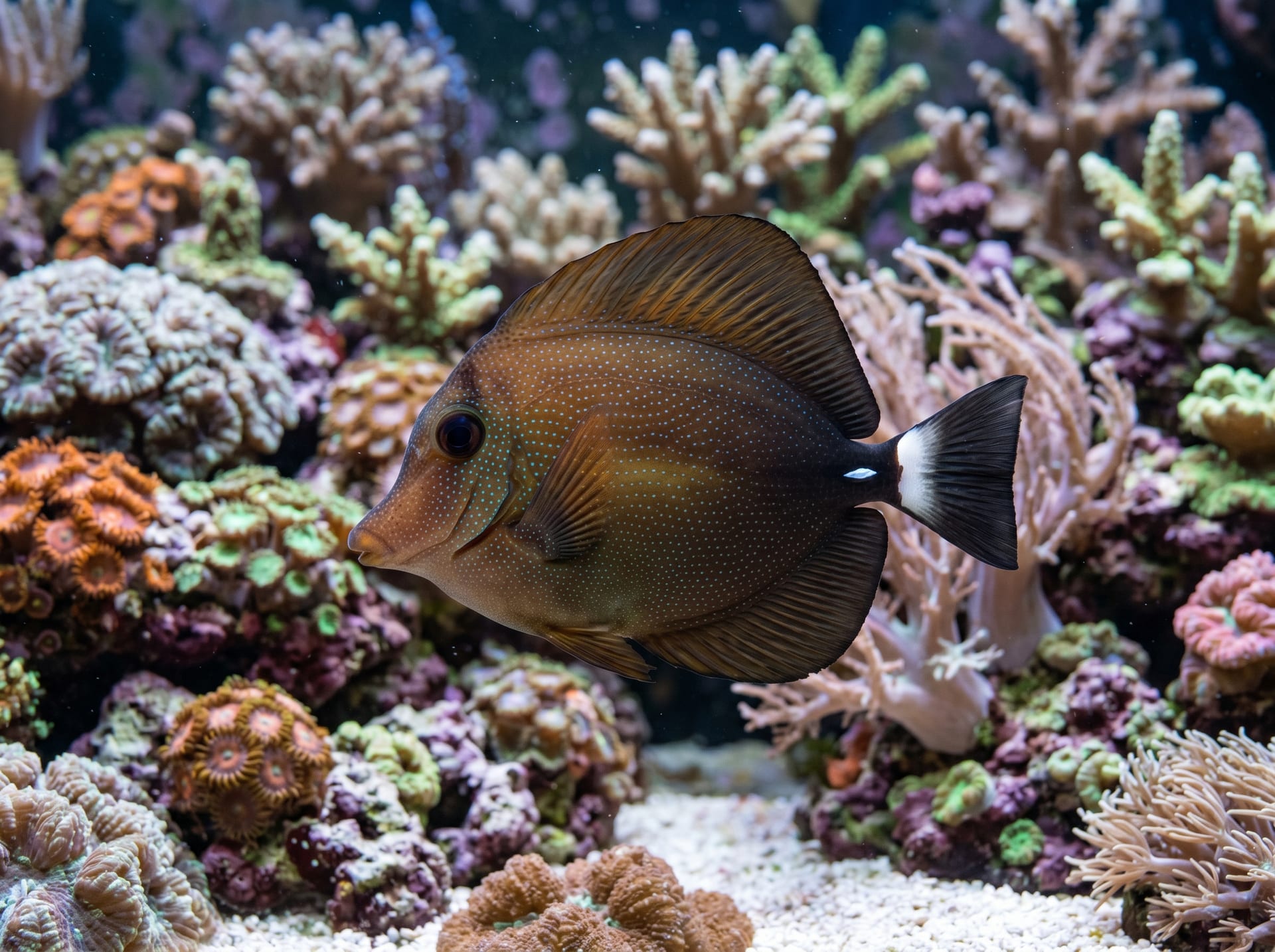
Scopas Tang
Zebrasoma scopas
Brown-bodied tang, not flashy but an excellent algae cleaner. Hardy and easy to keep. More affordable than Yellow Tang. Actively grazes on algae.
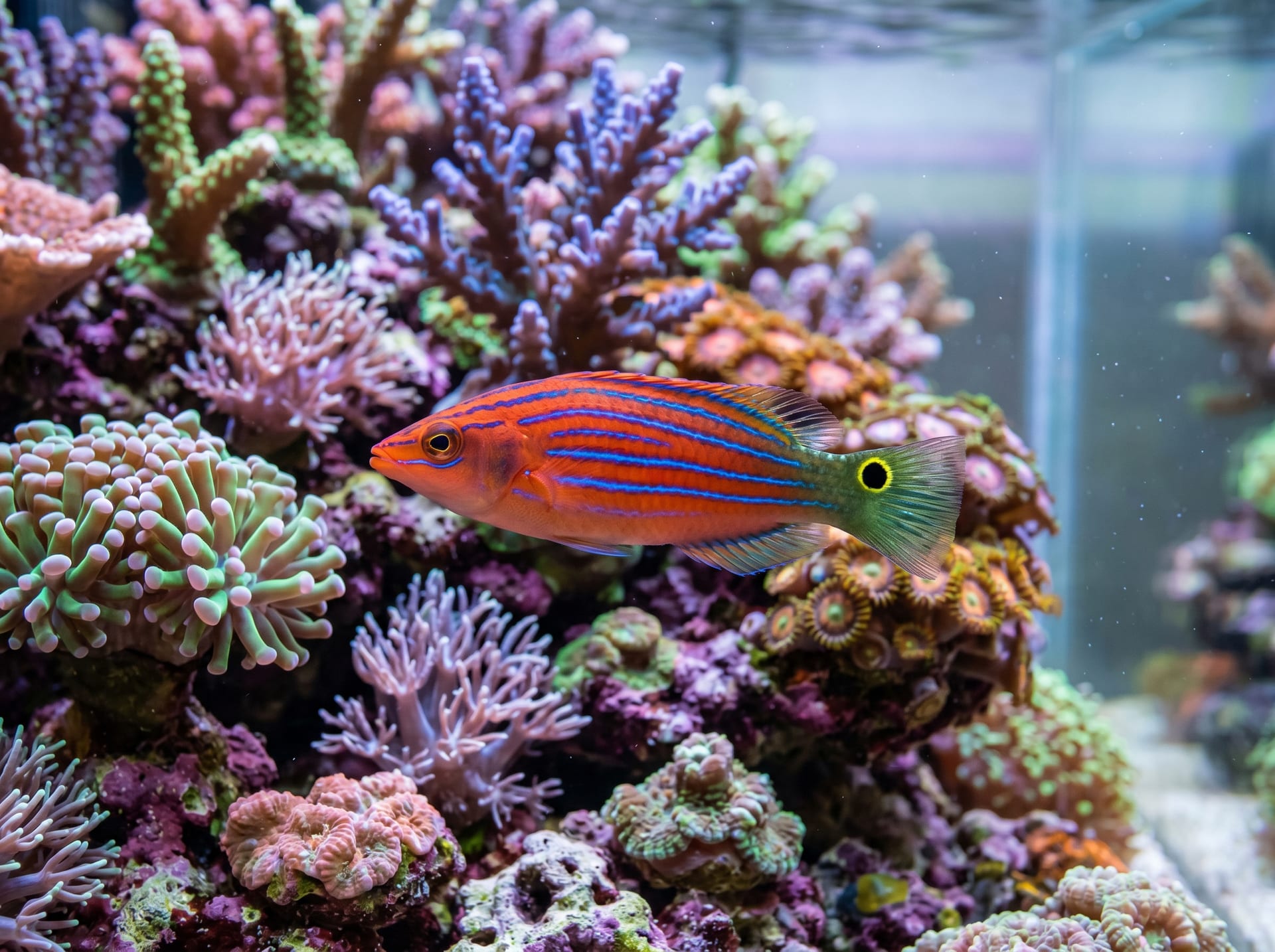
Six Line Wrasse
Pseudocheilinus hexataenia
Small wrasse with six horizontal lines. Beneficial pest controller eating flatworms. Active swimmer adding movement to the tank.
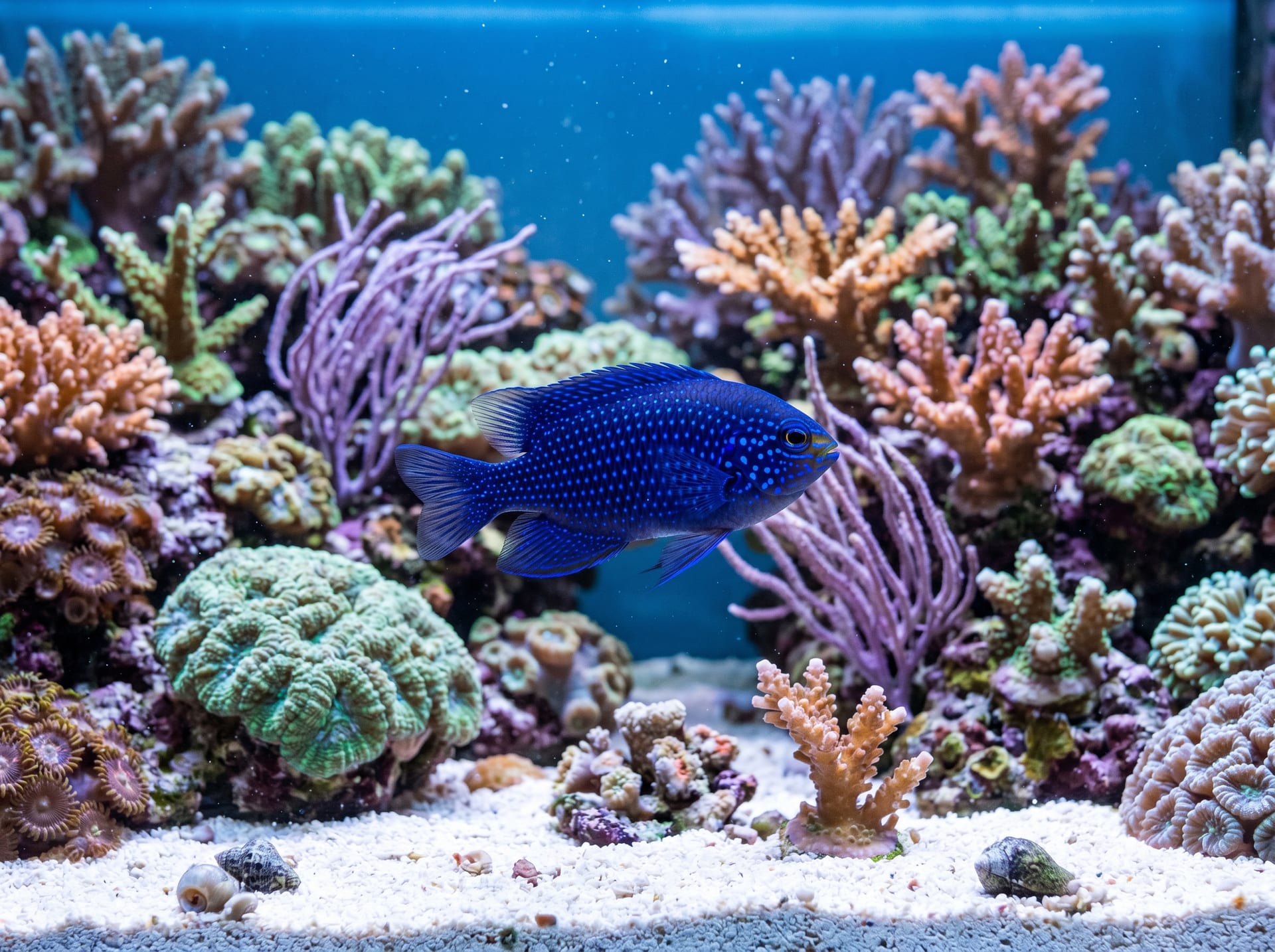
Springer's Damselfish
Chrysiptera springeri
A small damselfish with beautiful deep blue-purple color. Peaceful and easy to keep like Green Chromis.
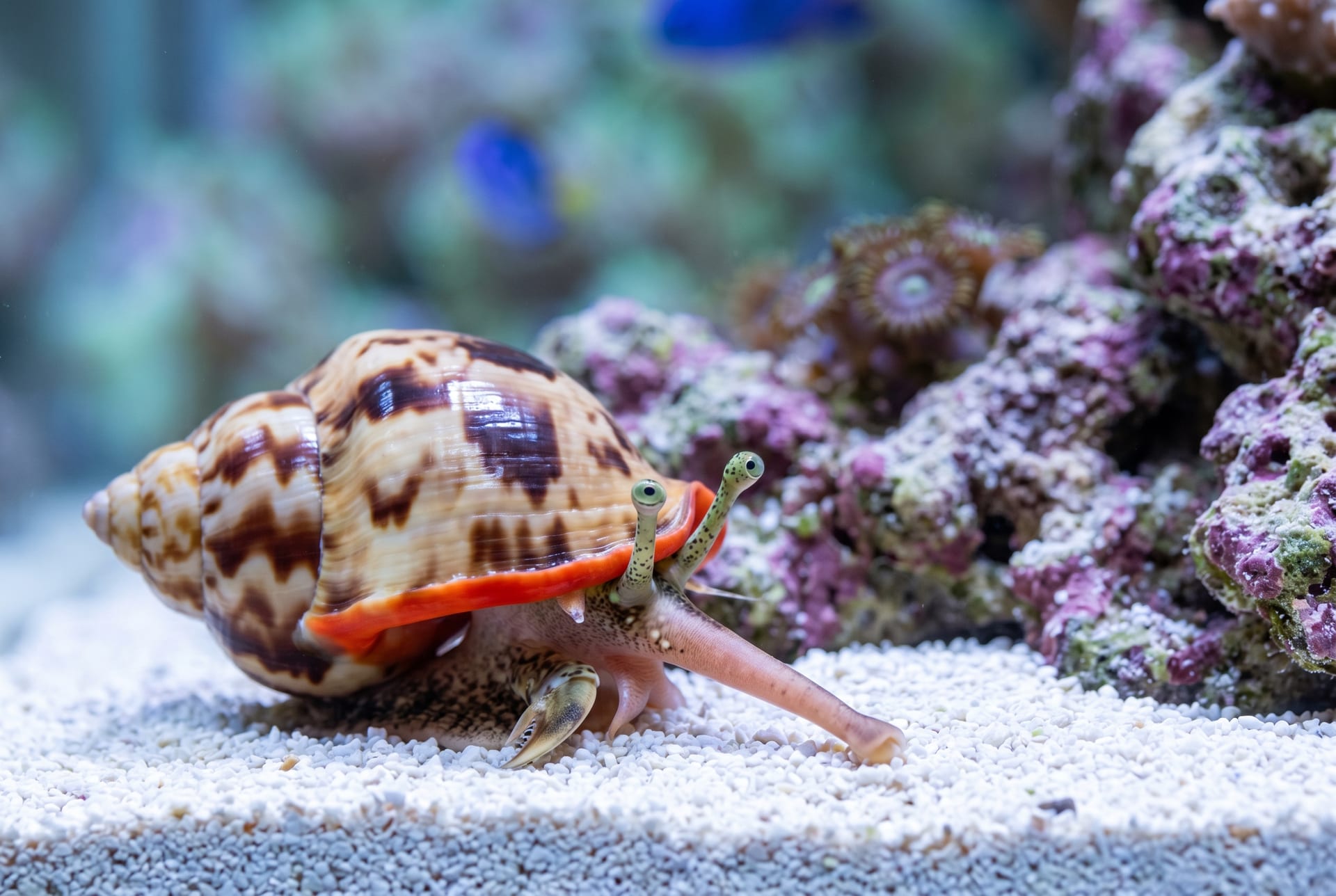
Strawberry Conch
Conomurex luhuanus
A master sand-cleaner that sifts the substrate with its long proboscis to eat detritus, leftovers, and diatoms, keeping the sand bed clean without stirring it up. Reef-safe.
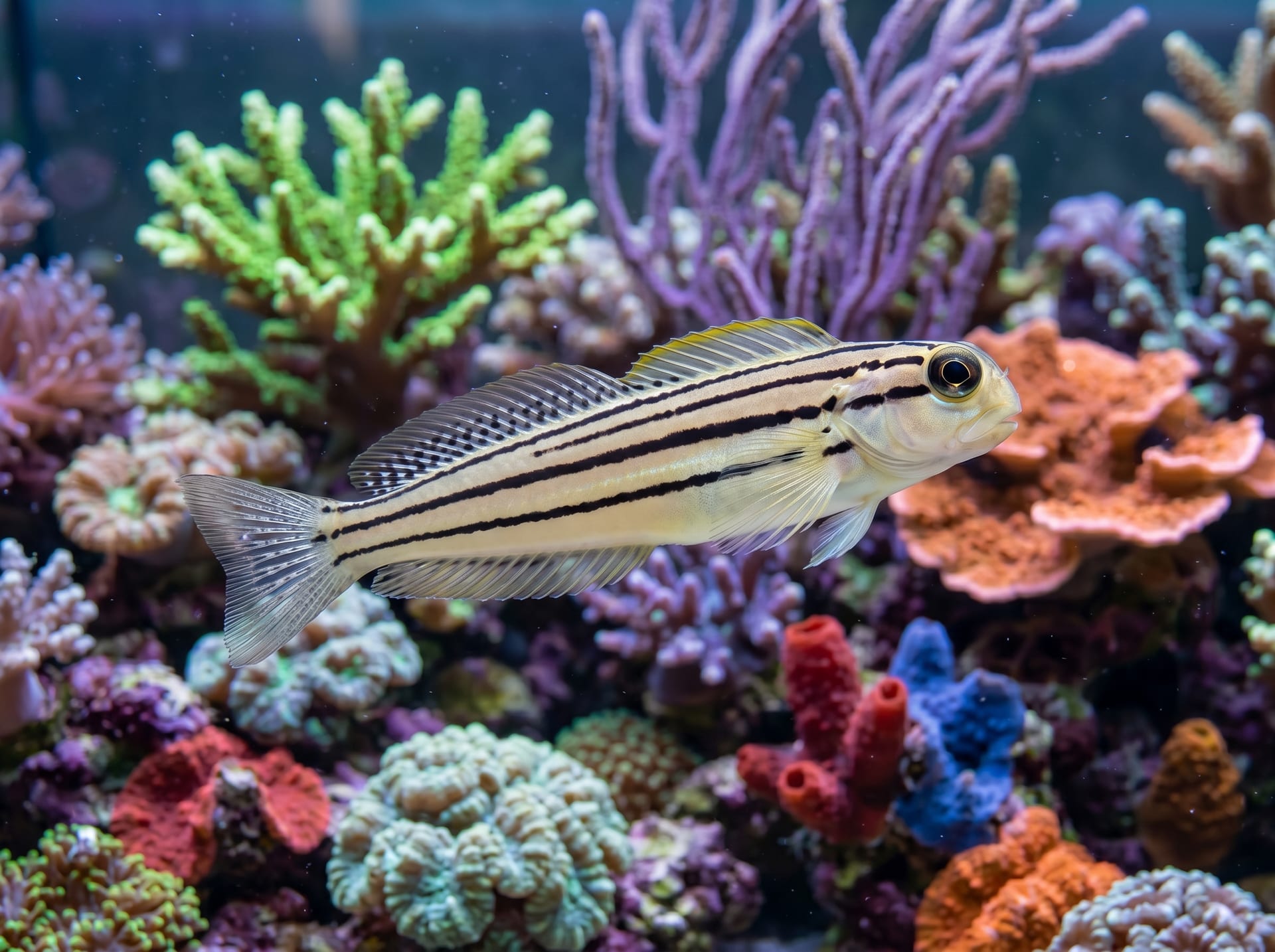
Striped Fang Blenny
Meiacanthus grammistes
Beautiful small blenny with yellow and black stripes. Has venomous fangs for defense but harmless to humans. Entertaining hole-dwelling behavior. Hardy and easy.
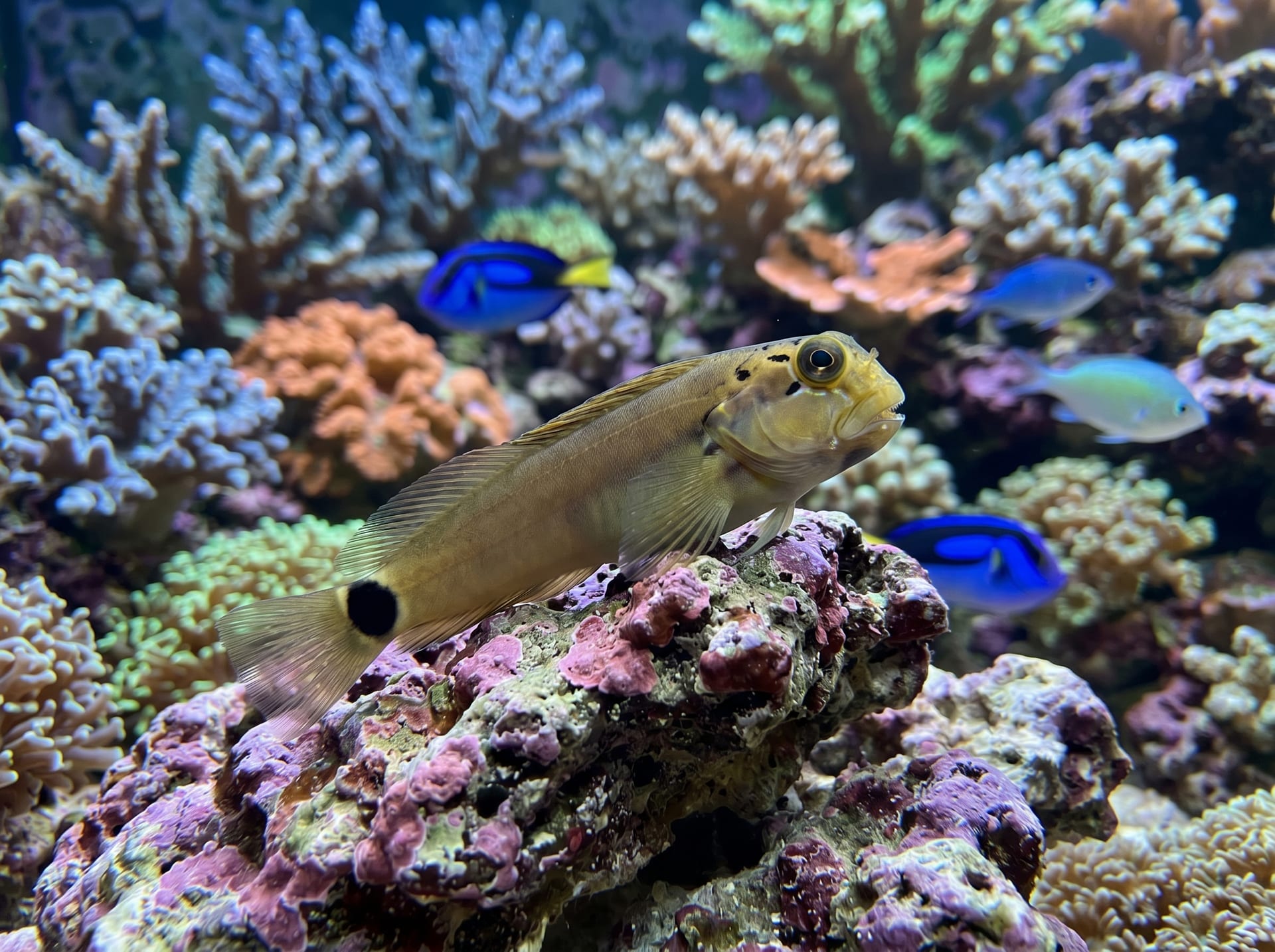
Tailspot Blenny
Ecsenius stigmatura
A blenny named for black spot at tail base. Small and eats algae.
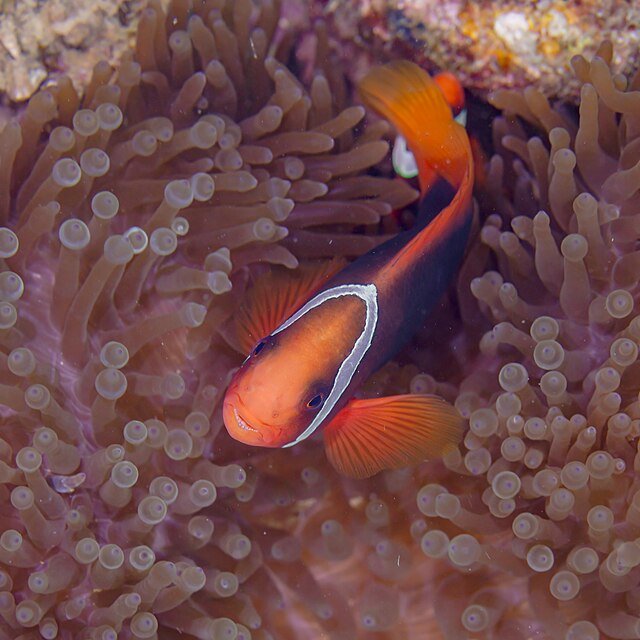 © Jim Greenfield / CC BY 3.0
Tomato Clownfish
Tomato clownfish
A large clownfish with distinctive deep red body. Hardy and easy but somewhat aggressive.
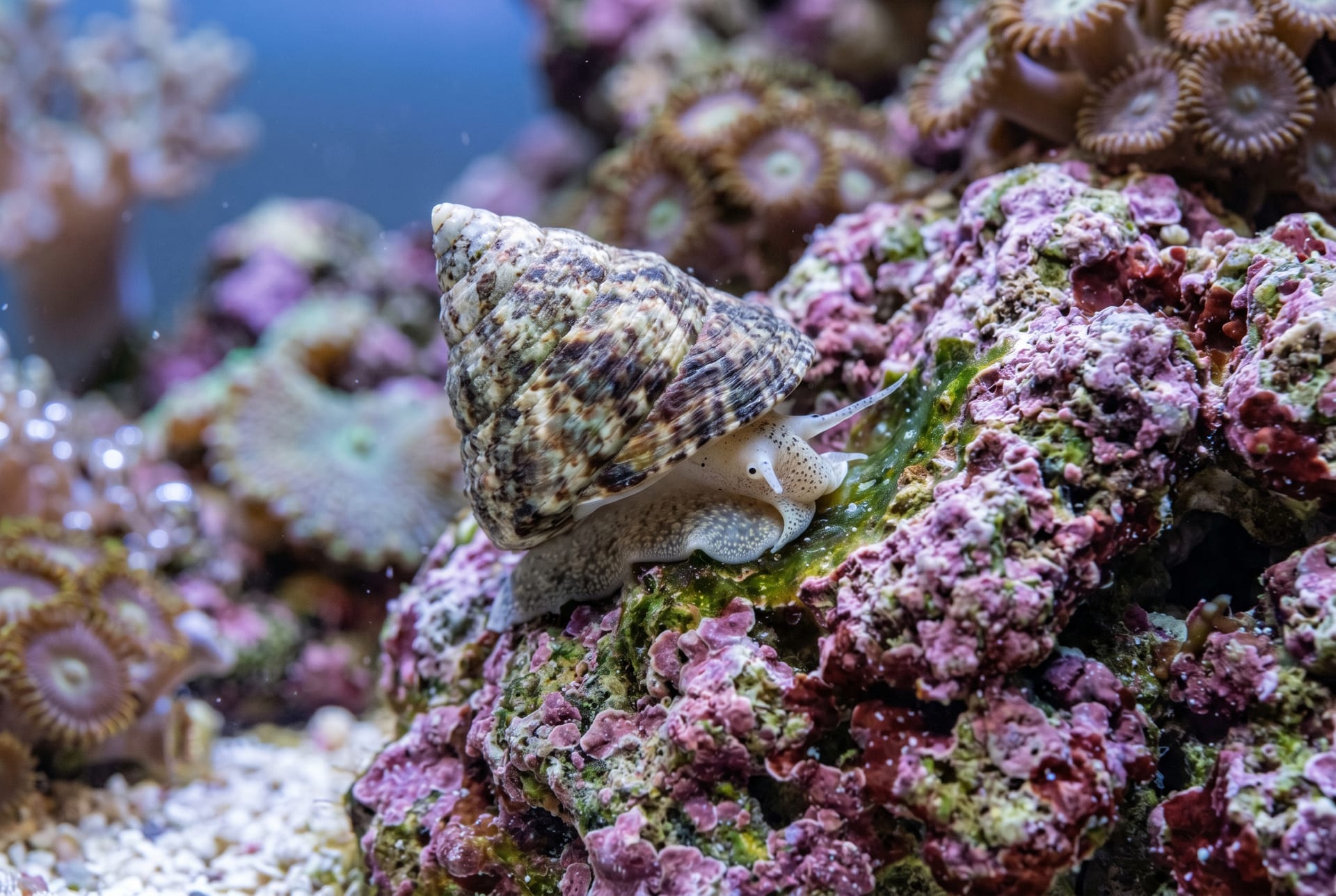
Turbo/Trochus Snail
Trochus spp. / Turbo spp.
A classic cleanup-crew snail that rasps algae off glass and live rock. Reef-safe and hardy, it is a first line of defense against algae.
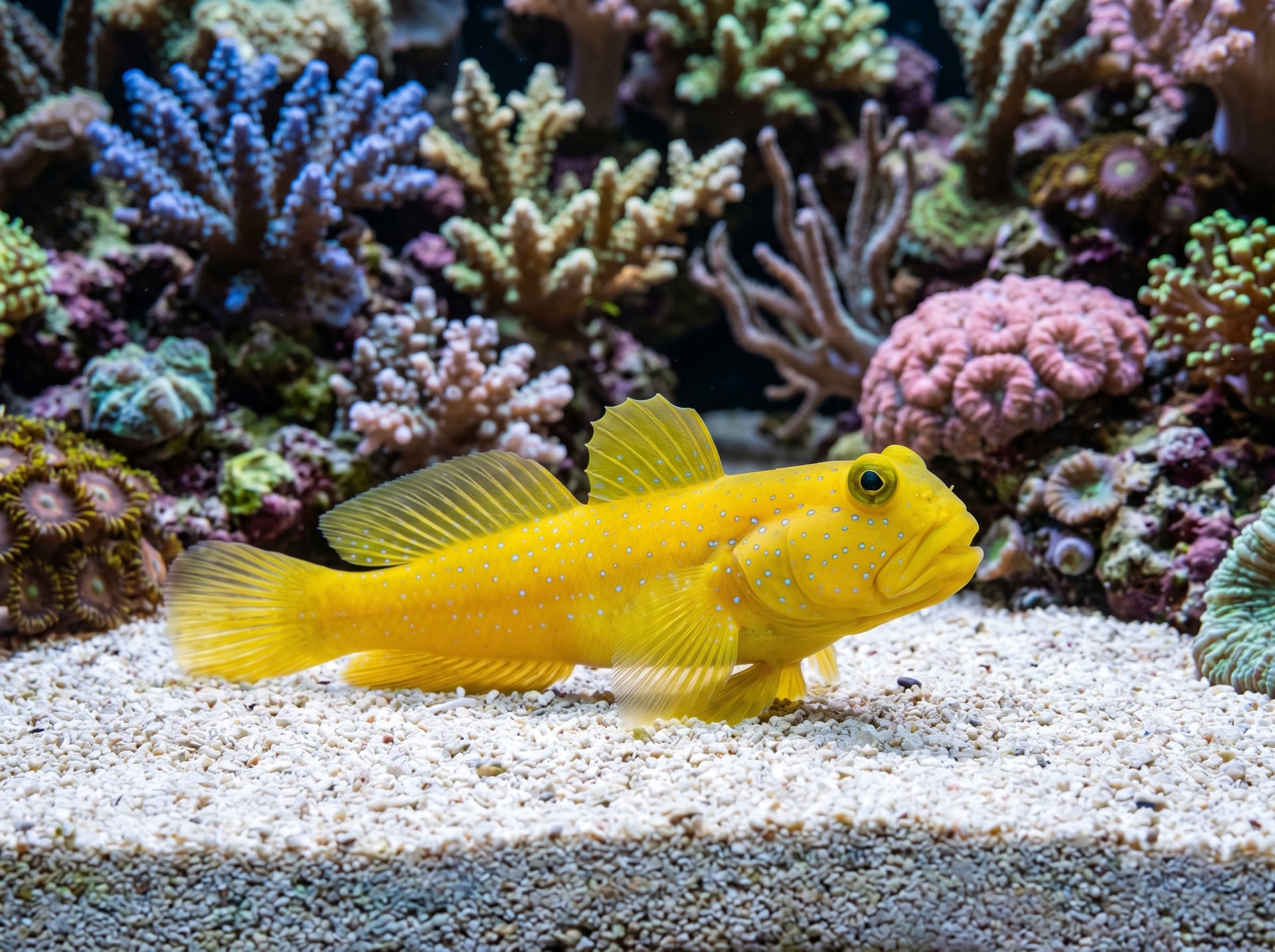
Watchman Goby
Valenciennea longipinnis
Small goby with cute yellow body and blue dot pattern. Famous for symbiosis with pistol shrimp, where shrimp digs burrow and goby stands watch. Hardy and easy to keep.
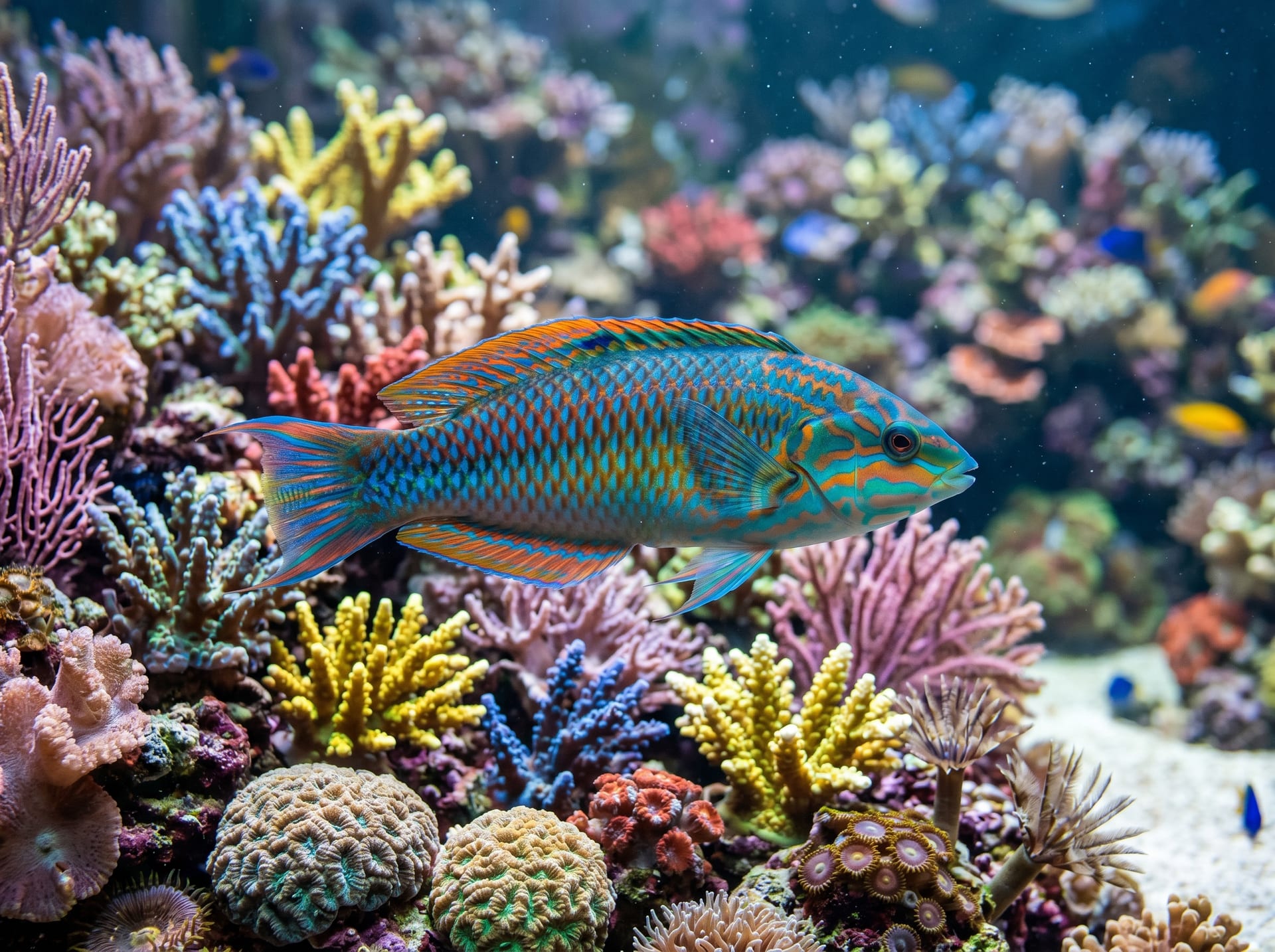
Wrasse
A colorful and diverse marine fish group. Sleeps buried in sand and also serves as a tank cleaner.
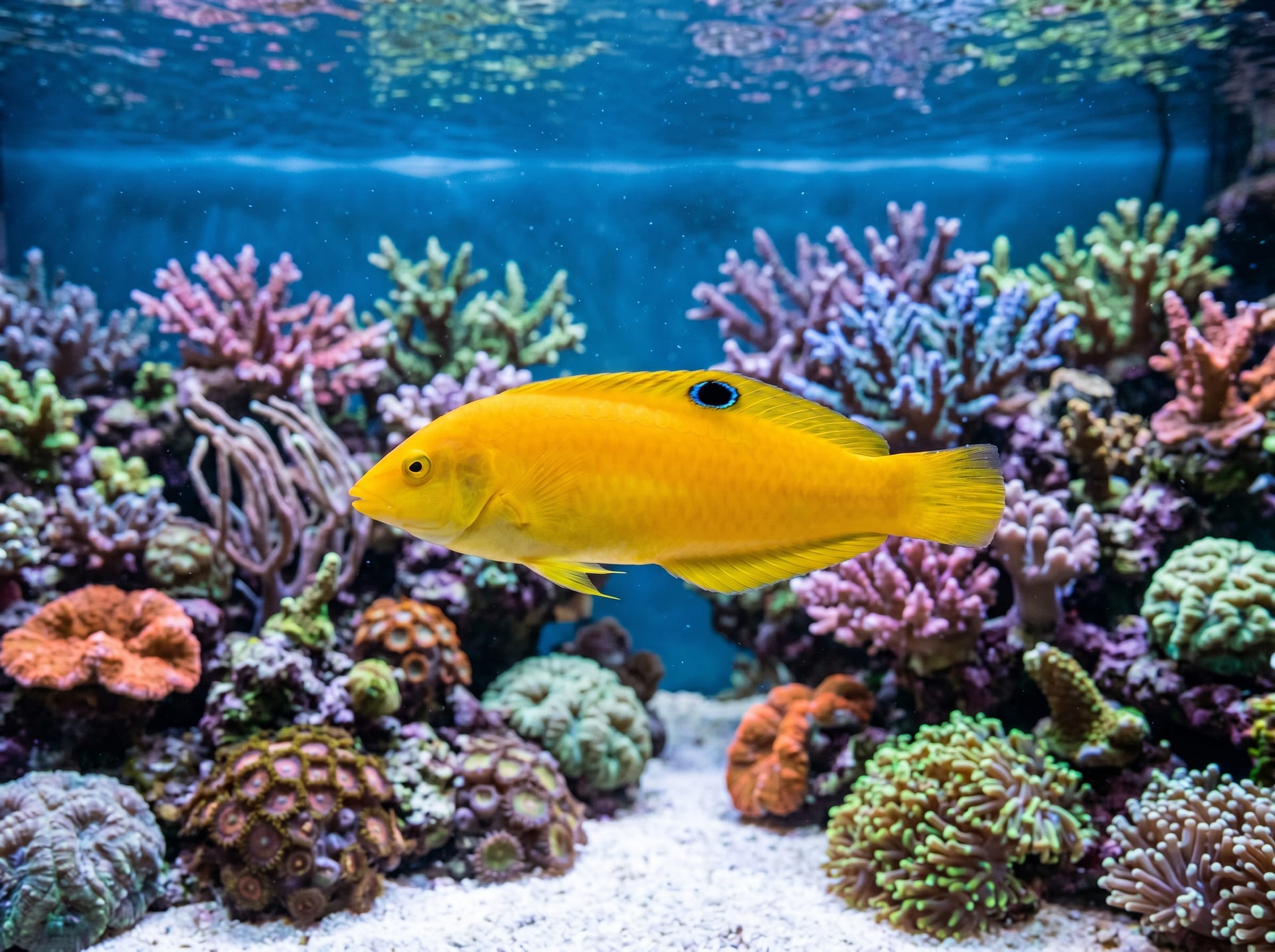
Yellow Coris Wrasse
Halichoeres chrysus
A wrasse adding color to tank with vivid yellow body. Useful fish also active in pest control.
 © USGS - Individual photographer uncredited by source. / Public domain
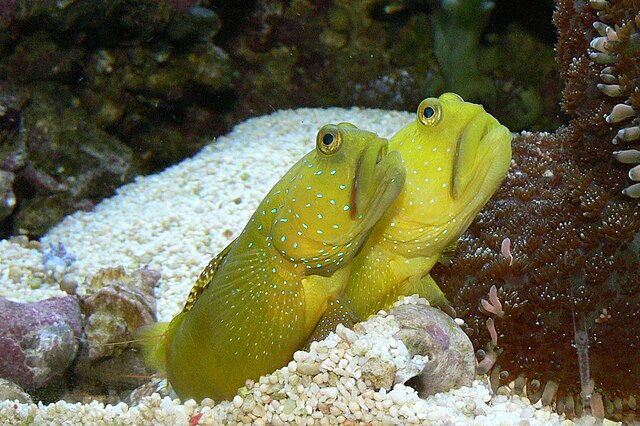
Yellow Watchman Goby
Cryptocentrus cinctus
A beautiful goby with vivid yellow body. Symbiotic relationship with pistol shrimp observable in tank.
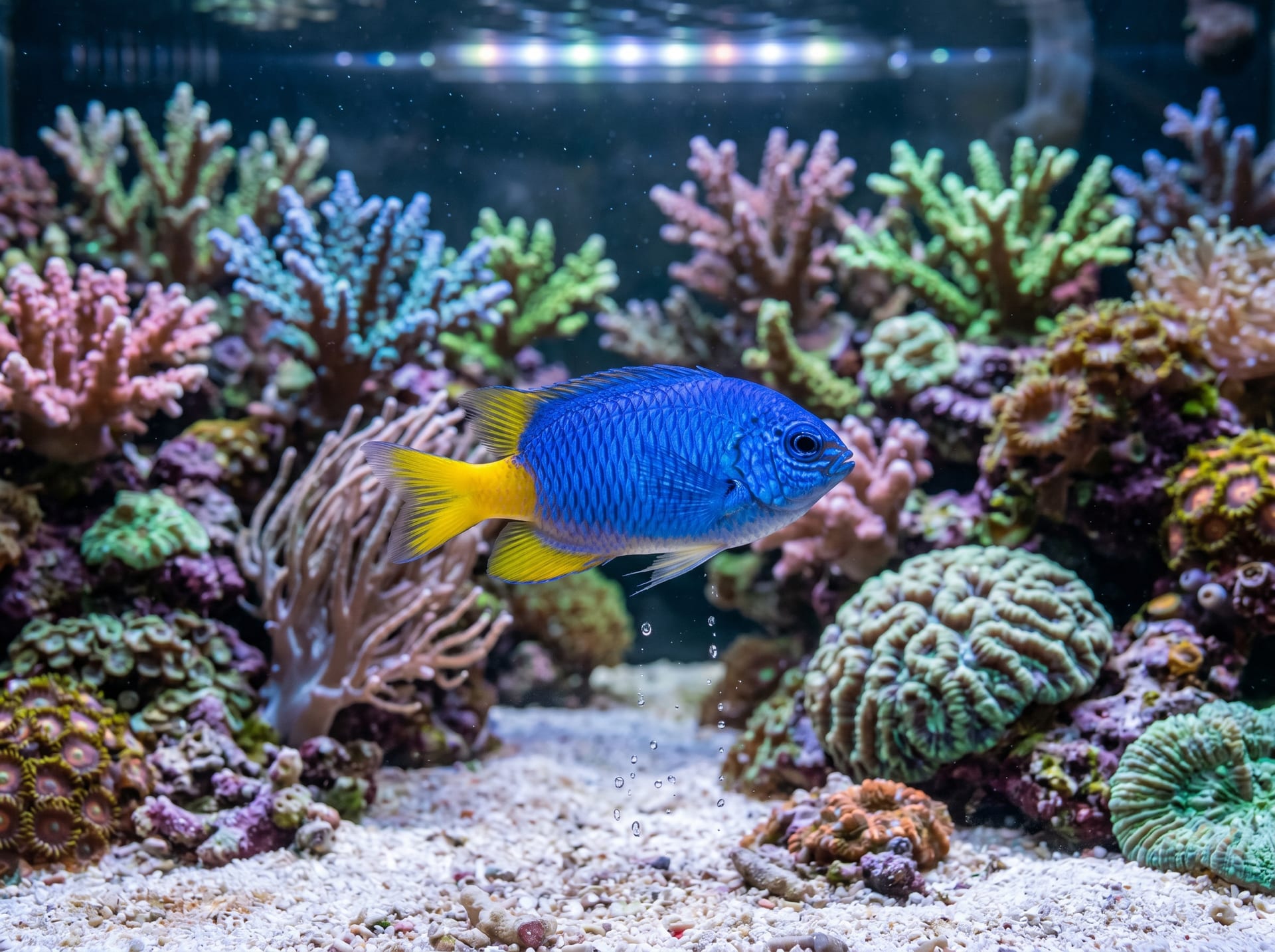
Yellowtail Blue Damselfish
Chrysiptera parasema
Damselfish with vivid blue body and beautiful yellow tail fin. Hardy, eats prepared food well, and is one of the best species for saltwater fish beginners. Can be kept in small tanks.
 © TANAKA Juuyoh / CC BY 2.0
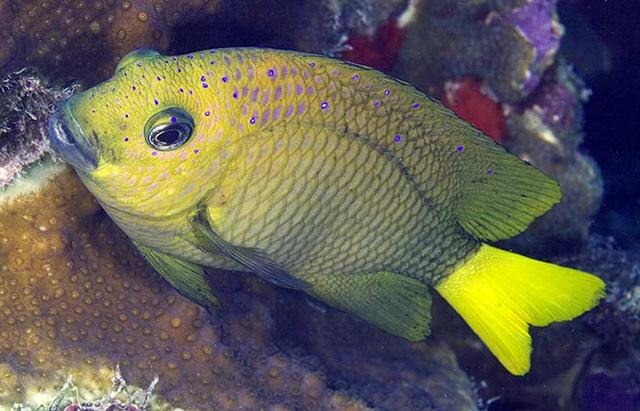
Yellowtail Damselfish
Microspathodon chrysurus
A damselfish with vivid blue body and yellow tail. Hardy but becomes aggressive when grown.
Related Content
Marine Fish FAQ
- Is keeping marine fish difficult?
- While more water quality management is needed compared to freshwater, starting with hardy species like clownfish or blue-green chromis makes it very manageable for beginners. Stable salinity and temperature are key.
- How much do marine fish cost?
- Clownfish range from 2,000-5,000 yen, blue tangs from 5,000-15,000 yen, and popular angelfish from 5,000-50,000+ yen depending on species and size.
- How long do marine fish live?
- Small fish live 5-10 years, while medium species like angelfish can live 10-20+ years. Proper environment and nutrition enable long-term care.
- What should I check when buying marine fish?
- Check for white spots or injuries on the body, intact fins, and that the fish is eating well. Choosing quarantined specimens gives extra peace of mind.
- What equipment is needed for marine fish?
- Basic equipment includes a tank, salt mix, refractometer, canister filter or overflow system, heater, and protein skimmer. Starting with a 60cm+ tank is recommended.