Source: Wikimedia Commons
Taiwanese Flat Stag Beetle
IntermediateDorcus titanus sika
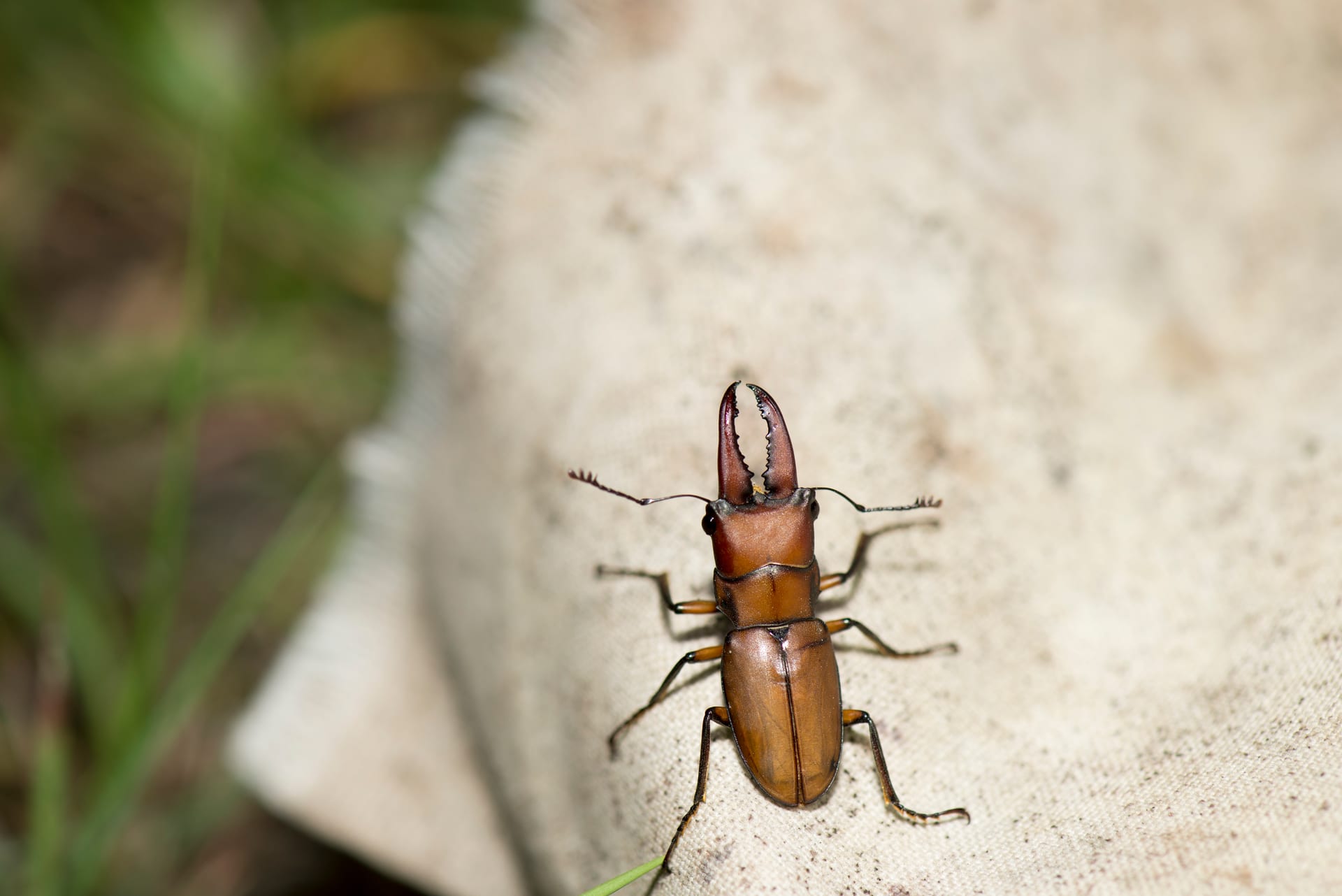
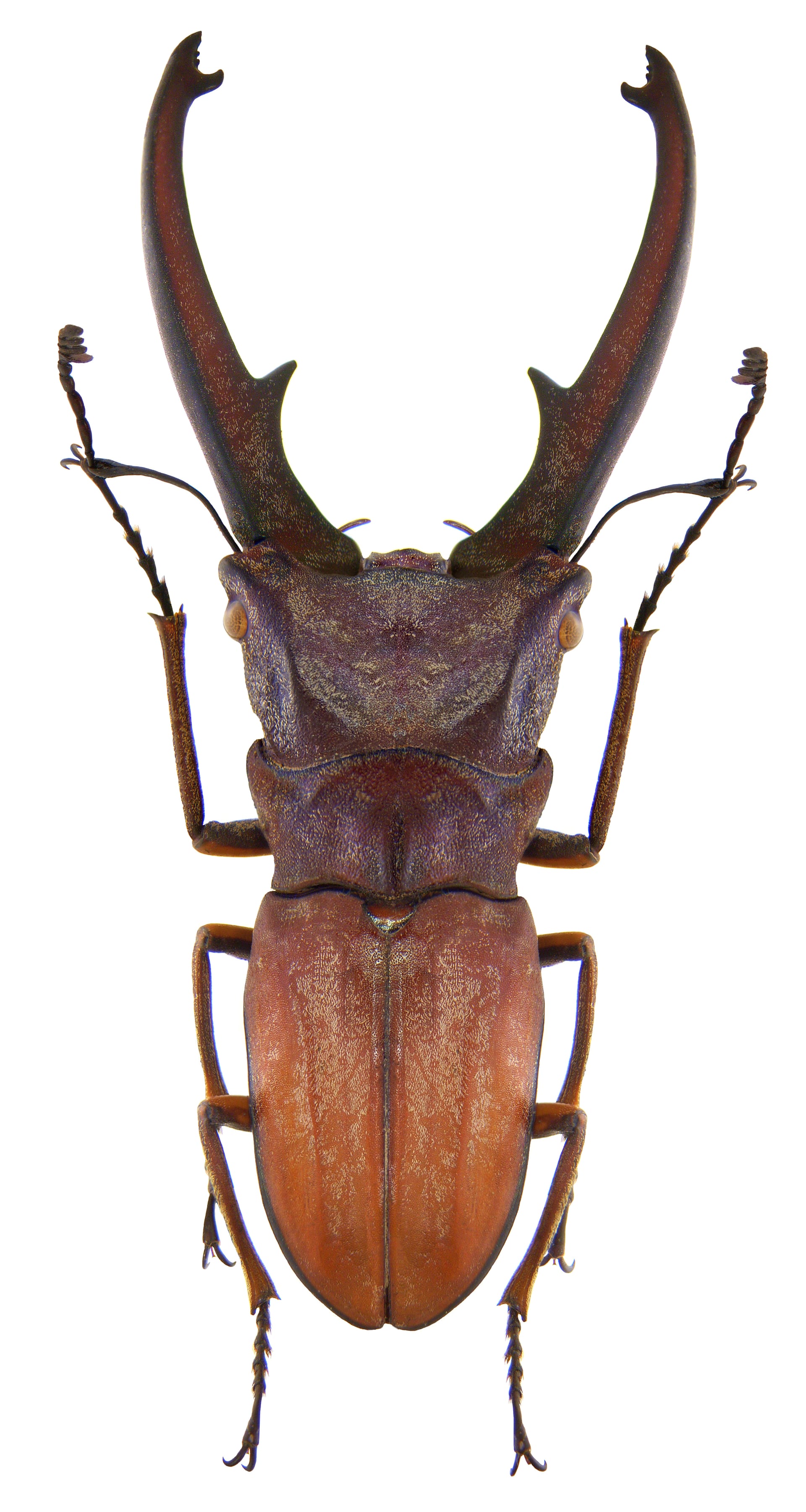
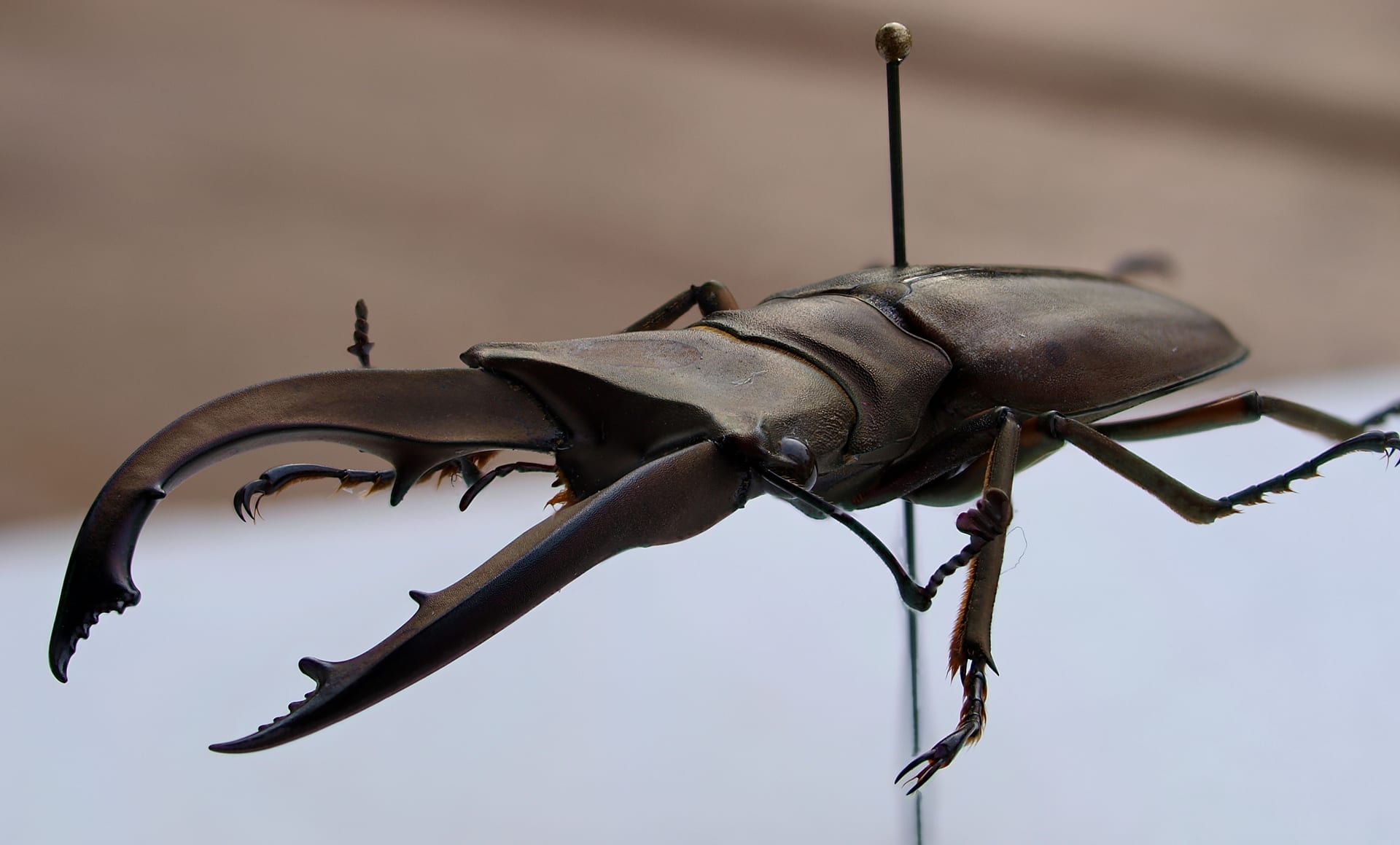
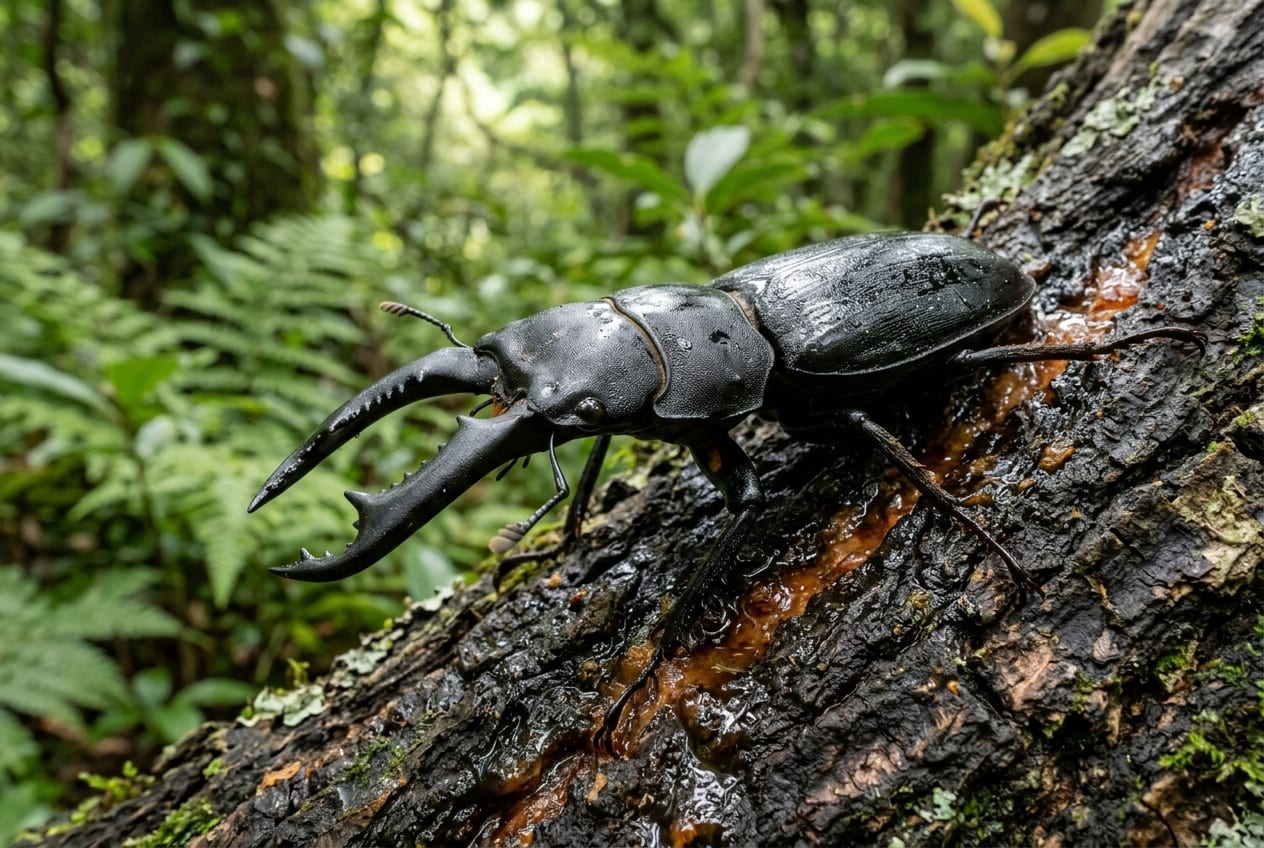
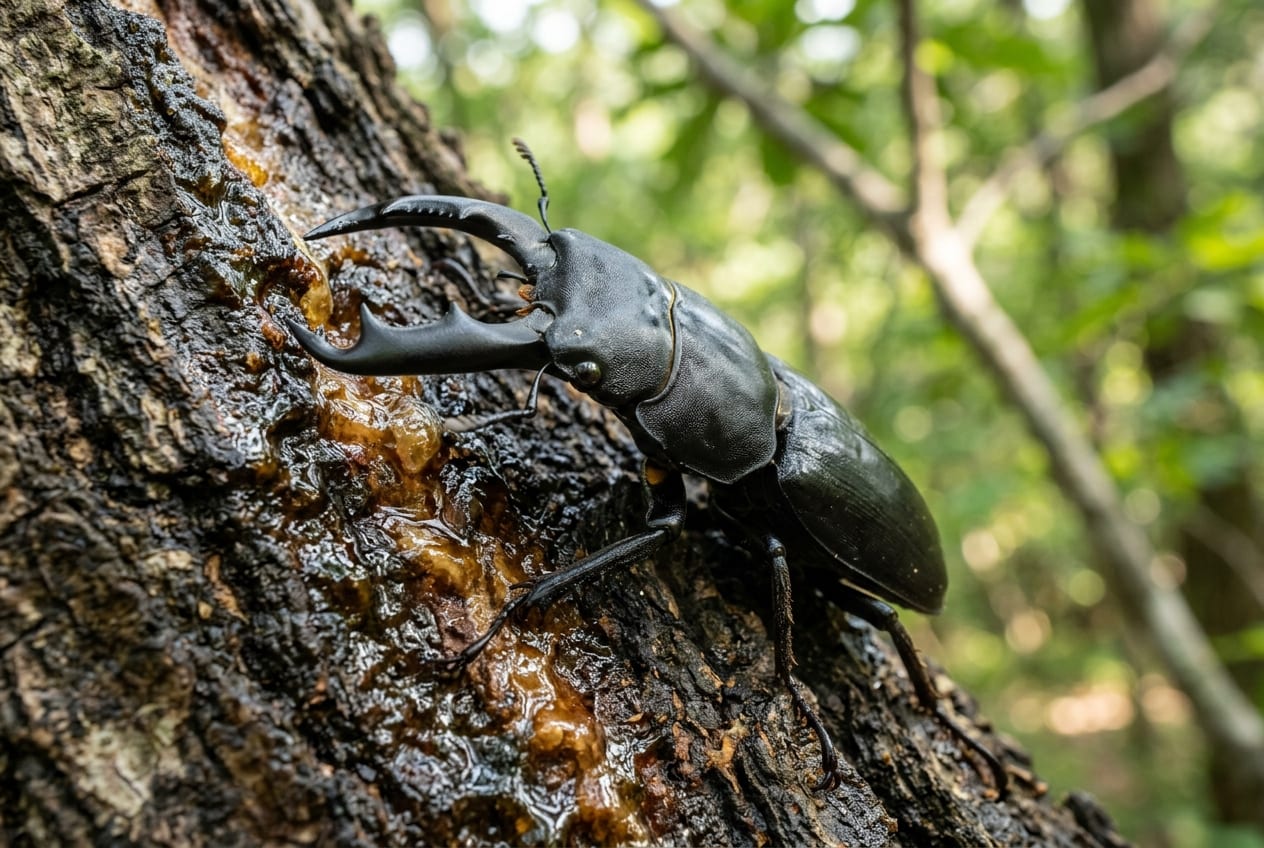
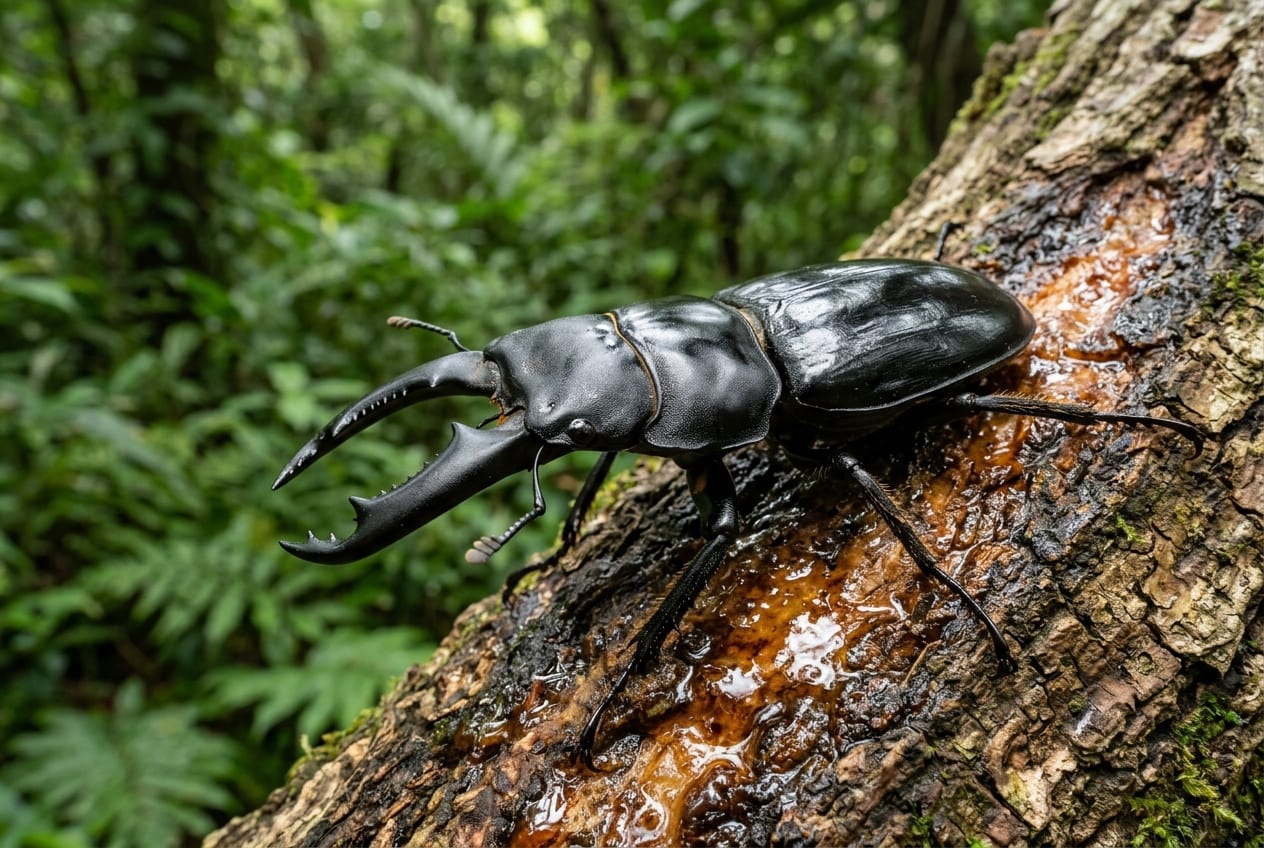
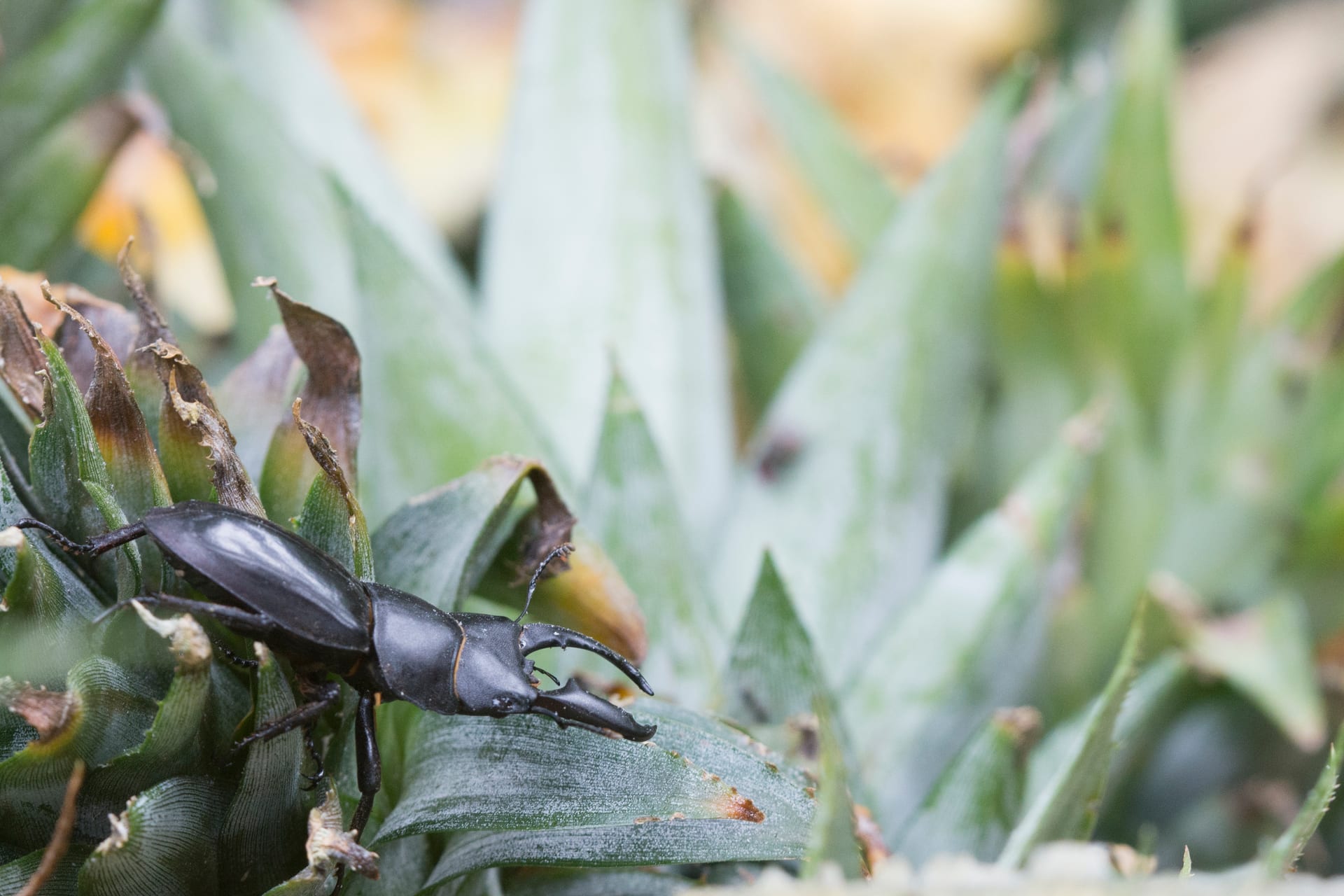
A subspecies of Dorcus titanus from Taiwan and Green Island, with wild males reaching 73.7 mm. The mandibles are short and thick with strongly curved tips, and molecular work places it close to the mainland Japanese subspecies.
Difficulty
Intermediate
Temperature
20〜26℃
Lifespan
Adults 1-3 years
Size
Males 45-73.7 mm / females 30-35 mm (captive record 79.5 mm)
Humidity
60〜80%
Diet
Tree sap, beetle jelly
About
The Taiwanese flat stag (Dorcus titanus sika) is a subspecies of Dorcus titanus from Taiwan and Green Island, described by Kriesche in 1920. Males measure 45-73.7 mm and females 30-35 mm, making it a medium-sized member of the 25 subspecies. Its mandibles are short and thick with strongly curved tips, giving it a different look from the large South-East Asian subspecies. Mitochondrial phylogenies place the Honshu, Shikoku and Kyushu subspecies as a descendant lineage of the Taiwanese, Sakishima and Hachijo forms, so it matters for understanding the origin of Japanese flat stags. Care follows other flat stags: use a set combining a log with fermented substrate for egg-laying, and rear larvae in either substrate or fungus bottles. It is aggressive and males can kill females, so house them singly.
Source: Wikipedia (CC BY-SA 4.0)
Lifespan of the Taiwanese Flat Stag Beetle
The Taiwanese Flat Stag Beetle lives Adults 1-3 years.
Size of the Taiwanese Flat Stag Beetle
The Taiwanese Flat Stag Beetle grows to Males 45-73.7 mm / females 30-35 mm (captive record 79.5 mm).
Temperature & humidity for the Taiwanese Flat Stag Beetle
The ideal temperature for the Taiwanese Flat Stag Beetle is 20〜26℃.
Basic Info
Origin
Taiwan (Taiwan island and Green Island)
Lifespan
Adults 1-3 years
Care Specifications
AggressiveSolitary
Sources: Dorcus titanus - Wikipedia (JA; subspecies ranges, sizes, biology and phylogeny) / beetlebreeding.ch - The Breeding/Rearing of Dorcus titanus palawanicus by Kay (species-level guidance for D. titanus) / Mushinavi - Dorcus titanus (JA; egg-laying, larval rearing, list of foreign subspecies)
Breeding Records & Localities
Captive record (♂)
79.5 mm
Wild record (♂)
71.2 mm
Record source: BE-KUWA 2025 edition (Taiwanese flat stag, captive 79.5 mm, 陳冠穎 2023 / wild 71.2 mm; projected maximum 82 mm)
Notable localities
Taiwan islandGreen Island (Taiwan)
Regional subspecies
- Dorcus titanus sika — Taiwan island and Green Island; males 45-73.7 mm, females 30-35 mm, with short thick mandibles whose tips curve strongly
In mitochondrial phylogenies the Honshu subspecies falls out as a descendant lineage of the Taiwanese, Sakishima and Hachijo forms.
Generation codes
- WD
- Wild-caught
- WF1
- Offspring of a wild-caught female
- F1〜
- Captive generations (same locality)
- CBF1
- Cross-locality captive-bred (reset)
Sources: BE-KUWA Certified Breeding Records (Mushi-sha, FY2025 edition PDF, JA)
References & Sources
Edited & verified by: BreederDirect editorial team
The taxonomic, regulatory, and husbandry data on this page are compiled and verified against the authoritative primary sources below.
Primary sources
- Wikipedia
- Ministry of the Environment, Invasive Species Act: "Guidance for Those Importing Live Insects in Scarabaeoidea"
- CITES Appendix (checklist.cites.org)
- beetlebreeding.ch - The Breeding/Rearing of Dorcus titanus palawanicus by Kay (species-level guidance for D. titanus)
- Mushinavi - Dorcus titanus (JA; egg-laying, larval rearing, list of foreign subspecies)
- BE-KUWA Certified Breeding Records (Mushi-sha, FY2025 edition PDF, JA)
- GBIF
Taxonomy & Authority
Accepted name: Dorcus titanus sika (Kriesche, 1920)
Synonyms: Serrognathus titanus sika, Dorcus (Serrognathus) titanus sika
Authority databases: GBIF
Nomenclature follows global taxonomic authority databases.
Regulations & Conservation Status
Not CITES-listed
Plant Protection Act: When importing live specimens of Scarabaeoidea (including rhinoceros beetles, stag beetles, flower beetles, etc.), a species identification certificate issued by the exporting country government agency or equivalent must be attached in accordance with the Invasive Species Act (import ports are limited to Narita, Chubu, Kansai, Fukuoka, and Kagoshima airports). This species itself is not a designated invasive species, and import is possible upon submission of the certificate.
Sources: Ministry of the Environment, Invasive Species Act: "Guidance for Those Importing Live Insects in Scarabaeoidea" / CITES Appendix (checklist.cites.org)
Regulations may change. Always verify the latest information with the relevant authorities.
Taiwanese Flat Stag Beetle Listings
Loading latest listingsFind listings for this species