Source: Wikimedia Commons
Ox beetle
IntermediateStrategus aloeus
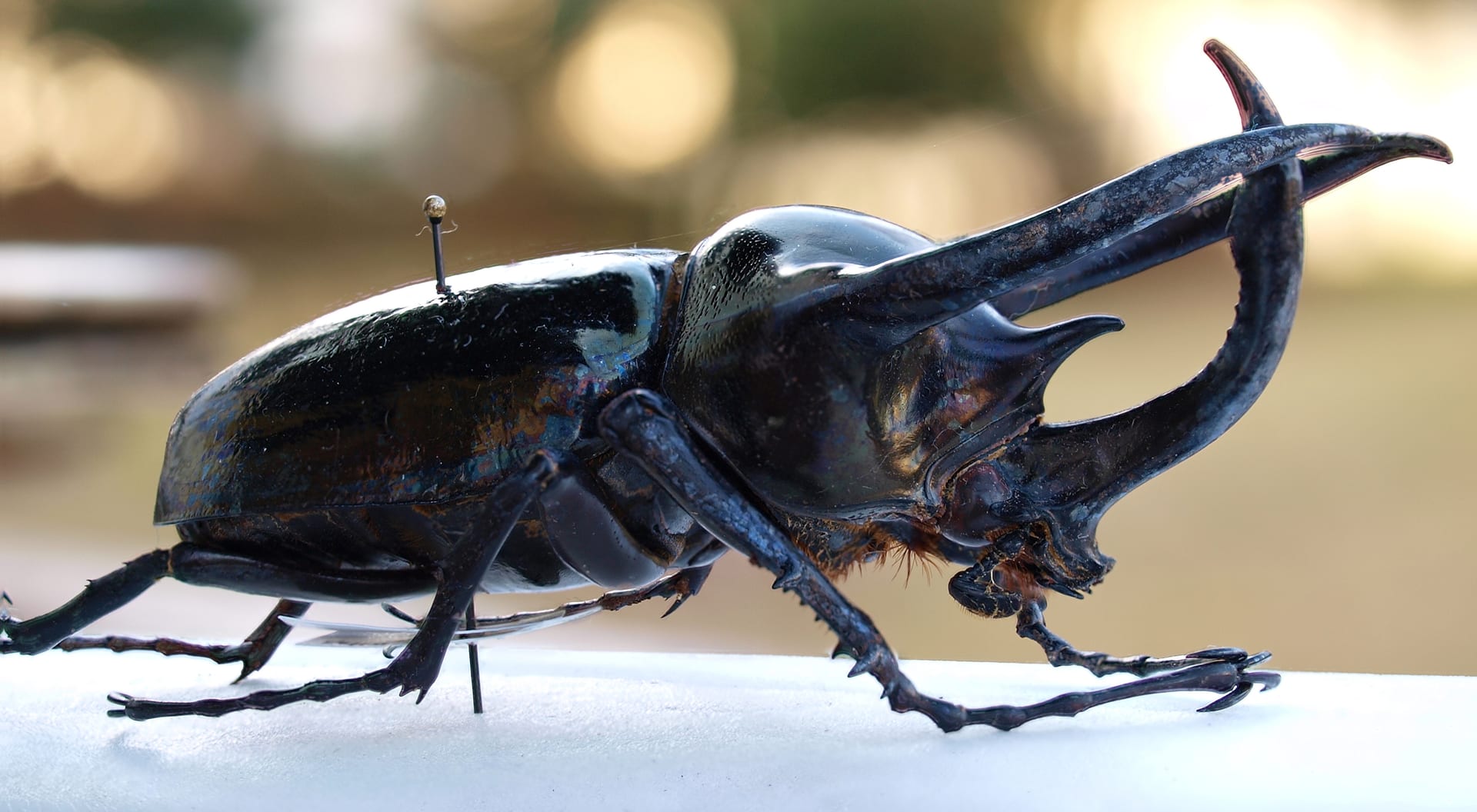
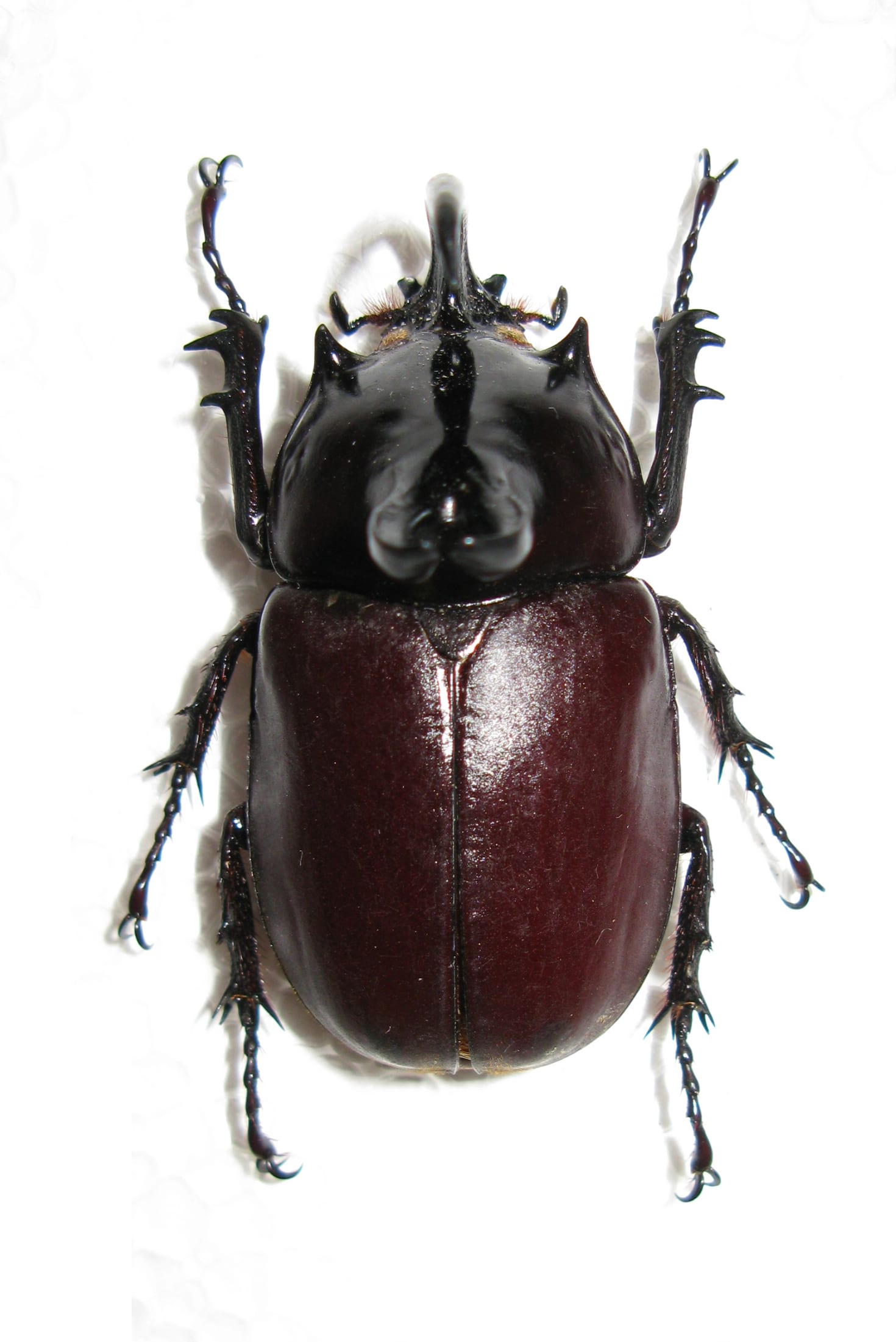
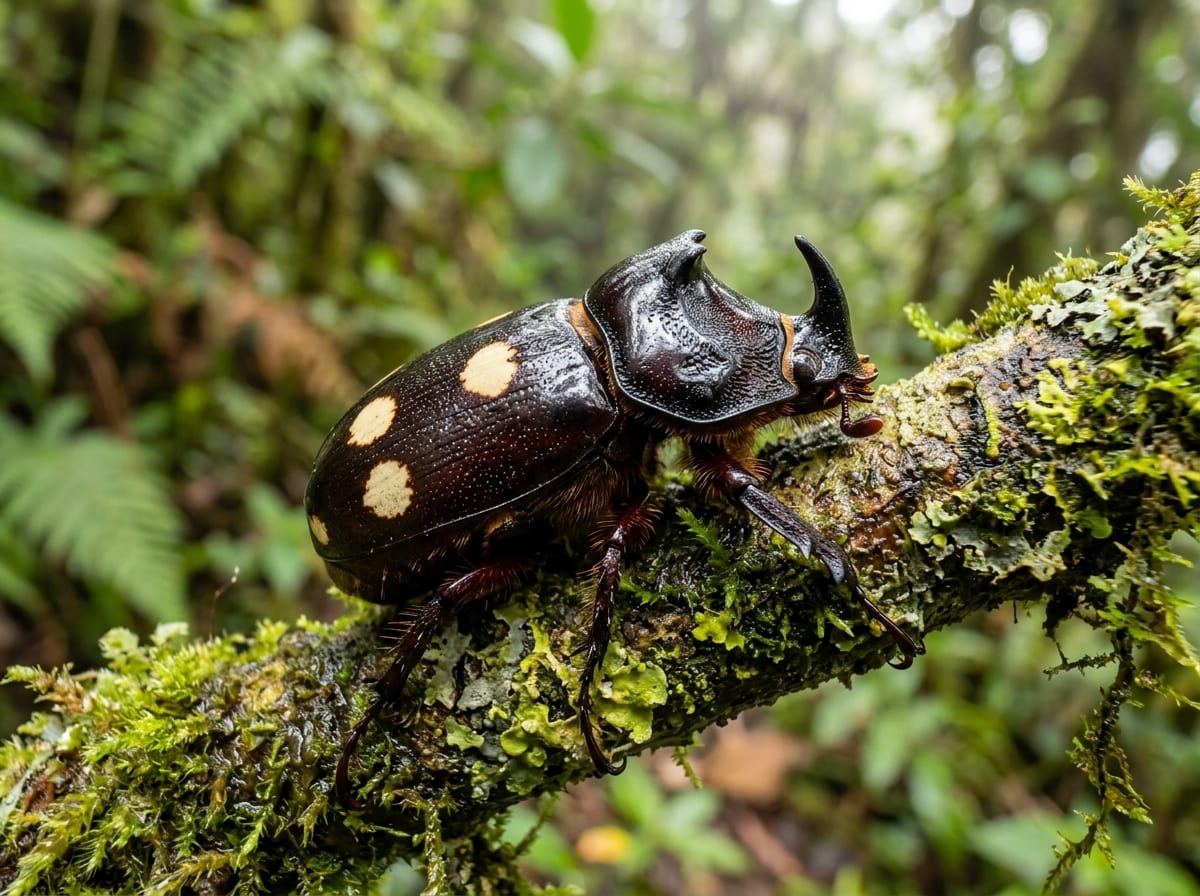
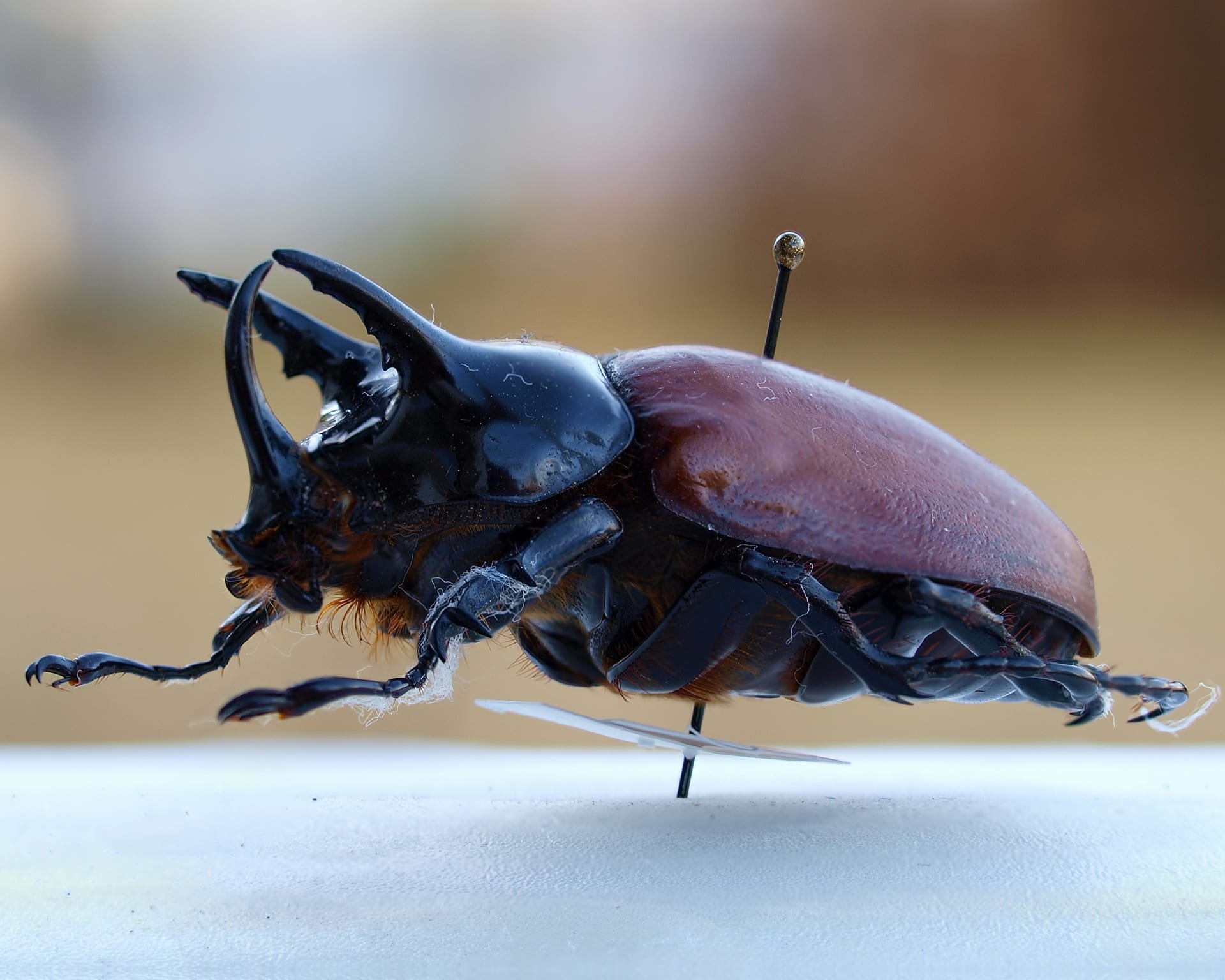
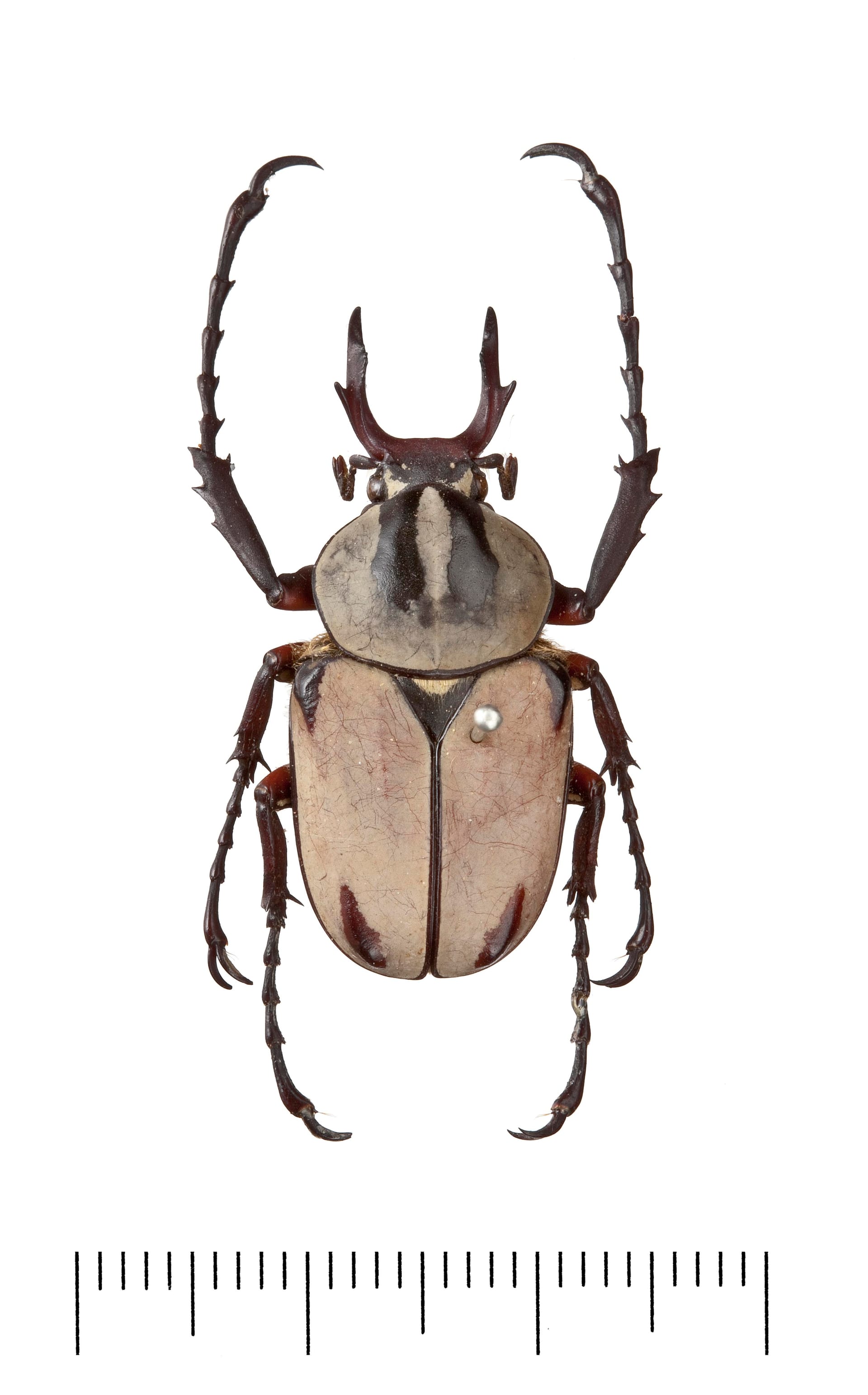
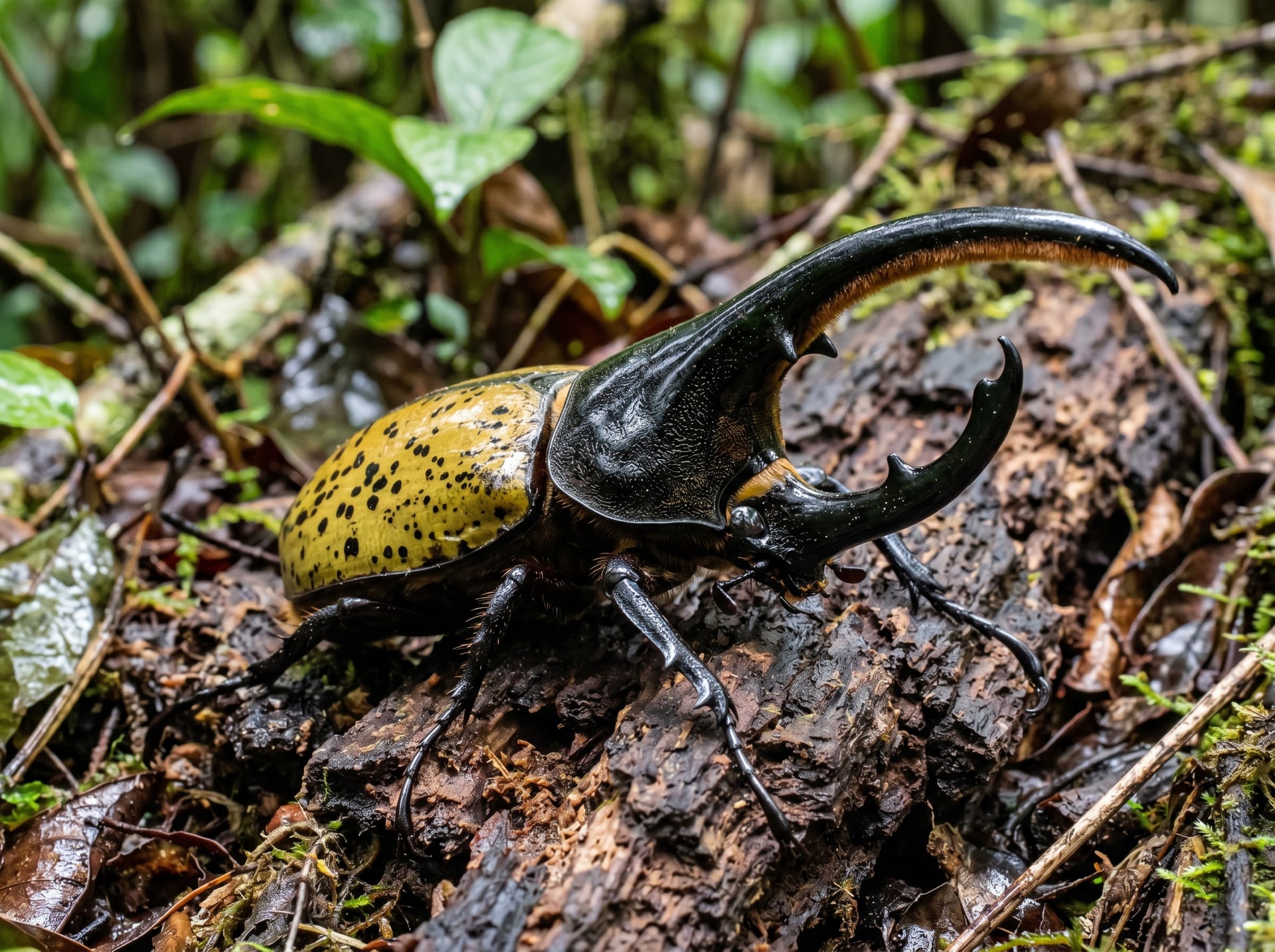
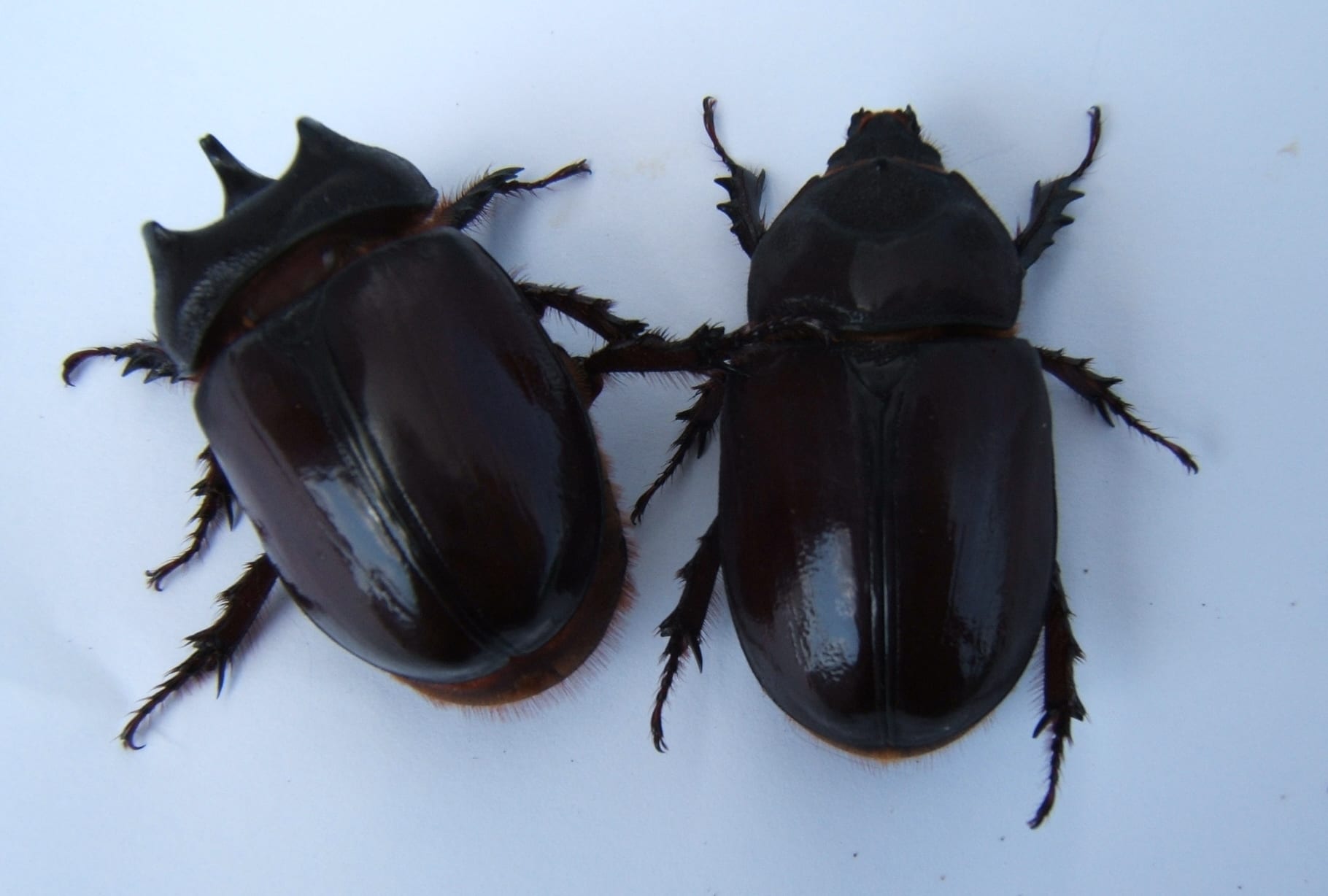
The best-known Strategus, ranging from the southern USA through Latin America, called the ox beetle in English. Major males carry large horns on the thorax likened to Triceratops; the female's short horn is used for digging.
Difficulty
Intermediate
Temperature
20〜28℃
Lifespan
Larval stage 4-6 months; adults active May to November
Size
2.5-3.8cm excluding horns
Humidity
60〜80%
Diet
Adults take flowers, fruit or beetle jelly; larvae eat roots in soil (fermented substrate in captivity)
About
Strategus aloeus (Linnaeus, 1758) is a rhinoceros beetle (Scarabaeidae: Dynastinae) known in English as the ox beetle. It occurs in the southern United States but is far more abundant in the Neotropics, including Mexico, the Caribbean, Central America and parts of South America; GBIF records span the USA, Mexico, Colombia, French Guiana, Costa Rica, Brazil, Panama and beyond. Strategus beetles are 30-45mm, nearly cylindrical and strongly dimorphic. Major males of this species carry large thoracic horns likened to Triceratops; minor males are horned too, but the rear two horns are small and the front one short. Females have a very short horn used for digging rather than fighting. Excluding horns, adults measure about 2.5-3.8cm. Larvae feed on roots underground and take four to six months to pupate, sometimes damaging lawns and gardens. Adults eat flowers and fruit, are active from May to November and come readily to lights in summer. In Japan specialist shops have handled it alongside other Strategus, though not in large numbers.
Source: Wikipedia (CC BY-SA 4.0)
Lifespan of the Ox beetle
The Ox beetle lives Larval stage 4-6 months; adults active May to November.
Size of the Ox beetle
The Ox beetle grows to 2.5-3.8cm excluding horns.
Basic Info
Origin
Southern USA, Mexico, the Caribbean, Central America and parts of South America
Lifespan
Larval stage 4-6 months; adults active May to November
Size
References & Sources
Edited & verified by: BreederDirect editorial team
The taxonomic, regulatory, and husbandry data on this page are compiled and verified against the authoritative primary sources below.
Primary sources
Taxonomy & Authority
Accepted name: Strategus aloeus (Linnaeus, 1758)
Synonyms: Geotrupes semiramus Fabricius, 1801, Scarabaeus aesalus Castelnau, 1840, Scarabaeus aloeus Linnaeus, 1758, Strategus arizonicus Schaeffer, 1915, Strategus frontalis Casey, 1915, Strategus gaillardi Casey, 1915
Authority databases: GBIF · GBIF
Nomenclature follows global taxonomic authority databases.
Regulations & Conservation Status
Not CITES-listed
Many live foreign Scarabaeoidea (stag beetles, rhinoceros beetles, flower chafers and relatives) are quarantine pests whose import is banned under Japan's Plant Protection Act, and even importable species require a species-name certificate from a foreign government body under the Invasive Alien Species Act (entry only via designated airports, never by international post). Whether a species may enter must be checked with the Plant Protection Station in advance, so choose domestically bred stock and never release captive beetles.
Sources: Plant Protection Station: Importing Scarabaeoidea (JA) / Plant Protection Station: Importing live insects (JA) / Ministry of the Environment: List of invasive alien species (JA) / Species+ CITES query (no listing)
Regulations may change. Always verify the latest information with the relevant authorities.
Ox beetle Listings
Loading latest listingsFind listings for this species