Source: Wikimedia Commons
Adams's antler horn beetle
IntermediateDicronocephalus adamsi
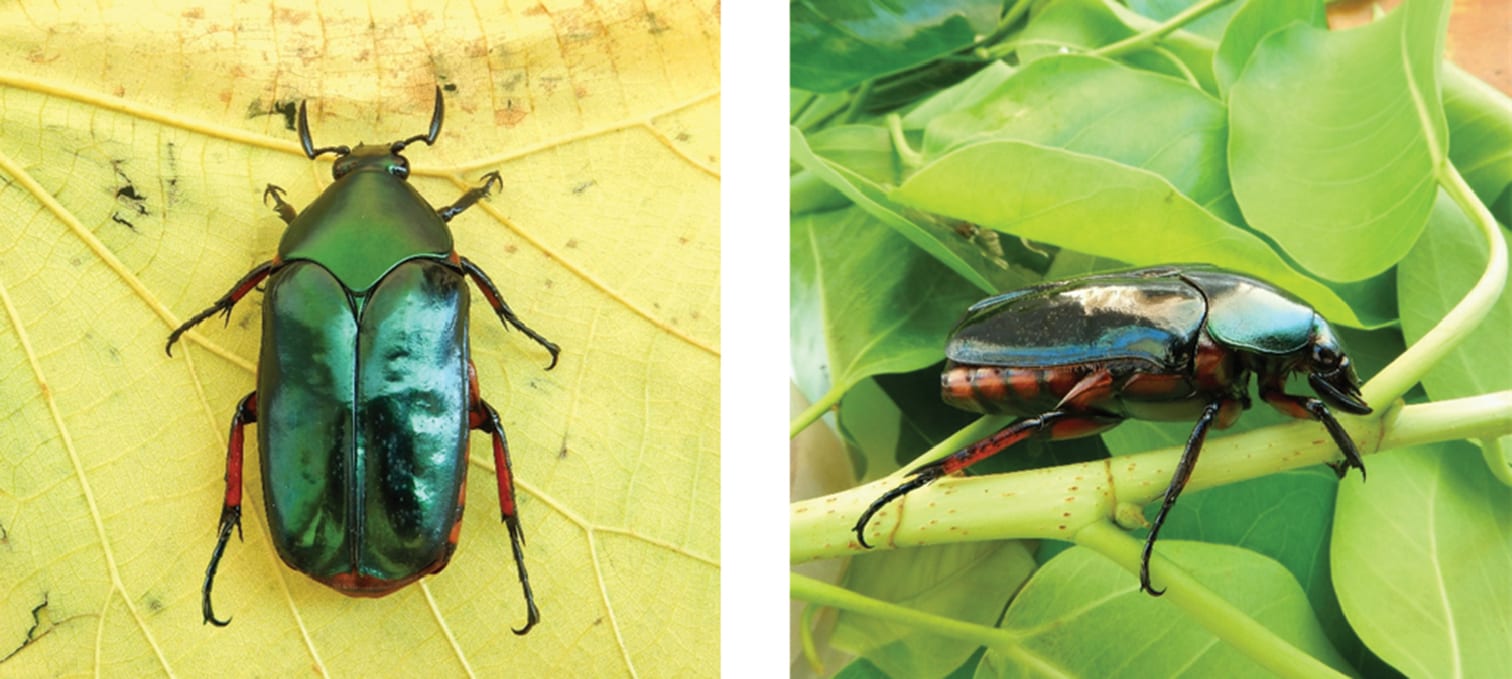
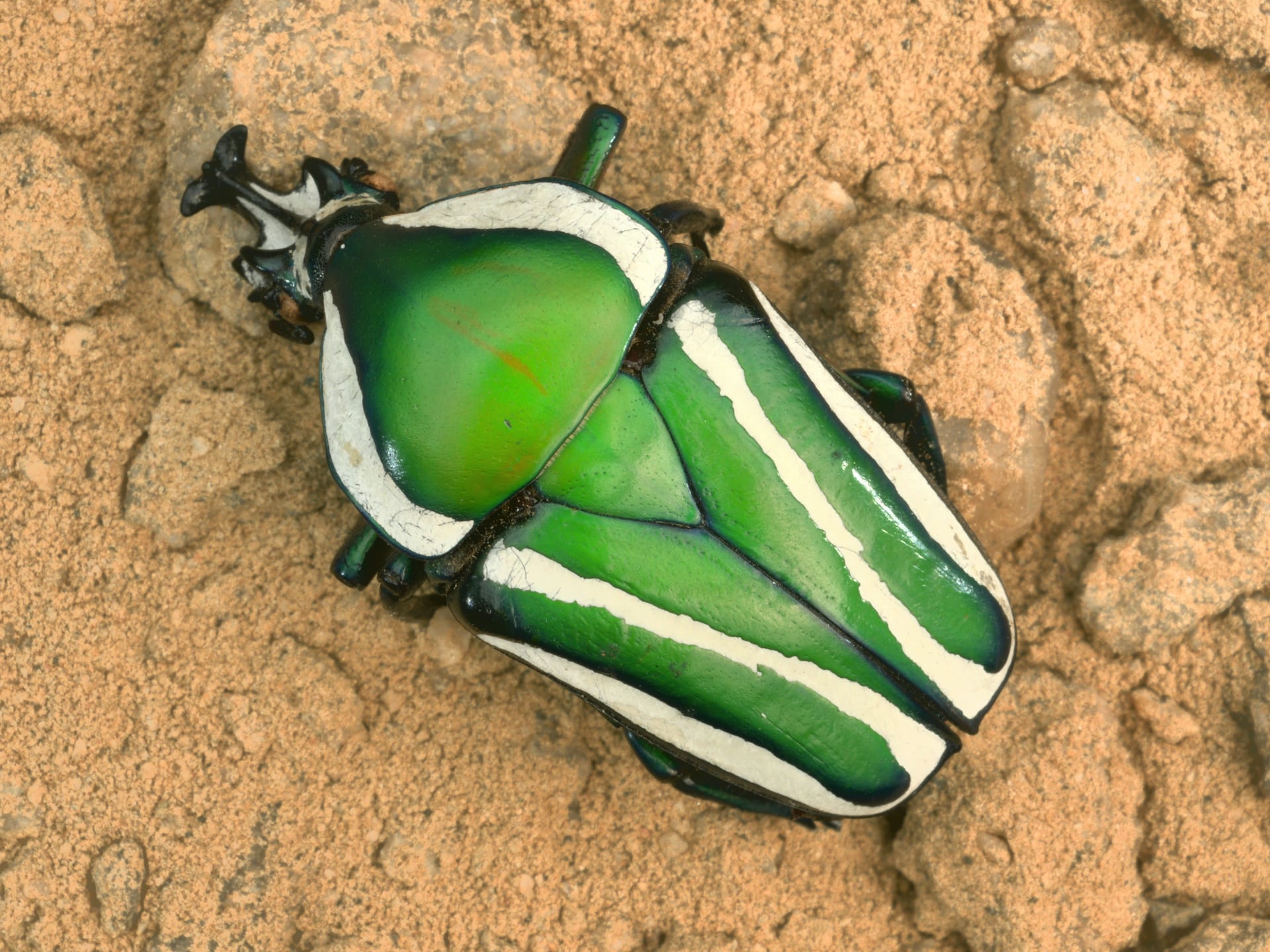
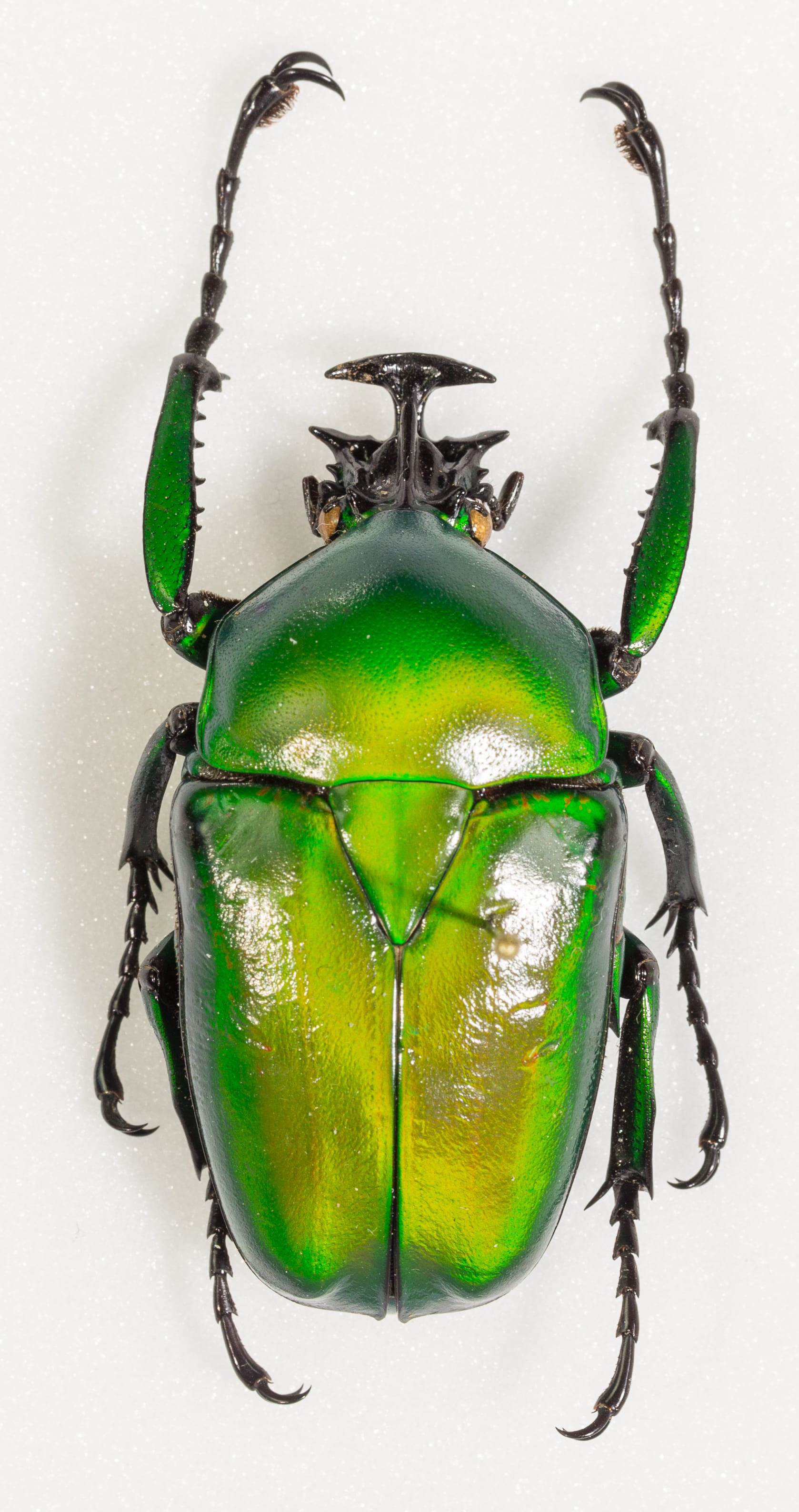
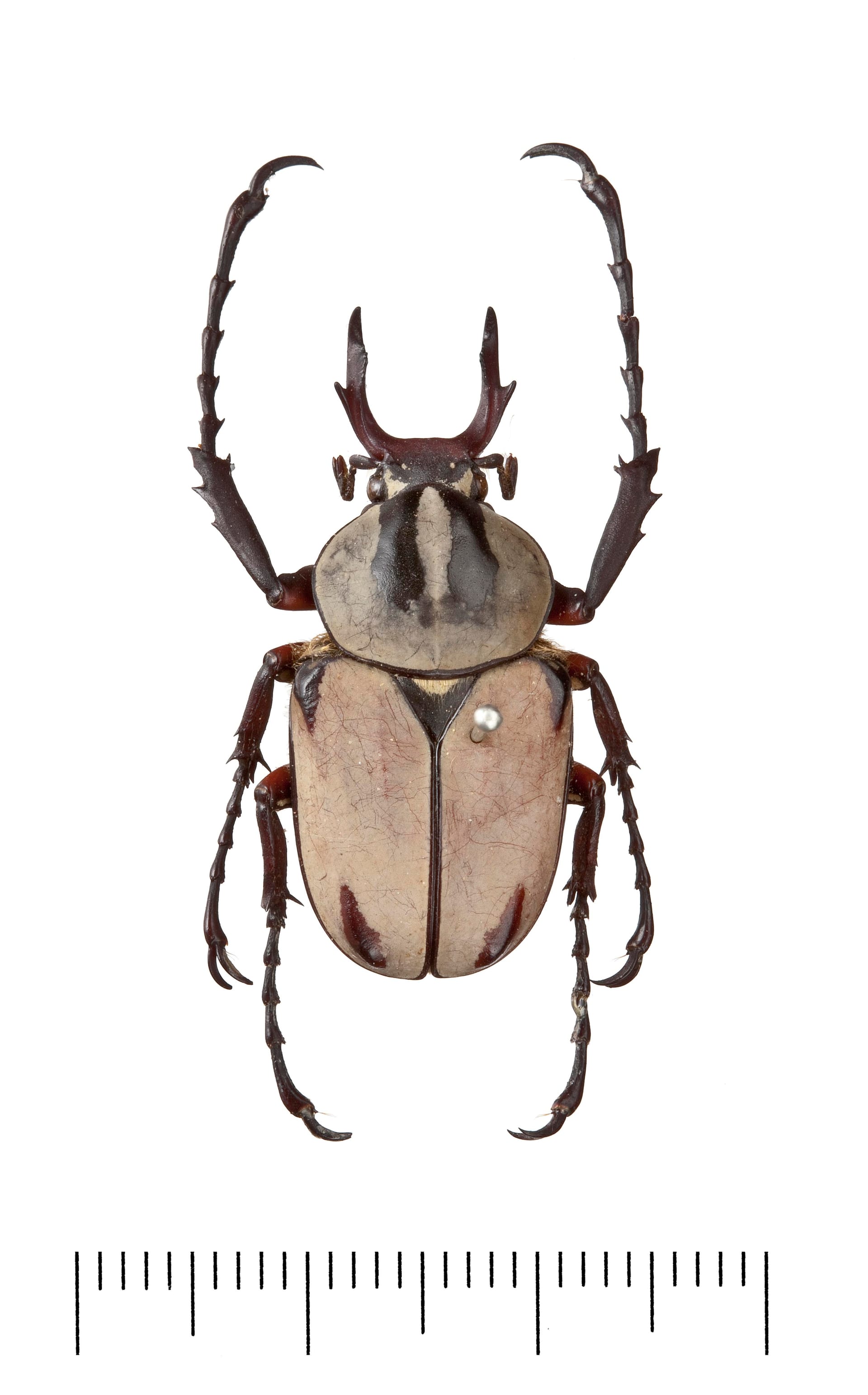
A Dicronocephalus of the Korean peninsula and China. Males of the genus carry antler-like head horns and are called antler horn beetles; these are medium-sized flower chafers of 20-32mm with long front legs.
Difficulty
Intermediate
Temperature
20〜28℃ (typical for Insect)
Size
20-32mm (genus accounts)
Humidity
60〜80%
Diet
Adults take fruit or beetle jelly; larvae eat humus-rich substrate
About
Dicronocephalus adamsi (Pascoe, 1863) is a flower chafer (Scarabaeidae: Cetoniinae), originally described as Dicranocephalus adamsi; the label of the type specimen at the Natural History Museum, London reads Corea. Dicronocephalus is a mainly Asian genus in the tribe Goliathini, alongside the Goliath beetles, and is the type genus of the subtribe Dicronocephalina. Its species are called antler horn beetles, though only males carry the antler-like horns. Unlike the African Goliath beetles they are medium-sized, 20-32mm, with relatively long legs, especially the front pair. GBIF holds more than 1,300 records, concentrated in South Korea (Gyeonggi, Gangwon, the Chungcheong provinces, North Gyeongsang and others) and China (Zhejiang, Beijing, Henan and others), with some from North Korea. This encyclopedia also covers its relative D. wallichi. Much about its keeping and life history remains unclear, so care follows general flower chafer practice. In Japan wild-caught specimens from Geoje Island, South Korea, have been sold by specialist shops.
Source: Wikipedia (CC BY-SA 4.0)
Size of the Adams's antler horn beetle
The Adams's antler horn beetle grows to 20-32mm (genus accounts).
Basic Info
Origin
Korean peninsula (South and North Korea) and China (Zhejiang, Beijing, Henan and others)
Size
20-32mm (genus accounts)
Temperature
20〜28℃ (typical for Insect)
Humidity
60〜80%
Diet
References & Sources
Edited & verified by: BreederDirect editorial team
The taxonomic, regulatory, and husbandry data on this page are compiled and verified against the authoritative primary sources below.
Primary sources
- Wikipedia
- Plant Protection Station: Importing Scarabaeoidea (JA)
- Plant Protection Station: Importing live insects (JA)
- Ministry of the Environment: List of invasive alien species (JA)
- Species+ CITES query (no listing)
- GBIF: Dicronocephalus adamsi (Pascoe, 1863) /地域別の記録
- Natural History Museum, London: type specimen photograph (Wikimedia Commons)
Taxonomy & Authority
Regulations & Conservation Status
Not CITES-listed
Many live foreign Scarabaeoidea (stag beetles, rhinoceros beetles, flower chafers and relatives) are quarantine pests whose import is banned under Japan's Plant Protection Act, and even importable species require a species-name certificate from a foreign government body under the Invasive Alien Species Act (entry only via designated airports, never by international post). Whether a species may enter must be checked with the Plant Protection Station in advance, so choose domestically bred stock and never release captive beetles.
Sources: Plant Protection Station: Importing Scarabaeoidea (JA) / Plant Protection Station: Importing live insects (JA) / Ministry of the Environment: List of invasive alien species (JA) / Species+ CITES query (no listing)
Regulations may change. Always verify the latest information with the relevant authorities.
Adams's antler horn beetle Listings
Loading latest listingsFind listings for this species