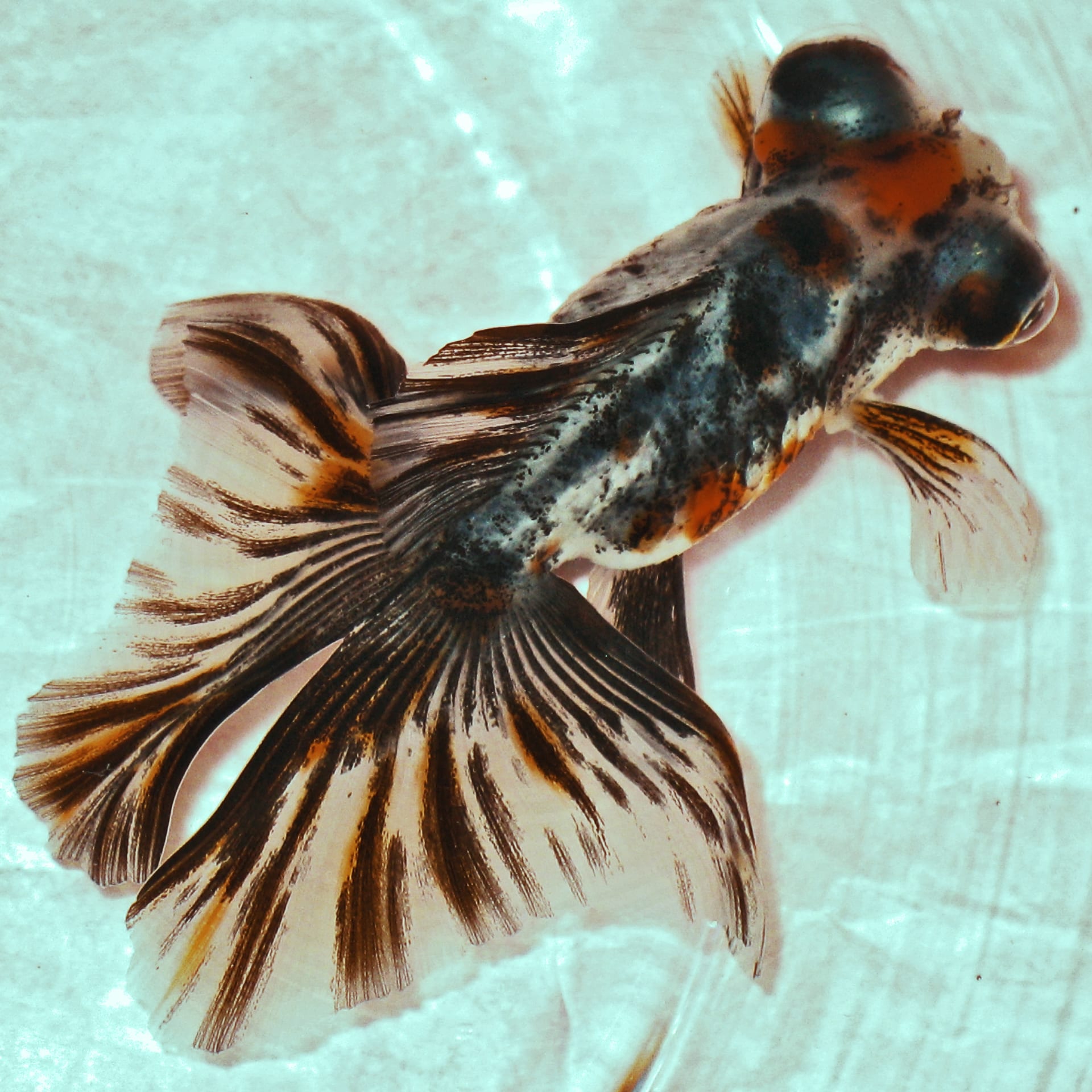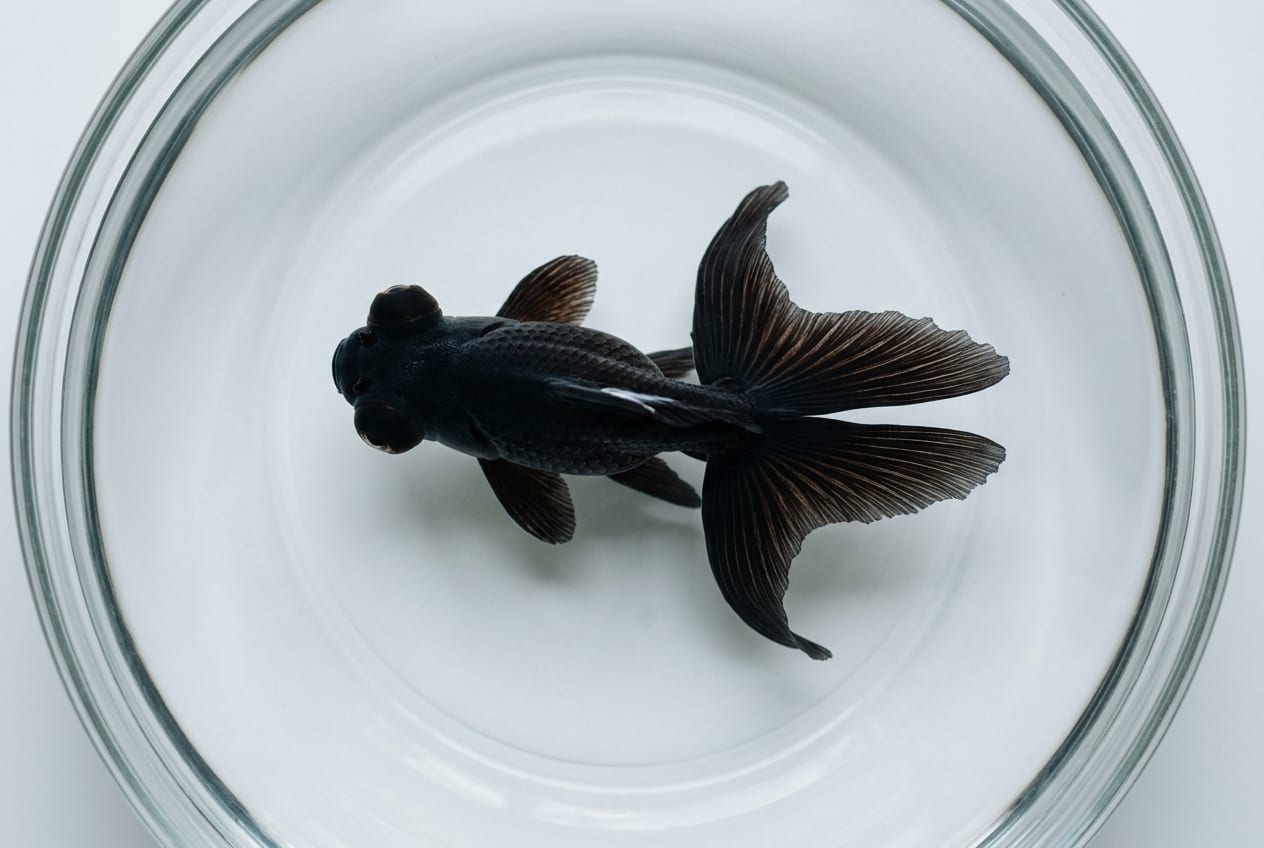
Black Butterfly Tail
IntermediateCarassius auratus
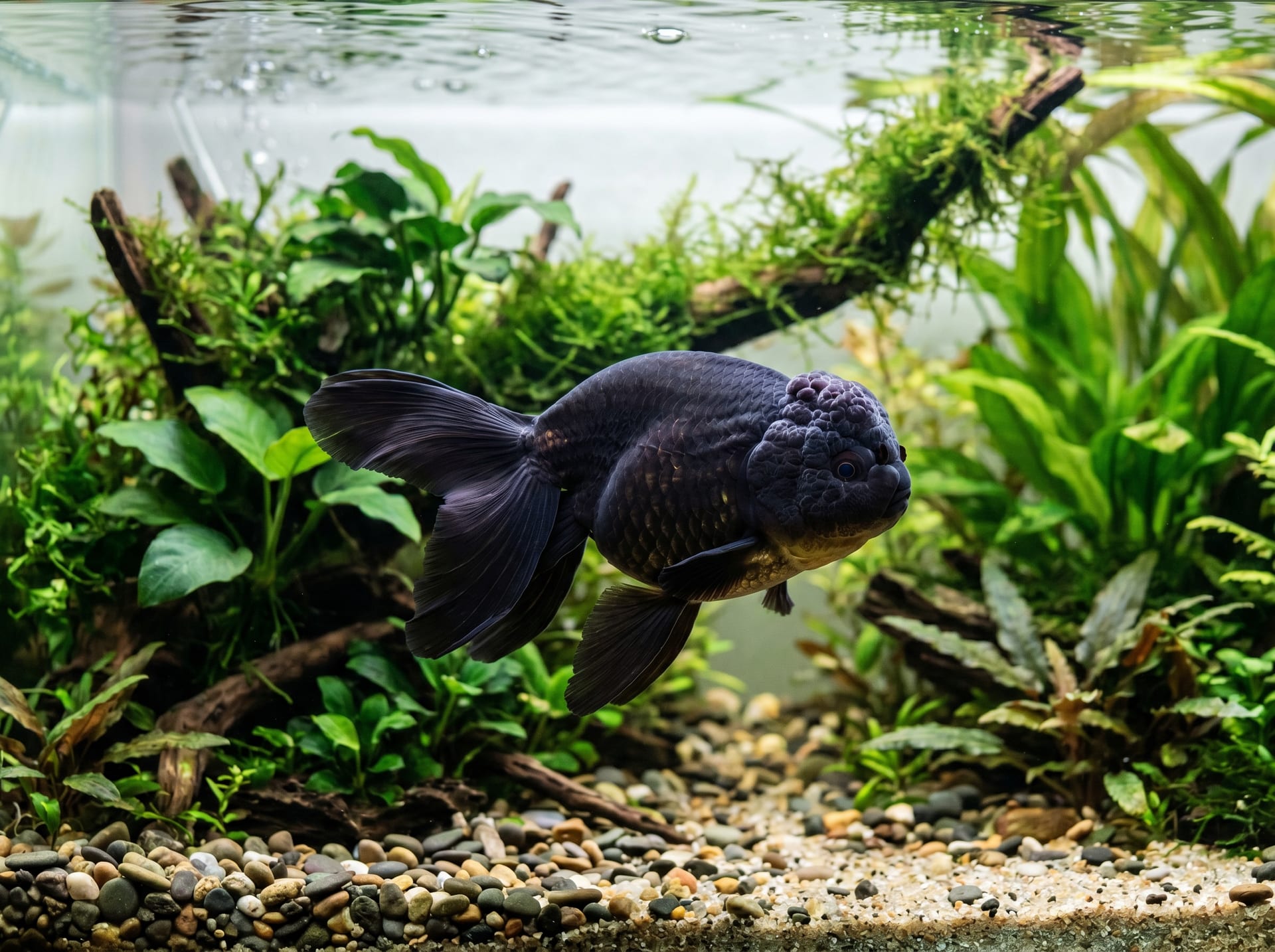
A black, protruding-eyed pearlscale. It has raised, pearl-like scales and telescope eyes, and corresponds to the black form of the Dragon-eye Pearlscale. The black can fade as the fish grows.
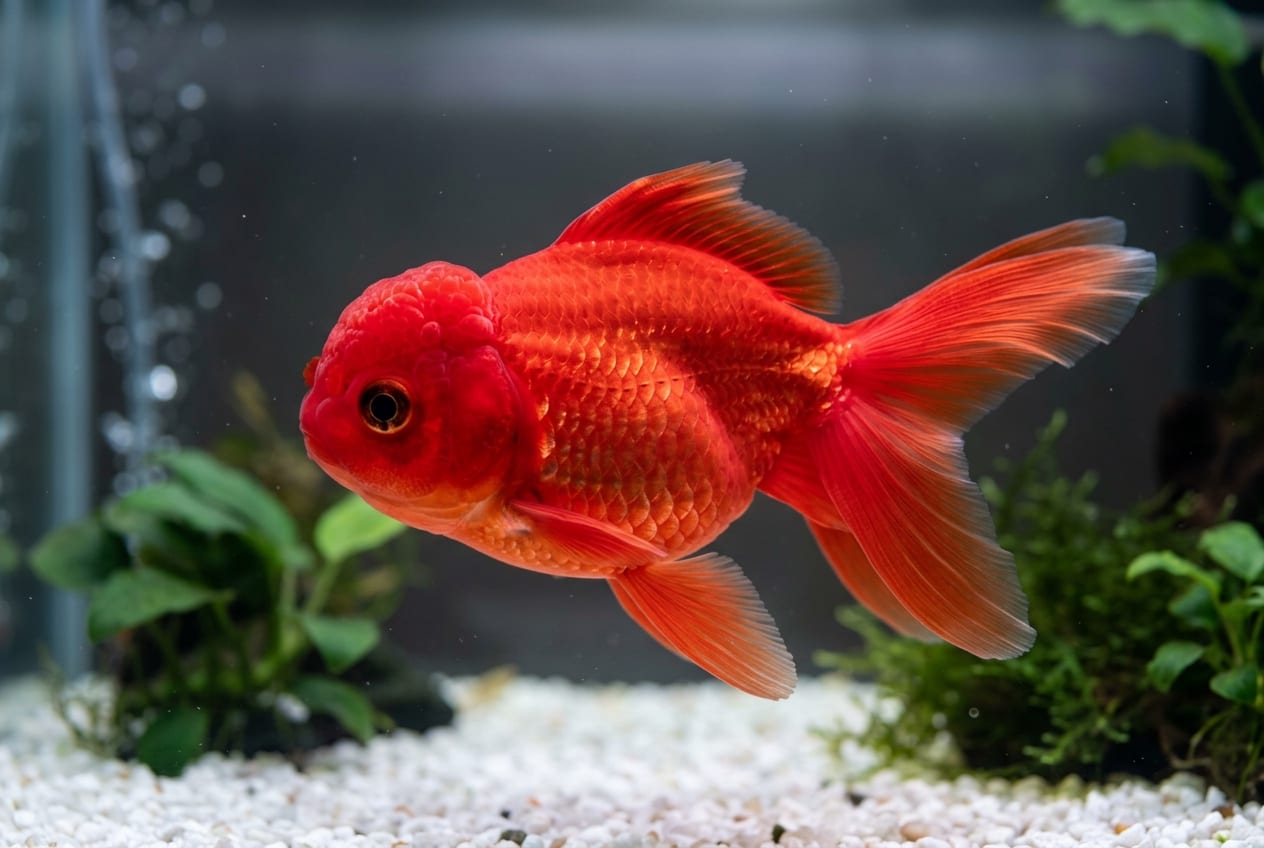
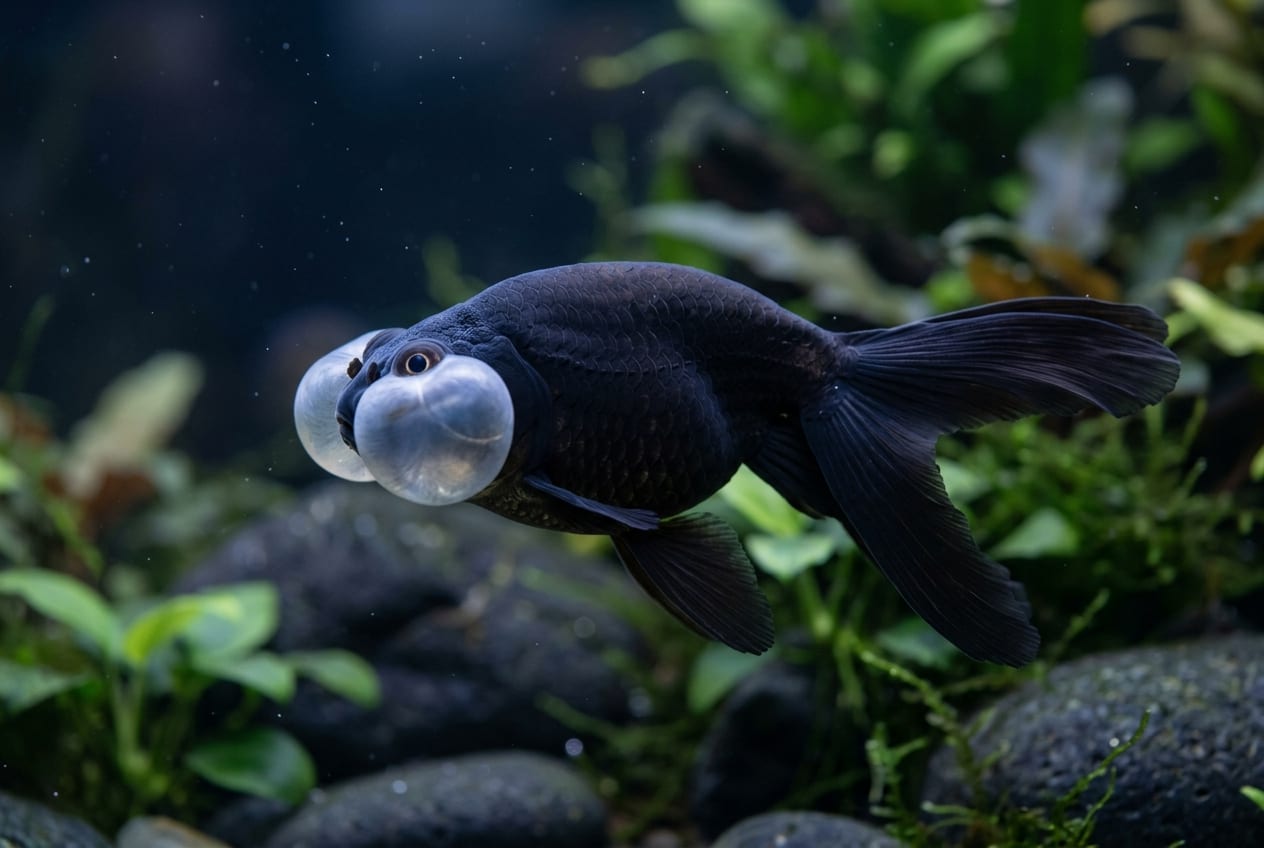
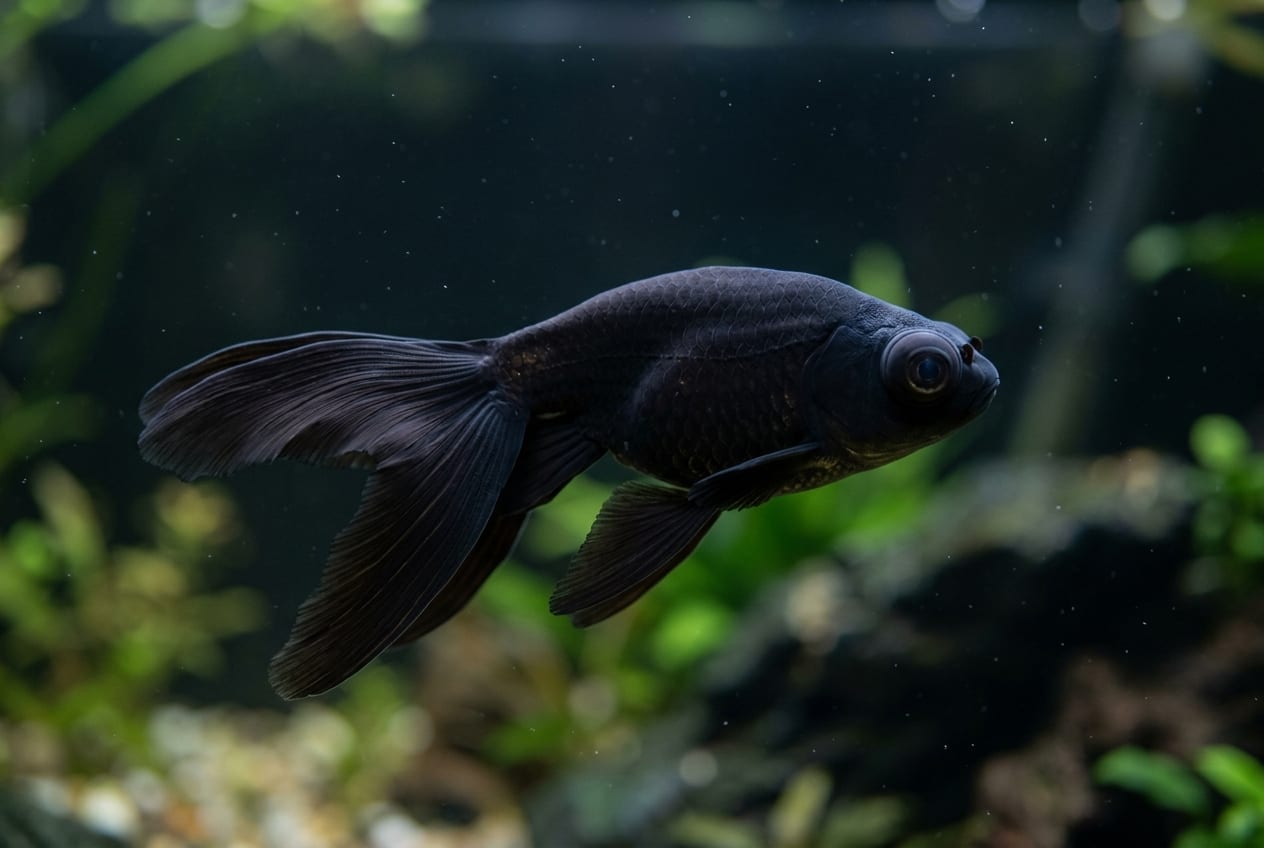
Kokuryu ('black dragon') is a trade name for black, telescope-eyed pearlscale goldfish — effectively the black form of the Dragon-eye Pearlscale. Pearlscale (zhenzhu lin in Chinese) scales accumulate calcium in their centers, bulging into domes that seem to stand on end. The Kokuryu combines these scales and a round body with eyes that protrude to each side like a telescope eye. Ordinary Pearlscales (Ping-pong Pearls) lack protruding eyes, and Dragon-eye Pearlscales are usually red, red-and-white or calico. Among black telescope-eyed goldfish, the Black Moor has flat scales and the black Butterfly Tail lacks pearl scales. Pearl scales do not regrow once lost, so use a layout that will not injure the body. The spherical body is said to be prone to constipation, so watch feeding amounts. Black in goldfish tends to fade with growth and some fish turn red. There is little documentation of when or by whom it was developed. In Japan, fish said to be Chinese-bred appear in small numbers at a few goldfish specialists. The name 'pearl scale' comes from these scales looking like pearls.
The Kokuryu (Black Dragon-eye Pearlscale) lives 10-15 years.
The ideal temperature for the Kokuryu (Black Dragon-eye Pearlscale) is 20〜23℃.
Origin
Said to be China (little documentation of its development)
Lifespan
10-15 years
Temperature
20〜23℃
Edited & verified by: BreederDirect editorial team
The taxonomic, regulatory, and husbandry data on this page are compiled and verified against the authoritative primary sources below.
Primary sources
Accepted name: Carassius auratus (Linnaeus, 1758)
Synonyms: Cyprinus auratus Linnaeus, 1758, Carassius auratus auratus (Linnaeus, 1758)
Authority databases: GBIF · GBIF: Carassius auratus · FishBase: Carassius auratus
Nomenclature follows global taxonomic authority databases.
Goldfish (Carassius auratus) are not listed in the CITES Appendices (checked on Species+, 2026-09-23) and are not designated Invasive Alien Species in Japan. Never release pet goldfish into rivers or ponds.
Sources: Species+ (CITES) / Ministry of the Environment: list of Invasive Alien Species
Regulations may change. Always verify the latest information with the relevant authorities.
Find listings for this species
Omnivore (goldfish pellets as the staple; also bloodworms and daphnia)
Look for all three: black body, domed pearl scales and protruding eyes. Without protruding eyes it is a Pearlscale; with flat scales, a Black Moor.
Pearl scales do not regrow and protruding eyes are easily injured; avoid sharp or hard decor and keep the current gentle.
The ideal range for fancy goldfish is about 20-23°C, pH around 7.0-8.4. Avoid sudden changes in temperature or water chemistry.
Allow roughly 38 L (10 gallons) or more per adult fish, with a generously sized filter.
The spherical body is said to be prone to constipation; give sinking food in small amounts and avoid overfeeding.
Slow and poor-sighted; keep only with other gentle telescope-eyed or round-bodied goldfish.
Black may fade with growth and some fish turn red, so do not assume the current color is permanent.
Advanced. This is an advanced-level species. It requires specialized equipment and advanced husbandry skills with precise environmental control.
The ideal temperature for Kokuryu (Black Dragon-eye Pearlscale) is 20〜23℃. Avoid sudden temperature changes and maintain a stable environment.
The average lifespan of Kokuryu (Black Dragon-eye Pearlscale) is 10-15 years. With proper care and nutrition, they can live a long and healthy life.
Kokuryu (Black Dragon-eye Pearlscale) feeds on: Omnivore (goldfish pellets as the staple; also bloodworms and daphnia). Aim for a balanced diet with appropriate feeding frequency.
The price of Kokuryu (Black Dragon-eye Pearlscale) varies significantly depending on variety, size, and individual quality. Check our market price page for the latest pricing information.
Last updated: September 28, 2026