Source: Wikimedia Commons
Black Telescope
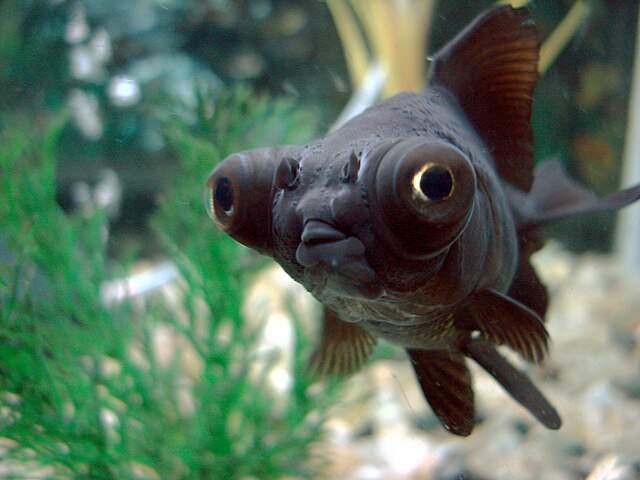
BeginnerThe representative black telescope breed. Beloved goldfish familiar from summer festival goldfish scooping.
Difficulty
Beginner
Temperature
5〜30℃
Lifespan
10-15 years
Size
10-18cm
Diet
Pellets, Bloodworms
About
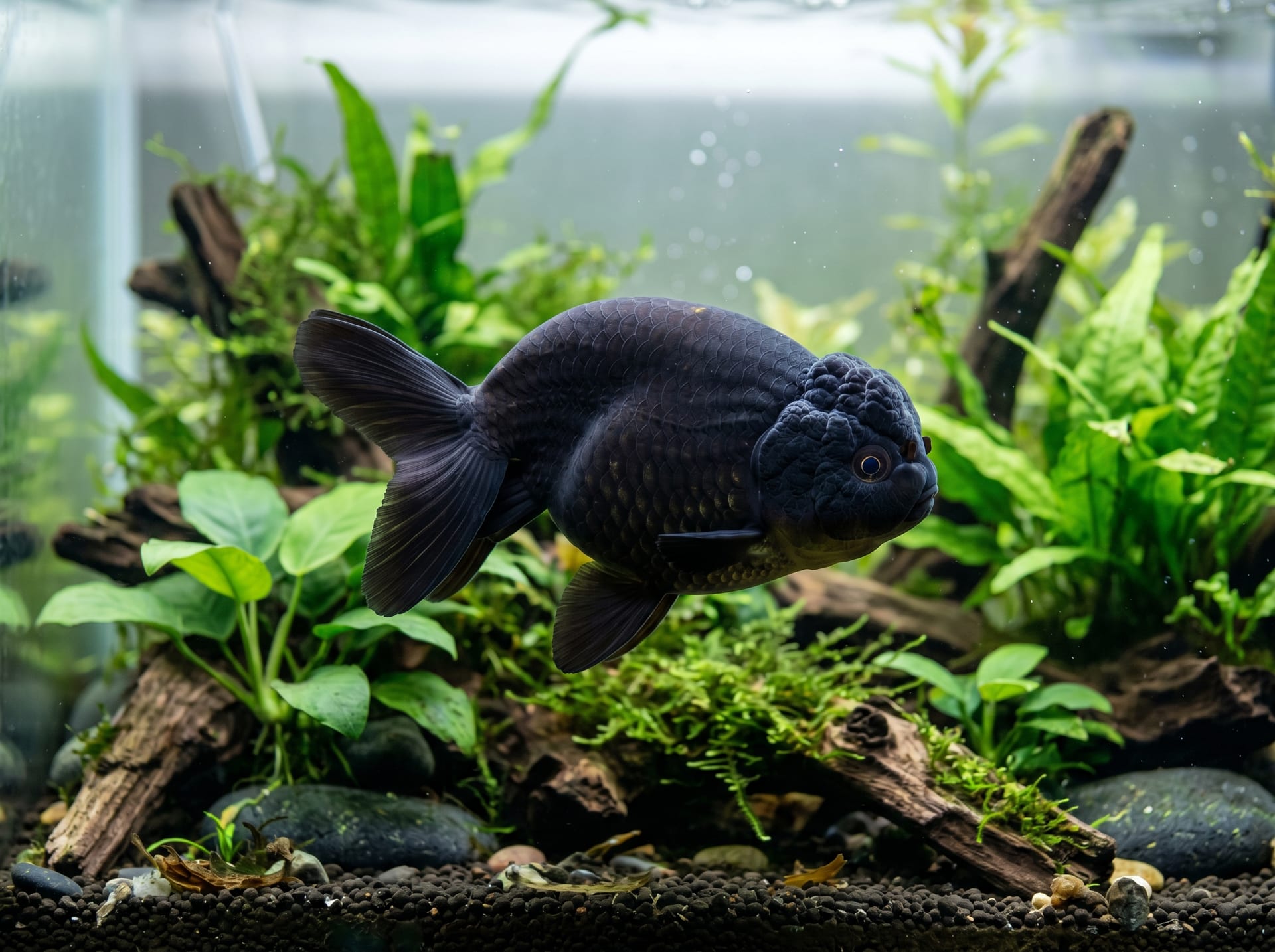
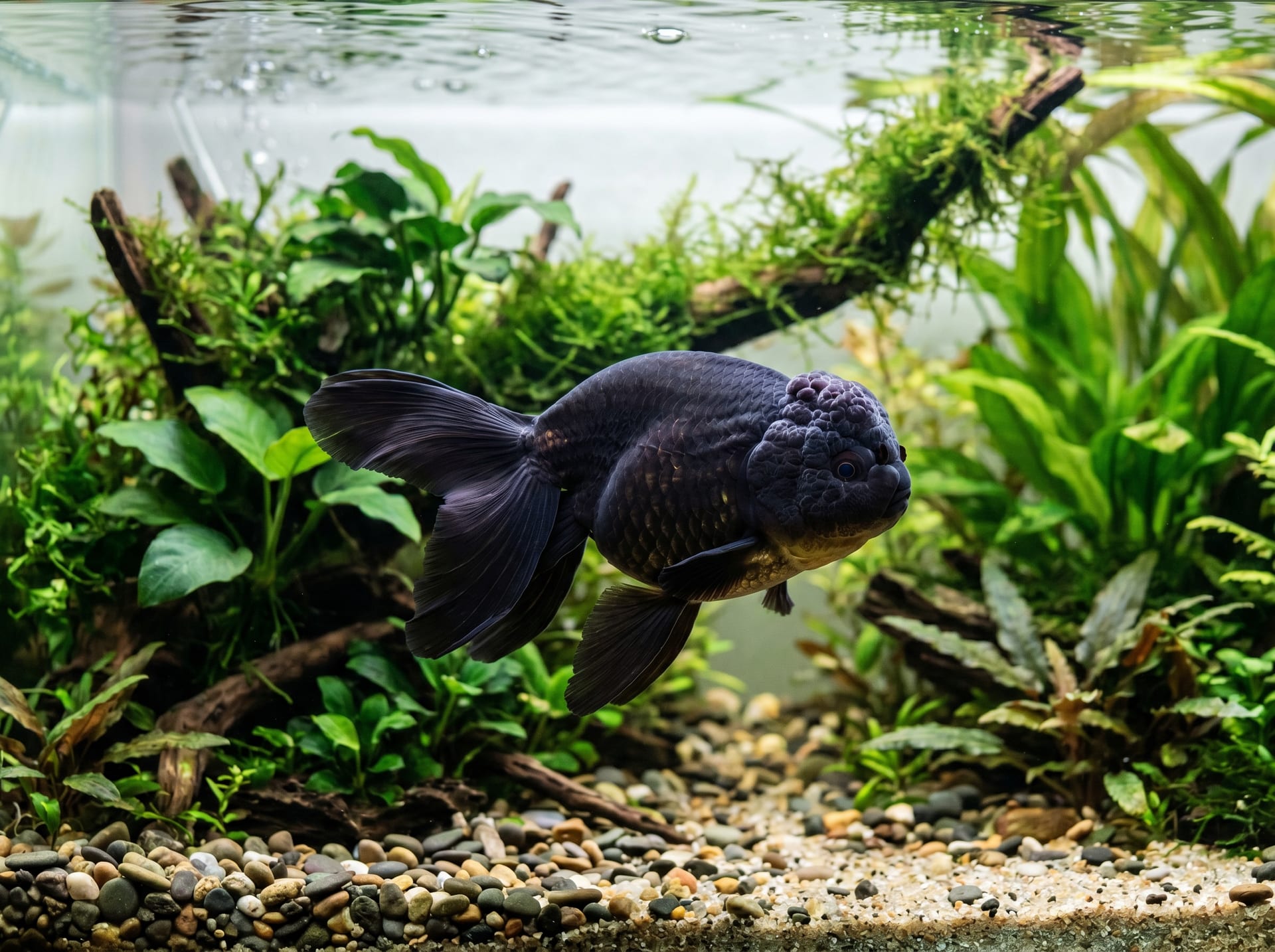
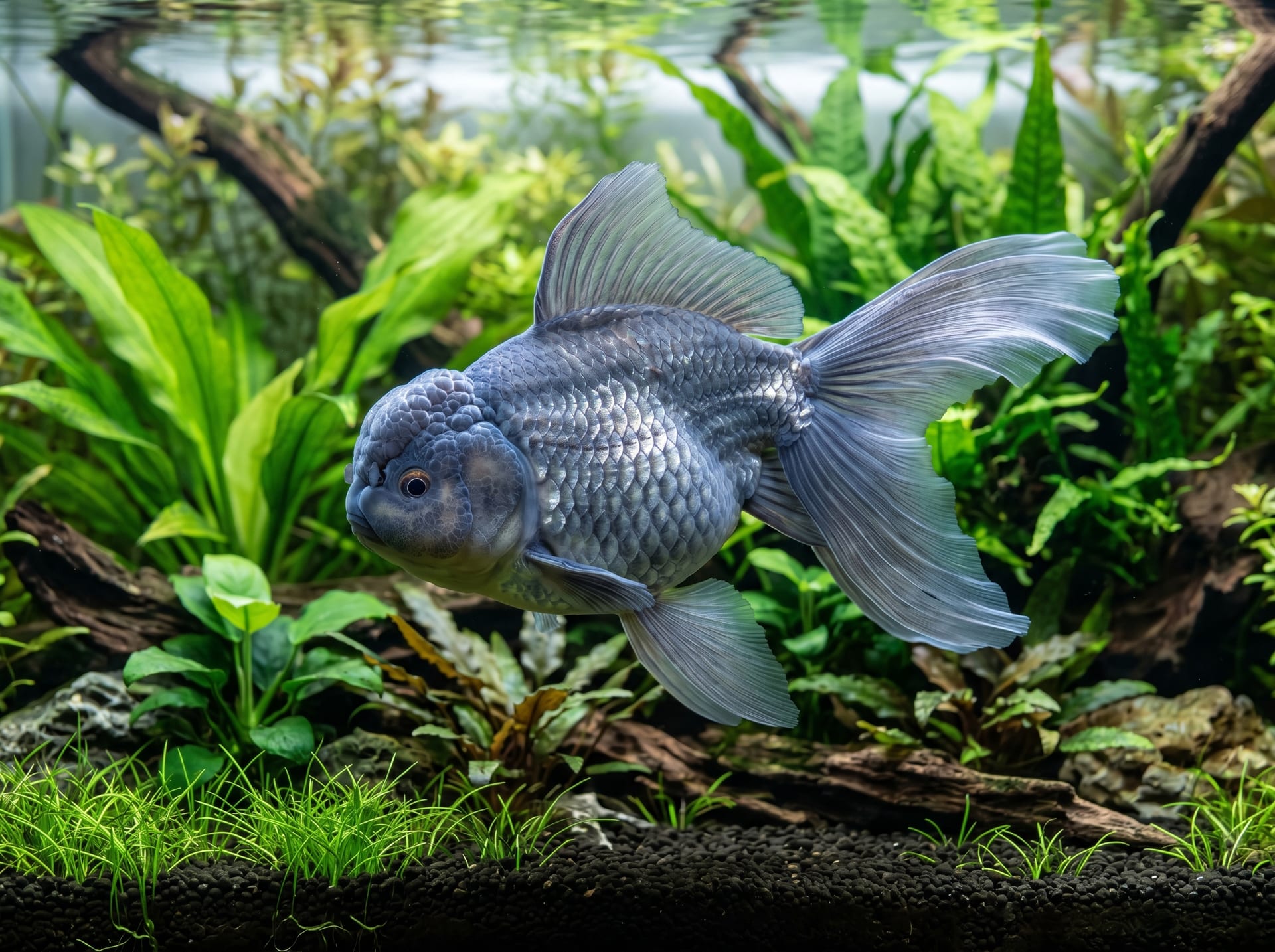
The Black Moor (Kuro Demekin) is the most iconic variety of Telescope goldfish and one of the most familiar goldfish in Japan, where it appears regularly at traditional festival goldfish-scooping stalls. Its deep, velvety black coloration and dramatically protruding eyes give it an unmistakable, striking appearance. However, maintaining the intense black color is a notable challenge: with age, or in response to poor water quality and environmental stress, the coloration often fades to silver, bronze, or reddish tones. Clean water, appropriate lighting, and avoiding harsh direct sunlight help slow this fading. Like all Telescope varieties, the prominent eyes are fragile and require a hazard-free aquarium with no sharp decorations or rough substrate, and sponge-protected filter intakes. Black Moors are gentle, slow swimmers best kept with similarly paced varieties in tanks of at least 45 liters with neutral water quality.
Source: Wikipedia (CC BY-SA 4.0)
Lifespan of the Black Telescope
The Black Telescope lives 10-15 years.
Size of the Black Telescope
The Black Telescope grows to 10-18cm.
Temperature & humidity for the Black Telescope
The ideal water temperature for the Black Telescope is 18〜23℃.
Basic Info
Origin
China
Lifespan
10-15 years
Care Specifications
- pH
- 6–8
- Hardness (GH)
- 5–19 dGH
- Water Temp.
- 18–23℃
PeacefulGroupBreeding: Moderate
Sources: FishBase / Aqueon Goldfish Care Guide
Captive Breeding
Egg-laying
- Clutch size
- 2000〜4000
- Incubation days
- 2〜9 days
Breeding season: Spring to early summer (March–June). Rising water temperature above approximately 18–22°C is the primary spawning trigger. A winter cooling period is considered important to prime the fish for spawning.
Breeding notes
Black Telescope (Demekin), like all goldfish varieties, is a domesticated form of Carassius auratus and shares the same spawning biology. In captivity, providing spawning mops or floating plants (e.g., Cabomba, Elodea) encourages deposition of adhesive eggs. Hatching duration depends on water temperature and typically spans 2–9 days. Parents should be removed promptly after spawning to prevent egg predation. Gentle aeration and good water quality are considered important for maximizing hatch rates and fry survival.
Breeding requires planning, proper husbandry, and responsibility. These figures are general guidelines.
Morphs (Varieties)
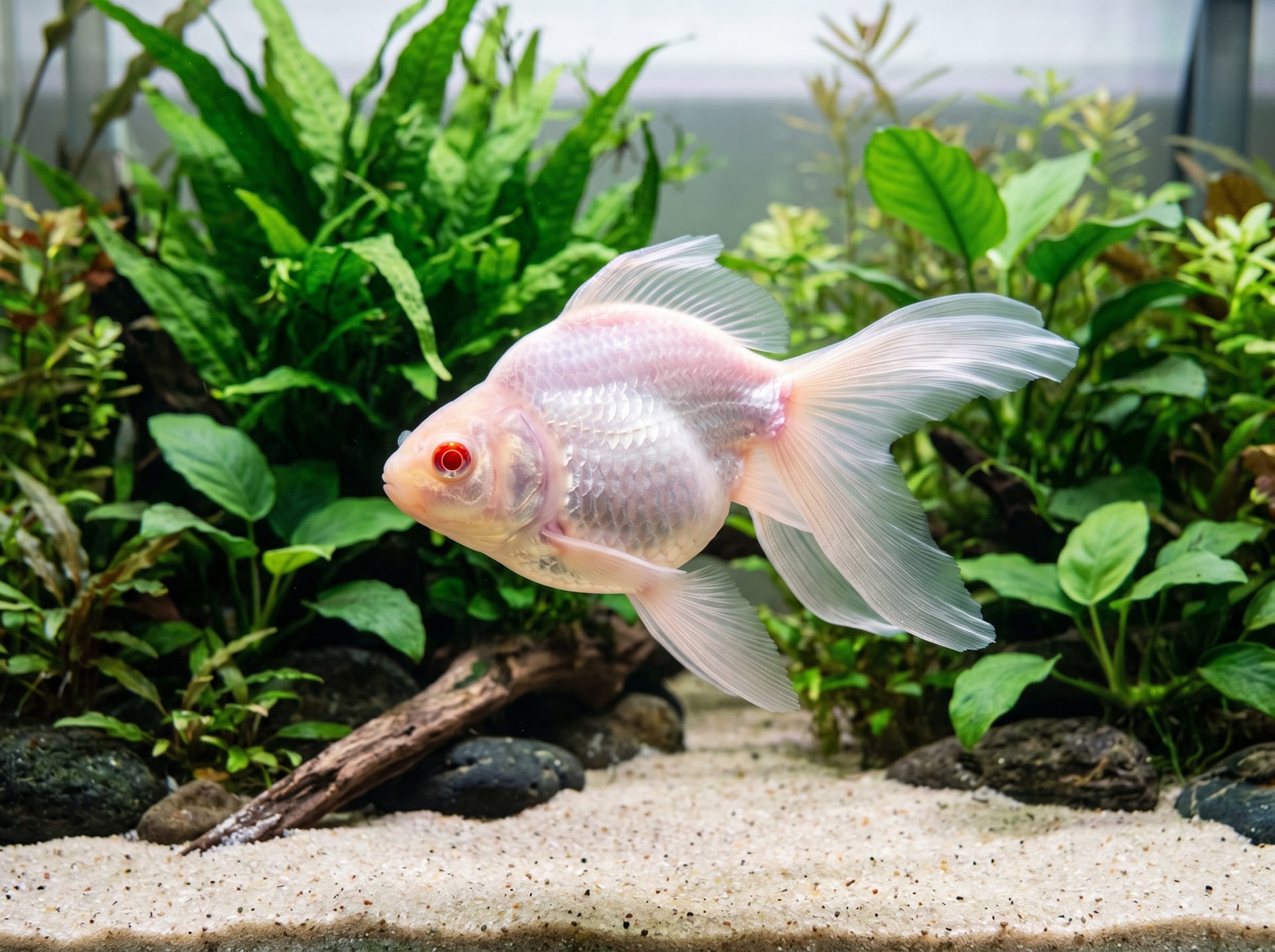
Goldfish varieties are line-bred for body shape, tail type, scale type, and coloration. Traits such as protruding eyes, transparent scales (calico), and albinism are single-locus traits.
RecessiveVisual only with two copies; one copy = het (carrier).
Protruding (telescope) eyes
Line-bredEstablished by selective line breeding.
Deep body / dorsal humpFantail (paired caudal)Black coloration
Sources: Wikipedia - Goldfish (Varieties) / Goldfish — Wikipedia (Japanese edition, varieties)
A curated selection of notable morphs. Inheritance modes are a breeding-planning guide; actual appearance varies with combos.
References & Sources
Edited & verified by: BreederDirect editorial team
The taxonomic, regulatory, and husbandry data on this page are compiled and verified against the authoritative primary sources below.
Taxonomy & Authority
Accepted name: (Linnaeus, 1758)
Synonyms: Cyprinus auratus Linnaeus, 1758, Carassius auratus auratus (Linnaeus, 1758), Cyprinus thoracatus Valenciennes, 1842, Carassius burgeri Temminck & Schlegel, 1846, Cyprinus chinensis Gronow, 1854
Authority databases: FishBase · GBIF · FishBase: Carassius auratus · GBIF: Carassius auratus
Nomenclature follows global taxonomic authority databases.
Black Telescope Listings
Loading latest listingsFind listings for this species