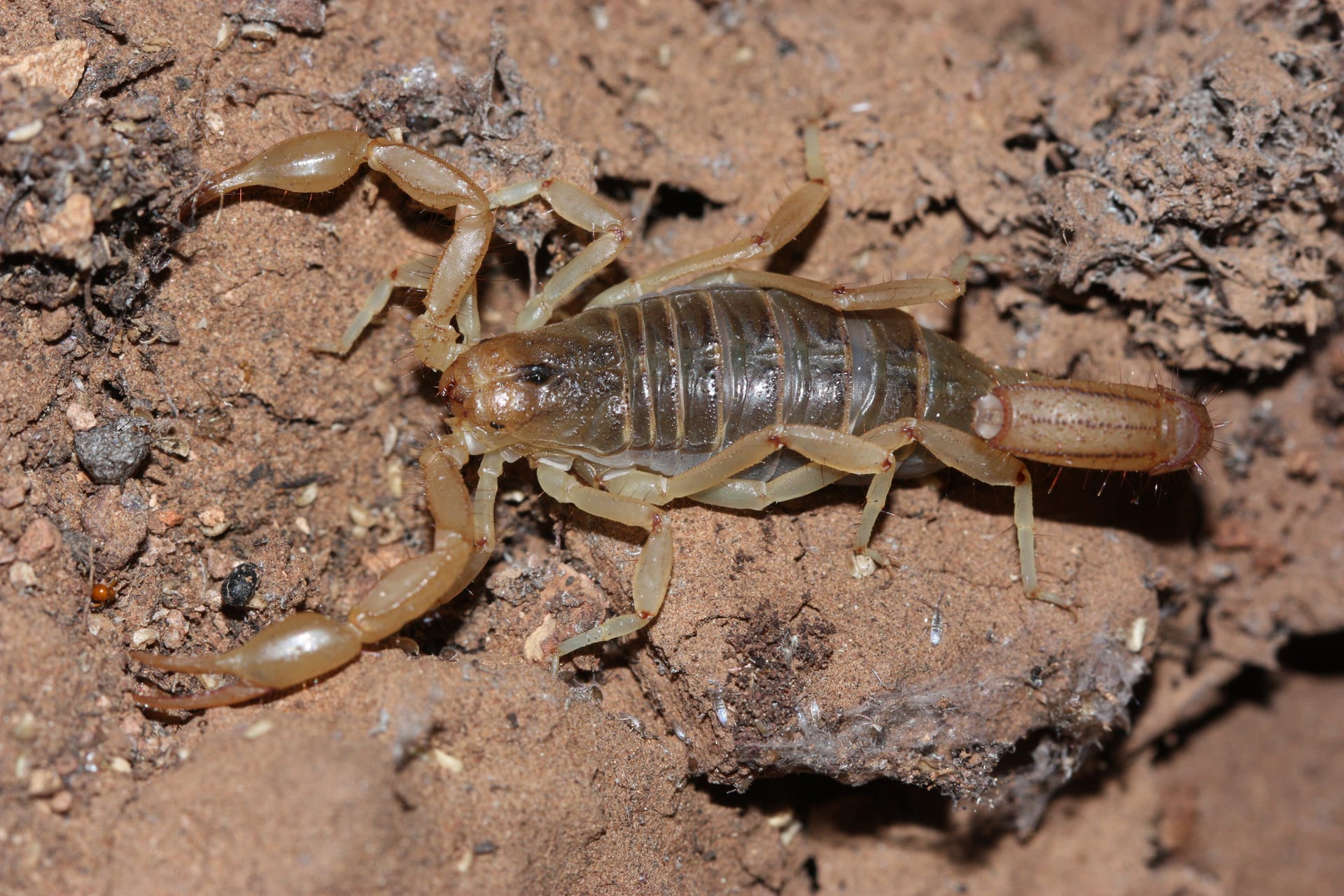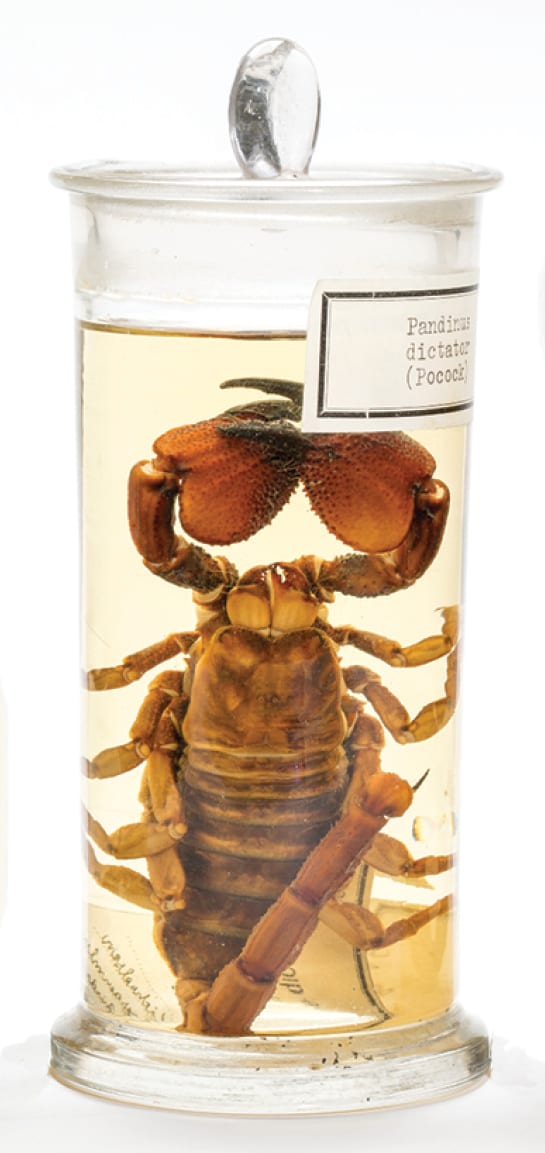
Source: Wikimedia Commons
Robust burrowing scorpion
IntermediateOpistophthalmus carinatus
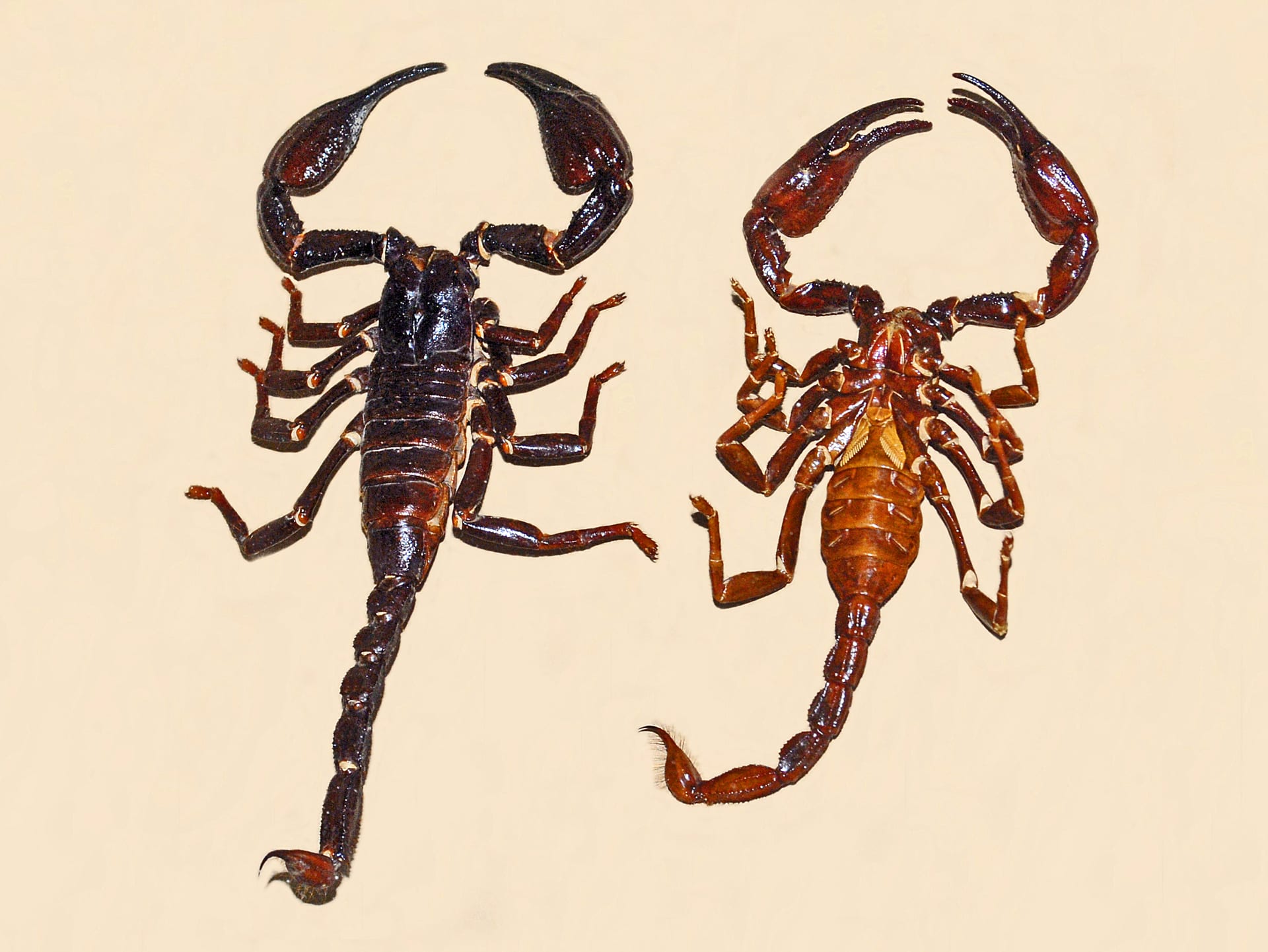
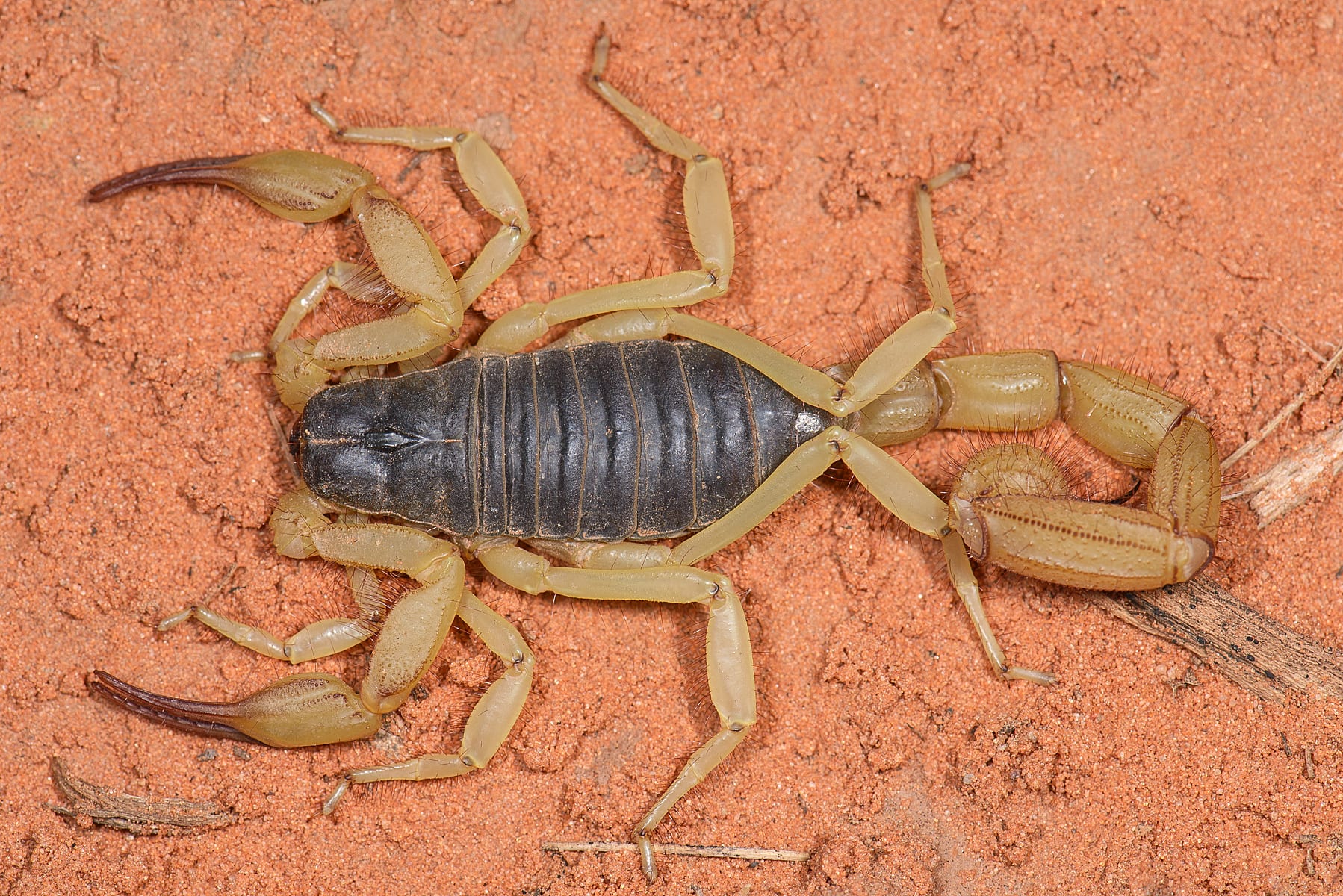
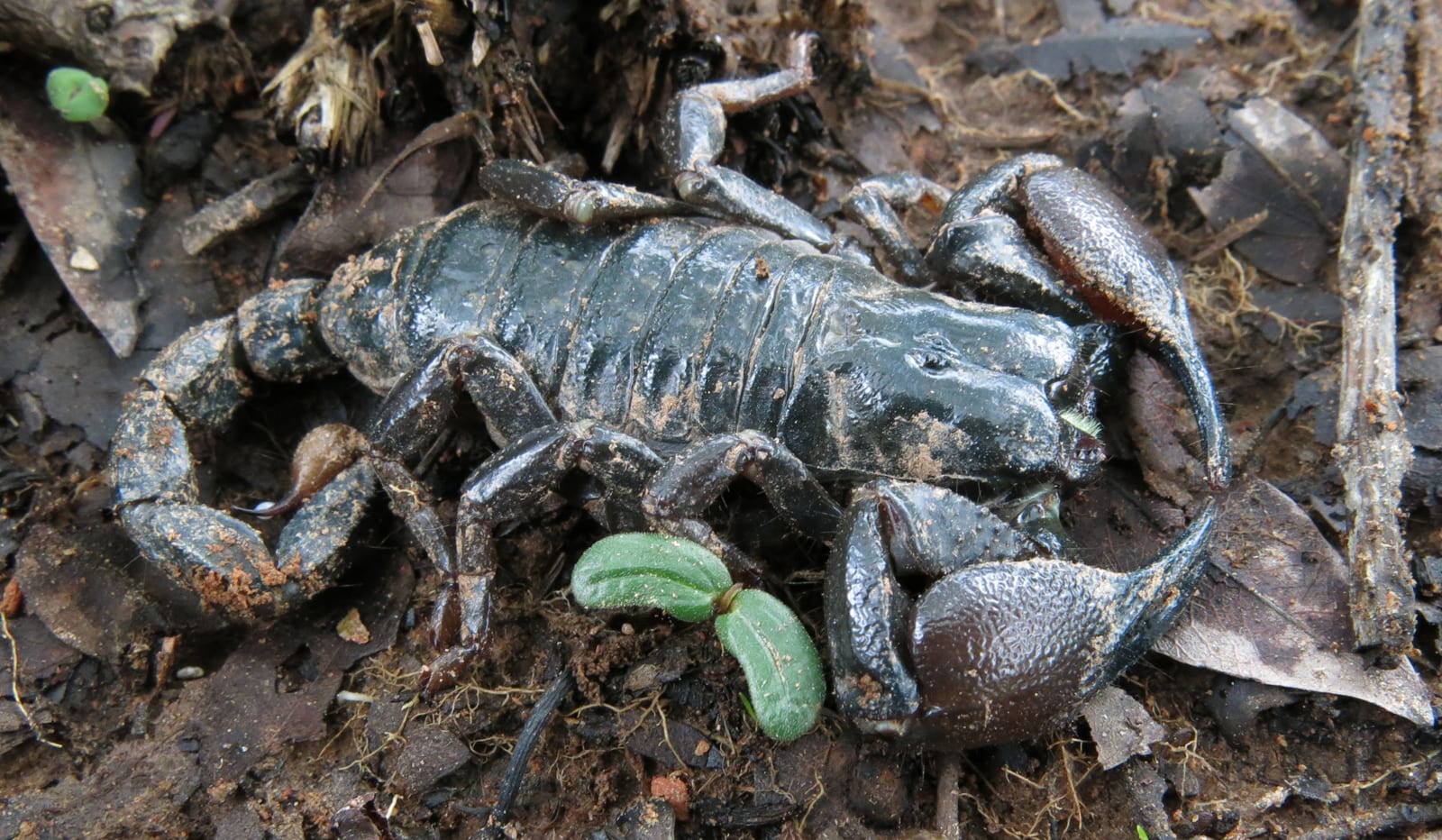
A burrowing scorpion widespread in the drier parts of southern Africa. It has a particularly sturdy body and large claws for its genus, and often digs its burrow beside a large rock.
Difficulty
Intermediate
Lifespan
Little data
Size
Little data
Diet
Carnivorous (live insects such as crickets and roaches)
About
Opistophthalmus carinatus (Peters, 1861) is a scorpion of the family Scorpionidae, widespread in the drier regions of southern Africa. GBIF lists Angola, Botswana, Mozambique, Namibia, South Africa, Zambia and Zimbabwe, and it has been photographed near Usakos in Namibia and in Zimbabwe. As its name says it is a burrowing scorpion, often placing its burrow beside a large rock, and it has a particularly sturdy body with large pincers compared with others of its genus. Opistophthalmus contains many species centred on southern Africa, and its synonyms and subspecies were reviewed by Prendini in 2001. Most members of the family are considered relatively harmless, and this species is not on The Scorpion Files list of scorpions of medical importance. In Japan specialist shops occasionally sell it, for example animals from Zambia.
Source: Wikipedia (CC BY-SA 4.0)
Lifespan of the Robust burrowing scorpion
Little has been published on its size or lifespan.
Basic Info
Origin
Southern Africa (Angola, Botswana, Mozambique, Namibia, South Africa, Zambia, Zimbabwe)
Lifespan
Little data
Size
Little data
Diet
Carnivorous (live insects such as crickets and roaches)
Care Guide
References & Sources
Edited & verified by: BreederDirect editorial team
The taxonomic, regulatory, and husbandry data on this page are compiled and verified against the authoritative primary sources below.
Primary sources
Taxonomy & Authority
Accepted name: Opistophthalmus carinatus (Peters, 1861)
Authority databases: GBIF · GBIF · The Scorpion Files
Nomenclature follows global taxonomic authority databases.
Regulations & Conservation Status
Not CITES-listed
It is not a member of the Buthidae, so it is not a designated invasive alien species in Japan. However, every scorpion species is on Japan's list of taxa that need an identification certificate, so imports must be accompanied by documents certifying the species. It is not listed by CITES (September 2026). Keep it in escape-proof housing and never release captive animals.
Sources: Ministry of the Environment: List of regulated alien species, including taxa needing an identification certificate (JA) / Species+ CITES query (not listed)
Regulations may change. Always verify the latest information with the relevant authorities.
Robust burrowing scorpion Listings
Loading latest listingsFind listings for this species