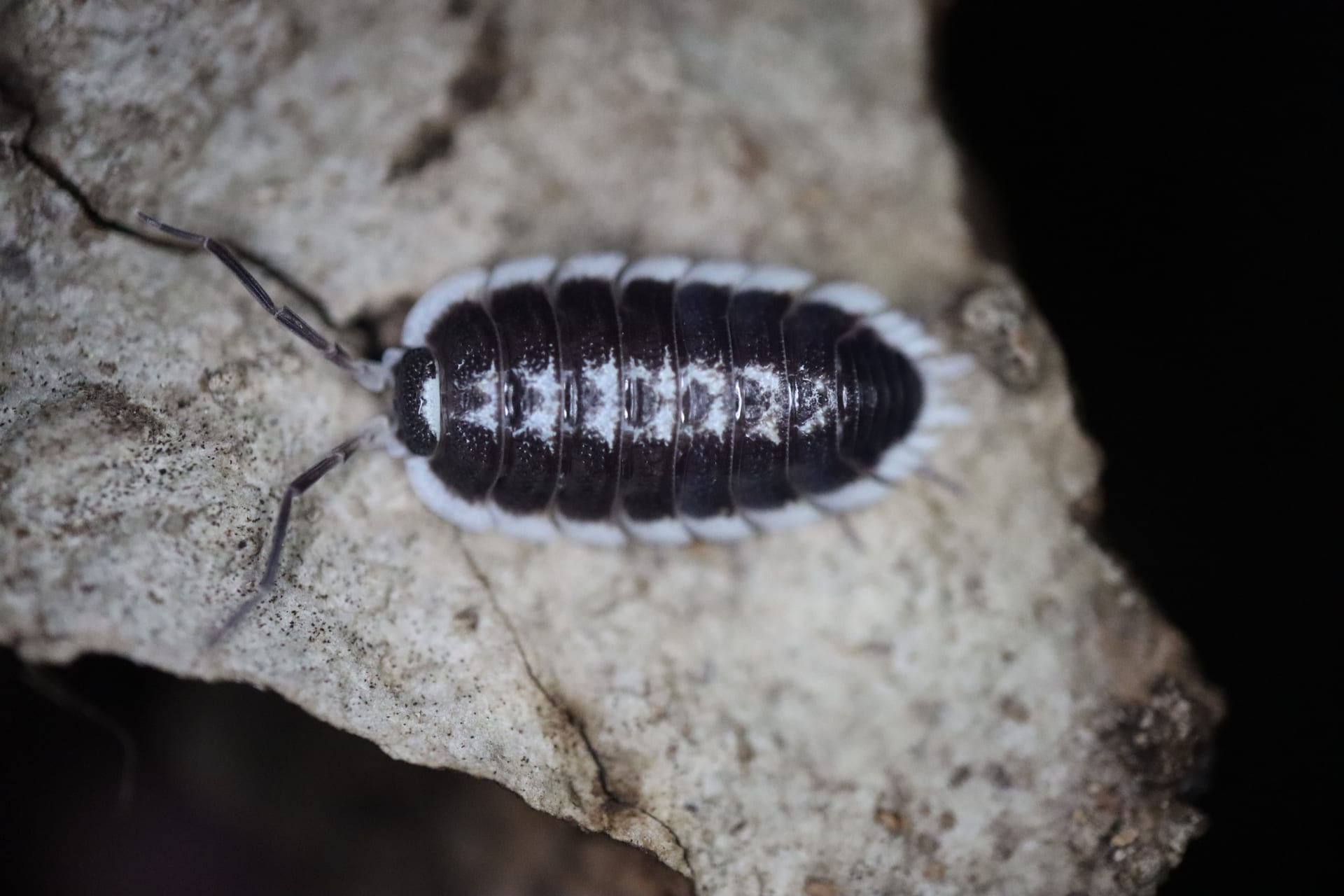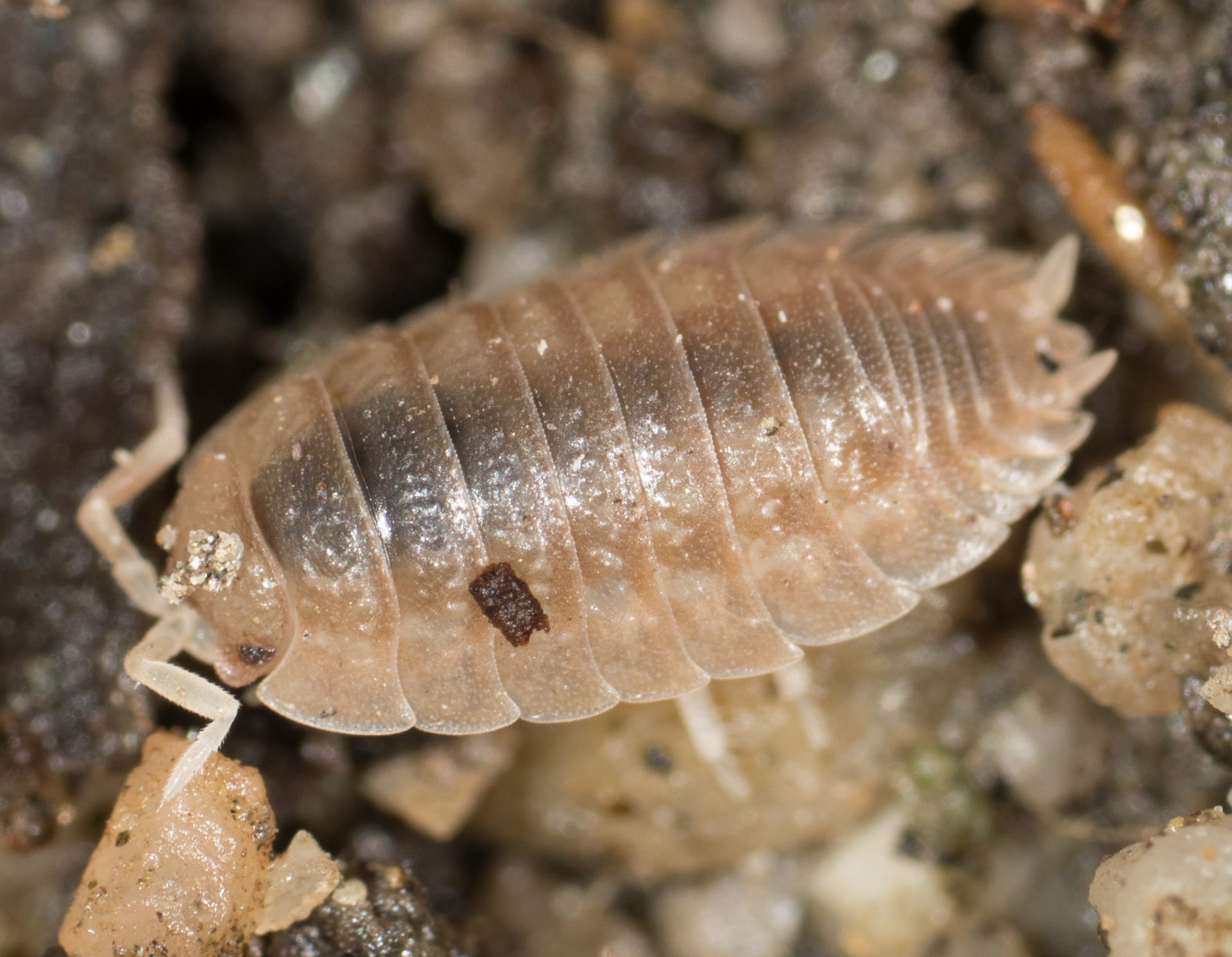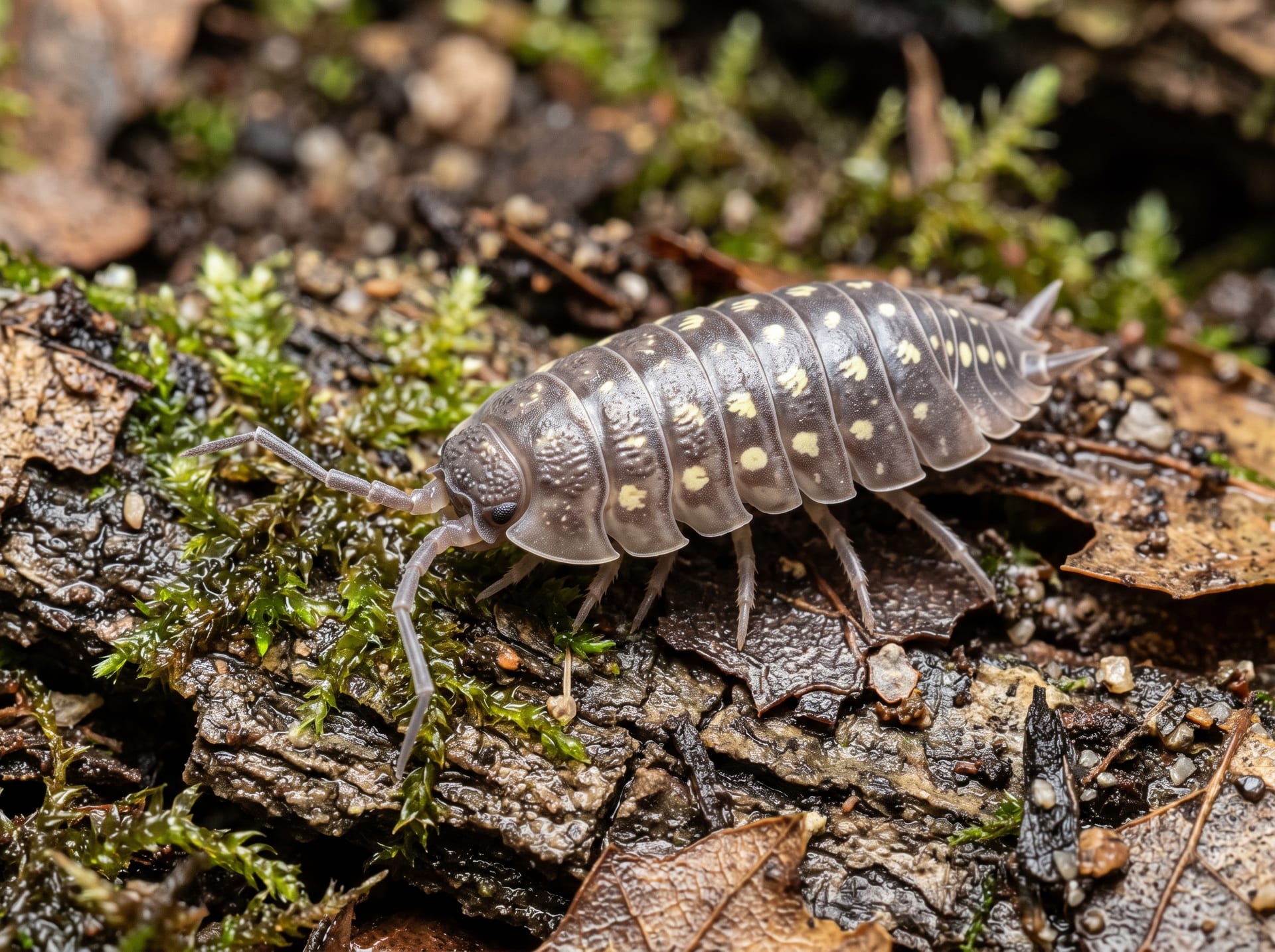
AI-generated image
Ornatus Isopod
IntermediatePorcellio ornatus
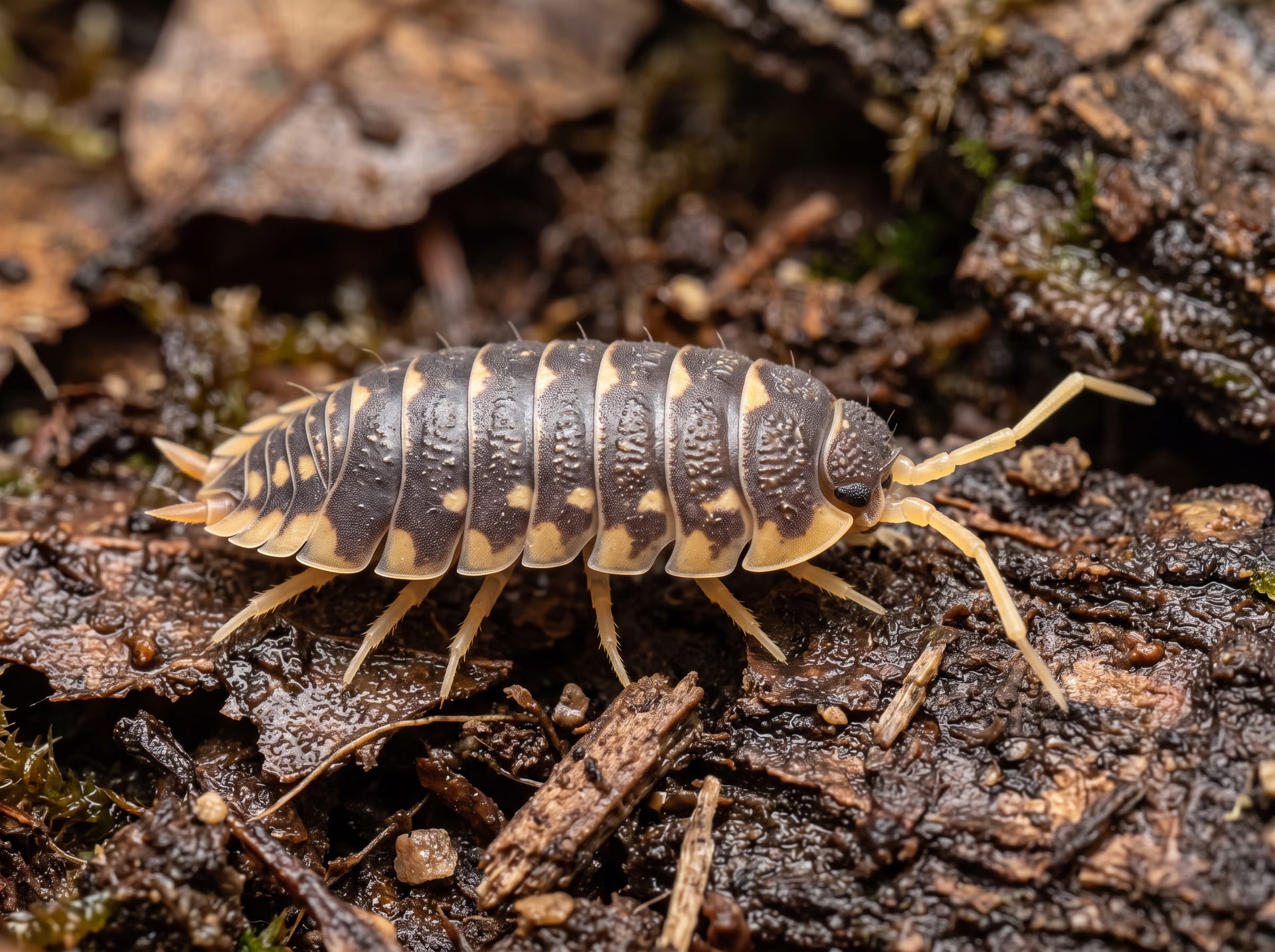
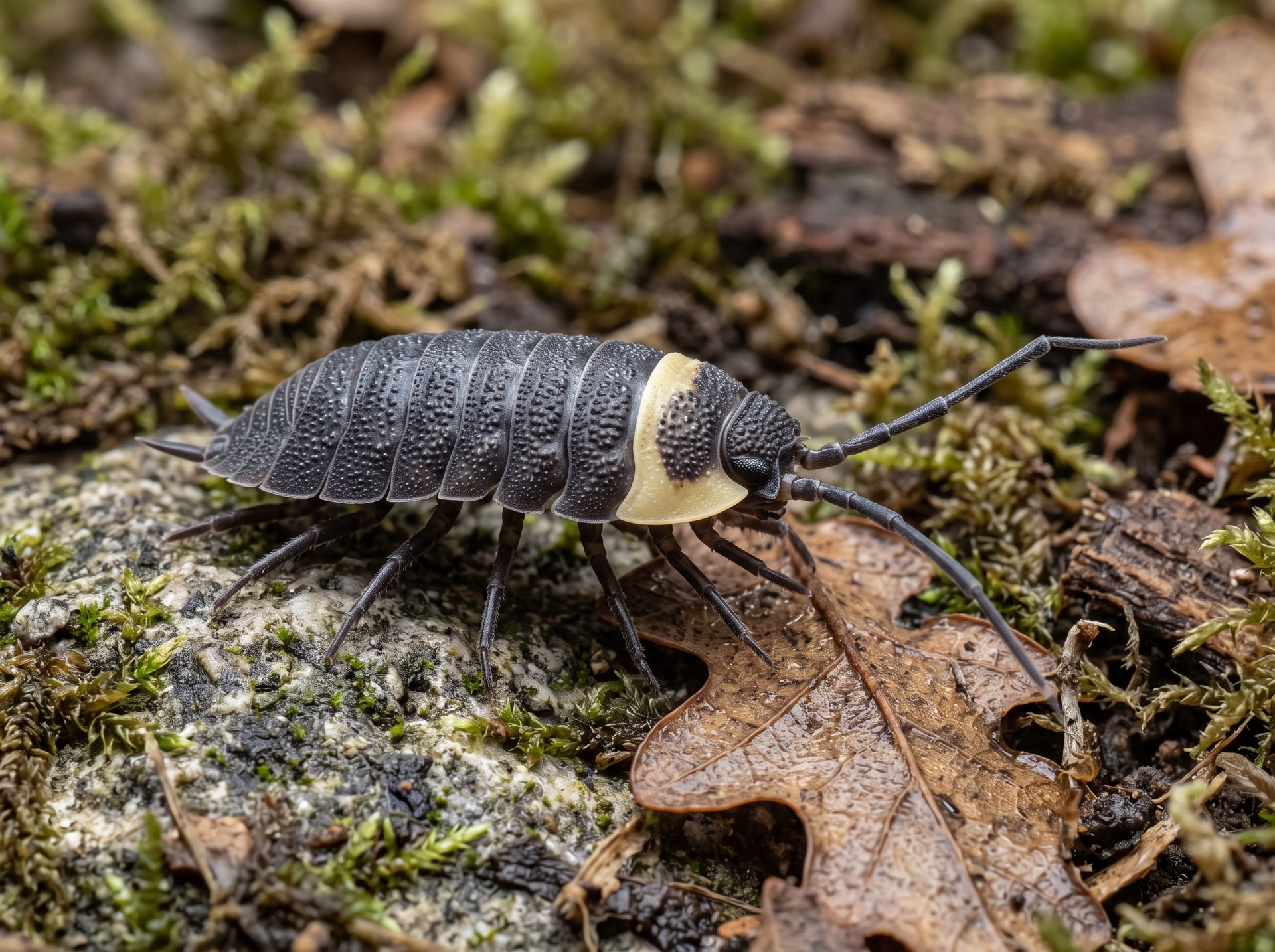
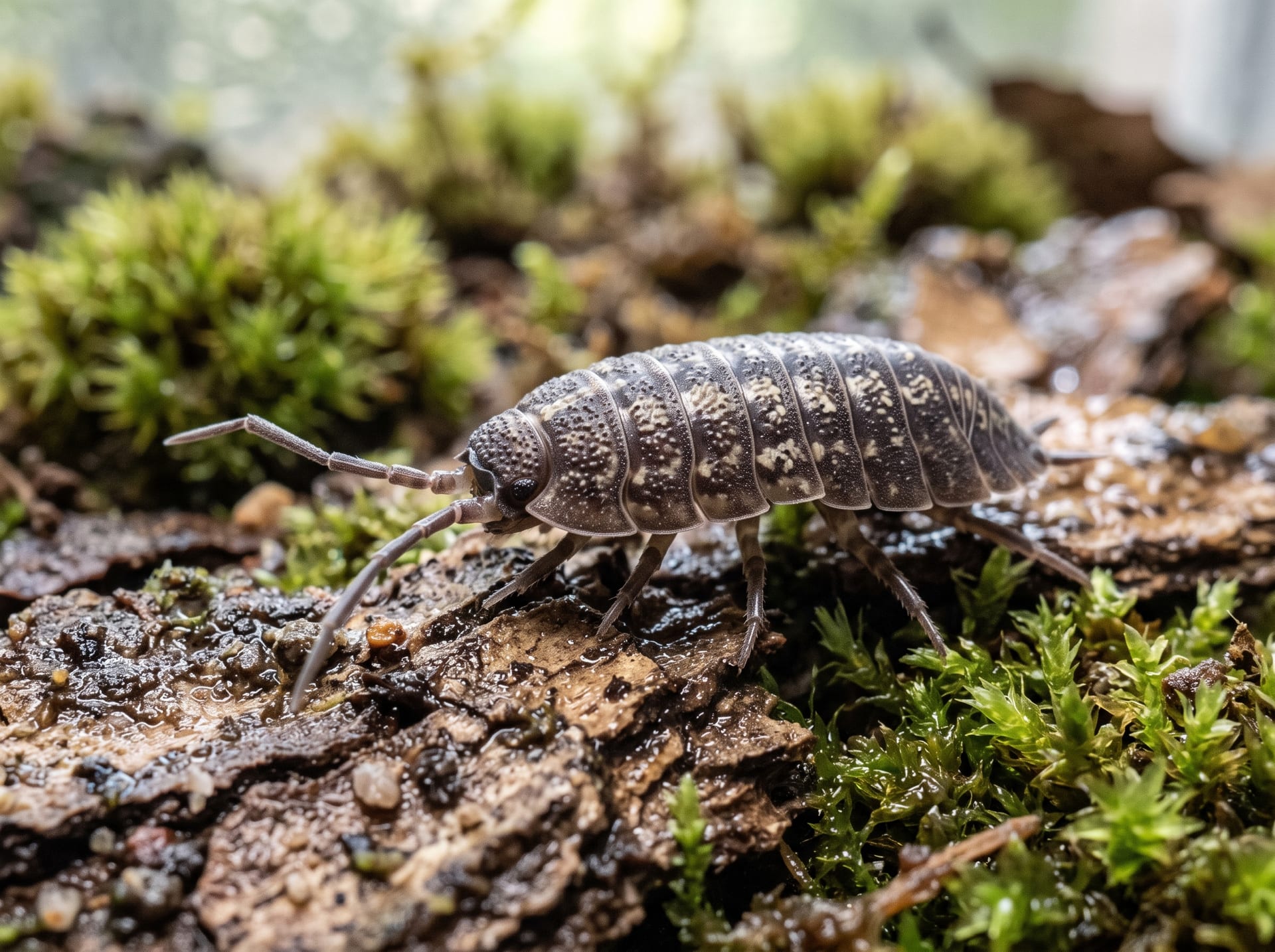
A large Spanish woodlouse. Yellow spots on the rear half of the grey body stand out, and high-yellow lines have been bred. Very active and a climber, it needs a drier setup and readily cannibalises its young.
Difficulty
Intermediate
Temperature
20〜26℃
Lifespan
2-3 years
Size
Up to about 25mm
Diet
Leaf litter and rotten wood as staples, with vegetables, protein and plenty of cuttlebone for calcium. Not fussy.
About
Porcellio ornatus, described by H. Milne Edwards in 1840, is a large Spanish woodlouse; WoRMS lists Porcellio discolor as a synonym. Adults reach about 25mm. The nominate form is grey with yellow spots on the rear half of the body, and lines with more yellow such as 'High Yellow' and 'Sandstone' have been fixed in captivity. The orange stock sold as 'Tangerine Dream' is reported to be the separate species P. pseudornatus. It is very active day and night and climbs, so an angled branch with lichen is useful. Keep at 20-26C on a mostly dry substrate with only one corner moist. Breeding and growth are fairly quick, but cannibalism of moulting juveniles is common, so provide many hides and plenty of cuttlebone to meet its high calcium demand. Some keepers report less cannibalism when another isopod species shares the tank. It also works well as a cleanup crew.
Source: Wikipedia (CC BY-SA 4.0)
Lifespan of the Ornatus Isopod
The Ornatus Isopod lives 2-3 years.
Size of the Ornatus Isopod
The Ornatus Isopod grows to Up to about 25mm.
Temperature & humidity for the Ornatus Isopod
The ideal temperature for the Ornatus Isopod is 20〜26℃.
Basic Info
Origin
Spain
Lifespan
2-3 years
Care Specifications
Semi-aggressiveGroupBreeding: Moderate
Sources: Insektenliebe keeping report (size, temperature, care) / Exuvium Isopods (Tangerine Dream is P. pseudornatus) / WoRMS
References & Sources
Edited & verified by: BreederDirect editorial team
The taxonomic, regulatory, and husbandry data on this page are compiled and verified against the authoritative primary sources below.
Taxonomy & Authority
Accepted name: Porcellio ornatus H. Milne Edwards, 1840
Synonyms: Porcellio discolor
Authority databases: GBIF
Nomenclature follows global taxonomic authority databases.
Regulations & Conservation Status
Not CITES-listed
Sources: CITES Appendices (species not listed)
Regulations may change. Always verify the latest information with the relevant authorities.
Ornatus Isopod Listings
Loading latest listingsFind listings for this species