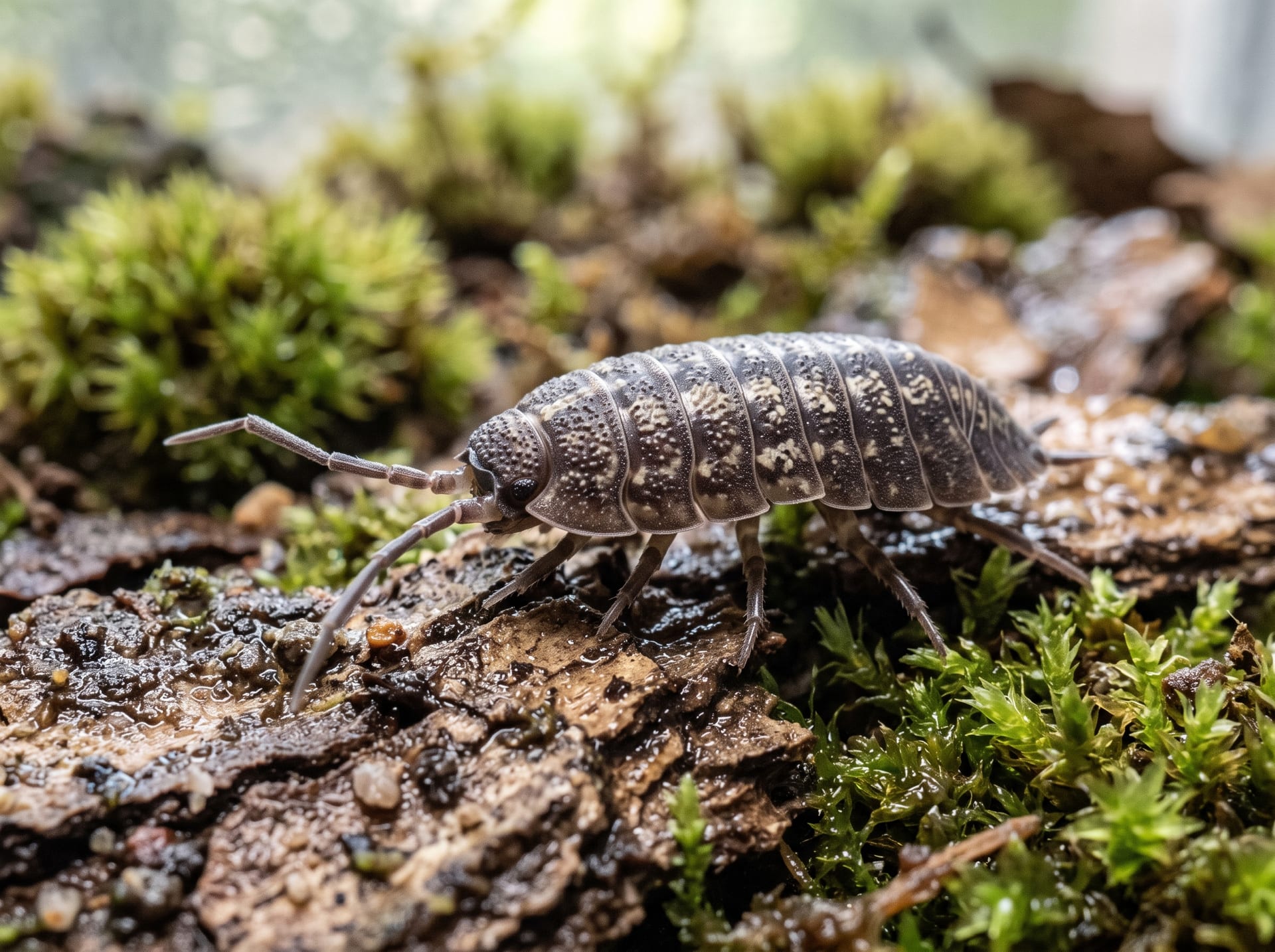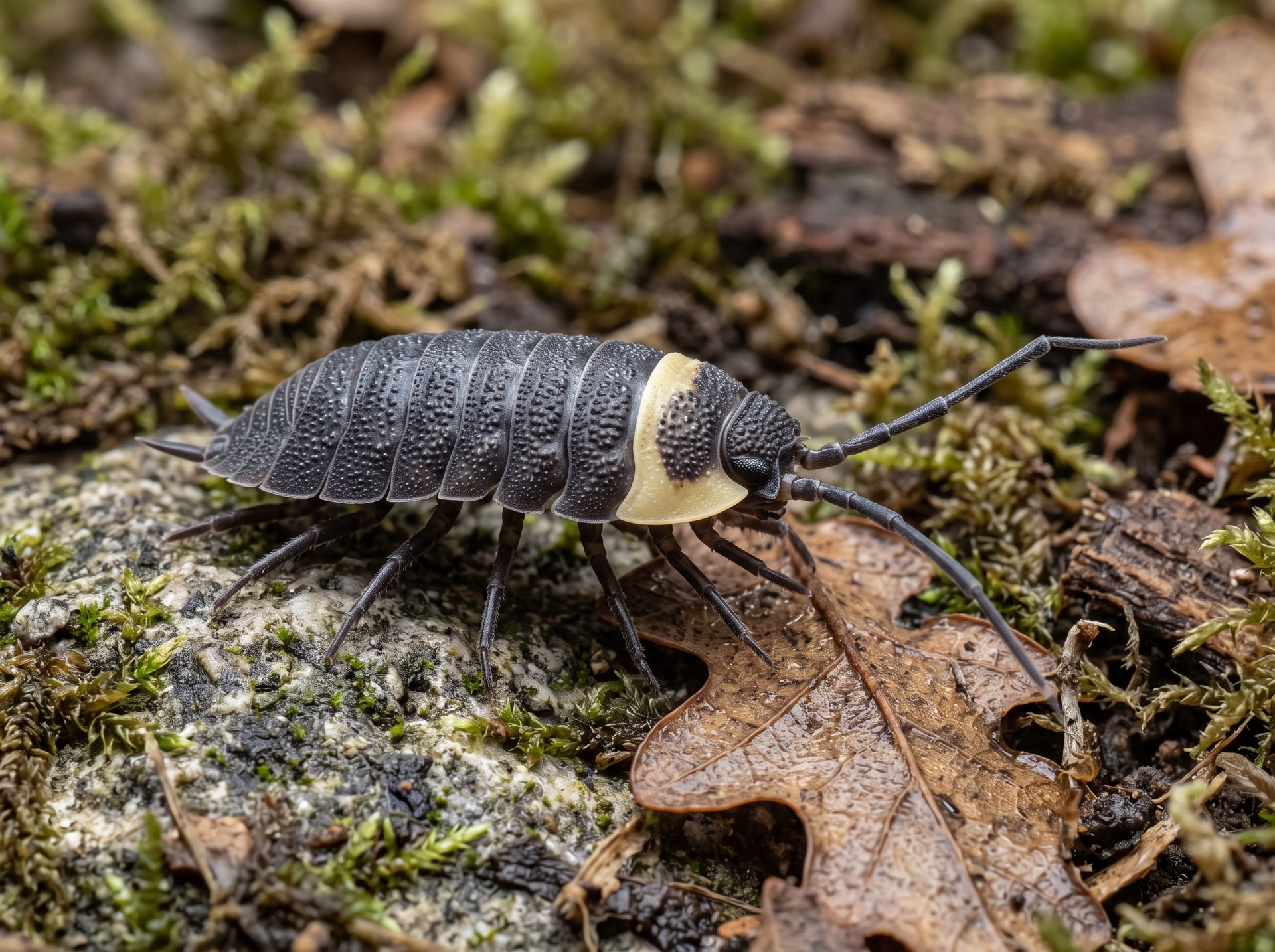
AI-generated image
Succinctus Isopod
AdvancedPorcellio succinctus
A broad, large woodlouse of limestone country in southern Spain. About 28mm of body plus long antennae and uropods make it imposing. Needs low humidity and airflow, produces few young and dislikes change during the summer breeding season, so it suits advanced keepers.
Difficulty
Advanced
Temperature
22〜28℃
Lifespan
3-4 years
Size
About 28mm body length (over 50mm including antennae and uropods)
Humidity
45〜55%
Diet
Leaf litter and rotten wood as staples, with vegetables, fruit, moss, lichen, protein about twice a week and permanent cuttlebone or lime.
About
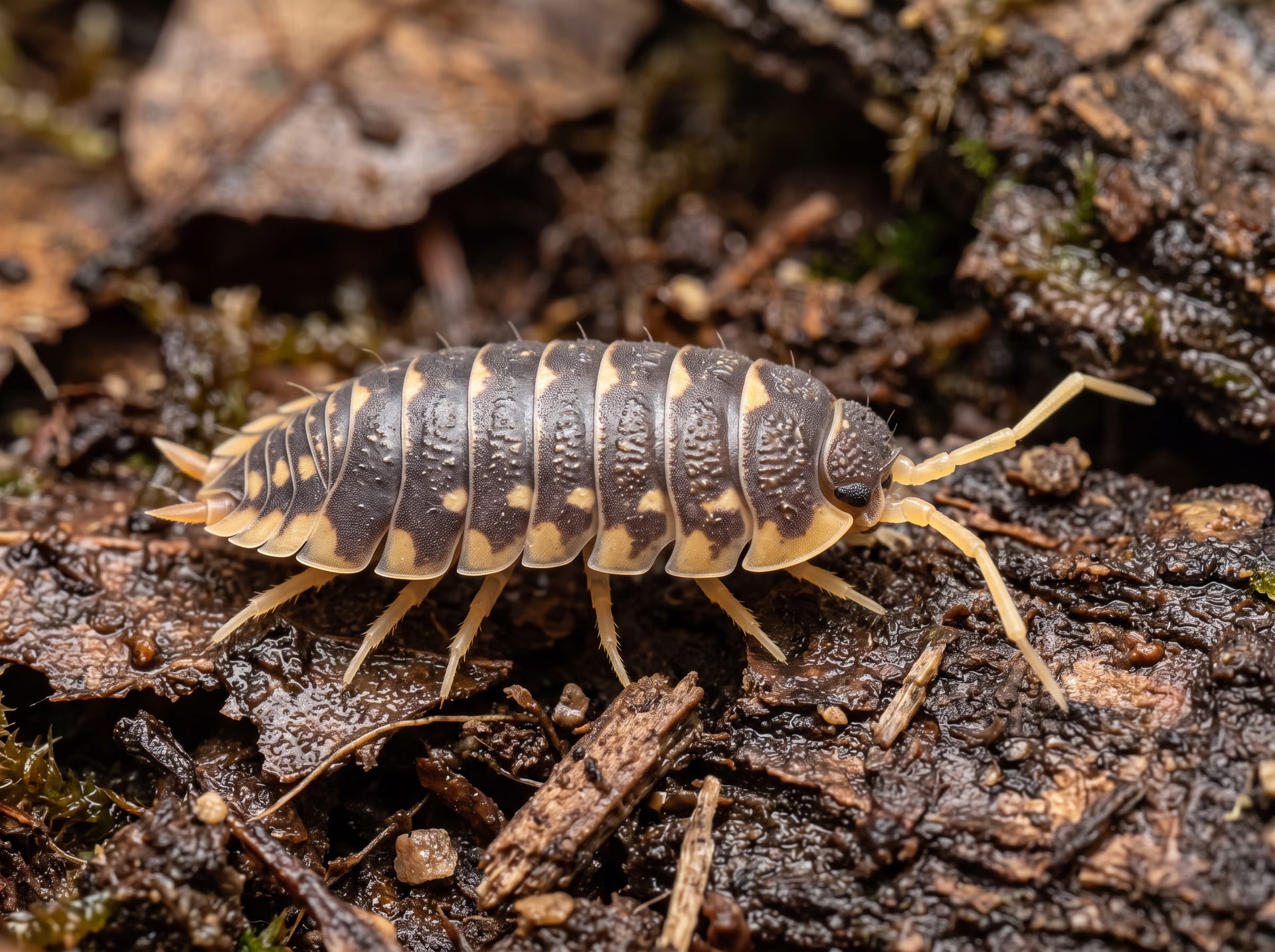
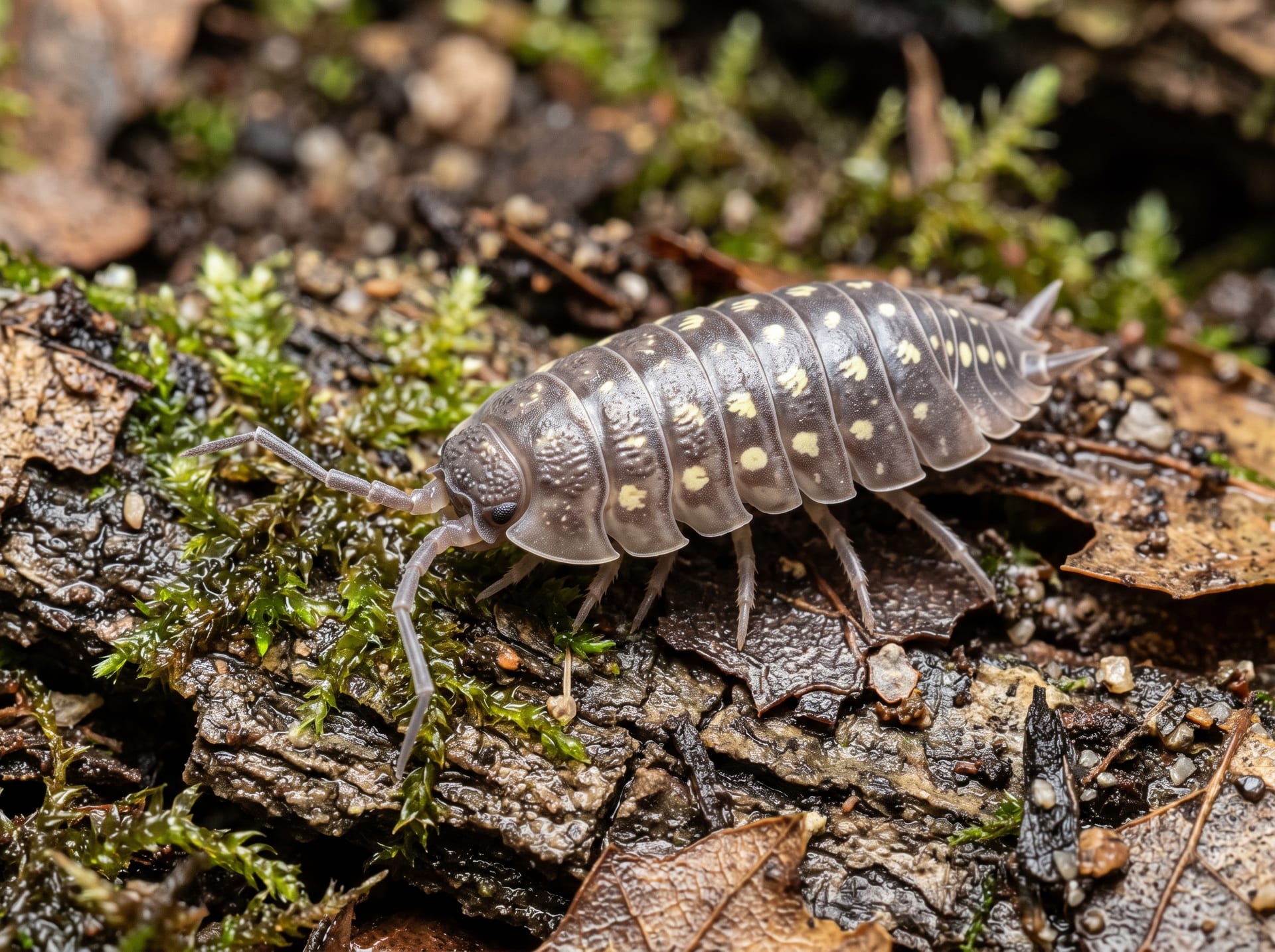
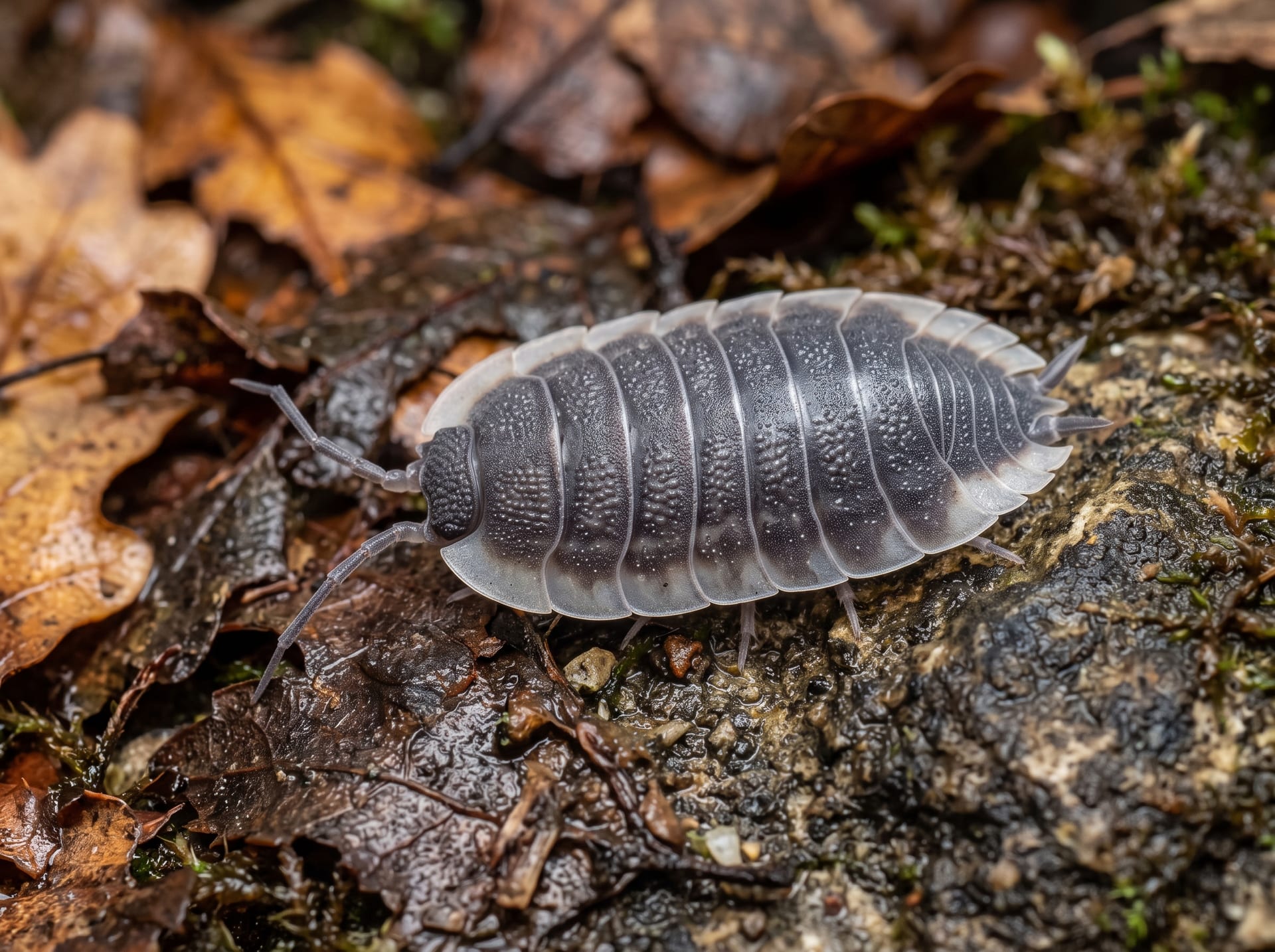
Porcellio succinctus, described by Budde-Lund in 1885, comes from limestone areas of southern Spain. The stocky body is about 28mm long and 15mm wide, and in males the antennae and uropods each add about 15mm, giving a total length of over 50mm. A dark ground carries white segment edges and white dorsal markings, and a strongly white-skirted 'Black Ribs' line is traded; juveniles are almost white with only a few black dots. As a limestone species it needs generous lime in the substrate, limestone hides and permanent cuttlebone. Outside the breeding season it tolerates 16-30C, but in summer, when breeding occurs, females are sensitive to any change, and each produces only 10-20 young a year, so building a colony takes time and stable management. It also suffers under summer heat.
Source: Wikipedia (CC BY-SA 4.0)
Lifespan of the Succinctus Isopod
The Succinctus Isopod lives 3-4 years.
Size of the Succinctus Isopod
The Succinctus Isopod grows to About 28mm body length (over 50mm including antennae and uropods).
Temperature & humidity for the Succinctus Isopod
The ideal temperature for the Succinctus Isopod is 22〜28℃. Ideal humidity is 45〜55%.
Keep at 22-28C and a dry 45-55% humidity, moistening only one corner and providing ample ventilation.
Basic Info
Origin
Southern Spain (limestone areas)
Care Specifications
PeacefulGroupBreeding: Hard
Sources: Insektenliebe (size, temperature, breeding) / Exuvium Isopods (humidity, Black Ribs line) / WoRMS
References & Sources
Edited & verified by: BreederDirect editorial team
The taxonomic, regulatory, and husbandry data on this page are compiled and verified against the authoritative primary sources below.
Taxonomy & Authority
Accepted name: Porcellio succinctus Budde-Lund, 1885
Authority databases: GBIF
Nomenclature follows global taxonomic authority databases.
Regulations & Conservation Status
Not CITES-listed
Sources: CITES Appendices (species not listed)
Regulations may change. Always verify the latest information with the relevant authorities.
Succinctus Isopod Listings
Loading latest listingsFind listings for this species