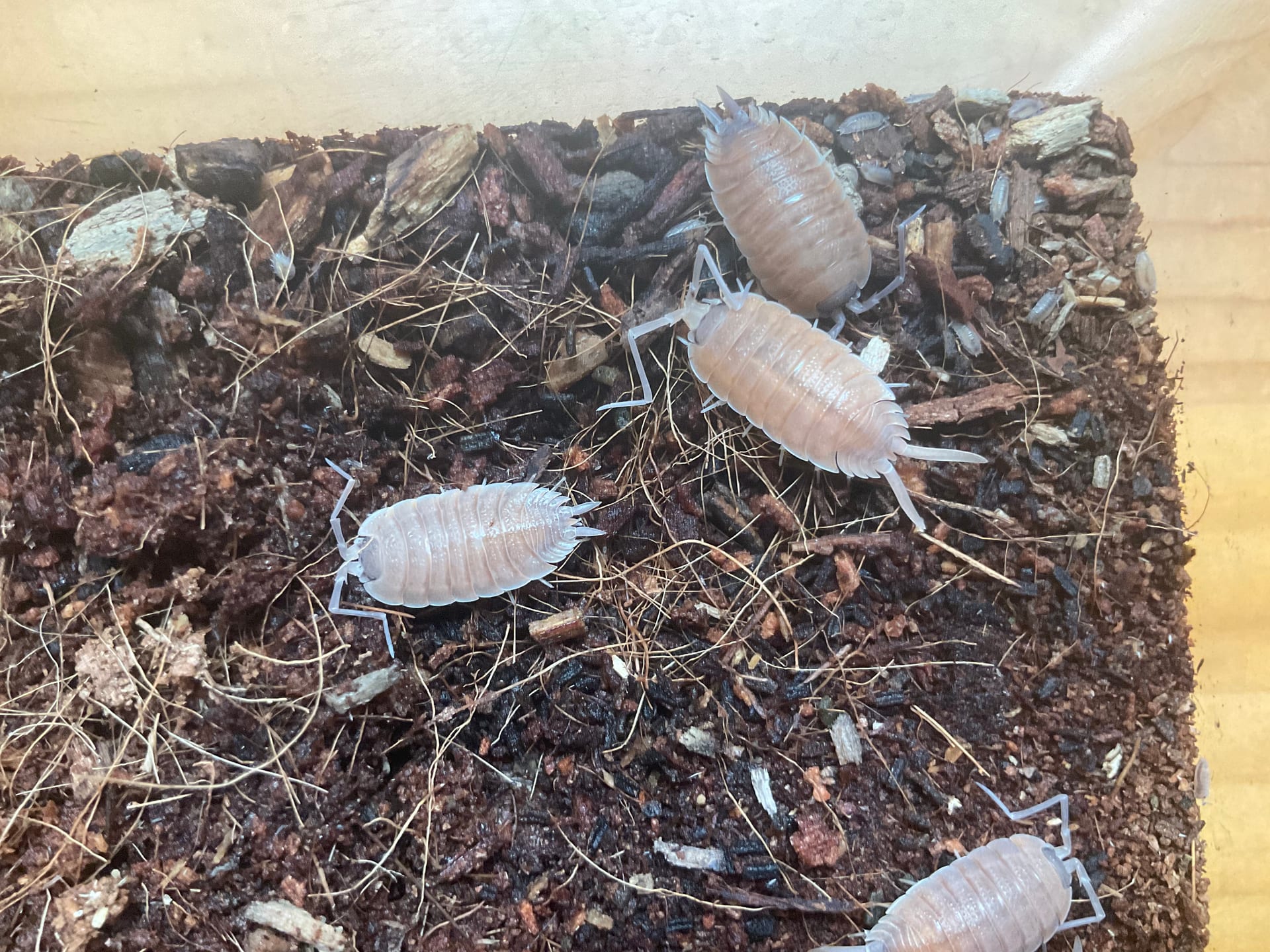
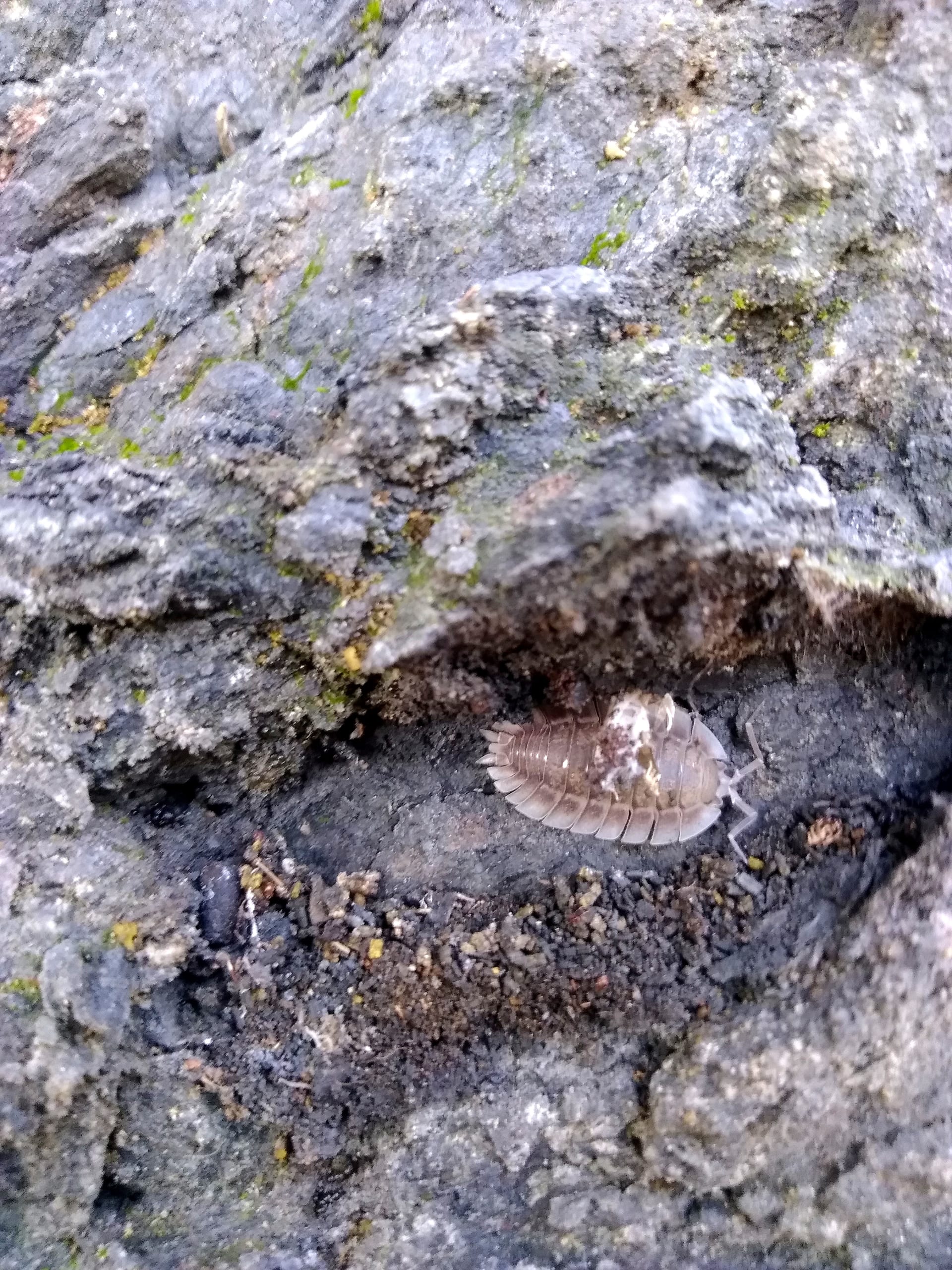
Source: Wikimedia Commons
Nicklesi Isopod
IntermediatePorcellio nicklesi
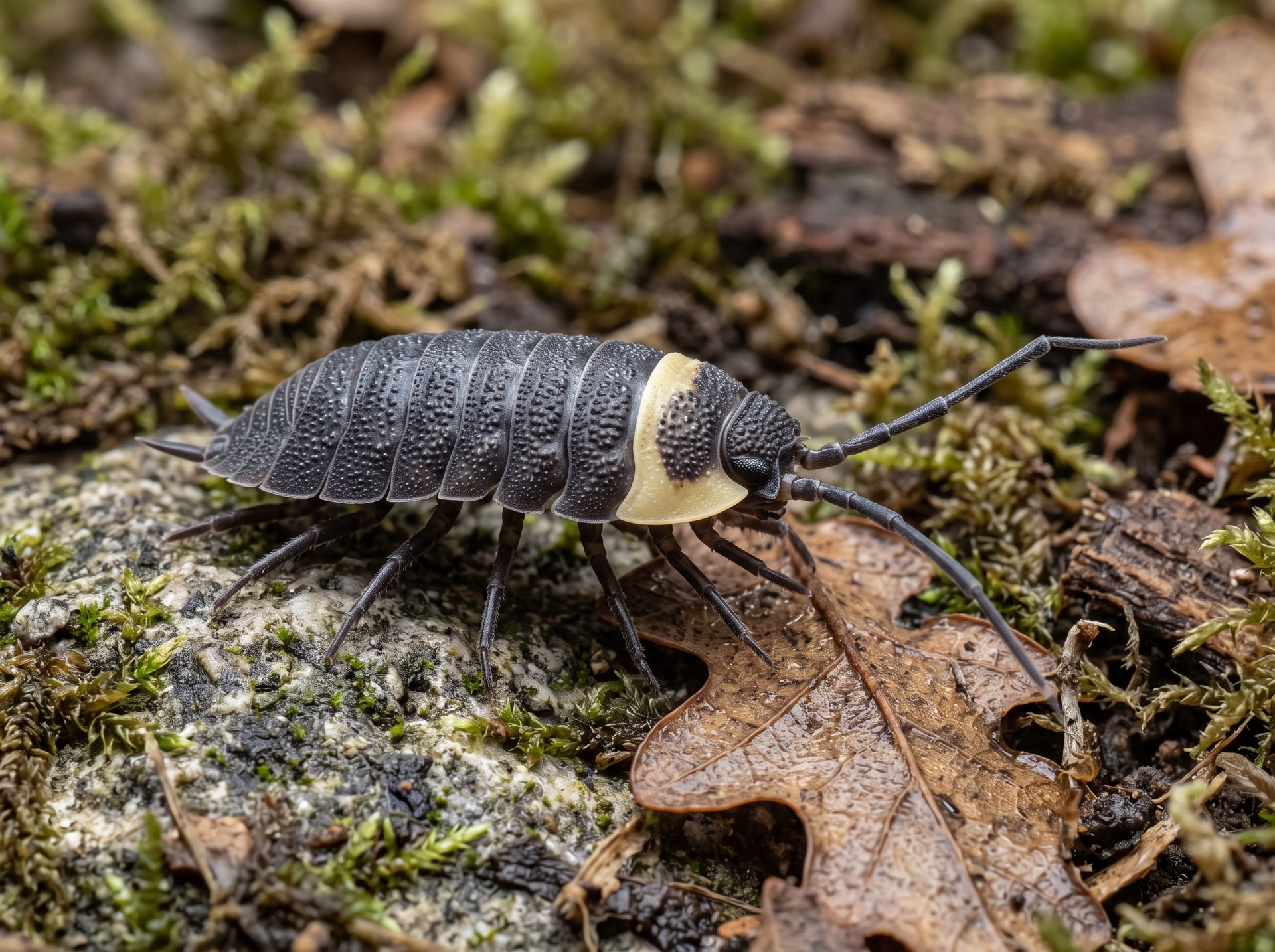
A compact Spanish woodlouse of about 20mm, or about 30mm with its long uropods. Active and often visible, its group behaviour is easy to watch. Needs a drier setup with airflow and does not tolerate high humidity.
Difficulty
Intermediate
Temperature
22〜25℃
Lifespan
1.5-2.5 years
Size
About 20mm (about 30mm including uropods)
Humidity
45〜55%
Diet
Leaf litter and rotten wood as staples, with protein such as isopod food and calcium from cuttlebone.
About
Porcellio nicklesi, described by Dollfus in 1892, is a Spanish woodlouse; WoRMS lists Porcellio bolivari nicklesi as a synonym. The body is a compact 20mm, but the long uropods bring it to about 30mm. In the wild it lives under stones, in loose soil and among rotting wood, conditions that are easy to recreate. Build structure from leaf litter, rotten wood and soil so the animals can use both dry and slightly damp zones. Leaf litter and rotten wood are the staples; it takes protein such as isopod food readily and gets calcium from cuttlebone. It is active and often seen running among leaves and wood by day, though some keepers report mainly nocturnal and early-morning activity. Group behaviour is calm and easy to observe. Once established it breeds seasonally and reliably, maturing at about six months, without overrunning the enclosure.
Source: Wikipedia (CC BY-SA 4.0)
Lifespan of the Nicklesi Isopod
The Nicklesi Isopod lives 1.5-2.5 years.
Size of the Nicklesi Isopod
The Nicklesi Isopod grows to About 20mm (about 30mm including uropods).
Temperature & humidity for the Nicklesi Isopod
The ideal temperature for the Nicklesi Isopod is 22〜25℃. Ideal humidity is 45〜55%.
Keep at 22-25C and 45-55% humidity, moistening only about a fifth of the enclosure and ventilating well so no water accumulates.
Basic Info
Origin
Spain
Lifespan
1.5-2.5 years
Size
About 20mm (about 30mm including uropods)
Temperature
22〜25℃
Humidity
45〜55%
Diet
Leaf litter and rotten wood as staples, with protein such as isopod food and calcium from cuttlebone.
Care Guide
Temperature & Humidity
22-25C and 45-55% humidity. Moisten only about a fifth of the enclosure and avoid high humidity.
Enclosure
Ventilate well and build dry and slightly damp zones from leaf litter, rotten wood and soil, with stone or cork hides.
Diet & Feeding
Keep leaf litter and rotten wood available; add protein such as isopod food and keep cuttlebone present.
Temperament & Venom
Harmless and active. Calm group behaviour, often visible by day. Keep in groups.
Notes
Sensitive to wet conditions and poor airflow. Breeding is seasonal and maturity takes about six months.
WoodlousePorcellioSpanish speciesDry setup
Nicklesi Isopod FAQ
QHow difficult is it to keep Nicklesi Isopod?
A
Intermediate. This is an intermediate-level species. Some prior experience and knowledge of environmental management are recommended.
QWhat is the ideal temperature for Nicklesi Isopod?
A
The ideal temperature for Nicklesi Isopod is 22〜25℃. Recommended humidity is 45〜55%. Avoid sudden temperature changes and maintain a stable environment.
QWhat is the lifespan of Nicklesi Isopod?
A
The average lifespan of Nicklesi Isopod is 1.5-2.5 years. With proper care and nutrition, they can live a long and healthy life.
QHow large does Nicklesi Isopod get?
A
Nicklesi Isopod typically reaches About 20mm (about 30mm including uropods) as an adult. Size may vary depending on care conditions and individual genetics.
QWhat should I feed Nicklesi Isopod?
A
Nicklesi Isopod feeds on: Leaf litter and rotten wood as staples, with protein such as isopod food and calcium from cuttlebone.. Aim for a balanced diet with appropriate feeding frequency.
QWhat is the typical price for Nicklesi Isopod?
A
The price of Nicklesi Isopod varies significantly depending on morph, size, and lineage. Check our market price page for the latest pricing information.
Last updated: September 17, 2026
Care Specifications
PeacefulGroupBreeding: Moderate
Sources: Insektenliebe (temperature, behaviour, feeding) / Exuvium Isopods (size, humidity, breeding) / WoRMS
References & Sources
Edited & verified by: BreederDirect editorial team
The taxonomic, regulatory, and husbandry data on this page are compiled and verified against the authoritative primary sources below.
Taxonomy & Authority
Accepted name: Porcellio nicklesi Dollfus, 1892
Synonyms: Porcellio bolivari nicklesi
Authority databases: GBIF
Nomenclature follows global taxonomic authority databases.
Regulations & Conservation Status
Not CITES-listed
Sources: CITES Appendices (species not listed)
Regulations may change. Always verify the latest information with the relevant authorities.
Related Species
Nicklesi Isopod Listings
Loading latest listingsFind listings for this species
Related Articles
Isopod Breeding and Care Guide | How to Use Them as Bioactive Cleanup Crew
A comprehensive guide to establishing and managing isopod breeding colonies. Covers housing, care, and solutions when colonies get too large—including self-consumption, splitting, and selling. Includes how to use them as cleanup crews in bioactive reptile and amphibian enclosures, plus an overview of popular species.
Bioactive Care Guide for Pill Bugs and Sow Bugs | Utilizing Cleanup Crews
Learn about bioactive care for pill bugs and sow bugs. Discover how to use them as cleanup crews in vivariums.
Dubia & Madagascar Hissing Cockroach Care Guide | How to Keep Feeder Insects and Pet Cockroaches
A comprehensive guide to caring for Dubia roaches (Blaptica dubia) and Madagascar Hissing Cockroaches (Gromphadorhina portentosa), popular as feeder insects for reptiles and amphibians and as ornamental pets. Covers essentials from container selection and temperature management to feeding, home breeding, feeder colony maintenance, and proper disposal methods—a practical guide for successfully keeping and breeding cockroach species.
The Complete Guide to Tarantula Molting Management | Pre-Molt Signs, Environmental Setup, Prevention and Treatment of Molting Failure
Tarantula molting is one of the most stressful events for keepers. This guide provides practical explanations of pre-molt signs, what not to do, humidity and substrate management, and how to handle stuck molts.