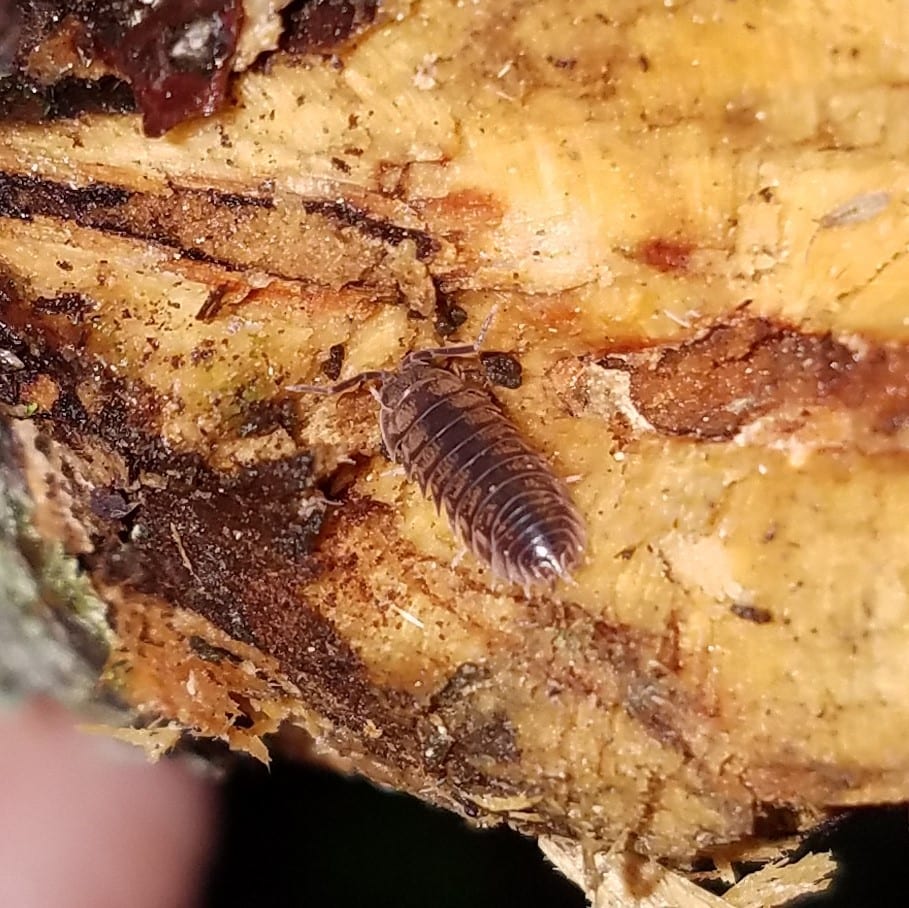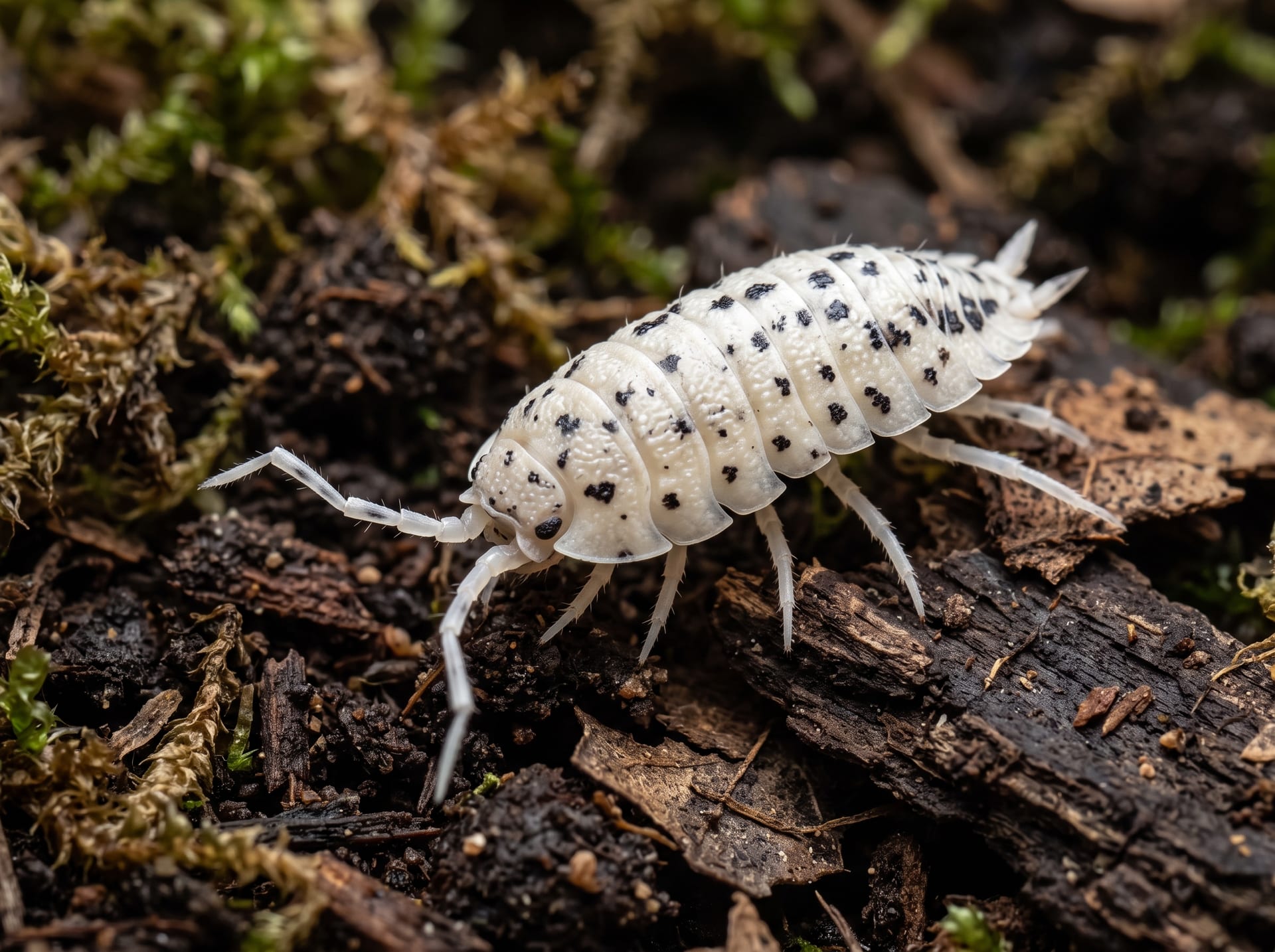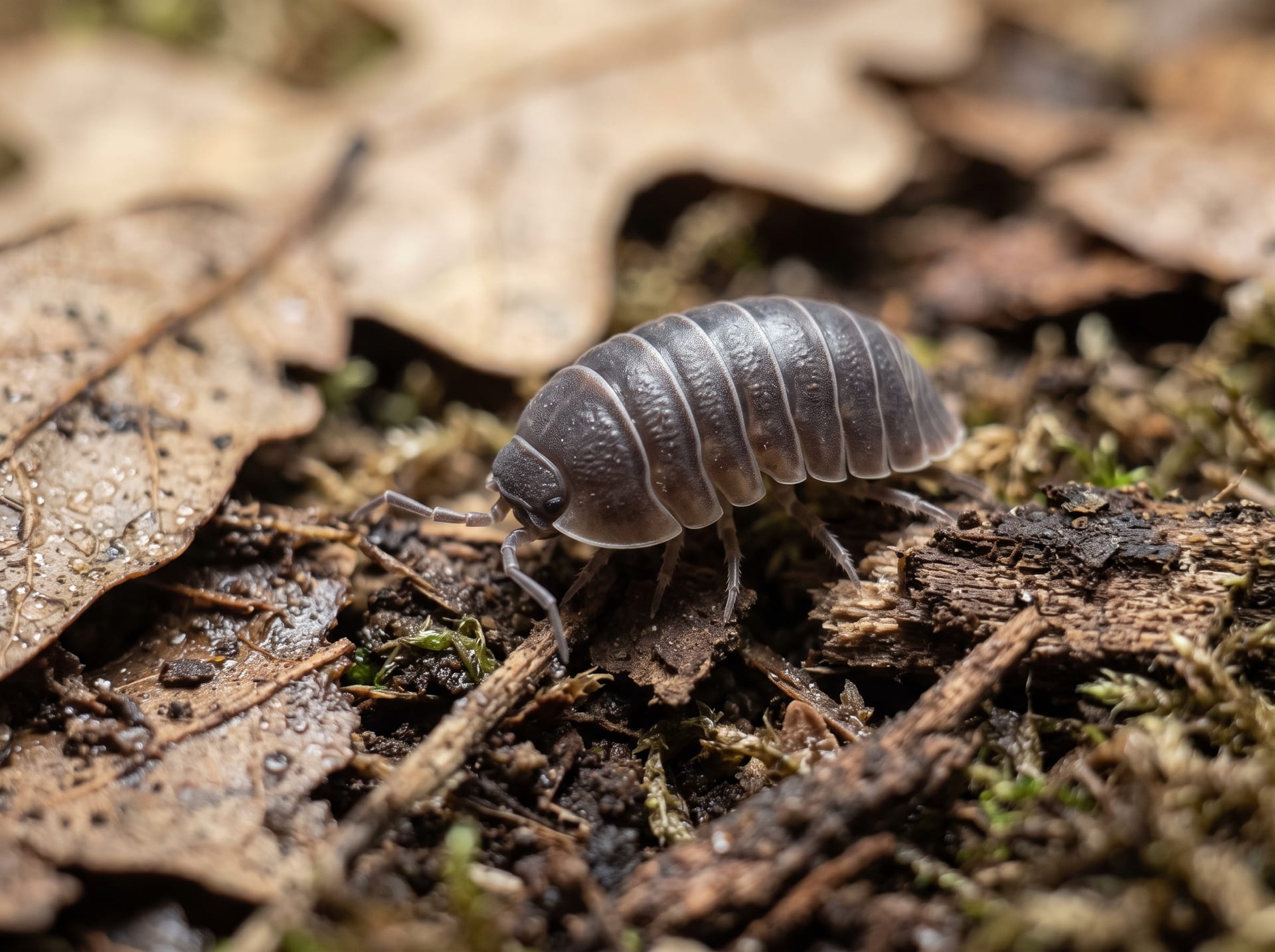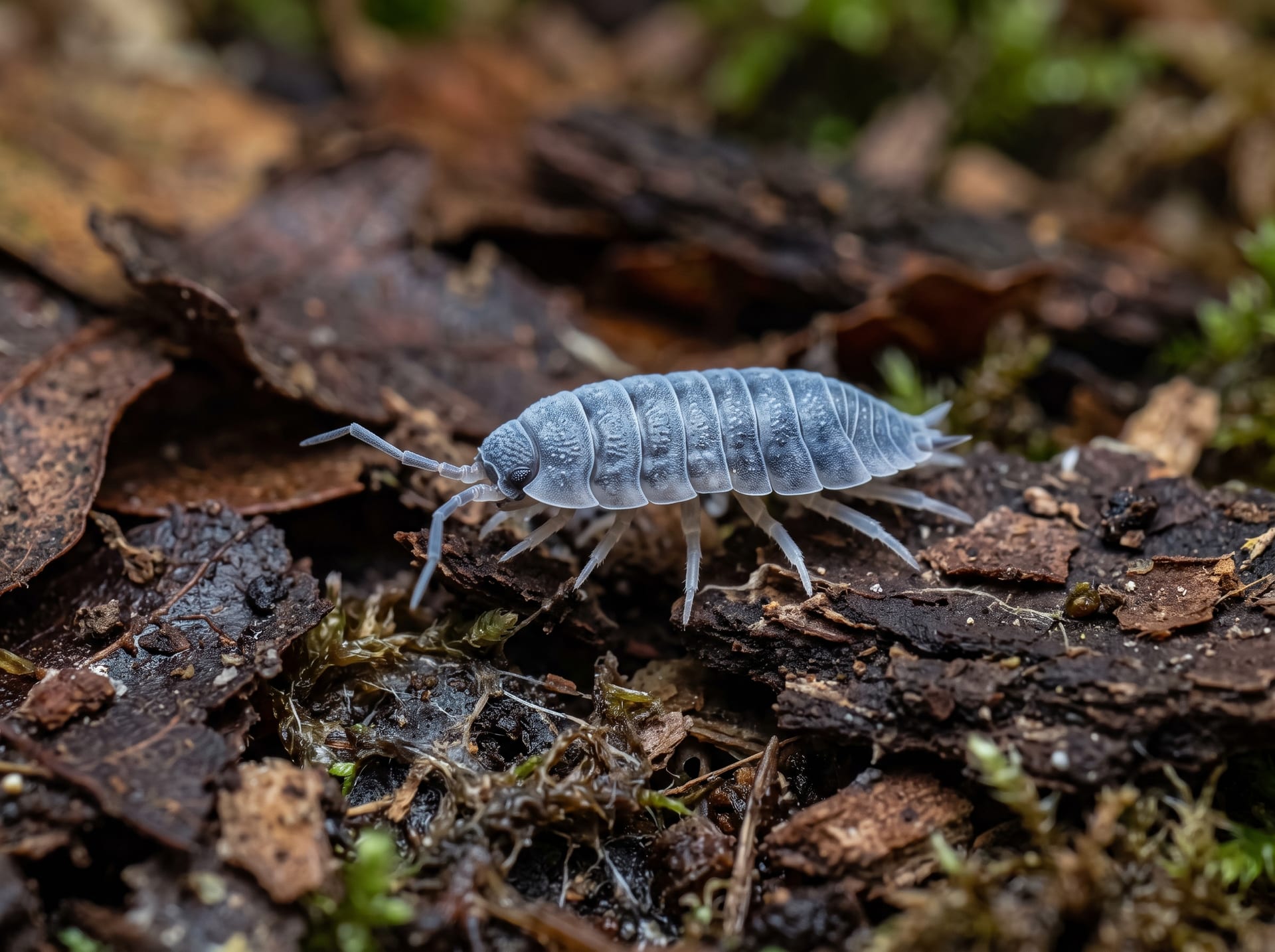
Source: Wikimedia Commons
Giant Canyon Isopod
BeginnerPorcellio dilatatus
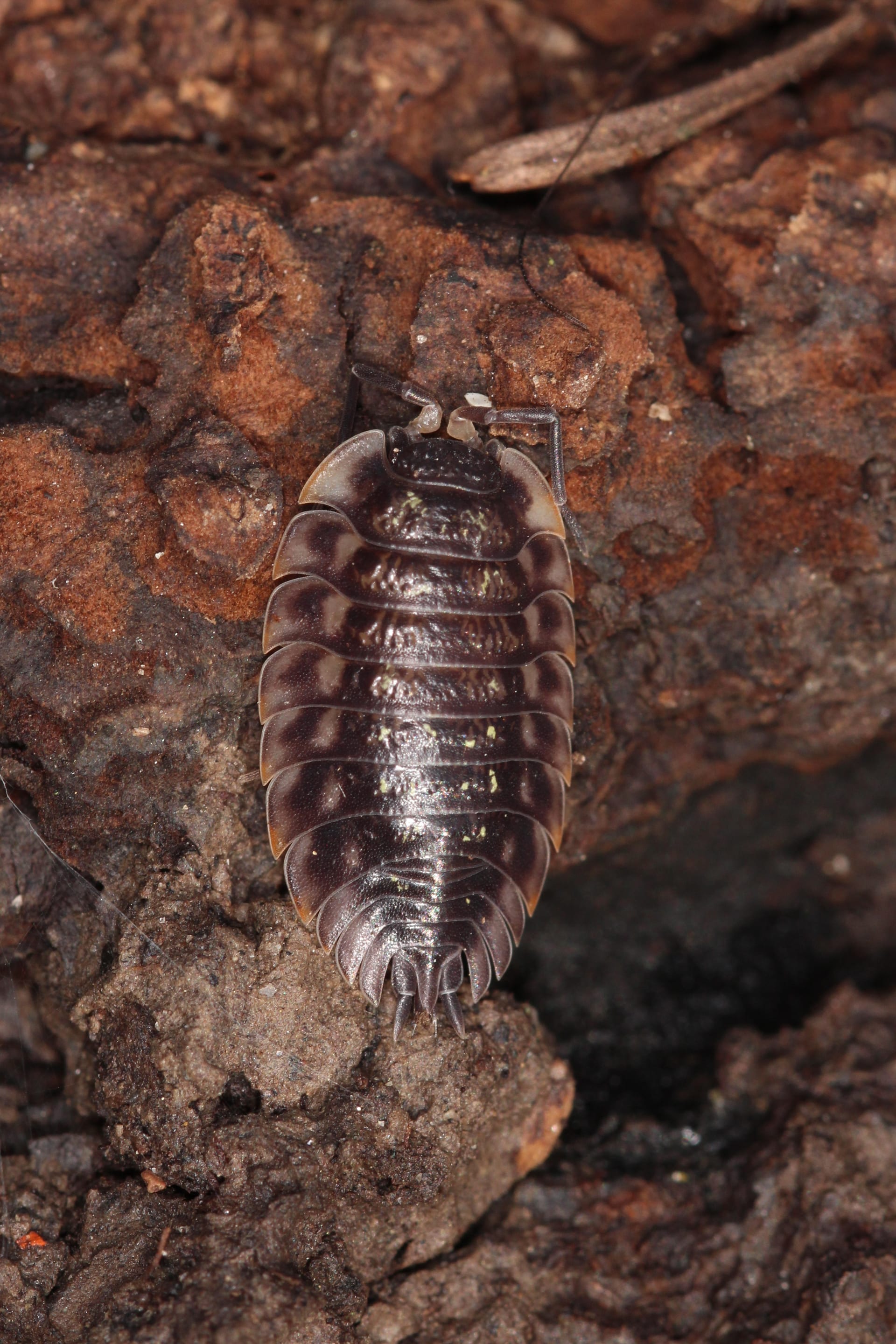
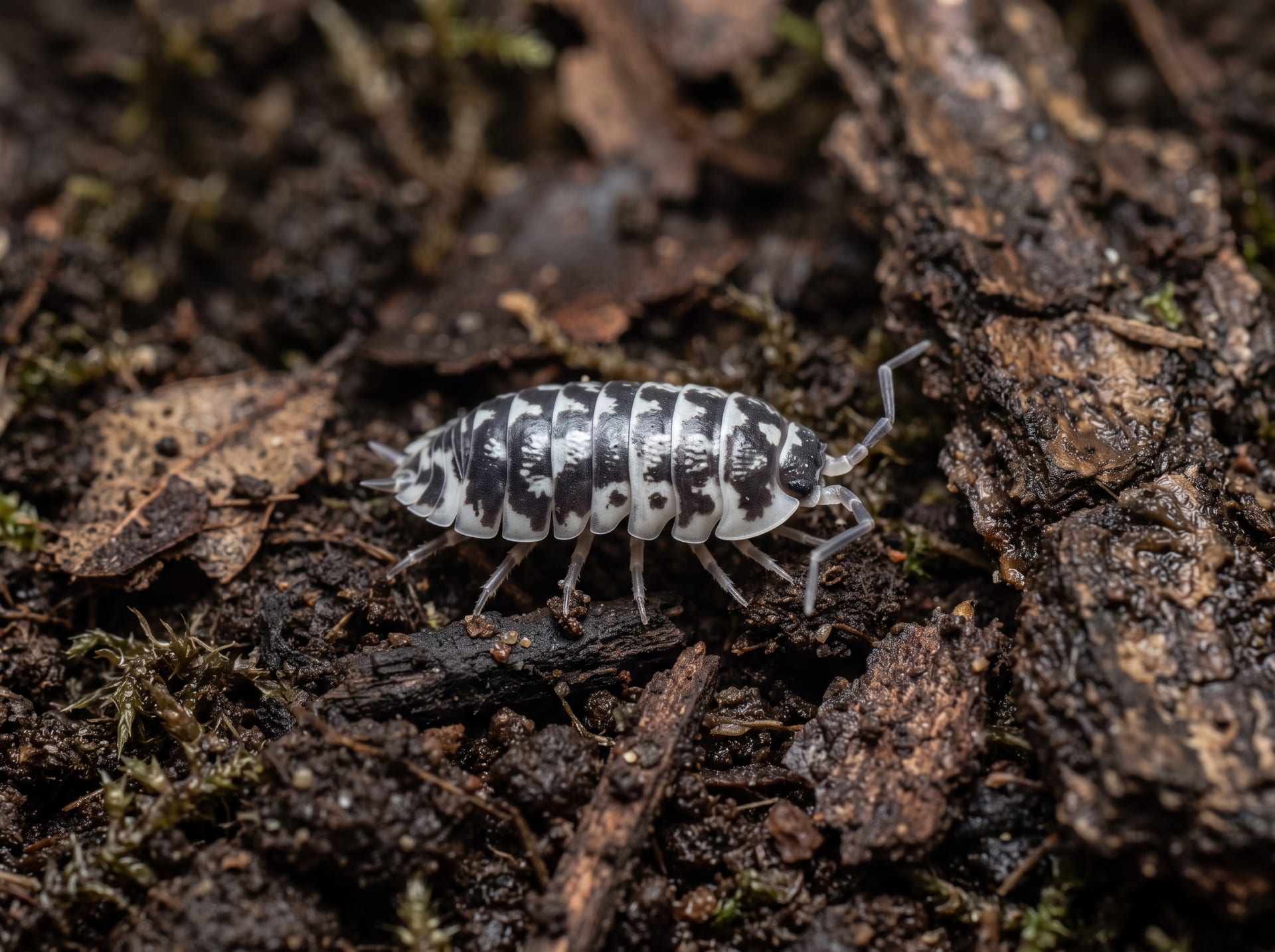
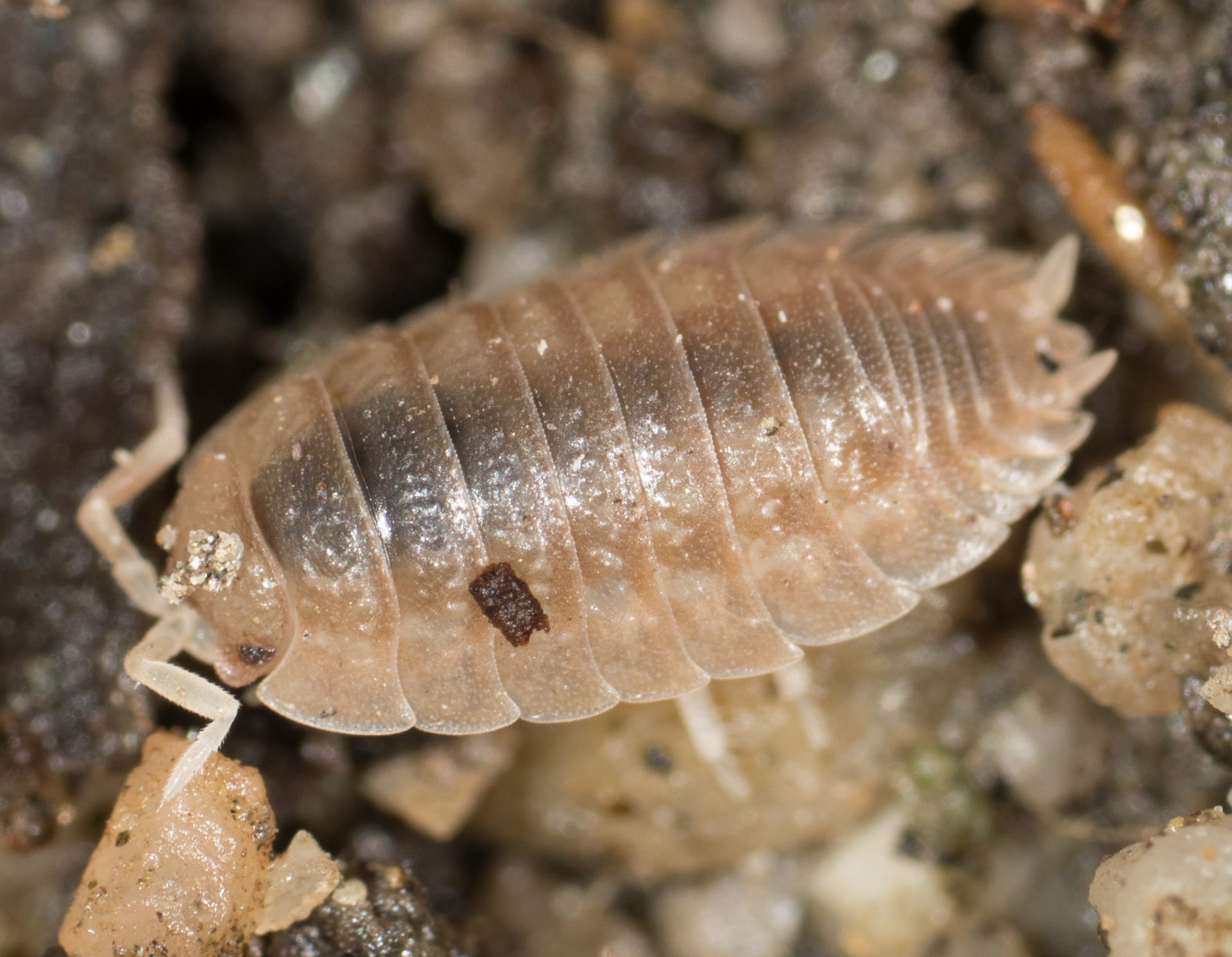
A woodlouse native to south-western Europe and now established around buildings worldwide. The broad oval body is grey to dark brown and it burrows readily. Hardy and drought tolerant, it is a widely used beginner cleanup species.
Difficulty
Beginner
Temperature
15〜26℃
Lifespan
2-3 years
Size
About 15-20mm
Humidity
50〜70%
Diet
Leaf litter, rotten wood and substrate humus as staples, with vegetables, fruit, protein and a calcium source.
About
Porcellio dilatatus, described by Brandt in 1831, is native to south-western Europe and has spread with human traffic to North and South America, Australia and beyond, where it lives around buildings, greenhouses and flower pots; five subspecies are recognised. Adults are about 15-20mm with a broad oval body of grey to dark brown, the central lobe of the head always darker, and a tongue-shaped rounded telson that separates it from similar species. It burrows and eats the substrate itself, so provide a depth of at least 5-10cm. Leaf litter and rotten wood are the staples, supplemented with vegetables, fruit, protein and calcium. It is nocturnal and also active in the early morning. Drought tolerant and forgiving of fluctuations, it is widely used as a vivarium cleanup crew. Breeding is reliable, with moderate colony growth.
Source: Wikipedia (CC BY-SA 4.0)
Lifespan of the Giant Canyon Isopod
The Giant Canyon Isopod lives 2-3 years.
Size of the Giant Canyon Isopod
The Giant Canyon Isopod grows to About 15-20mm.
Temperature & humidity for the Giant Canyon Isopod
The ideal temperature for the Giant Canyon Isopod is 15〜26℃. Ideal humidity is 50〜70%.
Care is easy at 15-26C and 50-70% humidity, with about one third of the enclosure kept moist with moss, rotten wood and leaves.
Basic Info
Origin
South-western Europe (introduced worldwide, established around buildings and greenhouses)
Care Specifications
PeacefulGroupBreeding: Easy
Sources: Exuvium Isopods (size, temperature, humidity, care) / Wikipedia (de) (size, morphology, distribution) / Wikipedia (en) (subspecies, distribution) / WoRMS
References & Sources
Edited & verified by: BreederDirect editorial team
The taxonomic, regulatory, and husbandry data on this page are compiled and verified against the authoritative primary sources below.
Taxonomy & Authority
Accepted name: Porcellio dilatatus Brandt in Brandt & Ratzeburg, 1831
Synonyms: Porcellio dilatatus var. flavus, Porcellio dilatatus var. rufobrunneus
Authority databases: GBIF
Nomenclature follows global taxonomic authority databases.
Regulations & Conservation Status
Not CITES-listed
Sources: CITES Appendices (species not listed)
Regulations may change. Always verify the latest information with the relevant authorities.
Giant Canyon Isopod Listings
Loading latest listingsFind listings for this species