Source: Wikimedia Commons
Indian Violet Tarantula
IntermediateChilobrachys fimbriatus
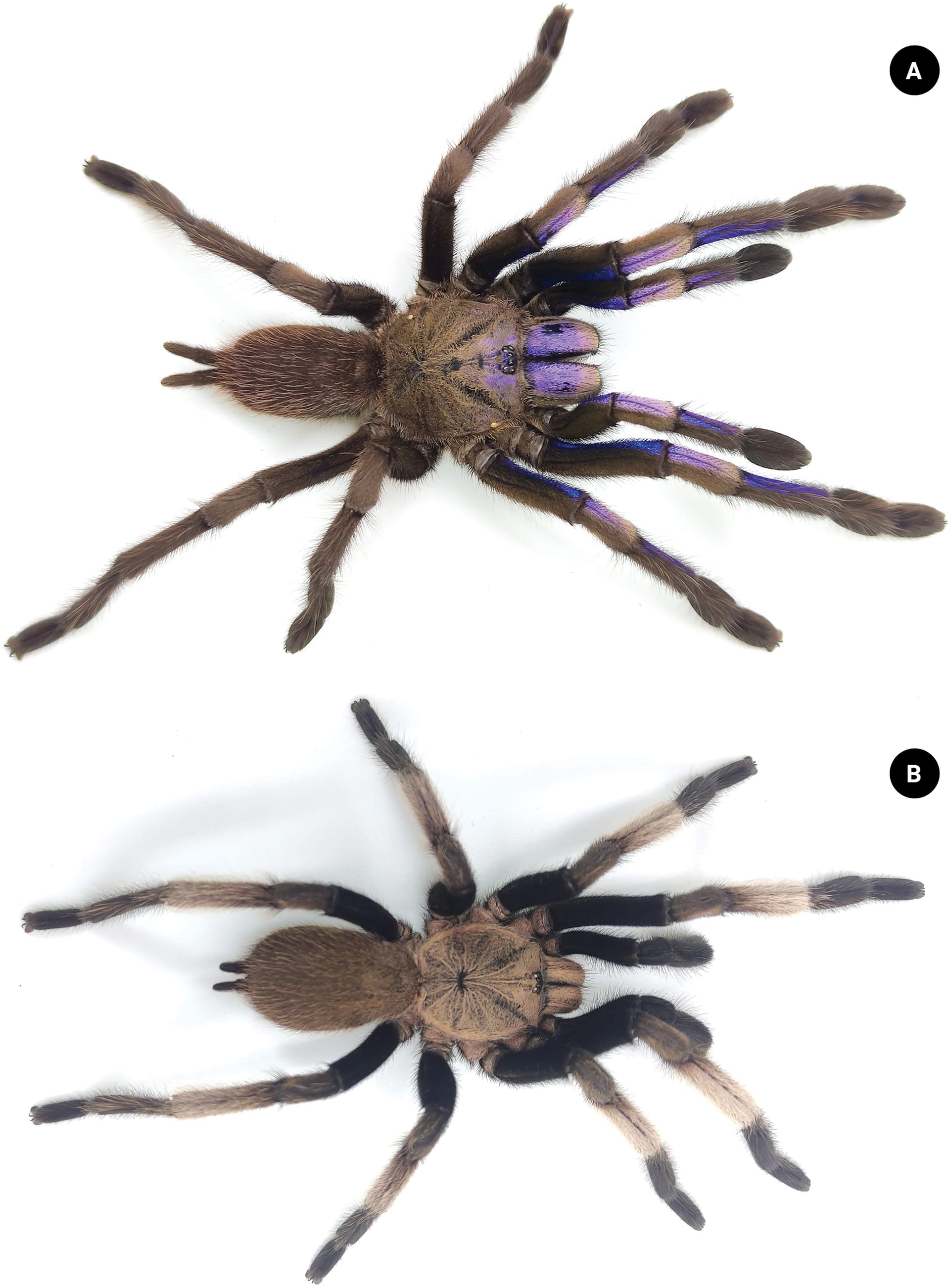
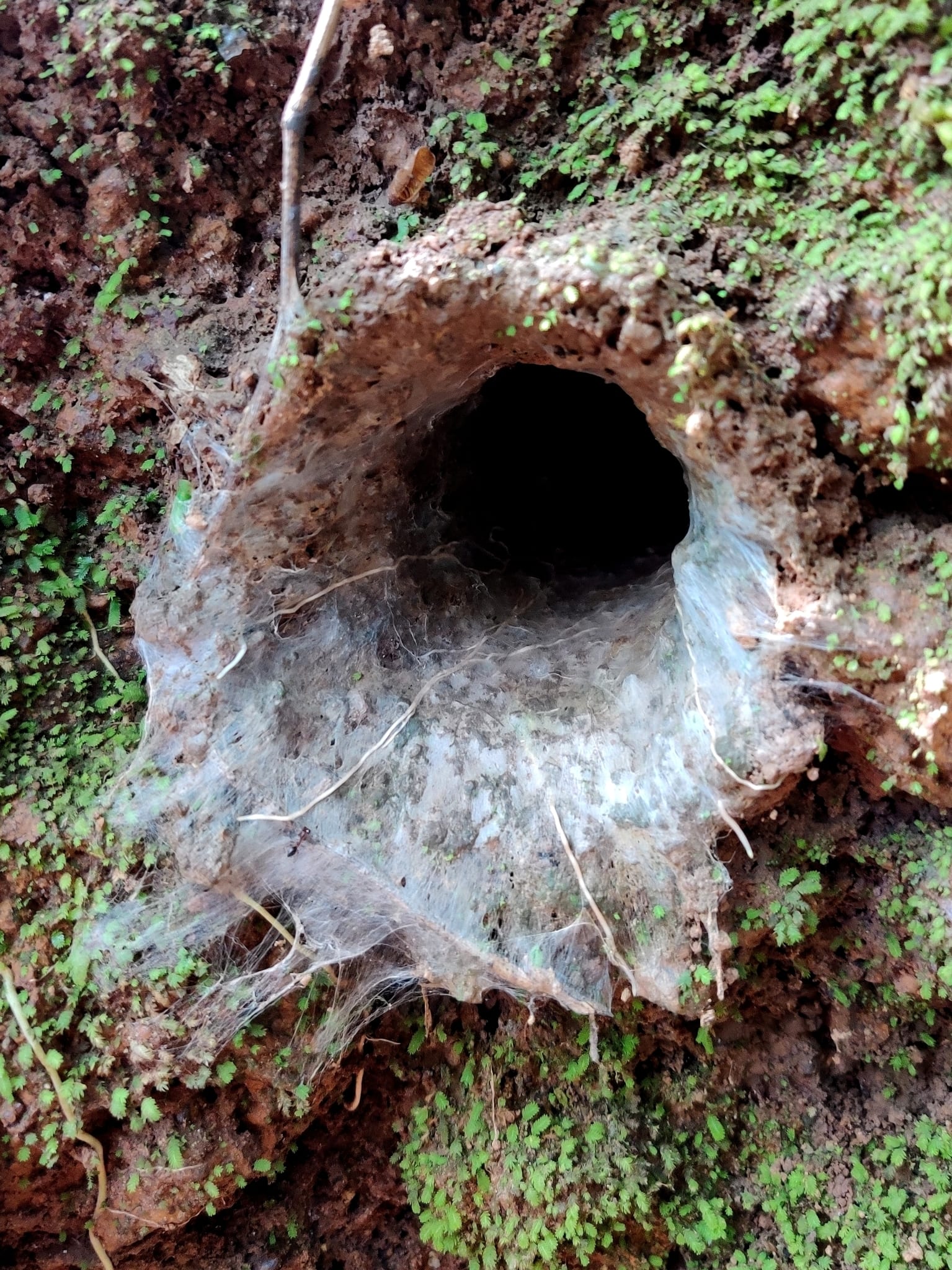
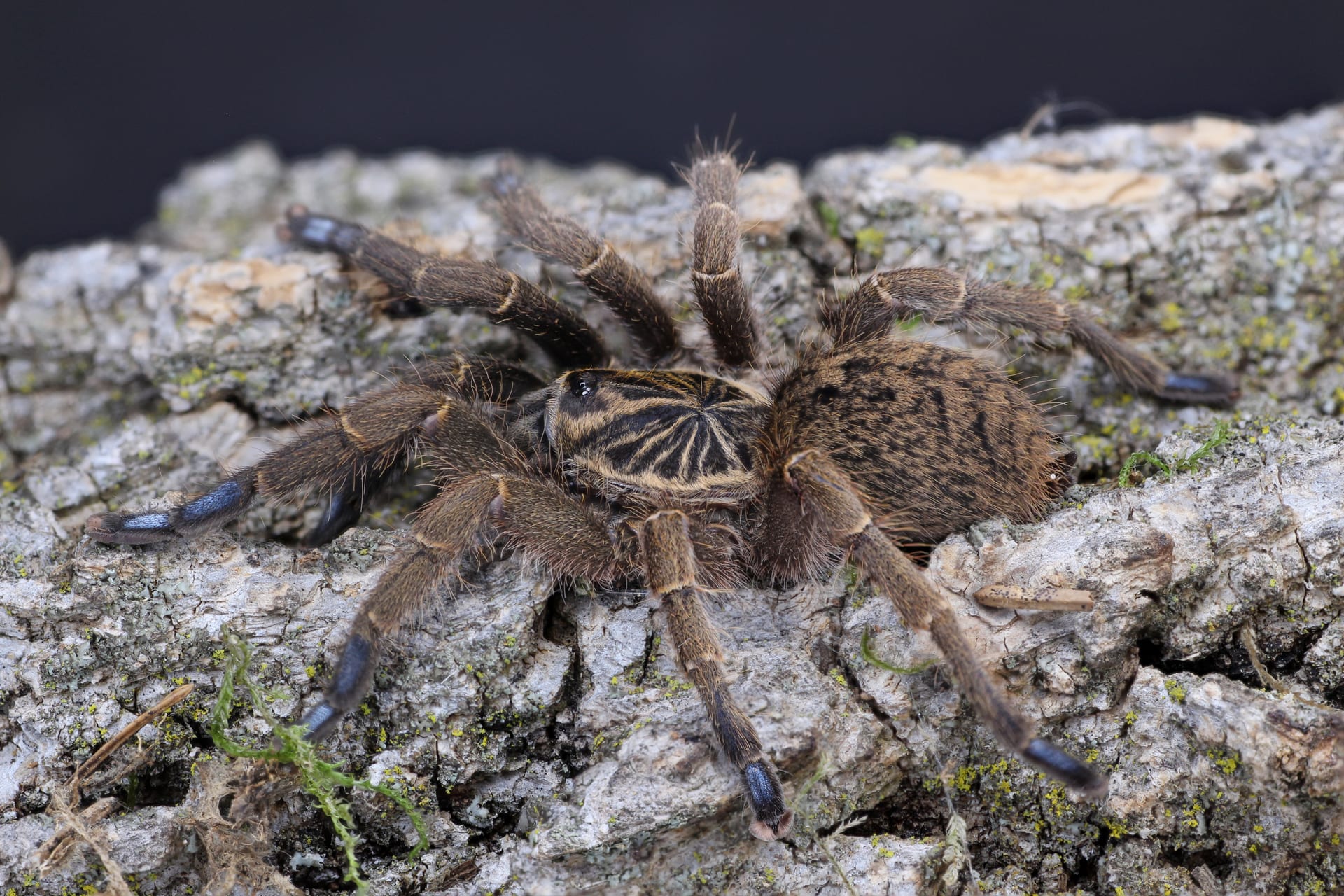
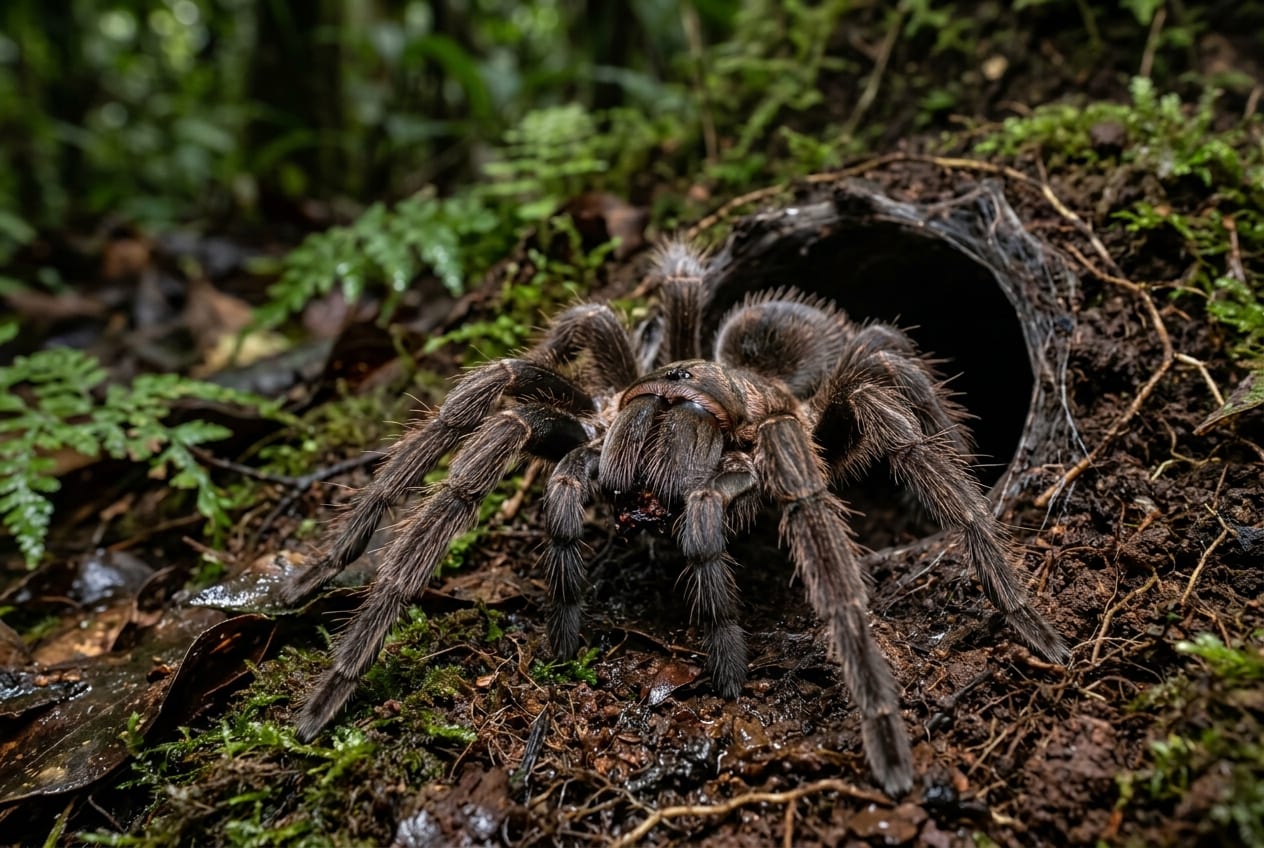
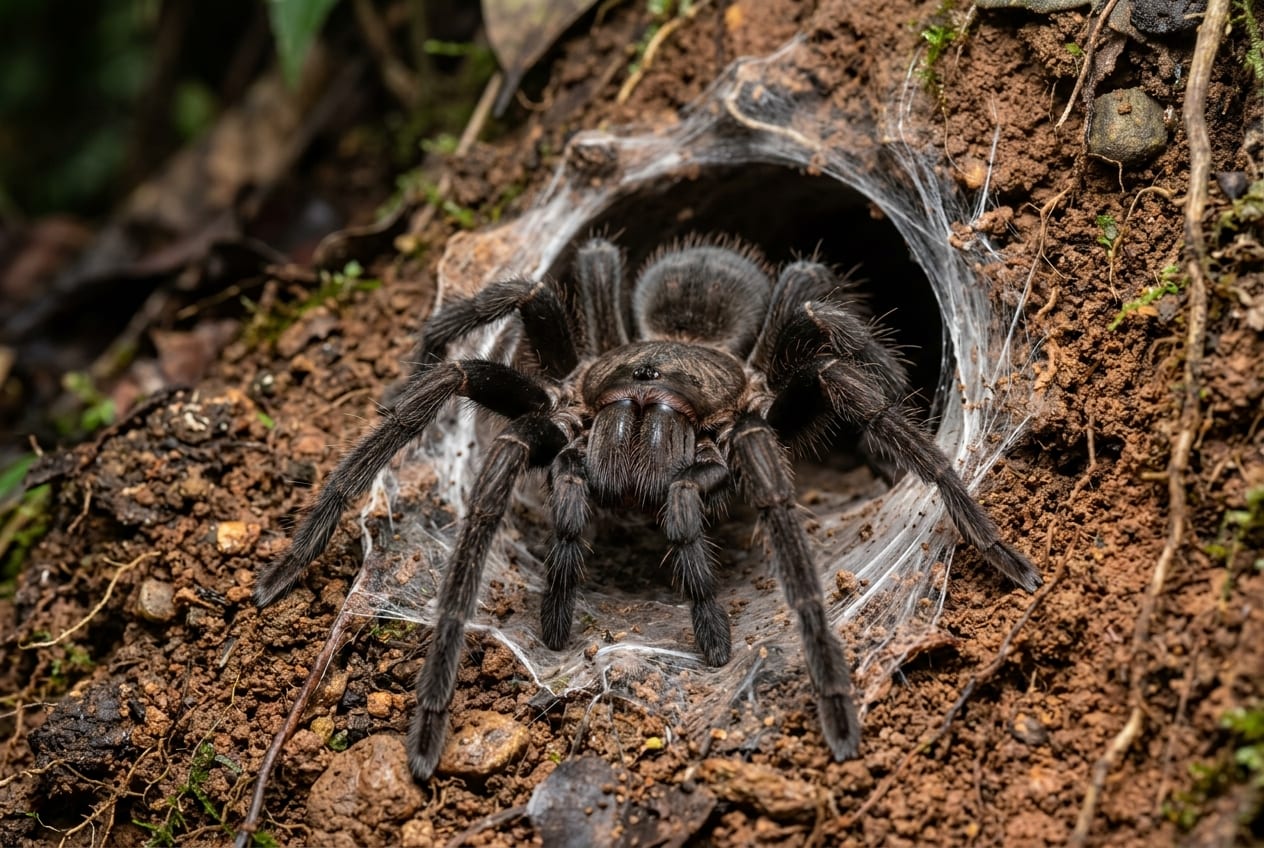
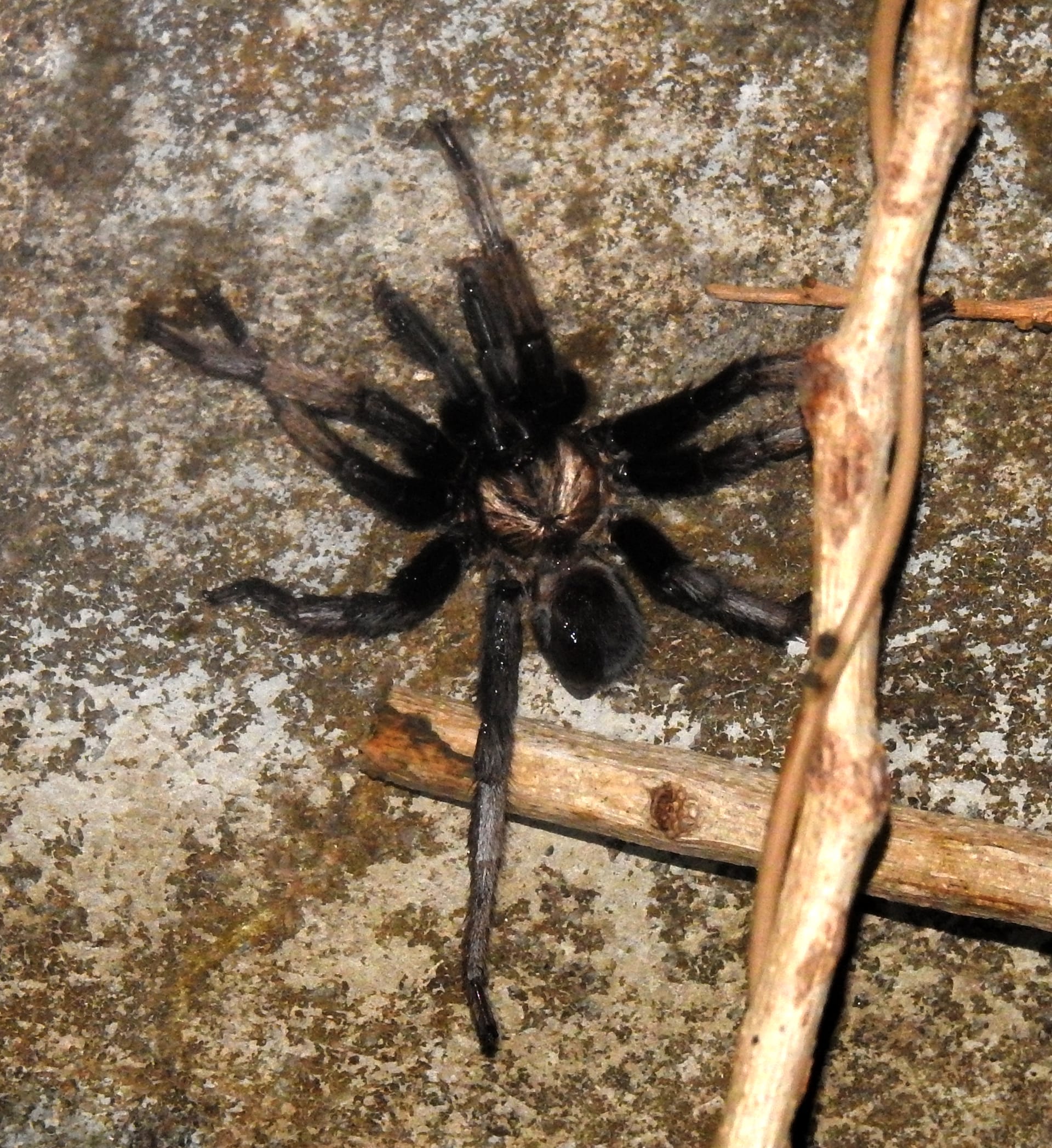
A fossorial tarantula endemic to western India. A light brown to golden carapace contrasts with blue-grey legs, black femora and a dark fishbone pattern on the abdomen. It builds elaborate tunnels and webbing below the surface.
Difficulty
Intermediate
Temperature
23〜25℃
Lifespan
12-15 years for females, about 5 years for males
Size
Body 5-7cm, leg span 15-17cm
Humidity
60〜80%
Diet
Live insects such as crickets and roaches
About
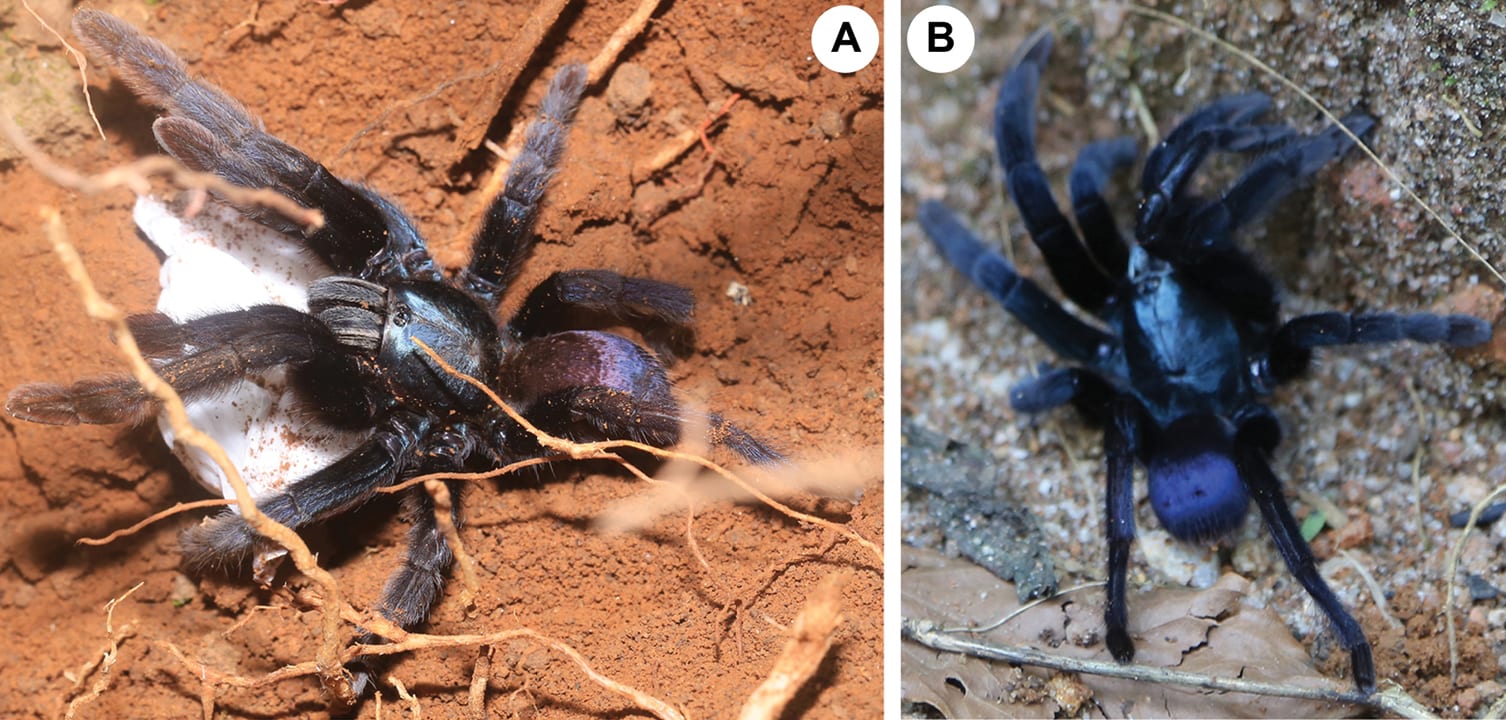
Chilobrachys fimbriatus was described by Pocock in 1899 from material collected at Khandala in Maharashtra and is endemic to western India. Juveniles are uniformly brown, but adults develop a strongly contrasting pattern: a light brown to golden carapace, blue-grey legs with black femora, and a beige-brown abdomen marked with dark lines resembling fish bones. Iridescence gives the femora a bluish sheen. It occurs in monsoon-influenced tropical country and tolerates both dry seasons and periods of high humidity, which makes it comparatively forgiving of a range of captive conditions. It is fossorial, constructing elaborate tunnels and webbing in which it spends the day before waiting at the burrow entrance at night to ambush prey. Despite its small range it is heavily collected for the pet trade, raising concern for wild populations.
Source: Wikipedia (CC BY-SA 4.0)
Lifespan of the Indian Violet Tarantula
The Indian Violet Tarantula lives 12-15 years for females, about 5 years for males.
Size of the Indian Violet Tarantula
The Indian Violet Tarantula grows to Body 5-7cm, leg span 15-17cm.
It measures 50-70mm in body length with a leg span of 15-17cm, making it a medium-sized member of the genus.
Temperature & humidity for the Indian Violet Tarantula
The ideal temperature for the Indian Violet Tarantula is 23〜25℃. Ideal humidity is 60〜80%.
Basic Info
Origin
Western India (mainly Goa, western Maharashtra and northwestern Karnataka)
Care Specifications
Semi-aggressiveSolitary
Sources: Wikipedia: Chilobrachys fimbriatus / German Wikipedia: Chilobrachys fimbriatus / Polish Wikipedia: Chilobrachys fimbriatus / Terrarium.com.pl: Chilobrachys fimbriatus / GBIF
References & Sources
Edited & verified by: BreederDirect editorial team
The taxonomic, regulatory, and husbandry data on this page are compiled and verified against the authoritative primary sources below.
Taxonomy & Authority
Accepted name: Chilobrachys fimbriatus Pocock, 1899
Authority databases: GBIF
Nomenclature follows global taxonomic authority databases.
Regulations & Conservation Status
Not CITES-listed
Sources: CITES Appendices (species not listed)
Regulations may change. Always verify the latest information with the relevant authorities.
Indian Violet Tarantula Listings
Loading latest listingsFind listings for this species