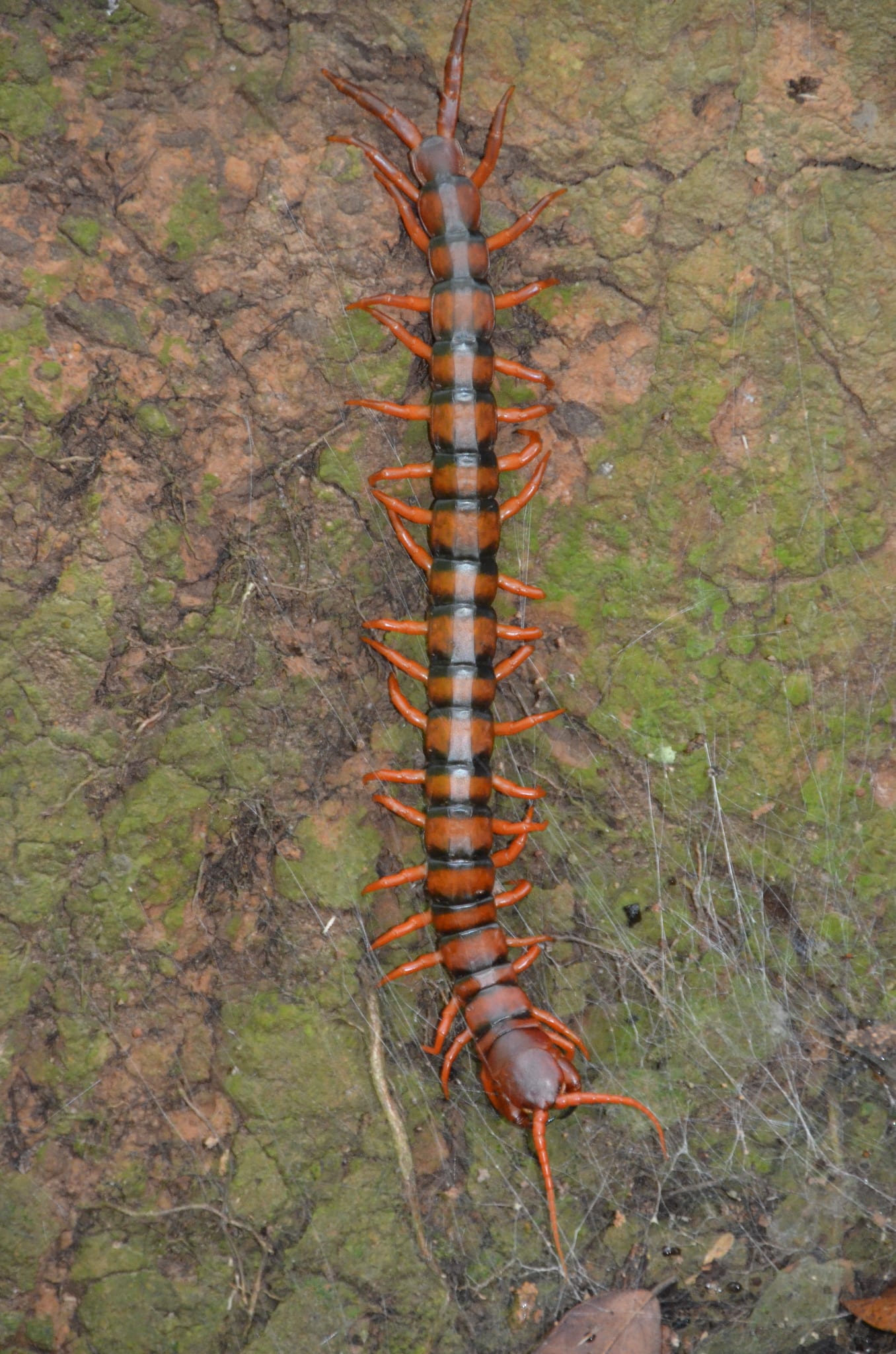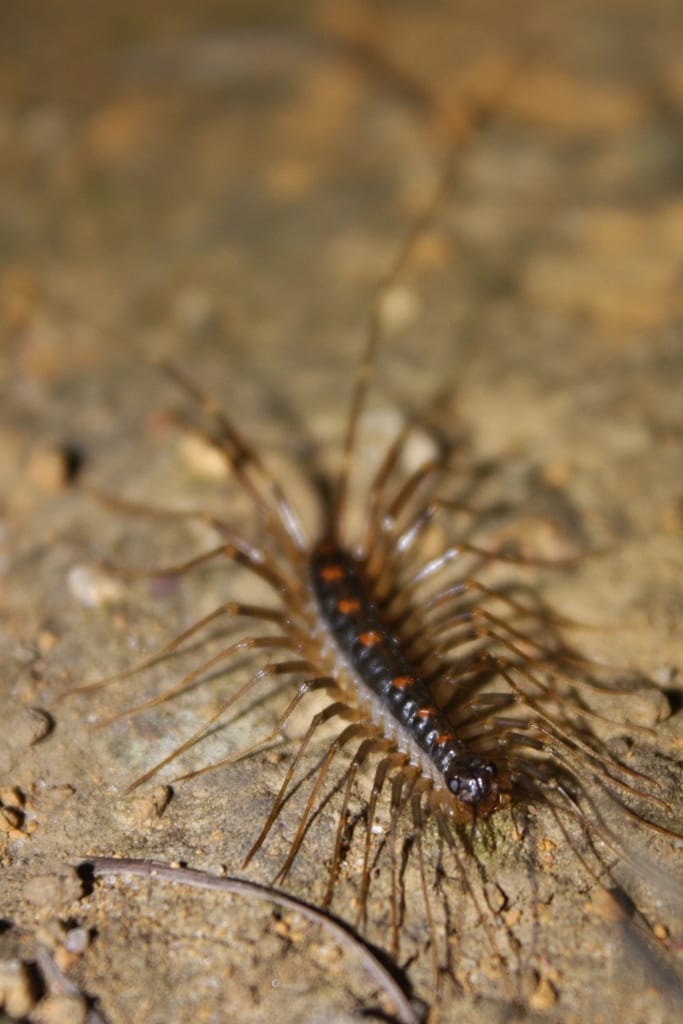
Source: Wikimedia Commons
Giant House Centipede
IntermediateThereuopoda clunifera
Japan's largest house centipede, found from Kanto southward. Body 4.5-6 cm, but its 15 pairs of long legs make it look nearly 20 cm. Weakly venomous and timid, a beneficial predator of cockroaches. Legs detach easily and it needs a tall enclosure.
Difficulty
Intermediate
Temperature
15〜30℃
Lifespan
5-6 years
Size
4.5-6cm (body)
Humidity
70%
Diet
Crickets, dubia and red runner roaches
About
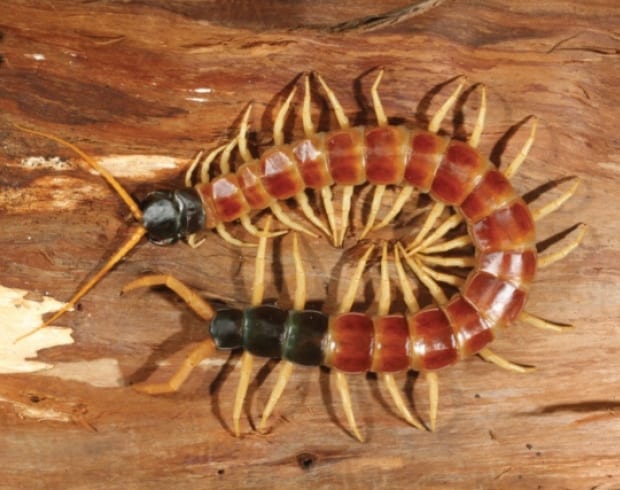
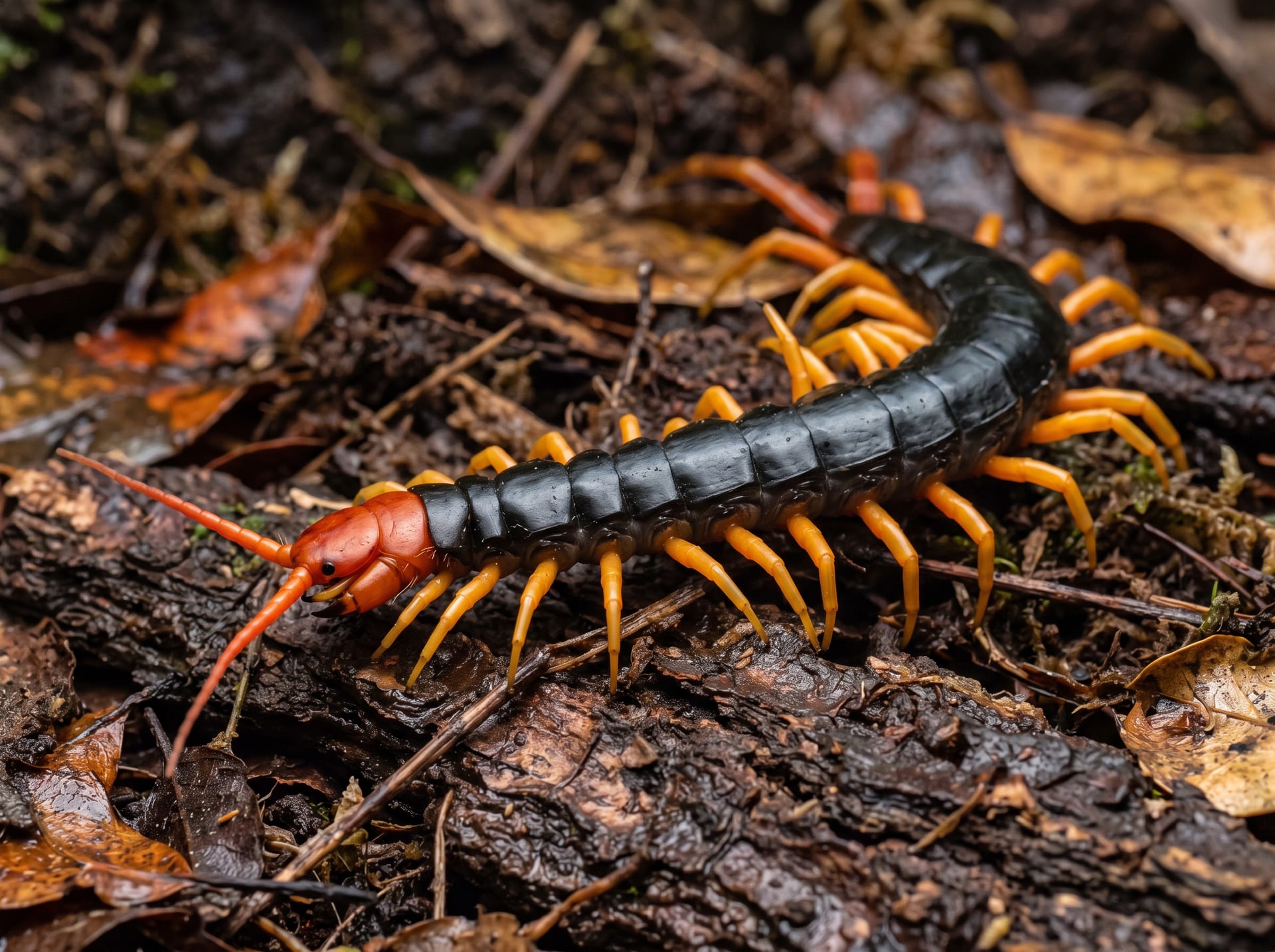
Thereuopoda clunifera, described by Wood in 1862, is Japan's largest scutigeromorph. It occurs from the Kanto region southward, with GBIF records from China, Taiwan, Hong Kong and Vietnam. The body is 4.5-6 cm, but with its 15 pairs of whip-like legs and long antennae spread it appears close to 20 cm. The back is black with orange around the spiracles. Scutigeromorphs are the only myriapods with true compound eyes, and their spiracles run in a single dorsal row. T. ferox and T. jamashinai, once treated as separate species, are synonyms. It favours damp, dark places such as caves and stones, enters houses, and hunts cockroaches and moths; it has even been recorded visiting Mitrastemon yamamotoi flowers. The venom is weak and the animal timid, biting only if restrained. Recent work has revealed unusually high genetic diversity within the species. It hangs to moult, so use an enclosure taller than its body with upright cork or branches and lightly moist leaf litter. Feed once or twice a week; it eats little. Extremely fast and prone to leg autotomy, so do not handle. Wild-collected Japanese animals are sold at events.
Source: Wikipedia (CC BY-SA 4.0)
Lifespan of the Giant House Centipede
The Giant House Centipede lives 5-6 years.
Lifespan is 5-6 years.
Size of the Giant House Centipede
The Giant House Centipede grows to 4.5-6cm (body).
Temperature & humidity for the Giant House Centipede
The ideal temperature for the Giant House Centipede is 15〜30℃. Ideal humidity is 70%.
Keep at 15-30 C, ideally around 25 C, with about 70% humidity.
Basic Info
Care Specifications
PeacefulSolitaryBreeding: Hard
Sources: Kaichudo: Thereuopoda clunifera / Nattoku blog: keeping house centipedes / Mushinavi: Thereuopoda clunifera / Wikipedia (ja) Scutigeromorpha / Wikipedia / GBIF
References & Sources
Edited & verified by: BreederDirect editorial team
The taxonomic, regulatory, and husbandry data on this page are compiled and verified against the authoritative primary sources below.
Taxonomy & Authority
Accepted name: Thereuopoda clunifera (Wood, 1862)
Synonyms: Thereuopoda ferox, Thereuopoda jamashinai
Authority databases: GBIF
Nomenclature follows global taxonomic authority databases.
Regulations & Conservation Status
Not CITES-listed
Sources: CITES Appendices (species not listed)
Regulations may change. Always verify the latest information with the relevant authorities.
Giant House Centipede Listings
Loading latest listingsFind listings for this species