Source: Wikimedia Commons
Goniopora Stokesi
AdvancedGoniopora stokesi
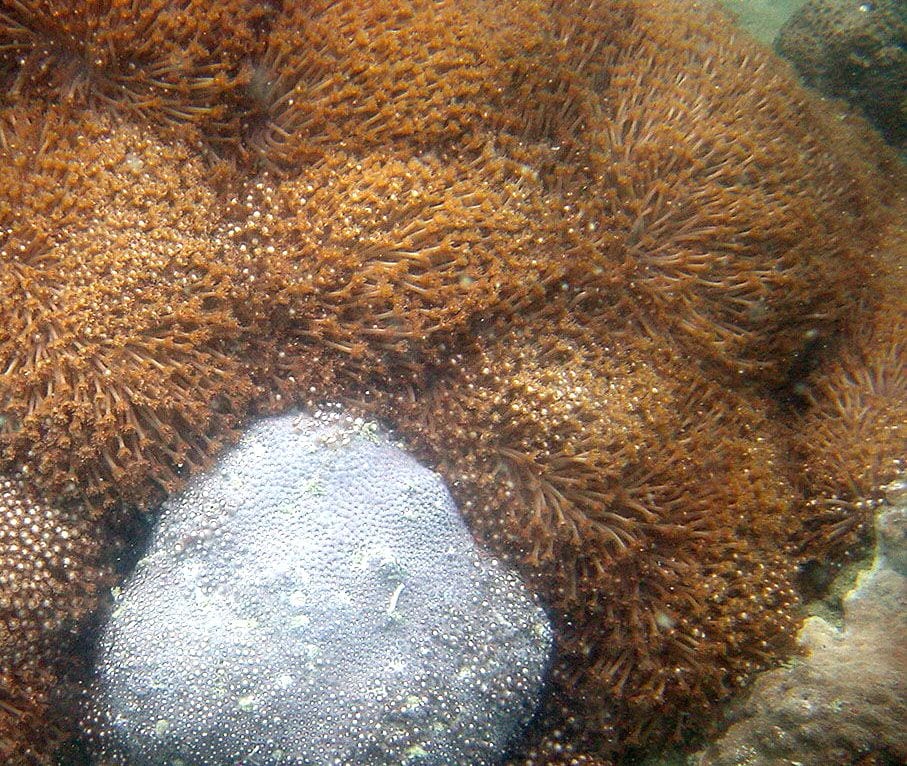
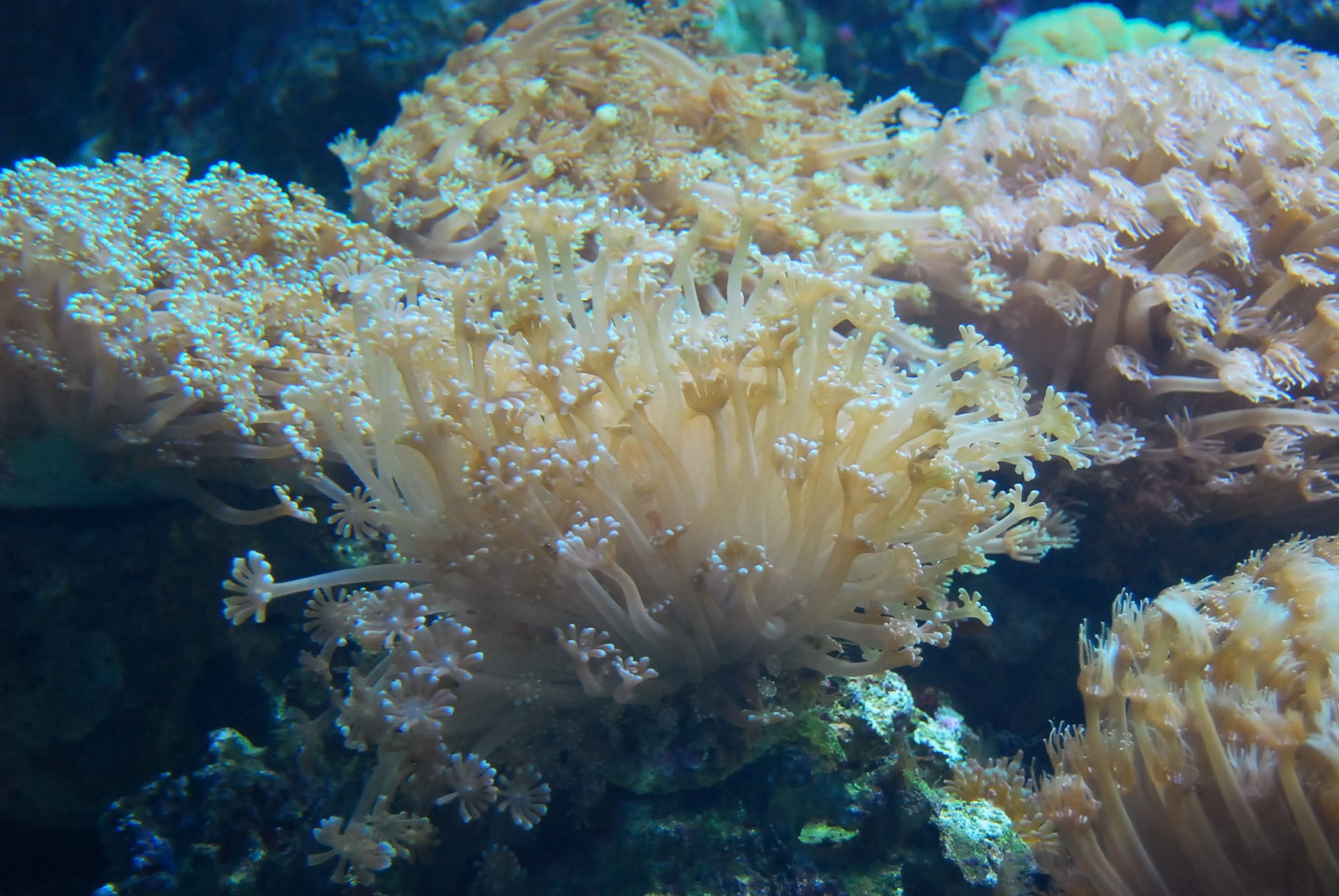
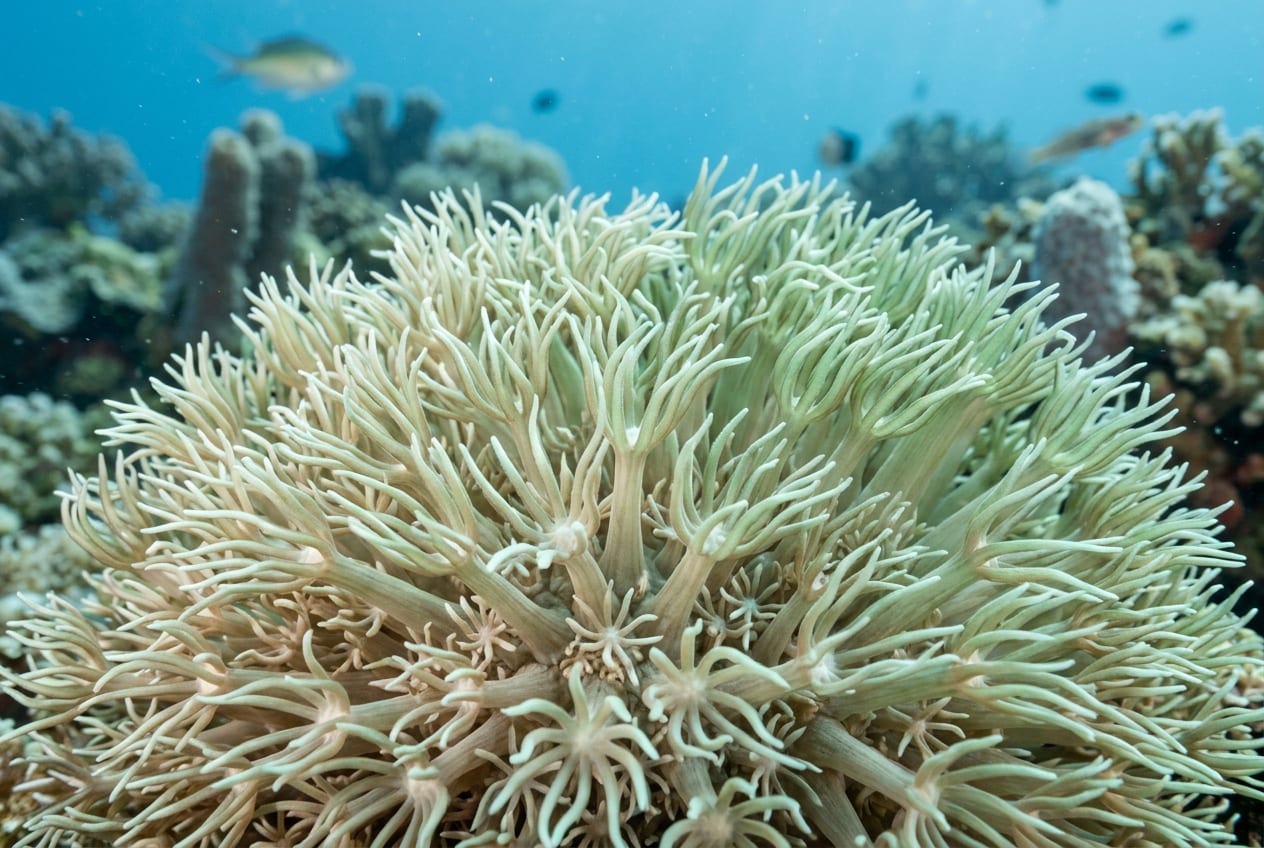
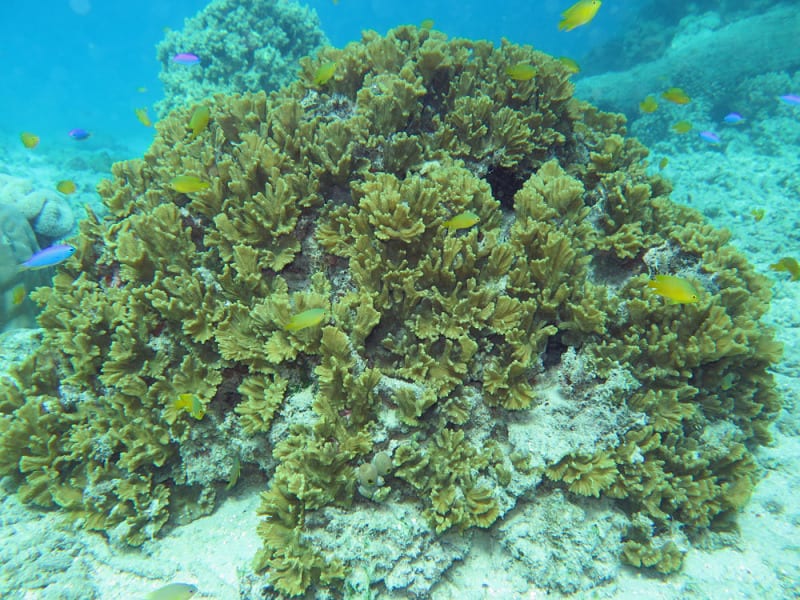
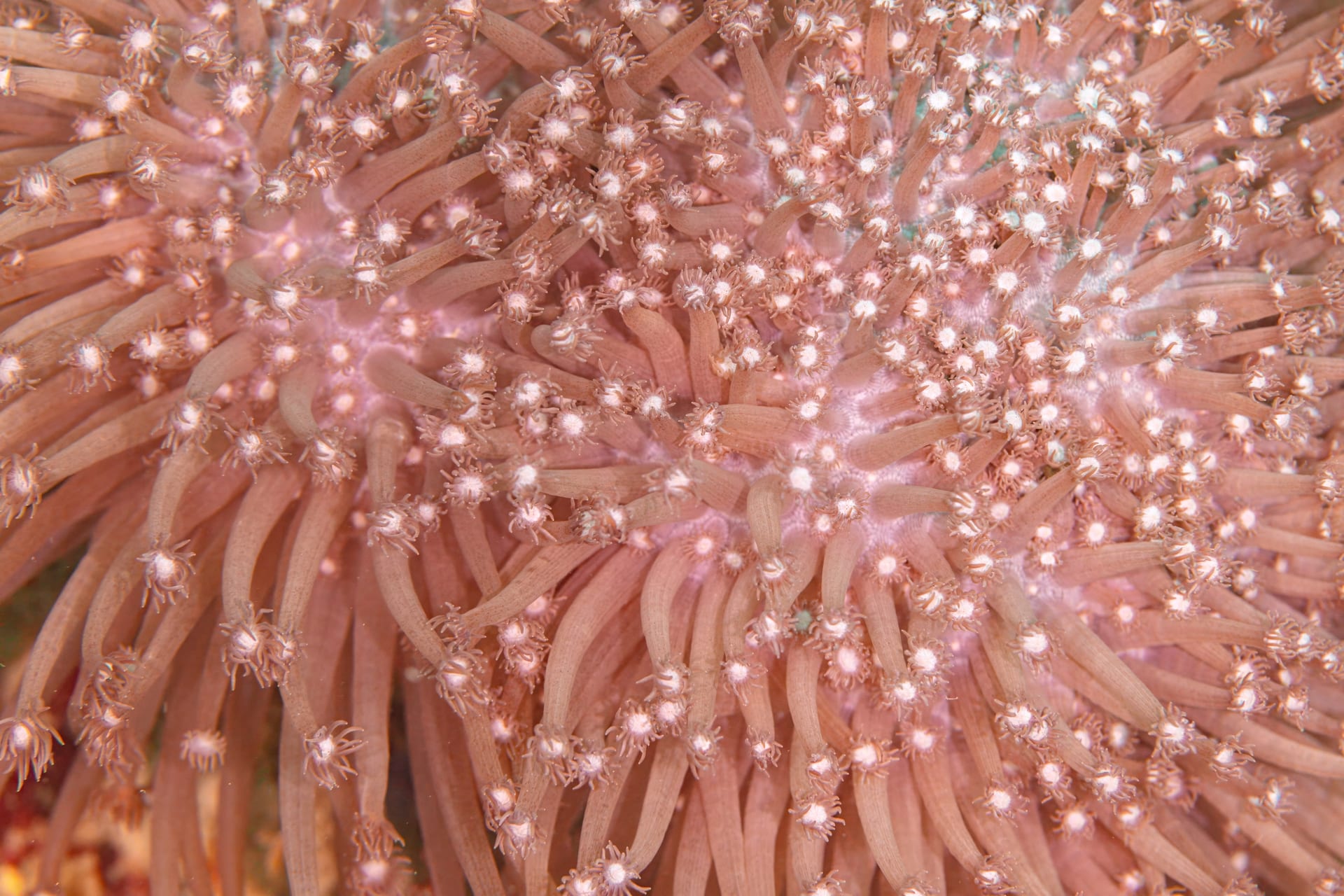
A Goniopora whose long-stalked polyps open like a bouquet. Colonies are hemispherical and usually free-living rather than attached, resting on sandy bottoms, and daughter colonies bud from the surface of the parent.
Difficulty
Advanced
Temperature
24〜26℃
Size
Colonies from about 10 cm to several tens of cm
Diet
Nutrition from symbiotic zooxanthellae, plus regular feeding with fine zooplankton foods and phytoplankton.
About
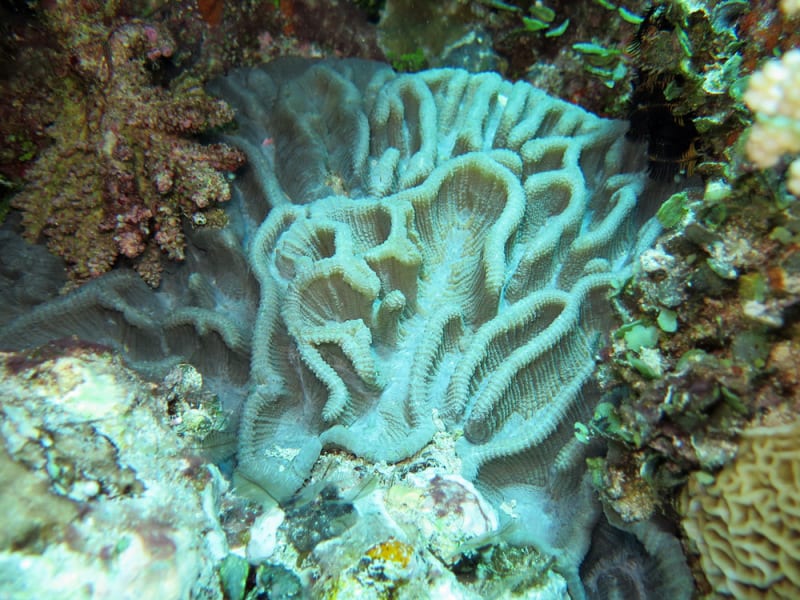
Goniopora stokesi is a poritid stony coral found widely across the northern Indian Ocean and the western Pacific, known in English as the anemone coral or flowerpot coral. Its range runs from Madagascar and the Gulf of Aden through the Maldives, southern India and the East Indies to Japan, north-western Australia and the Great Barrier Reef. It is usually recorded between 9 and 20 m, less commonly from 3 to 30 m. Its most distinctive feature is that colonies are normally free-living rather than attached, resting as hemispheres on sandy bottoms in turbid, relatively still water, and they often carry satellite daughter colonies that have not yet budded off. Among aquarists it has a reputation both for being readily available and for being difficult to keep alive, and the aquarium trade is regarded as one of the pressures on the species. The IUCN assessed it as Least Concern in 2024, and as a scleractinian it is on CITES Appendix II.
Source: Wikipedia (CC BY-SA 4.0)
Size of the Goniopora Stokesi
The Goniopora Stokesi grows to Colonies from about 10 cm to several tens of cm.
Temperature & humidity for the Goniopora Stokesi
The ideal temperature for the Goniopora Stokesi is 24〜26℃.
Basic Info
Origin
Madagascar and the Gulf of Aden to the Maldives, southern India, the East Indies, Japan, north-western Australia and the Great Barrier Reef
Size
Colonies from about 10 cm to several tens of cm
Temperature
Care Specifications
- Carbonate (KH)
- 8–12 dKH
- Water Temp.
- 24–26℃
- Specific Gravity
- 1.023–1.025
- Salinity
- 33–35 ppt
- Calcium (Ca)
- 380–450 ppm
- Magnesium (Mg)
- 1200–1400 ppm
LPSLight: Medium (PAR 50-150)Flow: MediumPlacement: Bottom
Sources: LiveAquaria / AlgaeBarn: Calcium Supplementation / WoRMS (World Register of Marine Species)
References & Sources
Edited & verified by: BreederDirect editorial team
The taxonomic, regulatory, and husbandry data on this page are compiled and verified against the authoritative primary sources below.
Taxonomy & Authority
Accepted name: Goniopora stokesi Milne Edwards & Haime, 1851
Synonyms: Goniopora irregularis (Crossland, 1952), Alveopora irregularis Crossland, 1952
Authority databases: WoRMS
Nomenclature follows global taxonomic authority databases.
Regulations & Conservation Status
CITES Appendix IIIUCN LC · Least Concern
Sources: CITES Appendix II (Scleractinia spp. listed as an order) / IUCN Red List
Regulations may change. Always verify the latest information with the relevant authorities.
Goniopora Stokesi Listings
Loading latest listingsFind listings for this species