Goniopora (Flowerpot Coral) Care Guide | Tips for Long-term Maintenance and Feeding
Learn the methods for successfully keeping Goniopora (Flowerpot Coral) long-term, a species considered difficult to maintain. We introduce proper lighting and water flow, the importance of regular feeding, the causes and solutions for polyps retracting, and recommended placement locations.
Key Takeaways
Learn the methods for successfully keeping Goniopora (Flowerpot Coral) long-term, a species considered difficult to maintain. We introduce proper lighting and water flow, the importance of regular feeding, the causes and solutions for polyps retracting, and recommended placement locations.
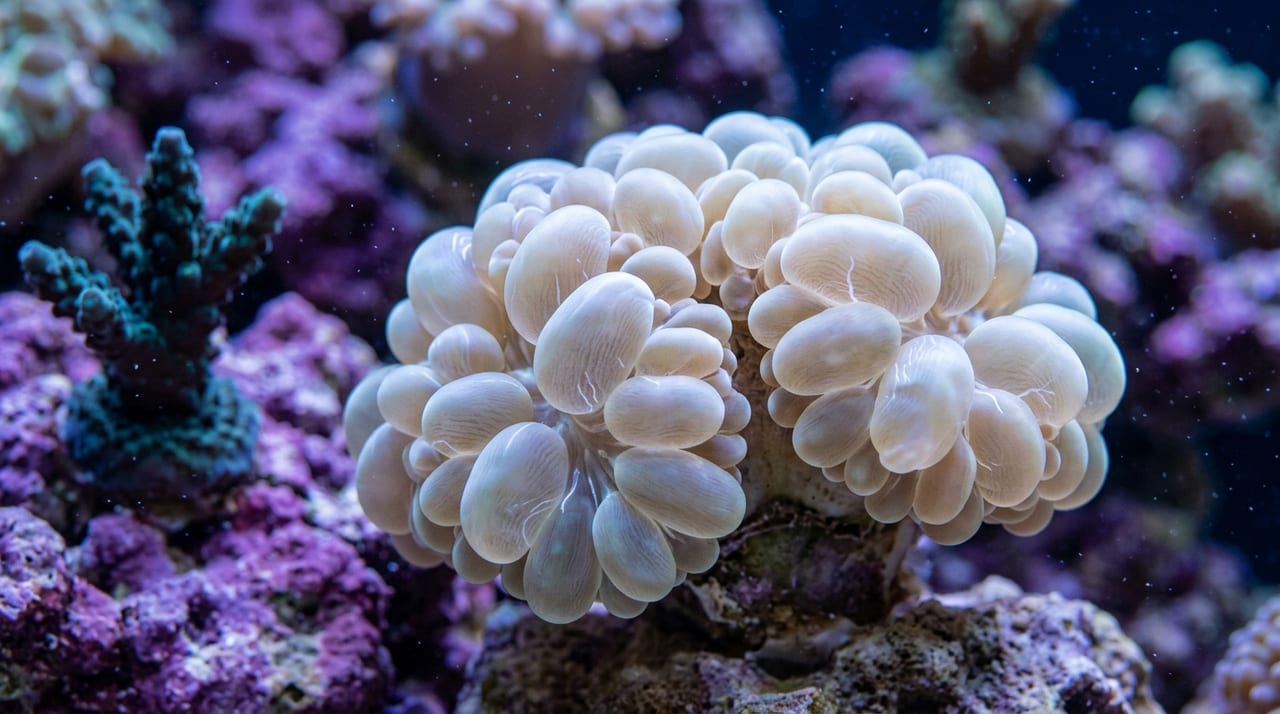
Goniopora is a beautiful LPS coral that displays long tentacles spread wide like blooming flowers. In English, it is also called "Flowerpot Coral," and its striking appearance has captivated many reef tank enthusiasts.
However, it also has a reputation for being "difficult to keep" and "hard to maintain long-term." This stems from the many failures in long-term cultivation during the early reef tank era of the 1980s–1990s. But now that modern husbandry techniques and knowledge have advanced, long-term care is entirely possible with proper management. In this article, we explain a modern approach to successful Goniopora keeping in detail. If you'd like to choose while comparing with other LPS corals, please also refer to How to Choose and Care for LPS Corals.
Basic Information on Goniopora
Goniopora is an LPS (Large Polyp Stony) coral belonging to the order Scleractinia (hard coral). It inhabits shallow reefs in the Indian Ocean and western Pacific, and often settles on sandy or muddy substrates.
The main species commonly available in the aquarium hobby are as follows:
- Goniopora lobata: mostly green to brown tones; relatively hardy
- Goniopora djiboutiensis: features beautiful forest-green tentacles; relatively easy to keep
- Goniopora columna: a species with slender tentacles; somewhat challenging
Why Was It Considered "Difficult" in the Past?
The background behind Goniopora becoming known as a "difficult coral" involved the following factors:
- Over-reliance on zooxanthellae alone: Early reef tanks favored the belief that "light alone is enough for growth." However, Goniopora requires active feeding in addition to photosynthesis.
- Mass die-off of wild-caught specimens: Wild-caught individuals subjected to collection stress and the rigors of transport could not recover even with proper care.
- Immature water quality management techniques: Parameter management (KH, Ca, Mg), now standard practice, was often insufficient back then.
Setting Up the Husbandry Environment
Lighting
Goniopora prefers "low to moderate lighting." Strong light is generally unsuitable, and excessive exposure to intense light can cause the tentacles to remain retracted and fail to extend.
PAR value guideline: 50–150 μmol/m²/s
- Basic care involves placement in the mid to lower portions of the tank (positions at a distance from the light source)
- Avoid areas receiving direct, intense light
- Locations with indirect lighting, such as in the shade of live rock or on side surfaces, are also suitable
Water Flow
Goniopora prefers gentle water flow. Strong, direct flow damages the tentacles and causes stress.
- Weak to moderate pulsating water flow (using wave pump modes)
- The ideal is for the tentacles to sway gently
- Strong flow causes the tentacles to retract
Sand Substrate vs Live Rock Placement
Goniopora naturally inhabits sandy substrates in its native environment. For larger, spherical colonies, placement on sand while being supported by live rock reduces stress.
- Placing the coral naturally on sand or near the sandy substrate, rather than directly attaching it to live rock, helps it adapt more readily
- For forms prone to tipping, use live rock to provide support
Feeding: The Greatest Key to Long-term Maintenance
The most critical point in modern Goniopora care is "feeding." It is now clear that many past failures were due to insufficient feeding. If you would like to systematically understand feeding strategies for corals in general, not just Goniopora, please also refer to Coral Feeding Guide | Nutritional Supplementation Beyond Photosynthesis Alone.
Recommended Food Types
- Coral powder foods like Reef-Roids: fine organic particles are taken directly into the polyps
- Frozen brine shrimp (nauplii): ideal size for smaller Goniopora
- Fresh fish extract and finely ground fish meat: effective for feeding large colonies
- Phytoplankton: a supplementary nutritional source
Feeding Frequency and Method
- Feeding 2–3 times per week is effective (daily small amounts are also possible)
- During feeding, temporarily stop or reduce the water flow pump (to prevent food from being swept away)
- Target feeding (applying food directly to polyps using a dropper or syringe) is most effective
- Feed when polyps are extended (typically during lighting hours)
How to Confirm Feeding Success
If within 15–30 minutes after feeding you observe signs of "feeding" where polyps capture food and the oral disk area bulges, the coral is feeding successfully. Polyps may temporarily retract after feeding, but should return to normal extension the following day.
What to Do When Polyps Won't Extend
Short-term (1–3 Days)
It is normal for polyps not to extend immediately after introduction or after a water change. Observe quietly.
Medium-term (1 Week or Longer)
- Check that water flow is not too strong
- Verify that lighting is not too intense; move to a shadier location if needed
- Test water quality parameters (KH, nitrate, phosphate)
- Ensure nearby corals are not too close (allelopathy)
Long-term (Closed for 1 Month or Longer)
This state may indicate the onset of "RTN (Rapid Tissue Necrosis)." If tissue discoloration (changes from brown to white) is observed, promptly isolate the coral and check water quality.
Summary of Tips for Long-term Maintenance
- Do not neglect feeding: target feeding 2–3 times per week is paramount
- Place in low to moderate light: avoid strong light
- Apply gentle water flow: tentacles should sway slowly
- Prioritize water quality stability: maintain stable KH, calcium, and magnesium
- Choose fragmented or captive-bred individuals: they adapt better to tank conditions than wild-caught specimens
- Maintain distance between neighboring corals: particularly distance other aggressive LPS corals
Search for Captive-bred Goniopora on BreederDirect
The best shortcut to increasing the success rate of long-term Goniopora care is to select captive-bred individuals adapted to tank environments. Unlike wild-caught specimens, individuals already acclimated to tank life experience less post-introduction stress and tend to stabilize quickly.
BreederDirect allows you to purchase Goniopora directly from coral specialist breeders who raise them in proper tank conditions. Before purchasing, asking questions like "How long have you been keeping this individual?" and "What do you feed it?" lets you confirm the specimen's condition and management methods, making it easier to plan your care after bringing it home. Be sure to find your ideal Goniopora match on BreederDirect.