Source: Wikimedia Commons
Goniopora Lobata
AdvancedGoniopora lobata
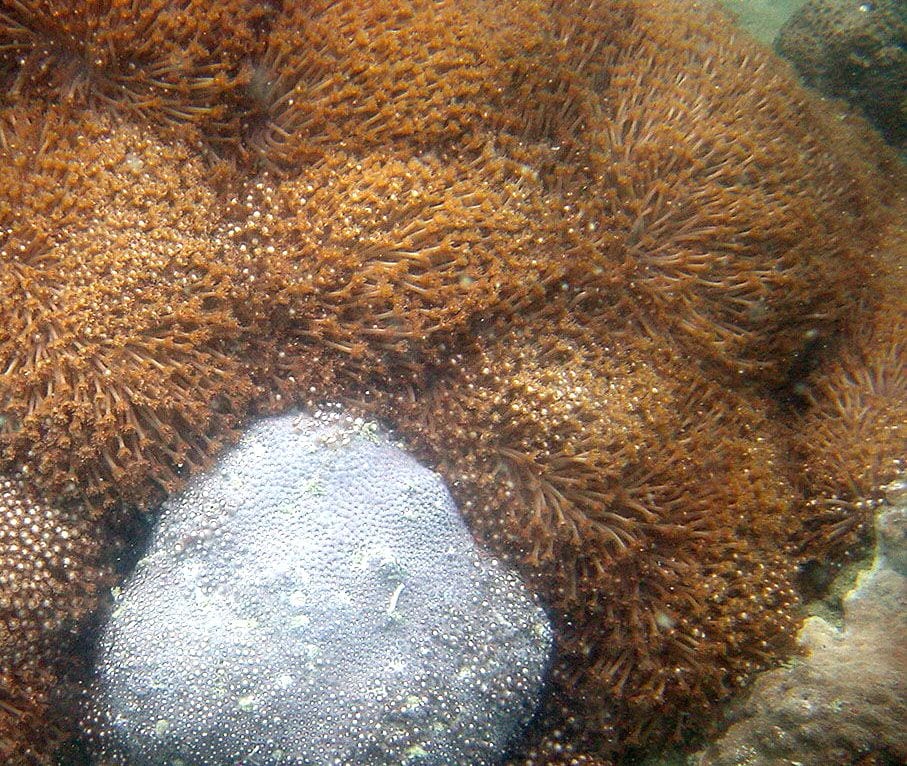
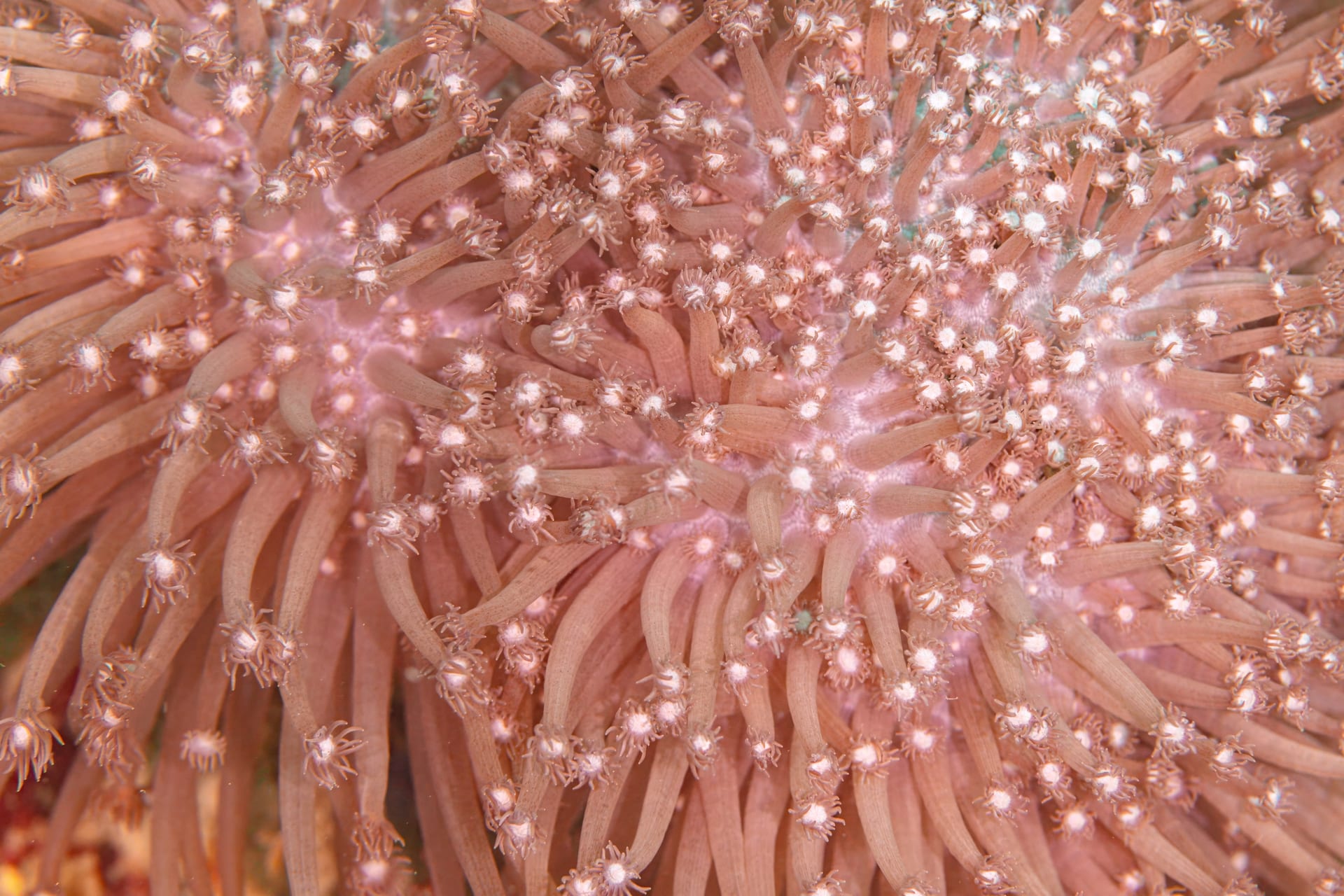
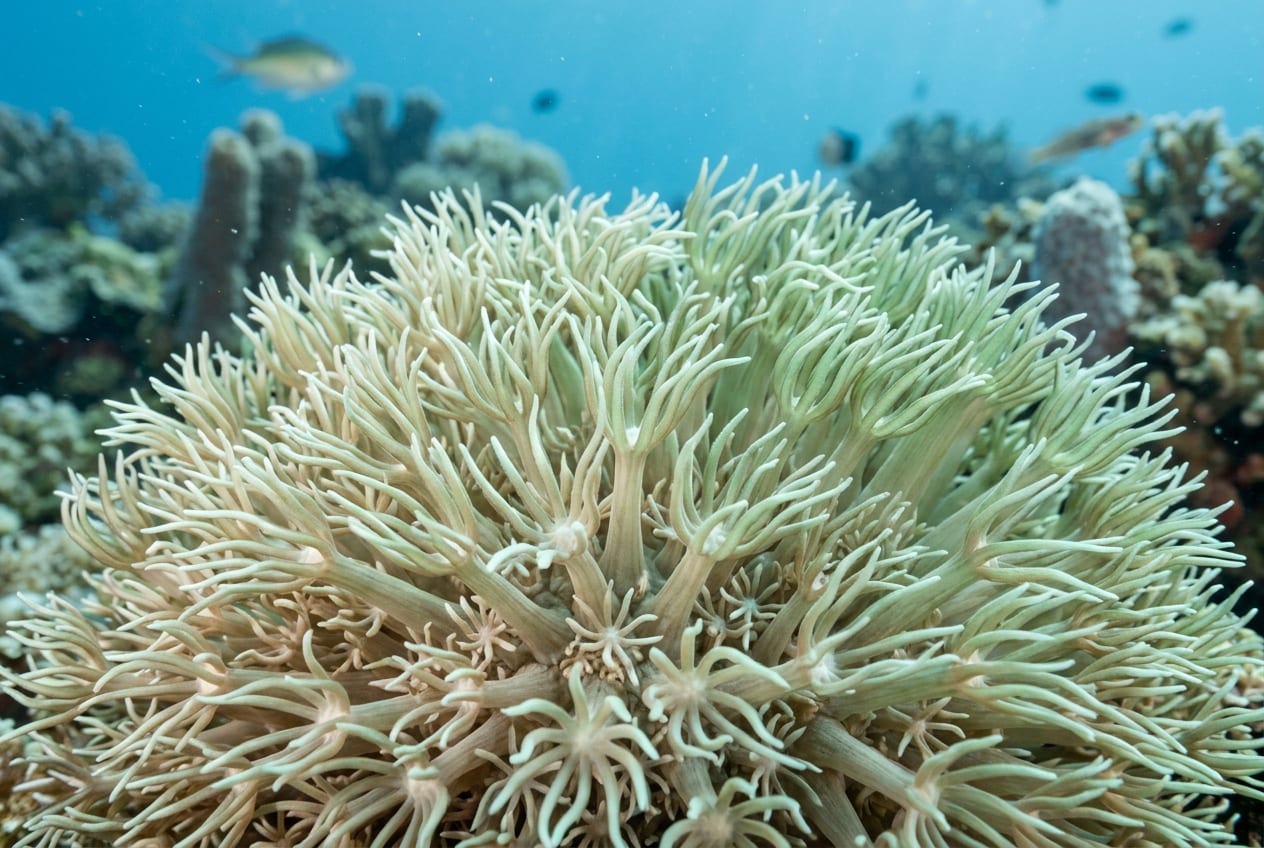
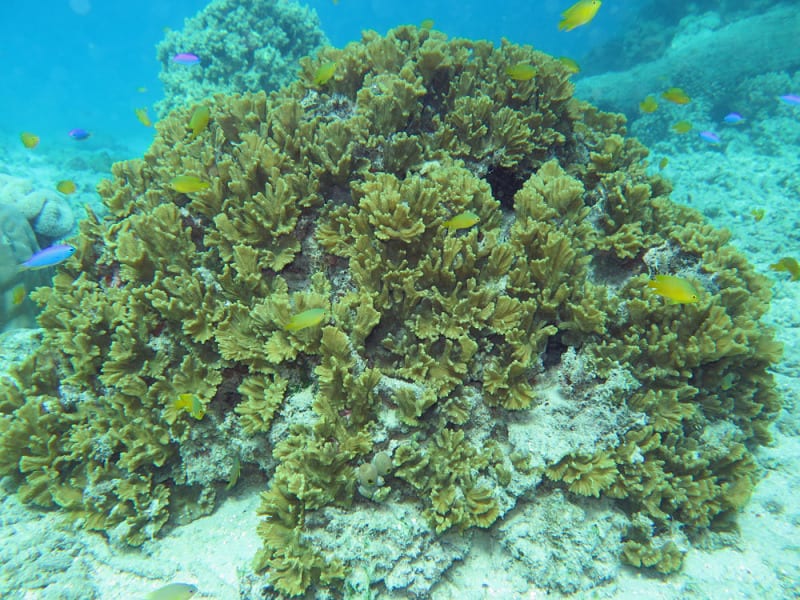
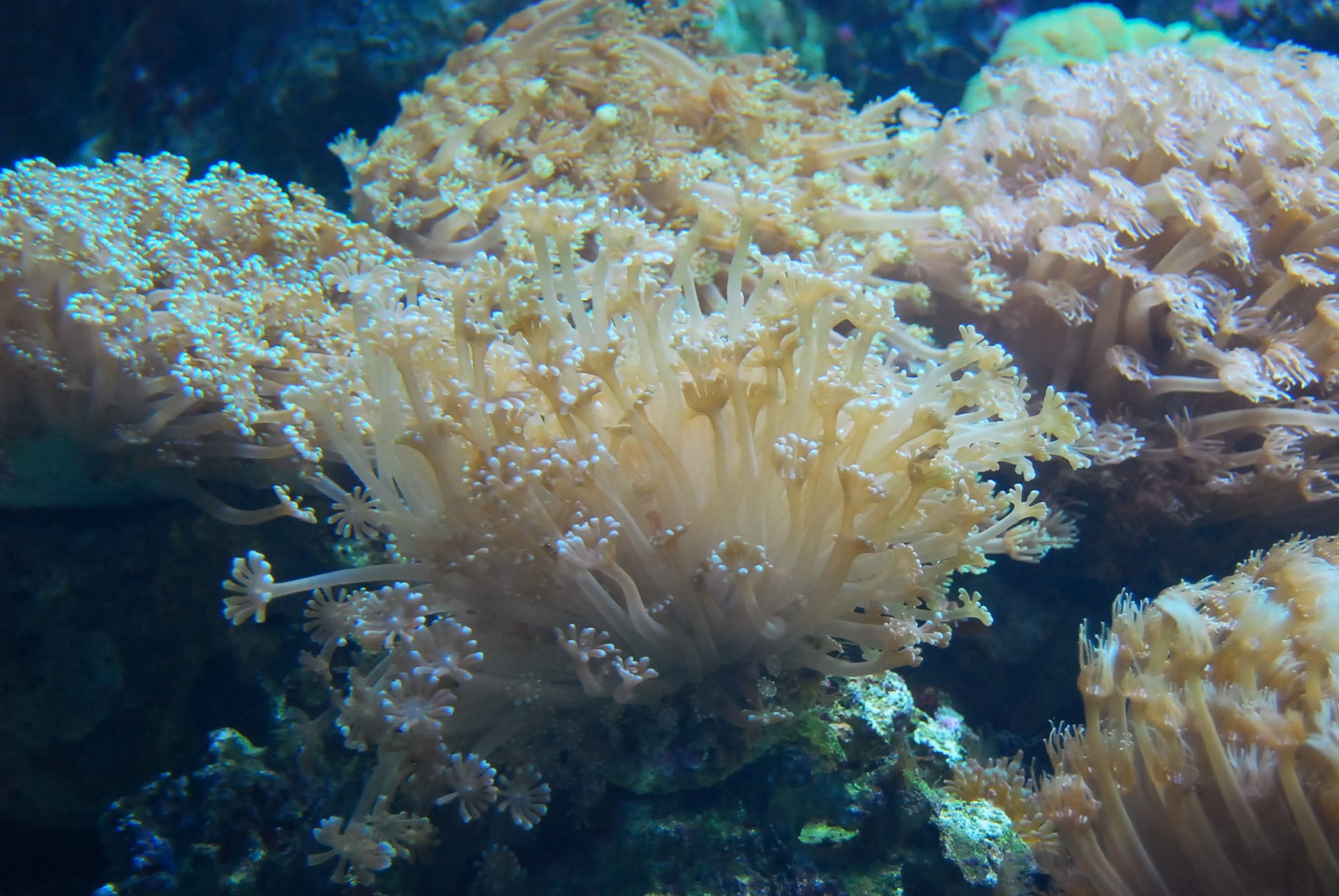
A poritid stony coral whose long polyps cover the colony surface densely. Colonies are massive with lobed mounds, and the brown or green polyps look like a flower bed when extended. It is hard to keep long term.
Difficulty
Advanced
Temperature
24〜26℃
Size
Colonies to several tens of cm
Diet
Nutrition from symbiotic zooxanthellae, plus regular feeding with fine zooplankton foods and phytoplankton.
About
Goniopora lobata is a poritid stony coral for which WoRMS gives the Japanese name hanagasa sango; in English it is called the anemone coral, flowerpot coral or coarse porous coral. The distribution records held by WoRMS cover the Red Sea, Somalia, Mozambique, Reunion, Rodrigues, Mauritius, the Seychelles, India and the Ashmore and Cartier Islands. Colonies are massive with a lobed surface, and long polyps cover that surface densely; when they are extended the skeleton is almost invisible and the colony looks like a bed of brown or green flowers. It is as difficult to keep as its congeners: polyps that were extended on arrival often shrink over a few months and the colony then declines. Keeping light and flow gentle and feeding fine particulate food consistently are regarded as the conditions for long-term success. As a scleractinian it is on CITES Appendix II.
Source: Wikipedia (CC BY-SA 4.0)
Temperature & humidity for the Goniopora Lobata
The ideal temperature for the Goniopora Lobata is 24〜26℃.
Basic Info
Origin
Red Sea, Somalia, Mozambique, Reunion, Rodrigues, Mauritius and the Seychelles to India and the Ashmore and Cartier Islands
Size
Colonies to several tens of cm
Temperature
24〜26℃
Diet
Nutrition from symbiotic zooxanthellae, plus regular feeding with fine zooplankton foods and phytoplankton.
Care Guide
Care Specifications
- Carbonate (KH)
- 8–12 dKH
- Water Temp.
- 24–26℃
- Specific Gravity
- 1.023–1.025
- Salinity
- 33–35 ppt
- Calcium (Ca)
- 380–450 ppm
- Magnesium (Mg)
- 1200–1400 ppm
LPSLight: Medium (PAR 50-150)Flow: MediumPlacement: Bottom
Sources: LiveAquaria / AlgaeBarn: Calcium Supplementation / WoRMS (World Register of Marine Species)
References & Sources
Edited & verified by: BreederDirect editorial team
The taxonomic, regulatory, and husbandry data on this page are compiled and verified against the authoritative primary sources below.
Taxonomy & Authority
Accepted name: Goniopora lobata Milne Edwards, 1860
Synonyms: Goniopora hirsuta Crossland, 1952, Goniopora traceyi Wells, 1954
Authority databases: WoRMS
Nomenclature follows global taxonomic authority databases.
Regulations & Conservation Status
CITES Appendix II
Sources: CITES Appendix II (Scleractinia spp. listed as an order)
Regulations may change. Always verify the latest information with the relevant authorities.
Goniopora Lobata Listings
Loading latest listingsFind listings for this species