Source: Wikimedia Commons
Acropora Echinata
AdvancedAcropora echinata
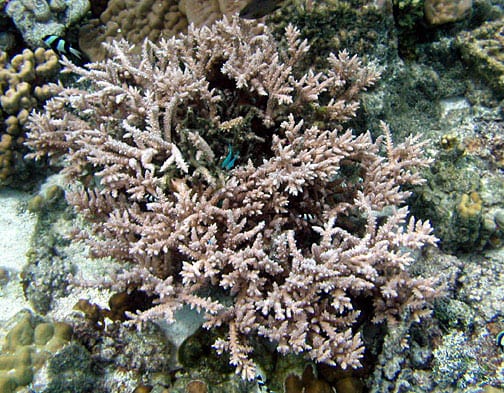
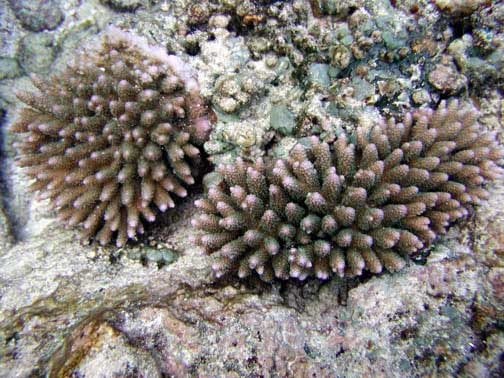
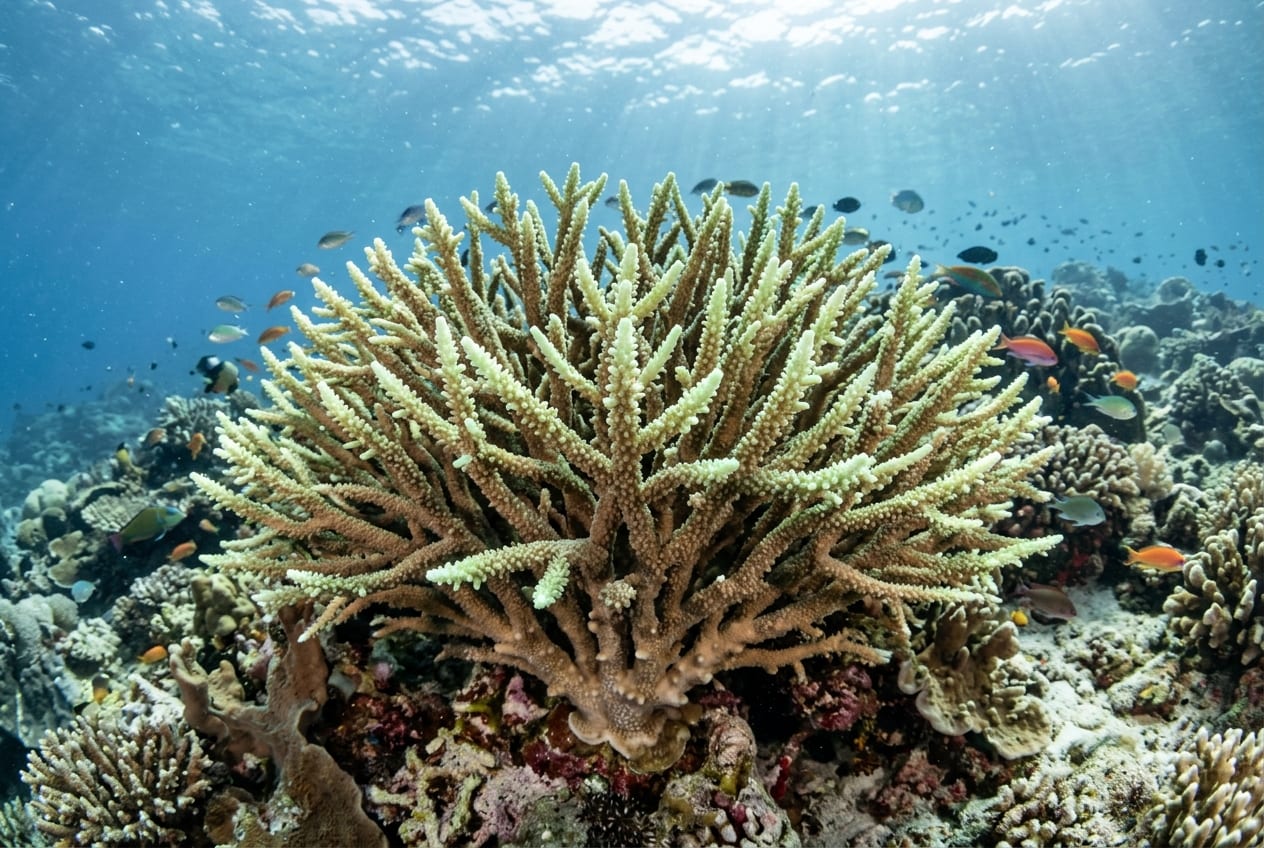
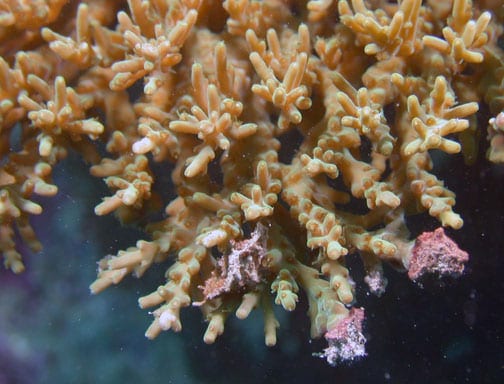
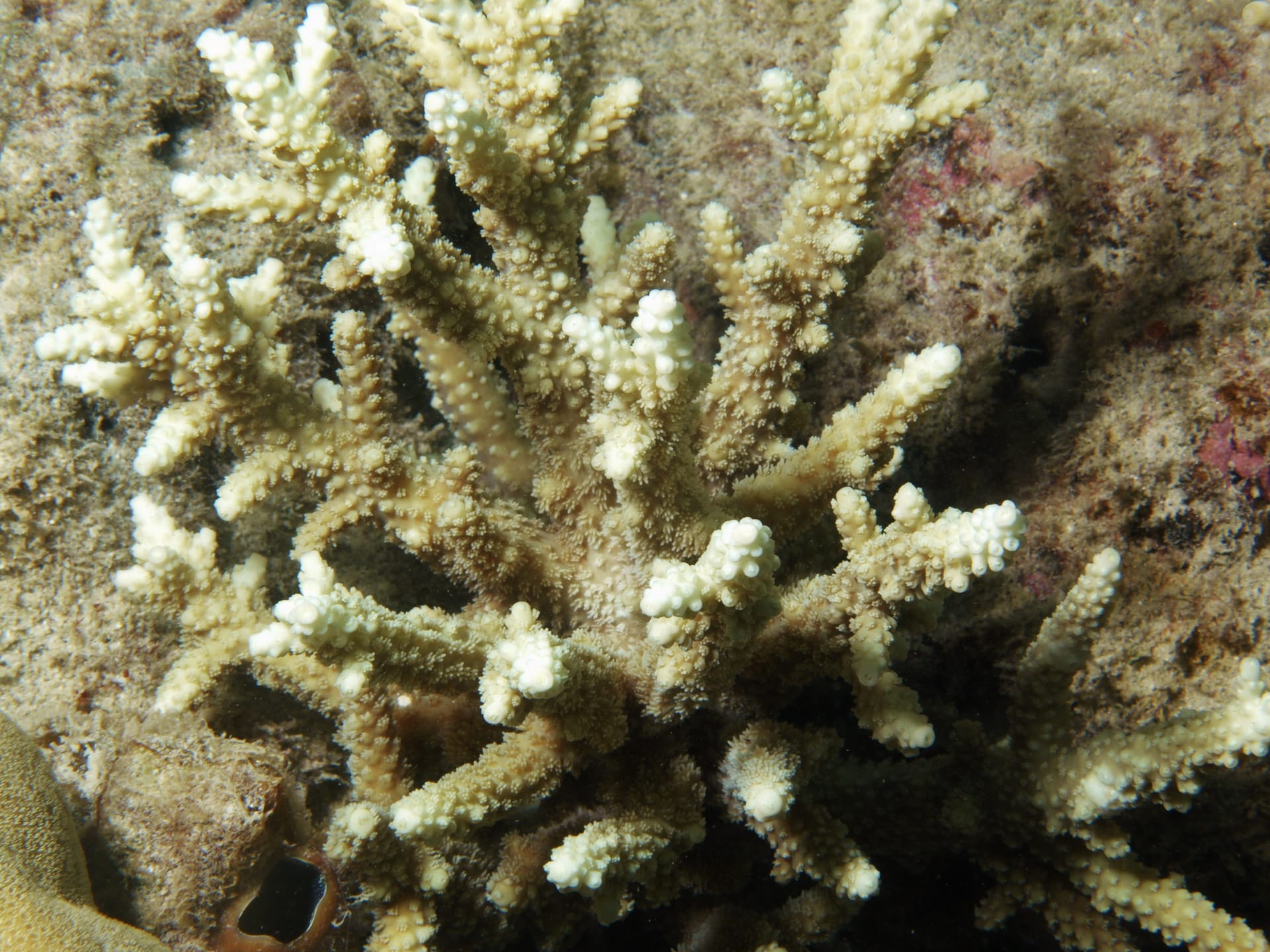
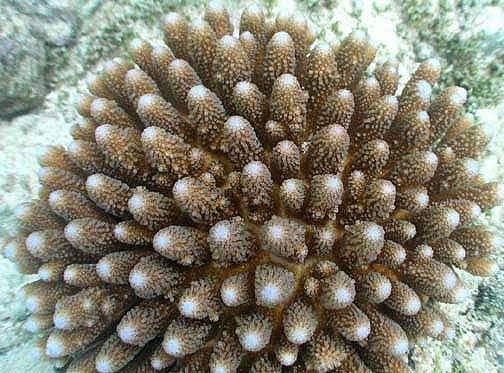
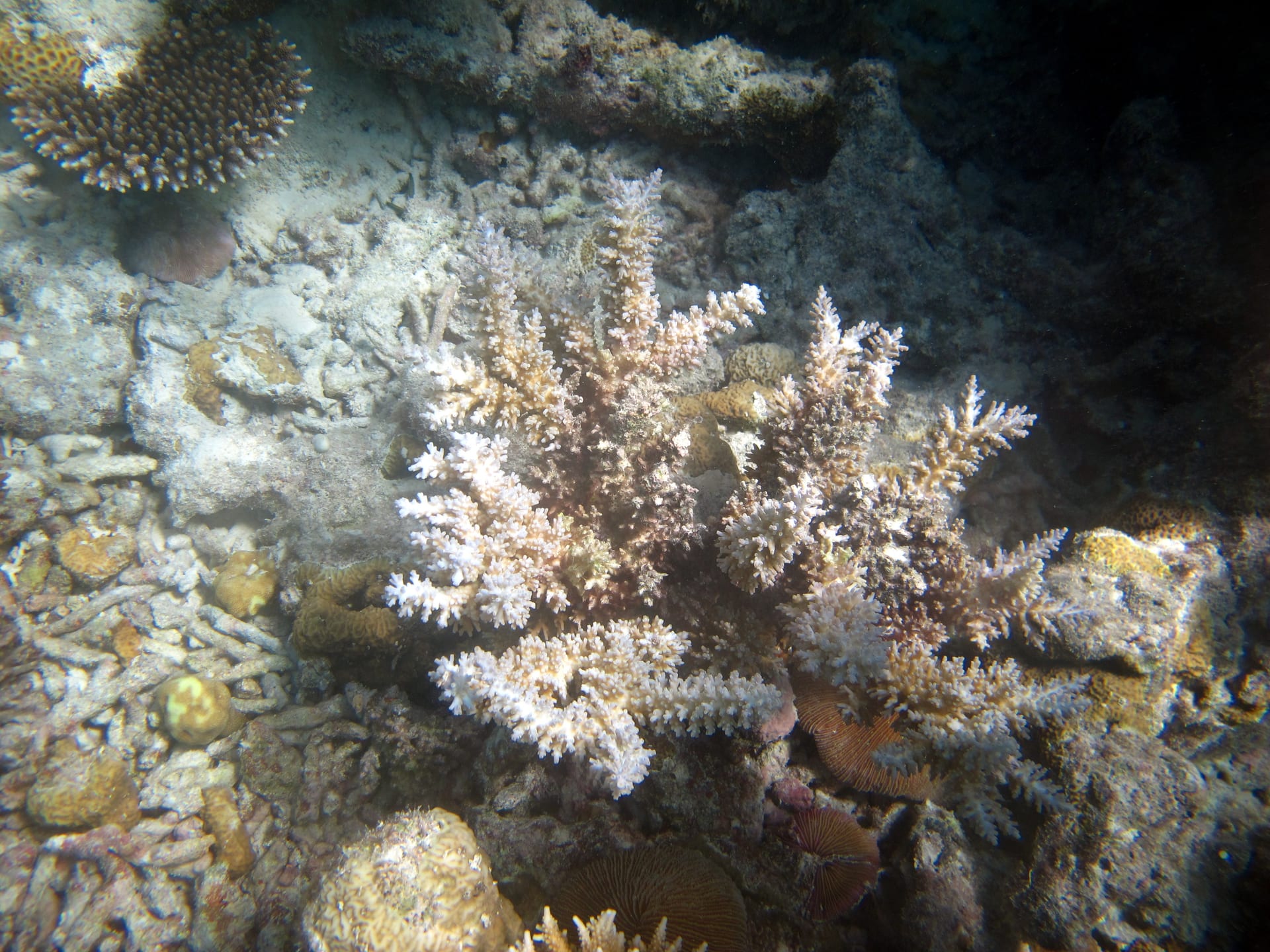
An Acropora whose flat, bottlebrush-like branches carry thin, neatly arranged branchlets. The branchlet tips are blue or purple against a white or cream ground, and some colonies are entirely blue. It lives on sheltered reefs in clear water.
Difficulty
Advanced
Temperature
24〜27℃
Size
Reaches 15 cm in diameter in aquaria
Diet
Mainly nutrition from symbiotic zooxanthellae, supplemented with powdered or liquid coral foods and phytoplankton.
About
Acropora echinata was described by James Dwight Dana in 1846. It occurs in Palau, the central Pacific, Southeast Asia, the Indo-Pacific, Australia, the Indian Ocean, the East China Sea and Japan; its range is wide but it is not common. It lives on sheltered tropical shallow reefs in clear water at depths of 8-25 m, and also on sand slopes and lagoon floors. Colonies are built from flat, bottlebrush-like branches with thin, neatly arranged branchlets. The incipient axial and axial corallites are indistinguishable, and the radial corallites are short and tubular, inconspicuous or absent. The branchlet tips are blue or purple against a white or cream ground, and some colonies are entirely blue. In aquaria it reaches 15 cm across. Its resistance to temperature-driven bleaching is very low: in Palau in 1998 every specimen was affected. The IUCN lists it as Endangered and it is on CITES Appendix II.
Source: Wikipedia (CC BY-SA 4.0)
Size of the Acropora Echinata
The Acropora Echinata grows to Reaches 15 cm in diameter in aquaria.
Temperature & humidity for the Acropora Echinata
The ideal temperature for the Acropora Echinata is 24〜27℃.
Basic Info
Origin
Palau, the central Pacific, Southeast Asia, the Indo-Pacific, Australia, the Indian Ocean, the East China Sea and Japan
Size
Reaches 15 cm in diameter in aquaria
Temperature
24〜27℃
Care Specifications
- Carbonate (KH)
- 8–12 dKH
- Water Temp.
- 24–27℃
- Specific Gravity
- 1.023–1.025
- Salinity
- 33–35 ppt
- Calcium (Ca)
- 380–440 ppm
- Magnesium (Mg)
- 1300–1400 ppm
SPSLight: High (PAR>150)Flow: HighPlacement: Top
Sources: LiveAquaria (Acropora valida) / LiveAquaria (Assorted Acropora Coral) / AlgaeBarn: A Quick Guide to LPS and SPS /
References & Sources
Edited & verified by: BreederDirect editorial team
The taxonomic, regulatory, and husbandry data on this page are compiled and verified against the authoritative primary sources below.
Taxonomy & Authority
Accepted name: Acropora echinata (Dana, 1846)
Synonyms: Madrepora echinata Dana, 1846, Acropora procumbens (Brook, 1891)
Authority databases: WoRMS
Nomenclature follows global taxonomic authority databases.
Regulations & Conservation Status
CITES Appendix IIIUCN EN · Endangered
Sources: CITES Appendix II (Scleractinia spp. listed as an order) / IUCN Red List (via SeaLifeBase)
Regulations may change. Always verify the latest information with the relevant authorities.
Acropora Echinata Listings
Loading latest listingsFind listings for this species