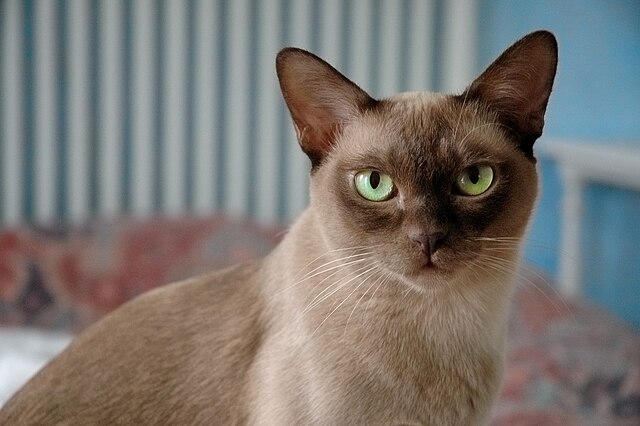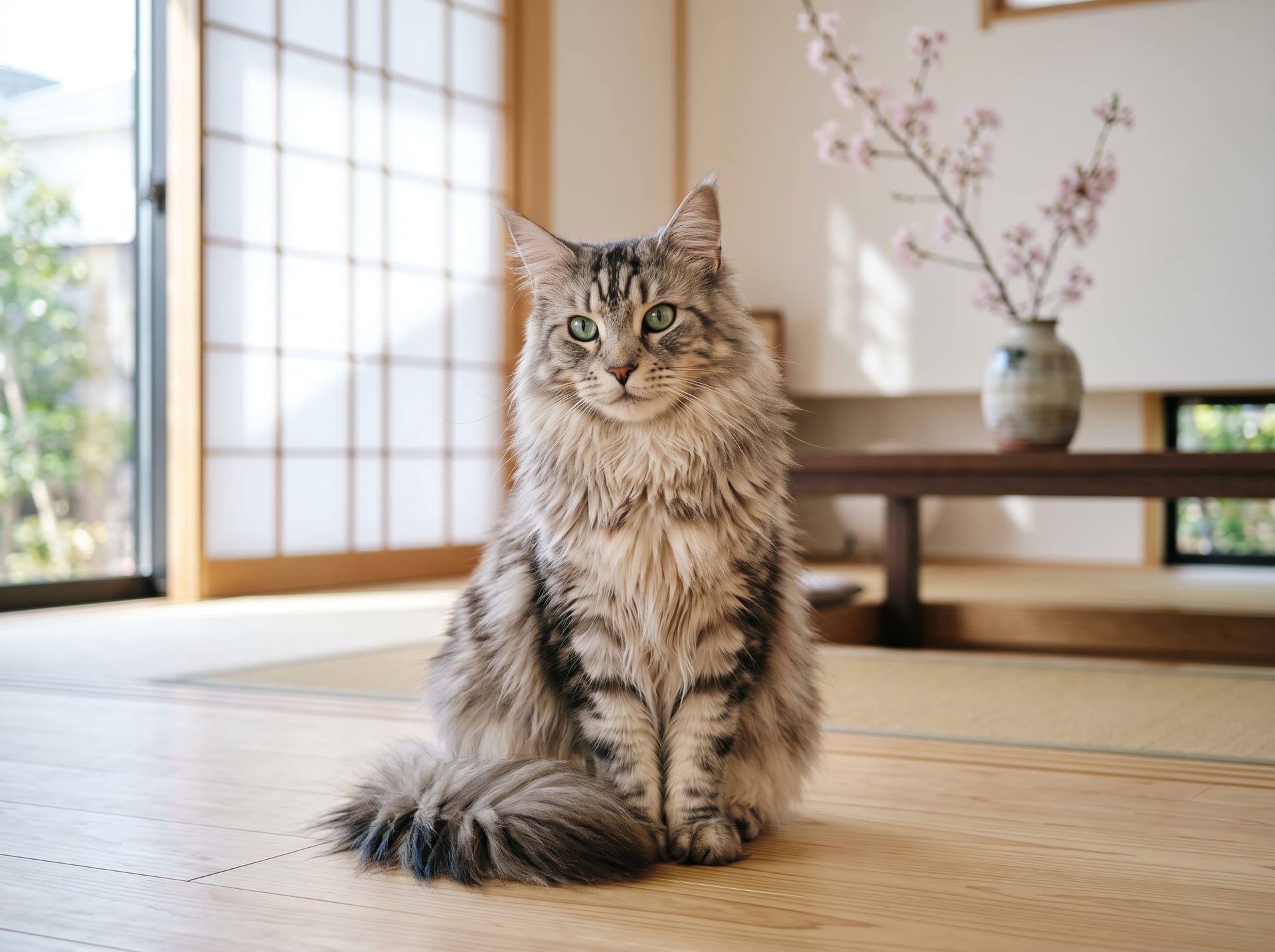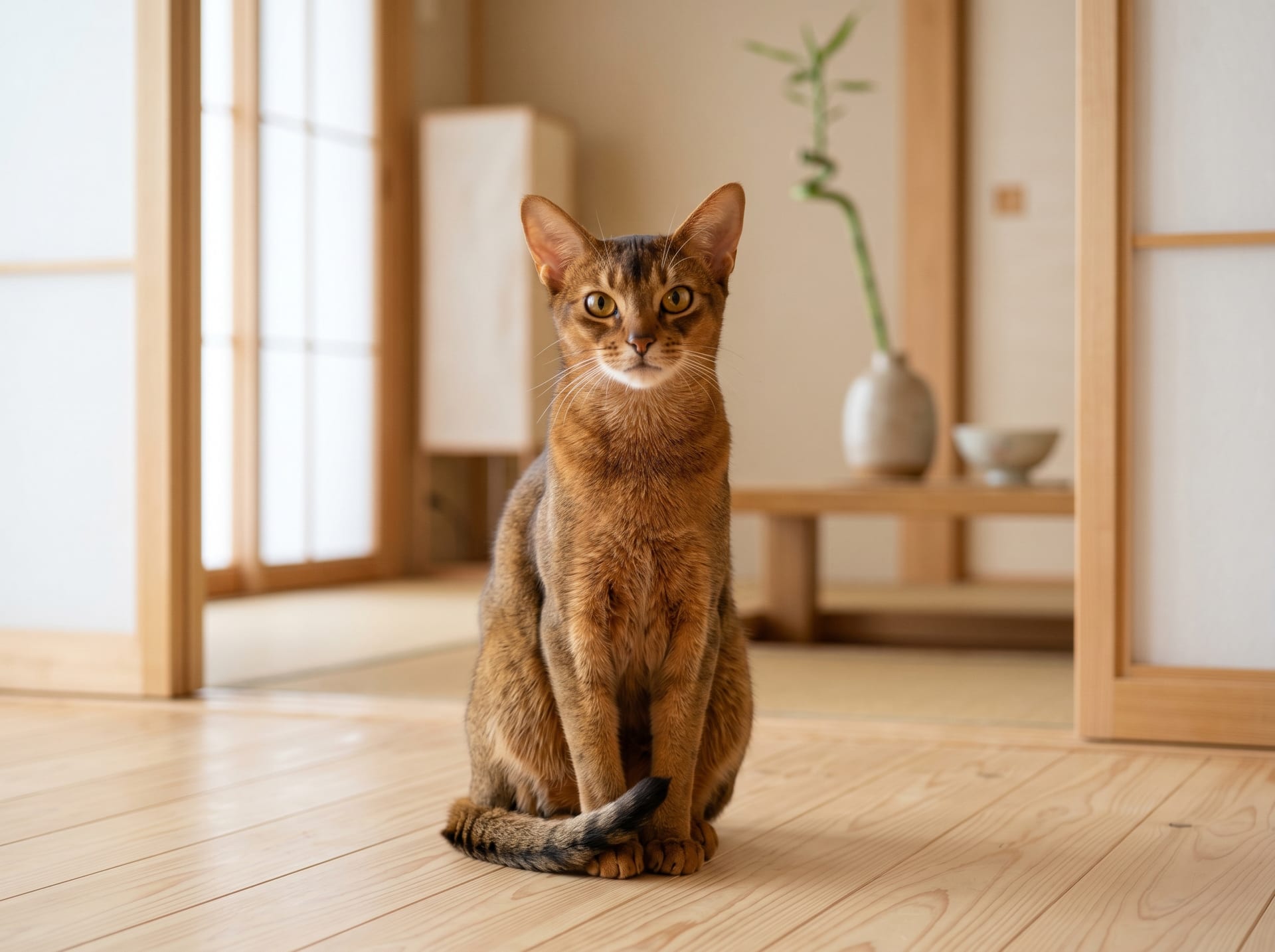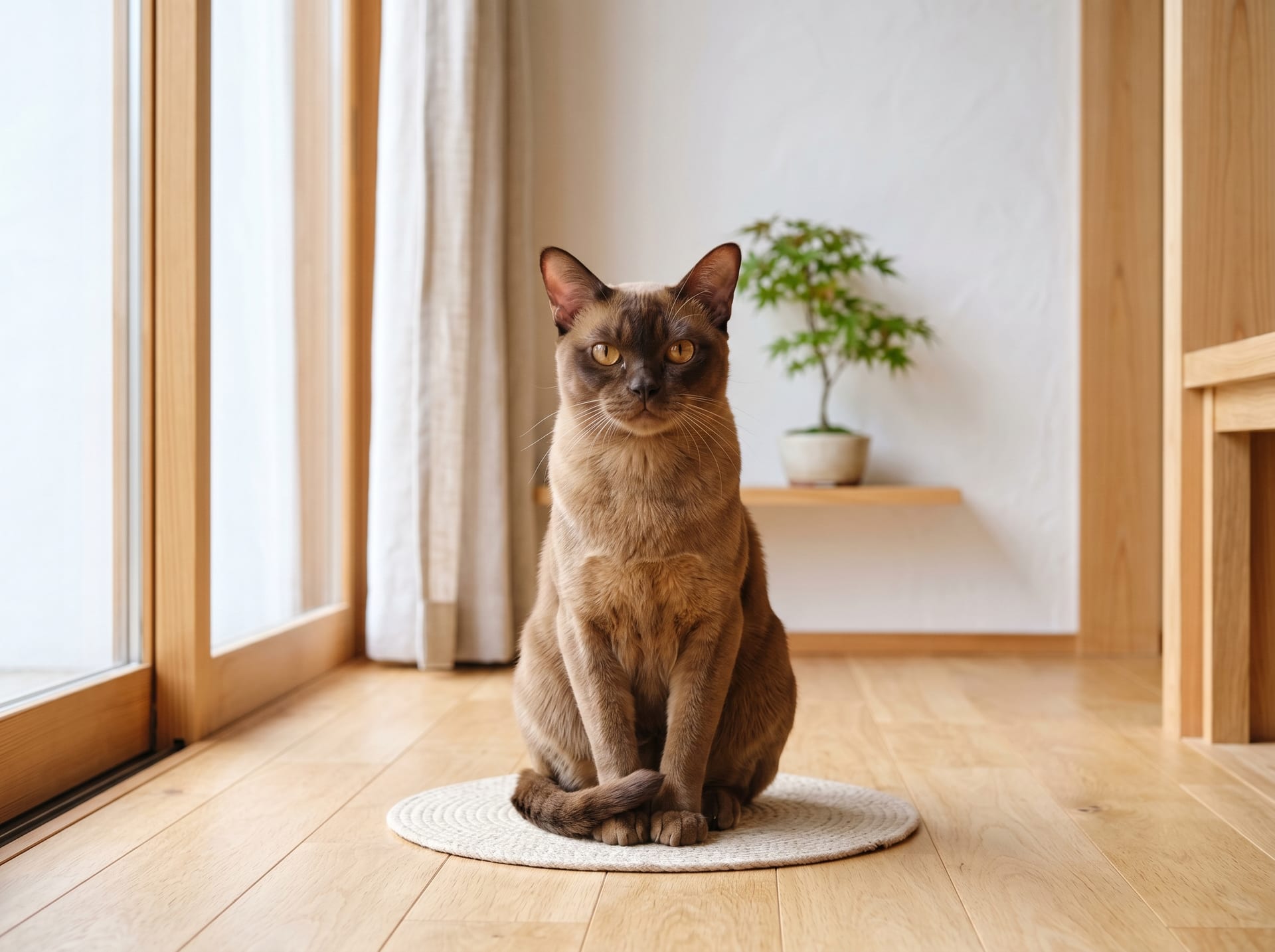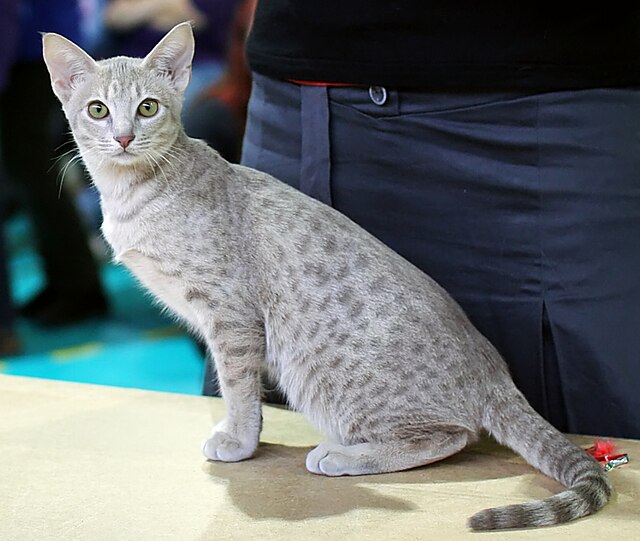
Source: Wikimedia Commons
Ocicat
IntermediateWild-looking spotted pattern but fully domestic. Dog-like loyalty; can learn leash walking and fetch.
Difficulty
Intermediate
Temperature
18〜28℃
Lifespan
12-15 years
Size
Weight 3-6.5kg
Diet
High-protein complete nutrition cat food.
About
The Ocicat is an all-domestic breed of cat which resembles a wild cat but has no recent wild DNA in its gene pool. It is named for its resemblance to the ocelot. The breed was established from the Siamese and Abyssinian and later on American Shorthair would be added.
Source: Wikipedia (CC BY-SA 4.0)
Lifespan of the Ocicat
The Ocicat lives 12-15 years.
Size of the Ocicat
The Ocicat grows to Weight 3-6.5kg.
Basic Info
Origin
United States
Lifespan
12-15 years
Size
Weight 3-6.5kg
Temperature
18〜28℃
Diet
High-protein complete nutrition cat food.
Care Guide
Temperament
Social with dog-like loyalty. Learns fetch and tricks; can walk on leash.
References & Sources
Edited & verified by: BreederDirect editorial team
The taxonomic, regulatory, and husbandry data on this page are compiled and verified against the authoritative primary sources below.
Primary sources
Taxonomy & Authority
Accepted name: Linnaeus, 1758
Synonyms: Felis silvestris catus
Authority databases: GBIF · GBIF: Felis catus · TICA breed profiles · CFA breed profiles
Nomenclature follows global taxonomic authority databases.
Ocicat Listings
Loading latest listingsFind listings for this species