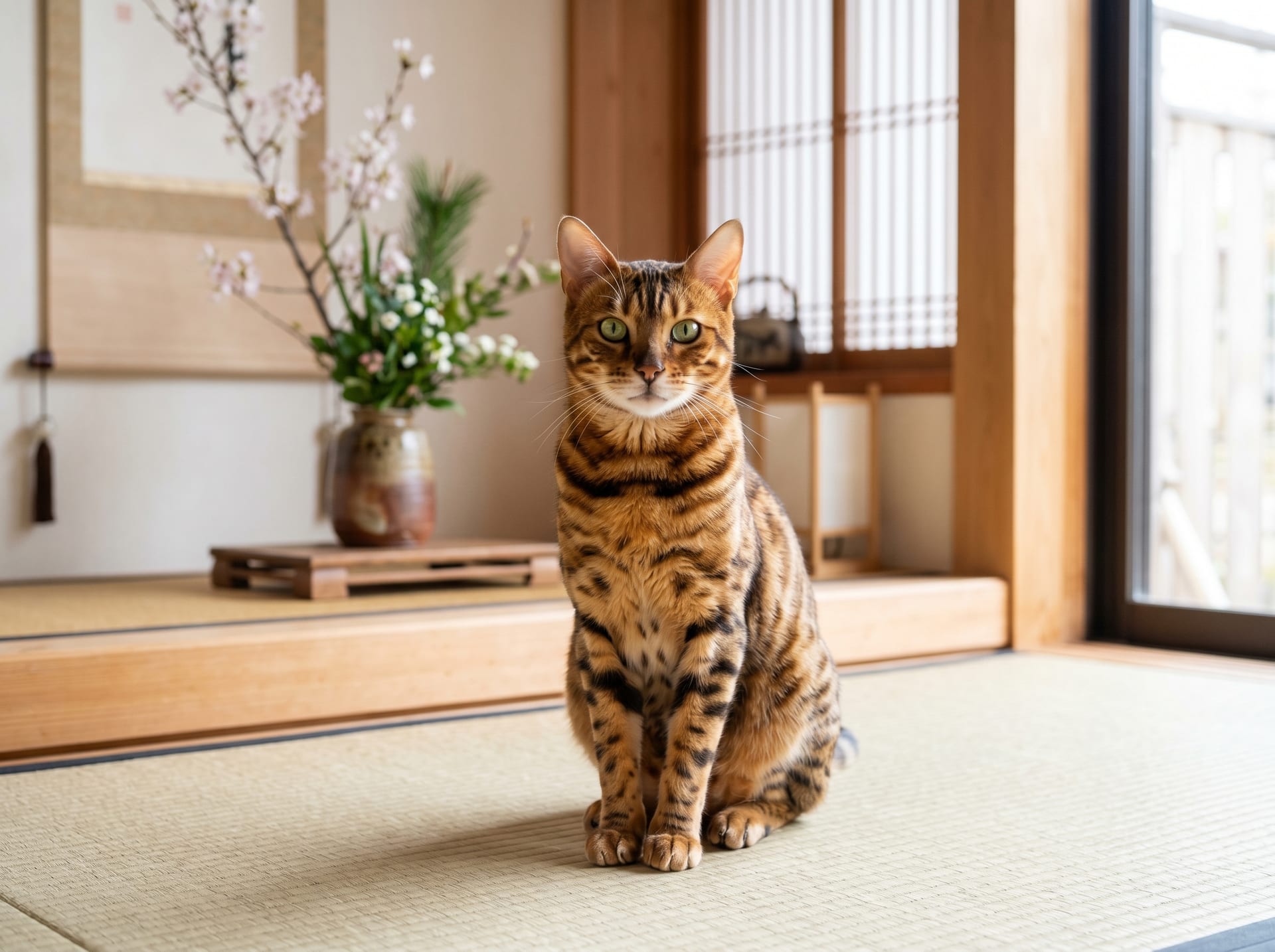
AI-generated image
Bengal
IntermediateWild-looking spotted or marbled breed with high energy and intelligence. Requires plenty of stimulation.
Difficulty
Intermediate
Temperature
18〜28℃
Lifespan
12-16 years
Size
Weight 3.5-7kg
Diet
High-protein, low-carb cat food. Combination of wet and dry food recommended.
About
The Bengal is a domestic cat breed developed to look like exotic jungle cats such as leopards and ocelots. The breed was created by crossing domestic cats with the Asian leopard cat (Prionailurus bengalensis), a small wild cat native to South and Southeast Asia. American breeder Jean Mill is credited with establishing the breed in the 1970s and 1980s. Bengals are known for their distinctive spotted or marbled coat with a characteristic glittery sheen. They are highly active, intelligent, and curious cats that require significant daily exercise and mental stimulation.
Source: Wikipedia (CC BY-SA 4.0)
Lifespan of the Bengal
The Bengal lives 12-16 years.
Size of the Bengal
The Bengal grows to Weight 3.5-7kg.
Basic Info
Origin
United States
Lifespan
12-16 years
Size
Weight 3.5-7kg
Temperature
18〜28℃
Diet
High-protein, low-carb cat food. Combination of wet and dry food recommended.
References & Sources
Edited & verified by: BreederDirect editorial team
The taxonomic, regulatory, and husbandry data on this page are compiled and verified against the authoritative primary sources below.
Taxonomy & Authority
Accepted name: Linnaeus, 1758
Synonyms: Felis silvestris catus
Authority databases: GBIF · GBIF: Felis catus · TICA breed profiles · CFA breed profiles
Nomenclature follows global taxonomic authority databases.
Regulations & Conservation Status
Bengal cat (Prionailurus bengalensis, CITES Appendix II; some subspecies are Appendix I) and domestic cat hybrid. Early generations (F1–F3) are wild-derived with restrictions on captive breeding and trade. Those available as pets are primarily later-generation SBT (F4 and beyond).
Sources: CITES Checklist (Prionailurus bengalensis)
Regulations may change. Always verify the latest information with the relevant authorities.
Bengal Listings
Loading latest listingsFind listings for this species