Source: Wikimedia Commons
Snowy Owl
AdvancedBubo scandiacus
A large owl clothed in white, the only living owl with mainly white plumage, feathered right down to the toes. The IUCN assesses it as Vulnerable. Females are distinctly larger than males.
Difficulty
Advanced
Temperature
15〜30℃
Lifespan
15+ years
Size
50-60cm (wingspan 140-165cm; males median about 1,658g with a range of 1,300-2,500g, females median about 2,102g with a range of 1,330-2,951g)
Humidity
40〜60%
Diet
Frozen mice, rats, day-old chicks and quail; in the wild strongly dependent on tundra lemmings, taking a wider range including birds outside the breeding season
About
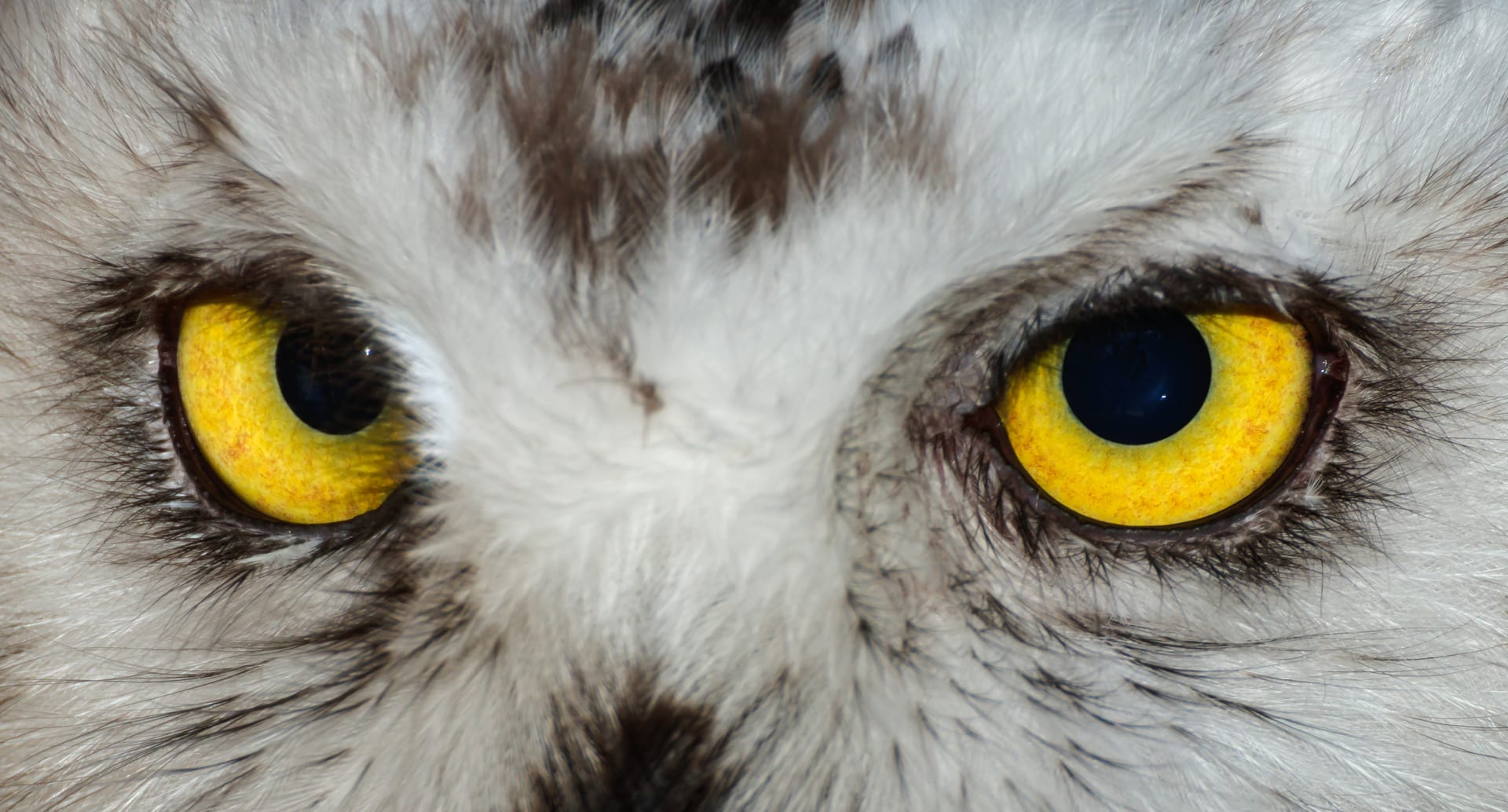
The snowy owl (Bubo scandiacus) is a large owl of Arctic North America and the Palearctic that breeds mostly on tundra, and it is the only living owl with mainly white plumage. It is 50-60 cm long with a wingspan of 140-165 cm; males have a median mass of about 1,658 g and females about 2,102 g, so unusually for an owl the female is distinctly larger and the sexes are easy to tell apart. Adult males are nearly pure white while females and young birds carry extensive dark brown flecking, and the pattern of brown on the wing is the most reliable, if imperfect, guide to age and sex. The feathering extends to the toes and buries the short bill, the eyes are yellow and the bill black. It lives in open tundra, grassland, marsh and rocky ground, seldom perching in trees and instead using ice blocks, rocks and stumps. Where most owls are nocturnal it is often active by day, an adaptation to the Arctic summer's continuous daylight. Its breeding and numbers are tied closely to tundra lemmings, and in winter many birds move south into the boreal zone; in Japan it is recorded rarely in Hokkaido and northern Honshu, with occurrences as far south as Tottori and Hiroshima.
Source: Wikipedia (CC BY-SA 4.0)
Lifespan of the Snowy Owl
The Snowy Owl lives 15+ years.
Size of the Snowy Owl
The Snowy Owl grows to 50-60cm (wingspan 140-165cm; males median about 1,658g with a range of 1,300-2,500g, females median about 2,102g with a range of 1,330-2,951g).
Basic Info
Origin
Arctic North America and the Palearctic, breeding mostly on tundra; in winter many move south into the boreal zone, and the species is recorded rarely in Hokkaido and northern Honshu
Lifespan
Care Specifications
Semi-aggressiveSolitary
Sources: Wikipedia - Snowy owl / Wikipedia - Snowy owl, Japanese edition (morphology, ecology)
References & Sources
Edited & verified by: BreederDirect editorial team
The taxonomic, regulatory, and husbandry data on this page are compiled and verified against the authoritative primary sources below.
Taxonomy & Authority
Accepted name: Bubo scandiacus (Linnaeus, 1758)
Synonyms: Strix scandiaca, Nyctea scandiaca
Authority databases: GBIF
Nomenclature follows global taxonomic authority databases.
Regulations & Conservation Status
CITES Appendix IIIUCN VU · Vulnerable
Bubo scandiacus. The order Strigiformes is listed in CITES Appendix II except for species placed in Appendix I, so this species is Appendix II and international trade requires an export permit. It is not among Japan's designated dangerous animals.
Sources: CITES Appendices (Appendix II) / IUCN Red List / Cabinet Order under the Act on Welfare and Management of Animals, appended table (designated dangerous animals)
Regulations may change. Always verify the latest information with the relevant authorities.
Snowy Owl Listings
Loading latest listingsFind listings for this species