Source: Wikimedia Commons
Saffron Finch
BeginnerSicalis flaveola
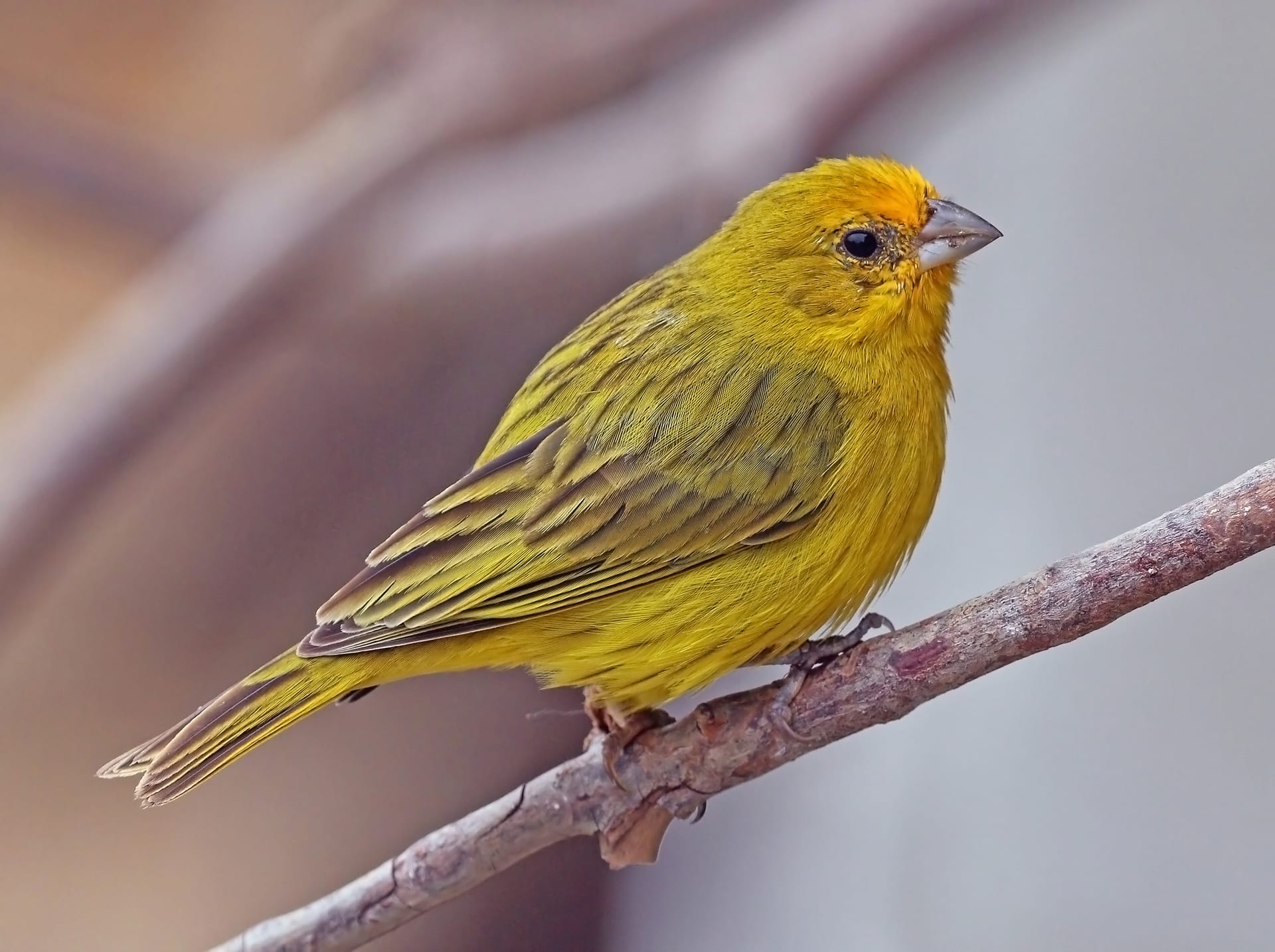
A South American tanager whose male is bright yellow with an orange forehead and crown. Sometimes called a canary, it is not related to the canary and will even nest under house roofs.
Difficulty
Beginner
Temperature
15〜30℃ (typical for Bird)
Humidity
40〜60%
Diet
Small-bird seed mix, greens, and small livefood or egg food when breeding
About
The saffron finch (Sicalis flaveola) is a tanager of open and semi-open lowlands across South America outside the Amazon Basin. It occurs naturally in Colombia, northern Venezuela, western Ecuador, western Peru, eastern and southern Brazil, Bolivia, Paraguay, Uruguay, northern Argentina and Trinidad and Tobago, and has been introduced to Hawaii, Puerto Rico, Jamaica and elsewhere. Locally it is called a 'roof canary', but it is not related to the canary. The male is bright yellow with an orange crown, which distinguishes it from most other yellow finches. Females are usually a duller version of the male, but in the southern subspecies pelzelni they are olive-brown with heavy dark streaks. Five subspecies are recognised. It nests in cavities, old hornero nests, bamboo and under house roofs, and tolerates people well. Males may mate with two females and are territorial in the breeding season. The song is pleasant but repetitive, and it has been kept as a cage bird in many areas for its looks and voice. The IUCN assesses it as Least Concern. In Japan it is seen now and then at specialist bird shops.
Source: Wikipedia (CC BY-SA 4.0)
Basic Info
Origin
Lowland open country of South America outside the Amazon Basin, including farmland and towns
Temperature
15〜30℃ (typical for Bird)
Humidity
40〜60%
Diet
Small-bird seed mix, greens, and small livefood or egg food when breeding
Care Guide
References & Sources
Edited & verified by: BreederDirect editorial team
The taxonomic, regulatory, and husbandry data on this page are compiled and verified against the authoritative primary sources below.
Taxonomy & Authority
Regulations & Conservation Status
Not CITES-listedIUCN LC · Least Concern
Sicalis flaveola. This tanager is not listed in the CITES Appendices. Imports into Japan are subject to animal import notification under the Infectious Diseases Control Law, but no notification is needed to keep or transfer it within Japan. The IUCN assesses it as Least Concern.
Sources: Species+ search (Sicalis flaveola not listed) / IUCN Red List
Regulations may change. Always verify the latest information with the relevant authorities.
Saffron Finch Listings
Loading latest listingsFind listings for this species