Source: Wikimedia Commons
King Quail (Chinese Painted Quail)
BeginnerSynoicus chinensis
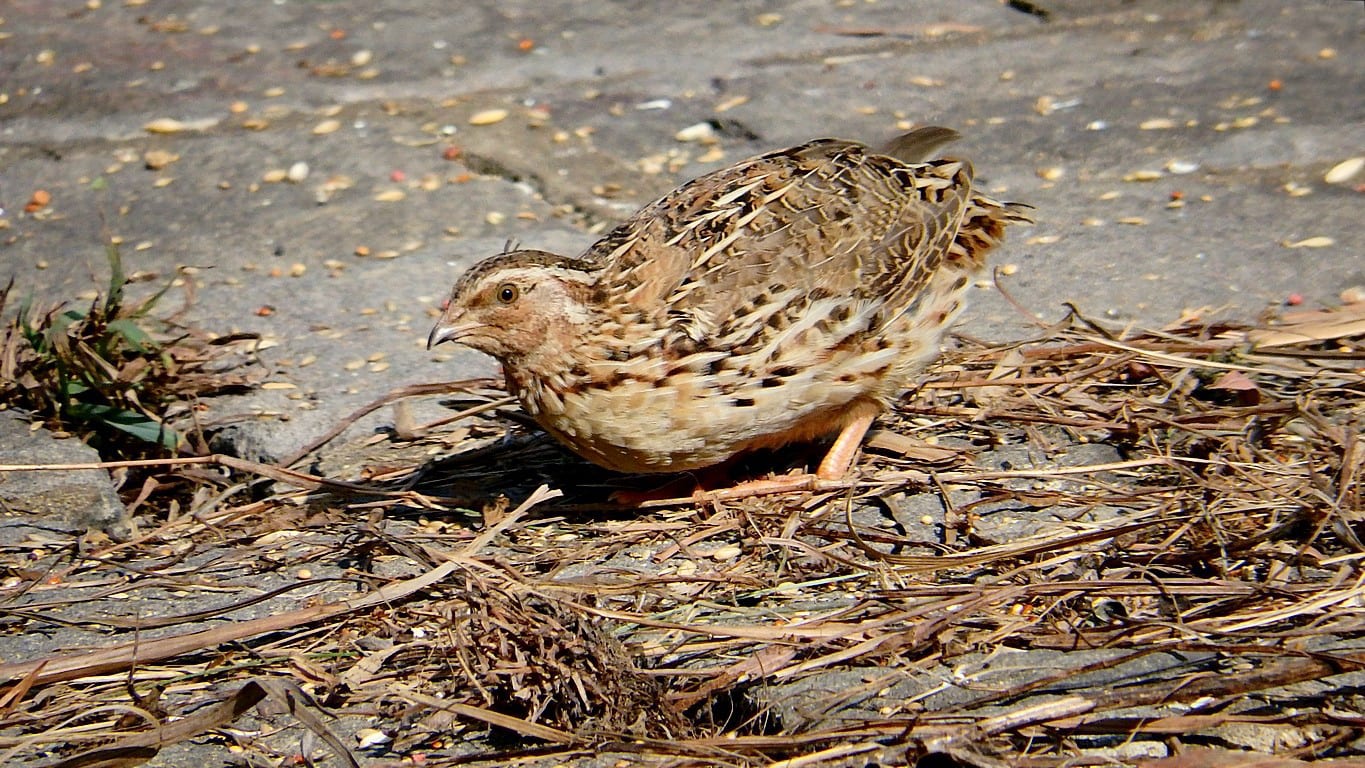
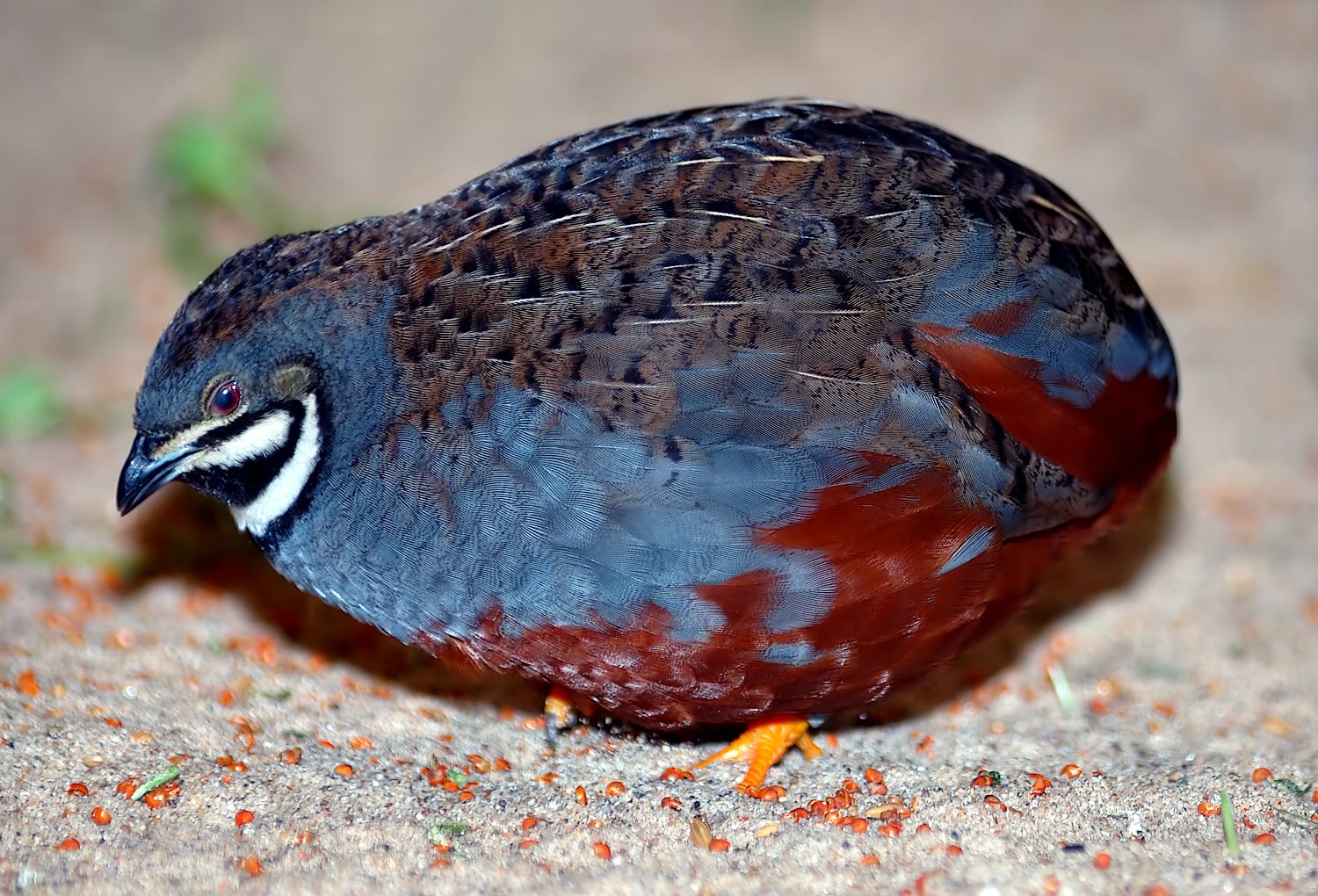
The smallest and lightest bird in the order Galliformes, 12 to 15 cm long. The male has blue-grey flanks, chestnut underparts and a black and white crescent on the throat, while the female is plain buff-brown. Many colour mutations have been bred for the aviary.
Difficulty
Beginner
Temperature
15〜30℃
Lifespan
Usually three to six years in captivity, up to 13, and about 1.5 years in the wild
Size
12-15cm (wingspan about 25cm; 20-57g)
Humidity
40〜60%
Diet
Fine mixed seed, greens, fruit and vegetables, insects, and a calcium source such as shell grit when breeding
About
The king quail (Synoicus chinensis) is the smallest of the quails and the smallest and lightest bird in the order Galliformes. The male has a dark brown back and wings, dark blue-grey flanks and neck and chestnut underparts, with the throat edged in black and white; the female is plain rufous-brown with a paler belly. Six subspecies are currently accepted, ranging from southern China and South and Southeast Asia through Oceania to southeastern Australia. The genus has moved from Coturnix to Synoicus to Excalfactoria and back to Synoicus following phylogenetic work. Clutches are of four to seven eggs, rarely nine, with incubation of 16 to 18 days; chicks can fly at one month and reach sexual maturity at three. In captivity many colour mutations are known, including blue, brown, silver and maroon, though the blue shades do not appear in females.
Source: Wikipedia (CC BY-SA 4.0)
Lifespan of the King Quail (Chinese Painted Quail)
The King Quail (Chinese Painted Quail) lives Usually three to six years in captivity, up to 13, and about 1.5 years in the wild.
Size of the King Quail (Chinese Painted Quail)
The King Quail (Chinese Painted Quail) grows to 12-15cm (wingspan about 25cm; 20-57g).
It is 12 to 15 cm long with a wingspan of about 25 cm and weighs 20 to 57 g.
Basic Info
Origin
Southern China and South and Southeast Asia through Oceania to southeastern Australia
Lifespan
Usually three to six years in captivity, up to 13, and about 1.5 years in the wild
Care Specifications
PeacefulPairBreeding: Moderate
Sources: Wikipedia - King quail (length 12-15cm, wingspan, weight 20-57g, six subspecies, clutch of four to seven, incubation 16-18 days, lifespan, captive colour mutations, floor mesh and cohabitation) / Japanese Wikipedia - King quail (no wild population in Japan, many birds do not incubate so an incubator is needed, adult at eight weeks, quiet voice)
References & Sources
Edited & verified by: BreederDirect editorial team
The taxonomic, regulatory, and husbandry data on this page are compiled and verified against the authoritative primary sources below.
Primary sources
- Wikipedia
- CITES Appendices (Synoicus chinensis not listed; checked against the edition valid from 25 November 2023)
- IUCN Red List
- Ministry of the Environment, Japan - List of Invasive Alien Species designated under the IAS Act (birds)
- Japanese Wikipedia - King quail (no wild population in Japan, many birds do not incubate so an incubator is needed, adult at eight weeks, quiet voice)
- GBIF
Taxonomy & Authority
Accepted name: Synoicus chinensis (Linnaeus, 1766)
Synonyms: Tetrao chinensis, Coturnix chinensis, Excalfactoria chinensis
Authority databases: GBIF
Nomenclature follows global taxonomic authority databases.
Regulations & Conservation Status
Not CITES-listedIUCN LC · Least Concern
Synoicus chinensis appears in none of the CITES Appendices. It is not designated an Invasive Alien Species in Japan, and as it is not a native Japanese bird it is not a nationally endangered species there either. The IUCN assesses it as Least Concern. It is not listed as threatened under Australian federal law, but it is listed as threatened under the Flora and Fauna Guarantee Act of Victoria.
Sources: CITES Appendices (Synoicus chinensis not listed; checked against the edition valid from 25 November 2023) / IUCN Red List / Ministry of the Environment, Japan - List of Invasive Alien Species designated under the IAS Act (birds)
Regulations may change. Always verify the latest information with the relevant authorities.
King Quail (Chinese Painted Quail) Listings
Loading latest listingsFind listings for this species