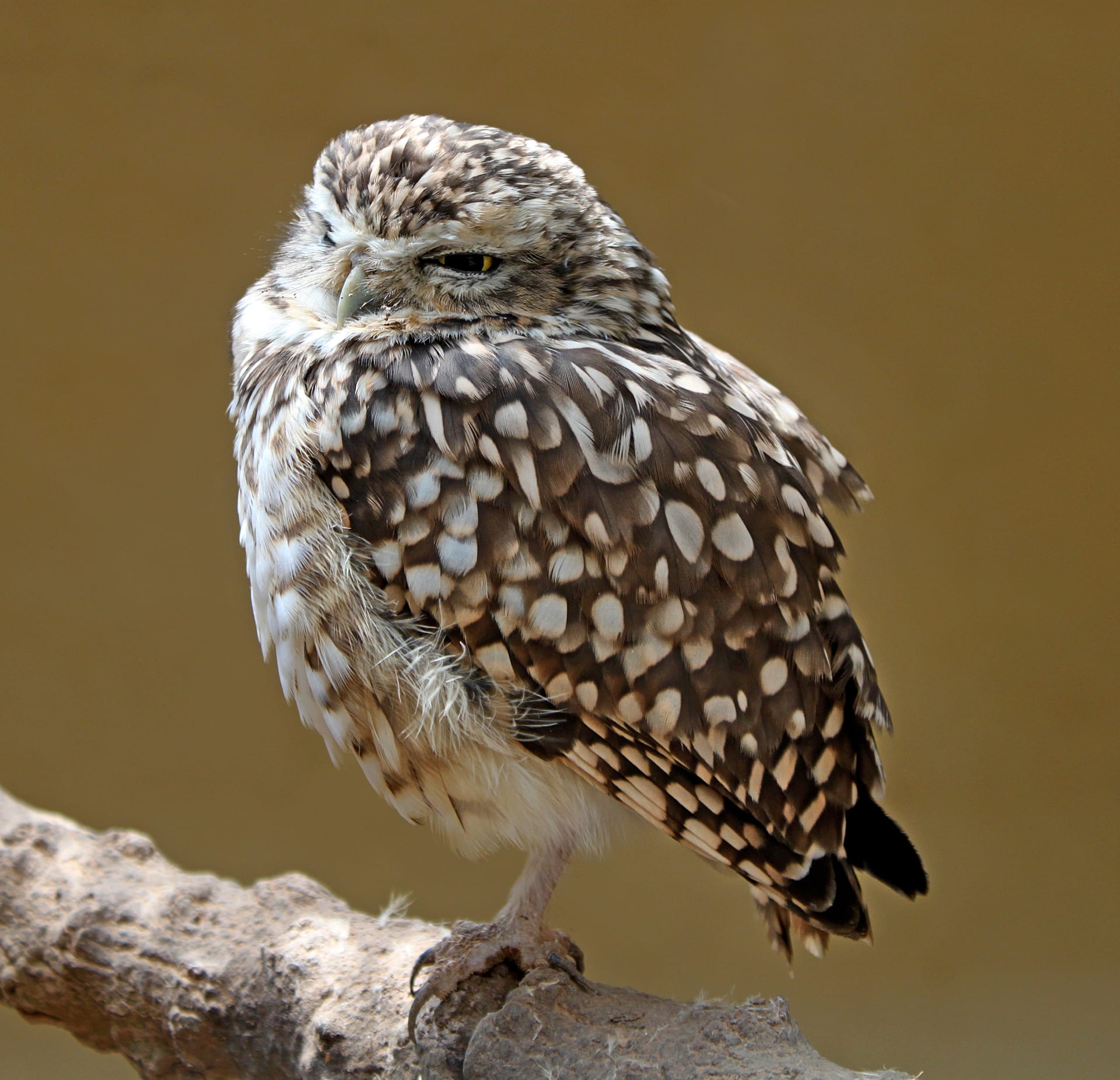
Source: Wikimedia Commons
Burrowing Owl
AdvancedAthene cunicularia
A small, long-legged owl adapted to life on the ground. It occupies burrows dug by prairie dogs and other animals and, unusually for an owl, is often active by day. It sprints a fair distance over the ground after prey.
Difficulty
Advanced
Temperature
15〜30℃
Lifespan
8-10 years
Size
19-28cm (wingspan 50.8-61cm, 140-240g)
Humidity
40〜60%
Diet
Frozen mice, day-old chicks and insects such as crickets; in the wild grasshoppers and other insects plus small mammals
About
It lives in grassland, rangeland, farmland and desert with low vegetation, nesting and roosting in burrows. Despite the name it rarely digs its own, instead taking over tunnels abandoned by American badgers, foxes, ground squirrels or prairie dogs. Adapted to prairie rather than forest, it has longer legs than other owls, which let it sprint after prey and give momentum on take-off, though its flights are short and low. Unlike most owls it is often active by day, avoiding the midday heat and hunting mainly at dawn and dusk when its night vision and hearing serve best. The sexes look alike, but adult males are more active and their plumage bleaches paler in the sun. Eighteen subspecies are recognised as of 2020, two of them extinct; most, such as the Brazilian (A. c. grallaria) and Florida (A. c. floridana) races, are defined by range rather than appearance.
Source: Wikipedia (CC BY-SA 4.0)
Lifespan of the Burrowing Owl
The Burrowing Owl lives 8-10 years.
Size of the Burrowing Owl
The Burrowing Owl grows to 19-28cm (wingspan 50.8-61cm, 140-240g).
The burrowing owl (Athene cunicularia) is a small owl of open country in North and South America, 19-28 cm long with a wingspan of 50.8-61 cm and weighing 140-240 g.
Basic Info
Origin
Open country across North and South America; eighteen subspecies are recognised as of 2020, two of them extinct
Lifespan
8-10 years
Size
Care Specifications
PeacefulPair
Sources: Wikipedia - Burrowing owl / Wikipedia - Burrowing owl, Japanese edition (morphology, ecology)
References & Sources
Edited & verified by: BreederDirect editorial team
The taxonomic, regulatory, and husbandry data on this page are compiled and verified against the authoritative primary sources below.
Taxonomy & Authority
Accepted name: Athene cunicularia (Molina, 1782)
Synonyms: Strix cunicularia, Speotyto cunicularia
Authority databases: GBIF
Nomenclature follows global taxonomic authority databases.
Regulations & Conservation Status
CITES Appendix IIIUCN LC · Least Concern
Athene cunicularia. The order Strigiformes is listed in CITES Appendix II except for species placed in Appendix I, so this species is Appendix II and international trade requires an export permit. It is not among Japan's designated dangerous animals.
Sources: CITES Appendices (Appendix II) / IUCN Red List / Cabinet Order under the Act on Welfare and Management of Animals, appended table (designated dangerous animals)
Regulations may change. Always verify the latest information with the relevant authorities.
Burrowing Owl Listings
Loading latest listingsFind listings for this species