Complete Guide to Raising Bobwhite and King Quails | The Appeal of Small Pet Birds and Breeding Tips
A comprehensive beginner's guide to raising Bobwhite and King Quails. We've compiled essential knowledge about ground-dwelling pet birds, which differ from parakeets, covering cage selection, bedding, feeding, temperature management, and breeding tips.
Key Takeaways
A comprehensive beginner's guide to raising Bobwhite and King Quails. We've compiled essential knowledge about ground-dwelling pet birds, which differ from parakeets, covering cage selection, bedding, feeding, temperature management, and breeding tips.
Bobwhite Quails and King Quails have recently gained popularity in the pet market as ground-dwelling birds, distinct from parakeets and Java sparrows. These small birds have unique appeal: they produce quiet calls suitable for apartment living, are relatively affordable to acquire, and offer enjoyable breeding opportunities. This article provides a comprehensive guide to raising Bobwhite and King Quails.
Basic Information on Bobwhite and King Quails
Bobwhite Quails (Colinus virginianus) are native to North America. Males produce a distinctive "Bob-White!" call, which is how the species gets its common name. They are small birds, approximately 24 cm in length, with beautiful plumage patterns that make them highly valued as display birds.
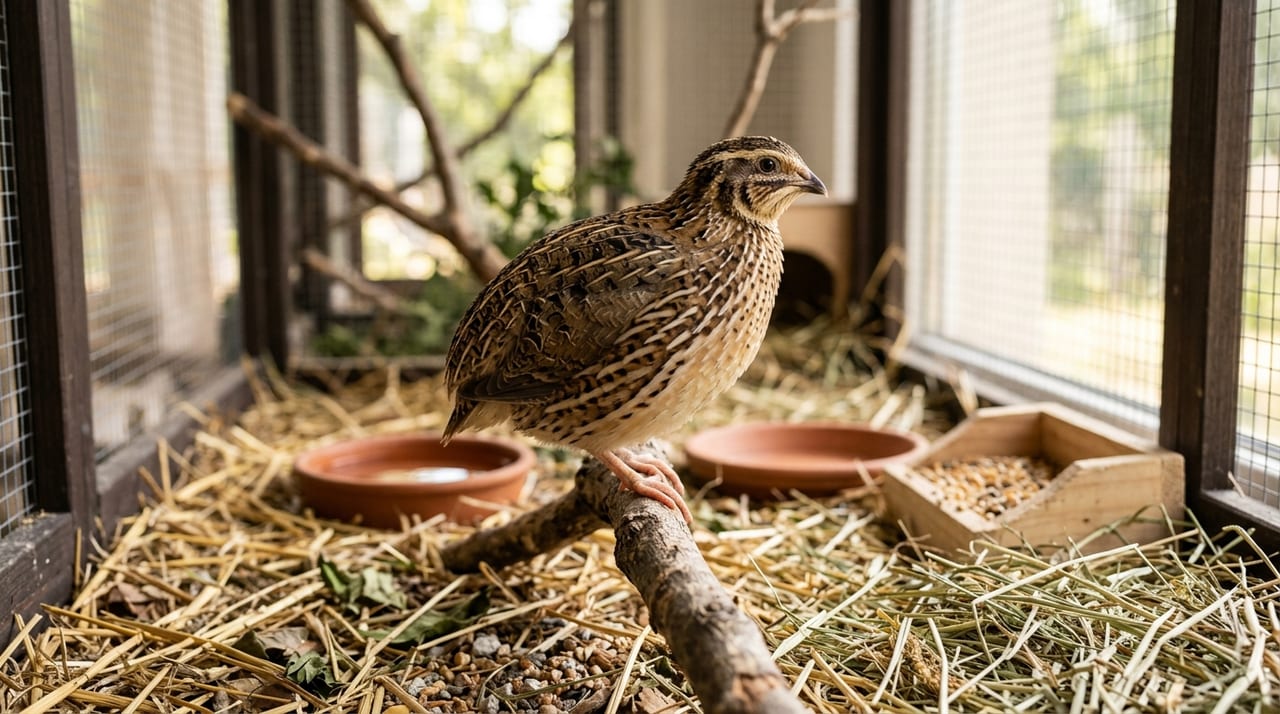
King Quails (Coturnix chinensis) are native to Southeast Asia and Australia. These are ultra-small quails, measuring just 12-14 cm in length. Also known as King Quails or Chinese Painted Quails, they are considered among the world's smallest quail species. Their cute appearance has earned them a devoted following in Japan as well.
Both species have calm temperaments and many individuals readily become accustomed to humans. However, unlike parakeets, they don't seek interaction with people. Instead, the basic approach is to enjoy observing their natural behaviors—walking across the ground and foraging—rather than direct handling.
Setting Up Your Quail Habitat
Cage Selection
Since quails have a habit of walking on the ground, a cage with ample floor space is essential. Height is less critical, but the cage should have a large bottom surface.
- Bobwhite Quails: Minimum floor space of approximately 60cm × 45cm is necessary. For two birds, 90cm (W) × 60cm (D) is recommended
- King Quails: Minimum 45cm × 30cm; for two or more birds, 60cm × 45cm or larger
Rather than bird-specific cages, reptile enclosures with side-opening doors or small animal cages may be more practical. Since startled quails can jump vertically, if the ceiling is made of metal mesh, install protective padding (foam or fabric) to prevent head injuries.
Bedding
Quails walk on the ground and forage for food at ground level. Choose bedding that is absorbent and promotes good hygiene.
- Dried hay (such as timothy hay): Recreates a natural environment and encourages foraging behavior
- Pet sheets + artificial turf: Easy to clean and simplifies hygiene management
- Corn cob (crushed corncob): Highly absorbent
Installing a sand bath (a dedicated dust bath box) will be readily used by the quails. Dust bathing is important behavior for maintaining clean plumage.
Temperature and Humidity Control
While quails are relatively hardy, sudden temperature fluctuations must be avoided.
- Optimal temperature: 15-28°C (adult birds)
- Chicks and juveniles: Require heating at 30-35°C for the first week after hatching; decrease by 2-3°C weekly thereafter
- Humidity: 40-60%
In winter, use pet heaters (heat lamps or panel heaters) to maintain proper cage temperature. In summer, avoid heat stress by preventing direct sunlight and ensuring good air circulation.
Diet and Nutrition Management
Quails are omnivorous and enjoy seeds, insects, and vegetables.
Primary pellet feed:
- Quail-specific pellets (commercially available but somewhat limited in selection)
- Chick starter feed (many keepers use this as a substitute)
- Small-grain wild bird seed mix is also suitable
Supplementary foods and treats:
- Leafy greens such as komatsuna and bok choy
- Crickets and mealworms (live or dried)
- Dried shrimp and dried daphnia (as protein sources)
Place feeders on the ground or at a low position. Provide water via a water tank (nipple-style drinker) or shallow dish, though shallow dishes soil easily and require daily changes.
Quails consume large amounts of calcium while producing eggs, so keep cuttlebone or oyster shells available at all times.
Breeding
Both King and Bobwhite Quails breed relatively easily and are popular among those aspiring to become breeders.
Pairing: Identify males and females by their appearance. Male Bobwhites have white stripes on the face, while male King Quails display distinctive bluish markings on the throat and breast. DNA sex determination can provide greater certainty.
Egg laying and hatching: While birds may naturally incubate in nesting boxes (low wooden boxes lined with hay) placed on the ground, natural hatching is difficult in most captive environments. Artificial incubation using a small incubator is more common.
Maintain incubation temperature at 37.5-38°C with humidity at 55-60% initially, increasing to 65-70% for the final three days. Incubation periods are approximately 23 days for Bobwhites and 16-17 days for King Quails.
Chicks are precocial and can feed themselves immediately after hatching, so hand-feeding is unnecessary. Provide chick starter feed (finely crushed) and water immediately after hatching.
Health Management and Considerations
Quails tend to conceal signs of illness. Watch for the following indicators:
- Changes in droppings: Watery, abnormal color, or reduced volume
- Loss of appetite and weight loss: Monitor daily food consumption
- Ruffled or fluffed plumage: Possible sign of illness
- Lethargy and sluggish movement: Consult a veterinarian immediately
Coccidiosis (gastrointestinal infection) is a common disease in quails; maintaining hygiene is critical for prevention. Remove droppings from the cage bottom daily and completely change the bedding weekly.
Through BreederDirect, you can also purchase quails directly from breeders. When selecting a healthy individual, confirm that the eyes are clear, the plumage is glossy, and the bird moves actively before bringing it home.