Source: Wikimedia Commons
Indian Peafowl
AdvancedPavo cristatus
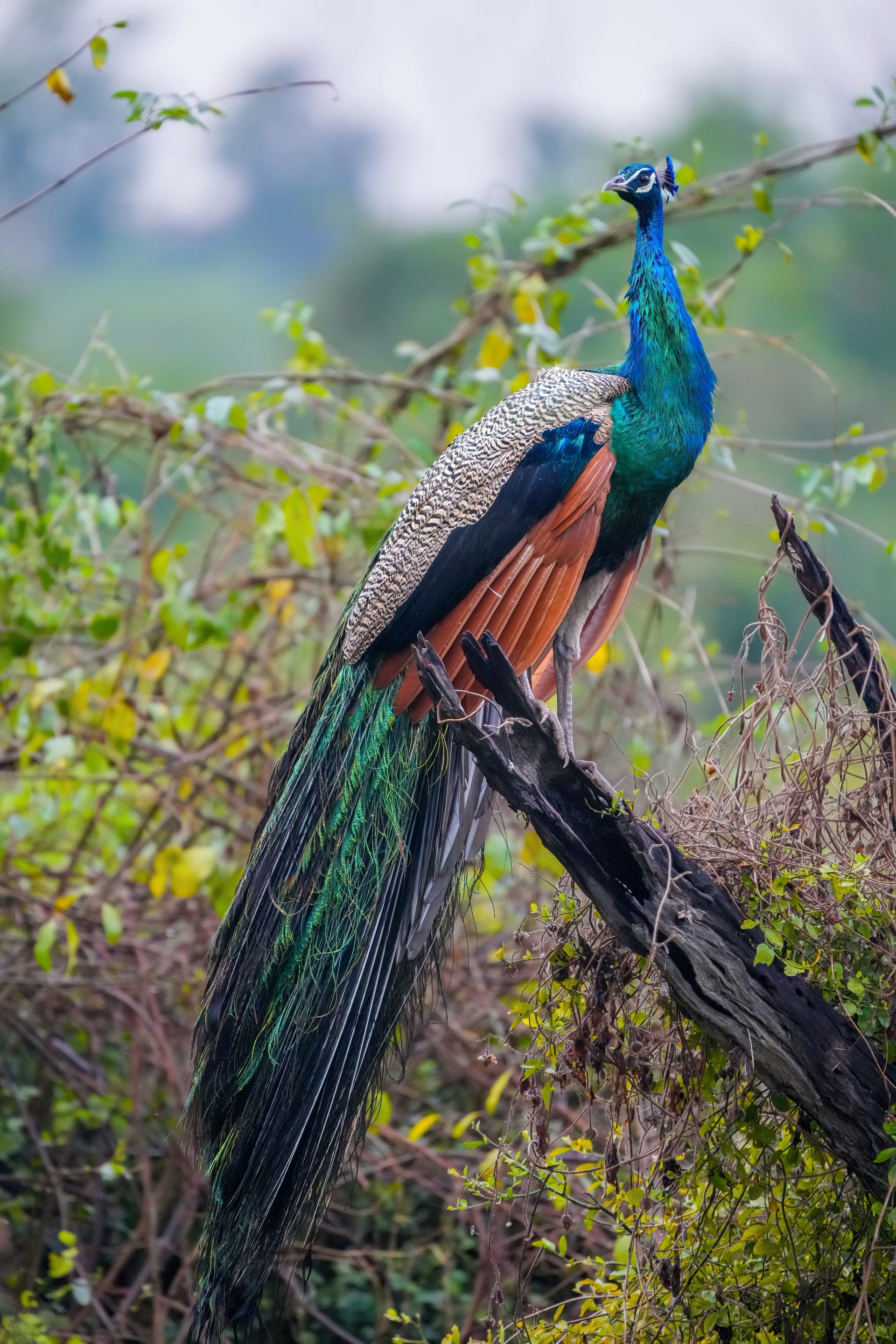
In the male 100 to 150 uppertail coverts grow out into the train, taking the total length to 180-230 cm. The head and neck are deep blue and the crest is fan-shaped. The female is brown throughout and has no train.
Difficulty
Advanced
Temperature
15〜30℃
Lifespan
10-20 years on average
Size
180-230cm (male) / 86-90cm (female)
Humidity
40〜60%
Diet
Pheasant feed, grain, greens, fruit and insects
About
The Indian peafowl (Pavo cristatus) is native to the Indian subcontinent, is the type species of the genus Pavo and is the national bird of India. In the adult male, 100 to 150 uppertail coverts grow into the long train, which is raised into an eyespotted fan in courtship. The head and neck are deep blue, the flanks blue-green, and a fan-shaped crest stands on the crown. The female is brown throughout, with face and belly a pale brownish white. It lives in and around deciduous forest below 1,500 m and in farmland, spending the day on the ground and roosting in trees at night, in small parties of one male and several females. It is omnivorous, taking insects, small reptiles and amphibians, leaves, fruit and seeds. In India it lays three to eight eggs between January and April, and incubation takes 27 to 29 days. A white form has been fixed through captive breeding.
Source: Wikipedia (CC BY-SA 4.0)
Lifespan of the Indian Peafowl
The Indian Peafowl lives 10-20 years on average.
Average lifespan is 10 to 20 years.
Size of the Indian Peafowl
The Indian Peafowl grows to 180-230cm (male) / 86-90cm (female).
The sexes differ greatly: males are 180 to 230 cm long and weigh 4 to 6 kg, females 86 to 90 cm and 2.8 to 4 kg.
Basic Info
Origin
India, Sri Lanka, southern Nepal, eastern Pakistan and western Bangladesh
Lifespan
10-20 years on average
Care Specifications
Semi-aggressiveGroupBreeding: Moderate
Sources: Japanese Wikipedia - Indo-kujaku (length and weight of both sexes, morphology, habitat, diet, breeding, lifespan, establishment in Japan) / Wikipedia - Indian peafowl (sexual dimorphism, train, range, introductions, IUCN, national bird of India) / IOC World Bird List v15.2 (scientific name, authority, English name, range)
References & Sources
Edited & verified by: BreederDirect editorial team
The taxonomic, regulatory, and husbandry data on this page are compiled and verified against the authoritative primary sources below.
Primary sources
- Wikipedia
- CITES Appendices (Pavo cristatus listed in Appendix III by Pakistan)
- Annex to Council Regulation (EC) No 338/97 as amended by Commission Regulation (EU) 2026/1383 (post-CoP20)
- Ministry of the Environment, Japan - List of Invasive Alien Species designated under the IAS Act (birds)
- Ministry of the Environment, Japan - List of Invasive Alien Species (2nd ed., birds)
- IUCN Red List
- Japanese Wikipedia - Indo-kujaku (length and weight of both sexes, morphology, habitat, diet, breeding, lifespan, establishment in Japan)
- IOC World Bird List v15.2 (scientific name, authority, English name, range)
Taxonomy & Authority
Accepted name: Pavo cristatus Linnaeus, 1758
Authority databases: GBIF
Nomenclature follows global taxonomic authority databases.
Regulations & Conservation Status
CITES Appendix IIIIUCN LC · Least Concern
Domestic law: 特定外来生物には指定されていないが、環境省「生態系被害防止外来種リスト(第2版)」に防除推進外来種として掲載されている。福島、埼玉、三重、滋賀、香川(小豆島)、愛媛、鹿児島(硫黄島)、沖縄の各地で定着が確認され、沖縄県の先島諸島では駆除が行われている。同リストは利用上の留意事項として、逸出しないよう十分注意し放出しないことを求めている。
Pavo cristatus is listed in CITES Appendix III at the request of Pakistan. Appendix III requires an export permit for specimens from the listing state and a certificate of origin for those from elsewhere; no registration certificate of the kind used for internationally endangered species is needed. Its congener the green peafowl Pavo muticus is in Appendix II. The species is not designated an Invasive Alien Species in Japan, but it is listed in the Ministry of the Environment's Invasive Alien Species List (2nd edition, 11 September 2026) in the category prioritised for control, at the stage of spreading to widespread establishment. The IUCN assesses it as Least Concern.
Sources: CITES Appendices (Pavo cristatus listed in Appendix III by Pakistan) / Annex to Council Regulation (EC) No 338/97 as amended by Commission Regulation (EU) 2026/1383 (post-CoP20) / Ministry of the Environment, Japan - List of Invasive Alien Species designated under the IAS Act (birds) / Ministry of the Environment, Japan - List of Invasive Alien Species (2nd ed., birds) / IUCN Red List
Regulations may change. Always verify the latest information with the relevant authorities.
Indian Peafowl Listings
Loading latest listingsFind listings for this species