Source: Wikimedia Commons
Domestic Turkey
IntermediateMeleagris gallopavo
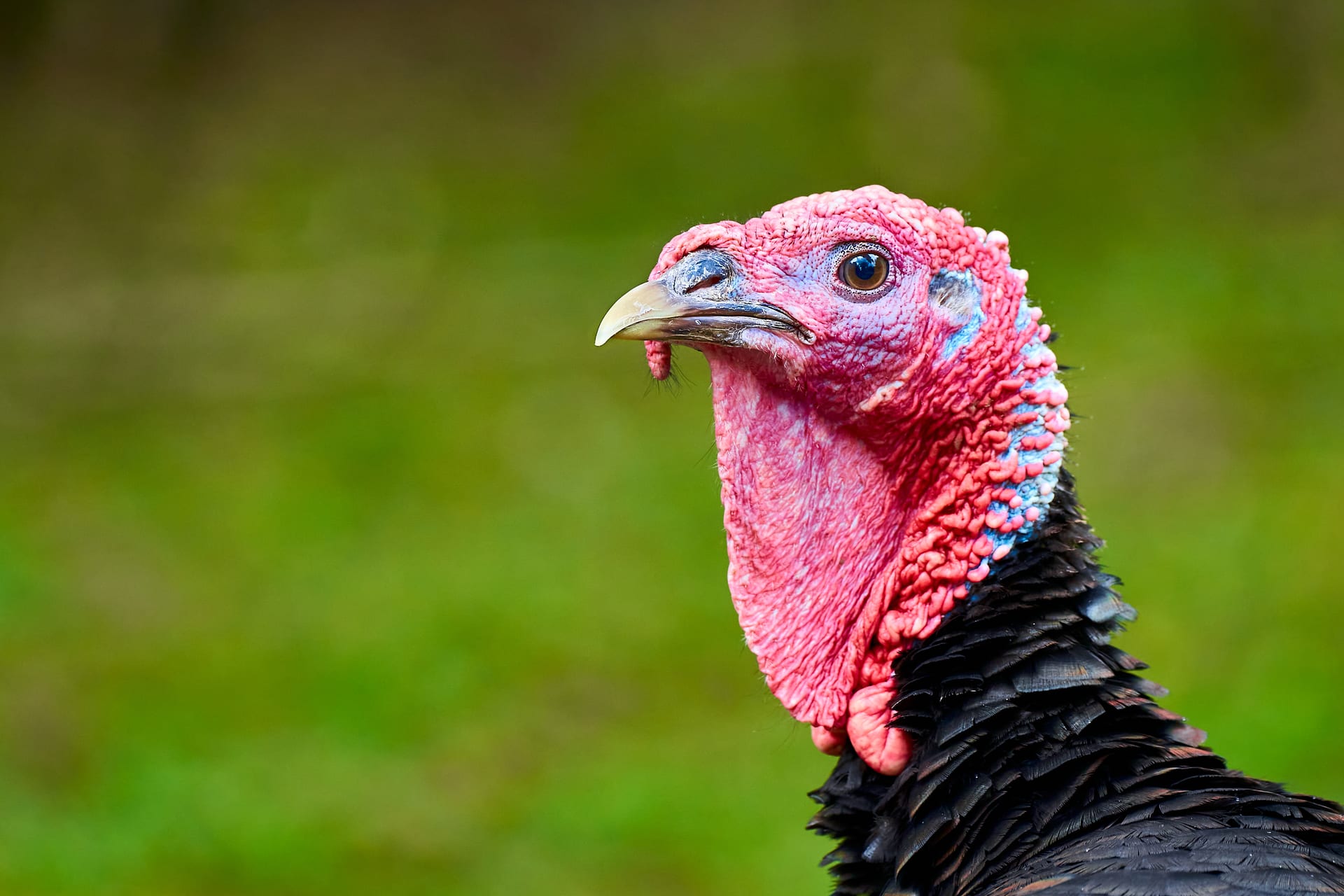
A large domestic fowl named in Japanese for the bare skin of its head and neck, which shifts between red, blue and purple when excited. Domesticated from wild turkeys of central Mexico, the male fans its tail in display.
Difficulty
Intermediate
Temperature
15〜30℃
Size
Wild males 122 cm
Humidity
40〜60%
Diet
Turkey or poultry rations for each growth stage, greens and grain
About
The domestic turkey descends from the central Mexican subspecies of the wild turkey (Meleagris gallopavo), domesticated by Mesoamerican peoples at least 2,000 years ago and taken to Europe by the Spanish in the 16th century, where many breeds were developed. The head and neck are bare with red skin, and it has a fleshy snood above the bill and a wattle below. The Japanese name, 'seven-faced bird', refers to this skin, which shifts between red, blue, purple and other colours when the bird is excited. Most domestic turkeys today are white-feathered because the pin feathers are less visible on the carcass, though bronze, black and other varieties are also kept. In display the male fans his tail, lowers and shakes his wings, arches his neck back and struts slowly with breast thrust forward, gobbling. Young turkeys readily fly short distances and roost, but do so less as they mature. Lines bred large for meat grow so big that leg and joint problems are common and some cannot mate naturally. It is the largest galliform; wild males reach 122 cm and 9 kg. In Japan poults are available from poultry dealers, and some people keep turkeys for display or home use.
Source: Wikipedia (CC BY-SA 4.0)
Size of the Domestic Turkey
The Domestic Turkey grows to Wild males 122 cm.
Basic Info
Origin
Domesticated in central Mexico (the wild species ranges across North America)
Size
Wild males 122 cm
Temperature
15〜30℃
Humidity
40〜60%
References & Sources
Edited & verified by: BreederDirect editorial team
The taxonomic, regulatory, and husbandry data on this page are compiled and verified against the authoritative primary sources below.
Primary sources
- Wikipedia
- Act on Domestic Animal Infectious Diseases Control (Articles 12-3, 12-4)
- Enforcement Order (Article 4, animals subject to hygiene standards)
- Enforcement Regulation (Articles 21-5, 21-6, deadline and items)
- Wikipedia (Japanese) - Turkey (name origin, size, groups, welfare problems)
- AnAge (maximum recorded longevity)
- GBIF
Taxonomy & Authority
Regulations & Conservation Status
Not CITES-listed
The domestic turkey, not listed in the CITES Appendices. Under the Act on Domestic Animal Infectious Diseases Control, turkeys are livestock subject to hygiene management standards, and anyone keeping even one bird must report the number kept to the prefecture (livestock hygiene service centre) by 15 June every year. Keepers of fewer than 100 birds file a simplified report, and those shipping no birds or eggs need no attachments.
Sources: Act on Domestic Animal Infectious Diseases Control (Articles 12-3, 12-4) / Enforcement Order (Article 4, animals subject to hygiene standards) / Enforcement Regulation (Articles 21-5, 21-6, deadline and items)
Regulations may change. Always verify the latest information with the relevant authorities.
Domestic Turkey Listings
Loading latest listingsFind listings for this species