Summer Water Temperature Management for Tropical Fish | Heat Mitigation Guide
When summer water temperatures exceed 30°C, it impacts the health of tropical fish. This guide explains cooling methods using fans, chillers, and air conditioning, oxygen supply strategies during temperature rises, and recommended water change frequency during summer.
Key Takeaways
When summer water temperatures exceed 30°C, it impacts the health of tropical fish. This guide explains cooling methods using fans, chillers, and air conditioning, oxygen supply strategies during temperature rises, and recommended water change frequency during summer.
Related Species
Temperature Above 30°C: A Warning Sign | Tropical Fish and High Water Temperature
While tropical fish are often thought of as preferring warm water, most species actually thrive in water temperatures of 26–28°C. Despite the name "tropical," it's commonly assumed they tolerate temperatures above 30°C without issue, but the risk of health deterioration increases dramatically when water temperature exceeds 30°C.
At higher temperatures, the amount of dissolved oxygen in the water decreases. If you notice your fish opening their gills rapidly or gasping at the water surface, these are signs of oxygen deficiency. Prolonged oxygen deprivation weakens their immune system, making them more susceptible to infections such as ich.
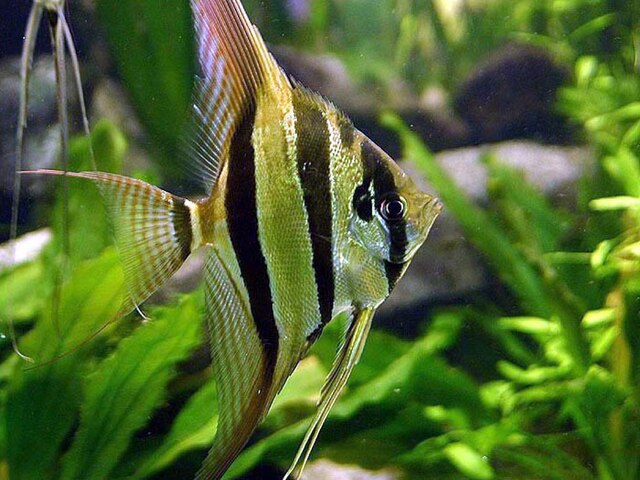
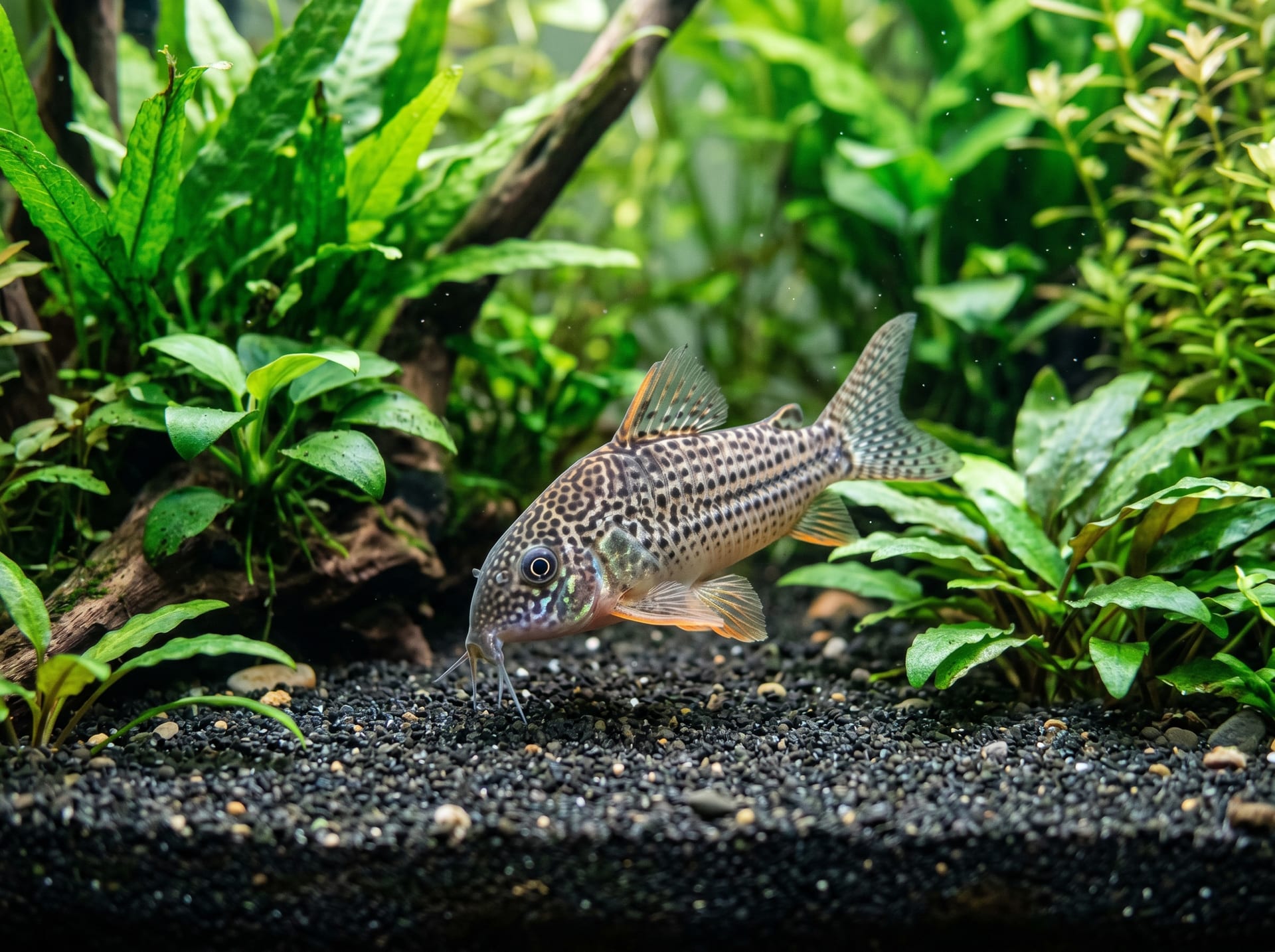
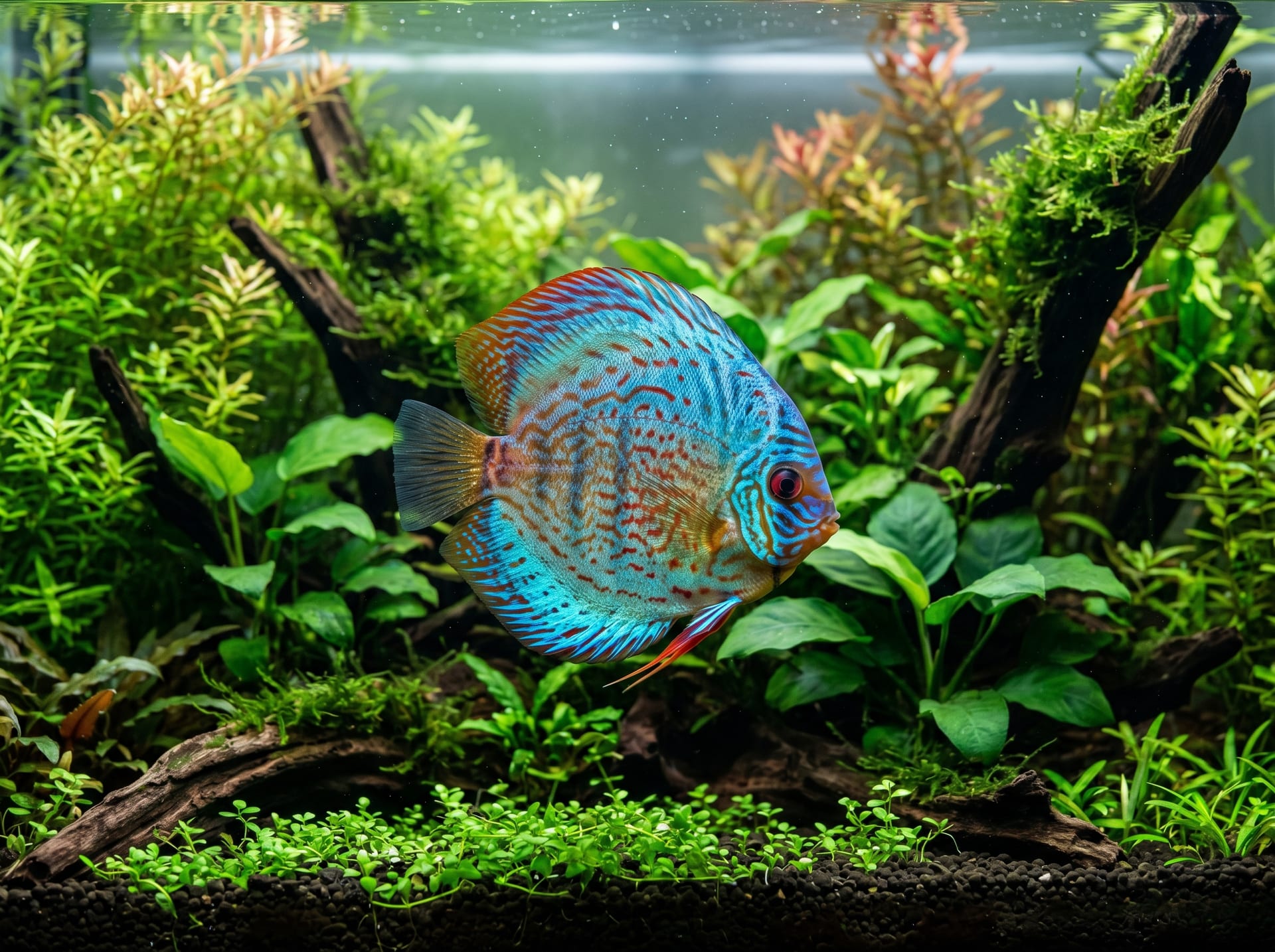
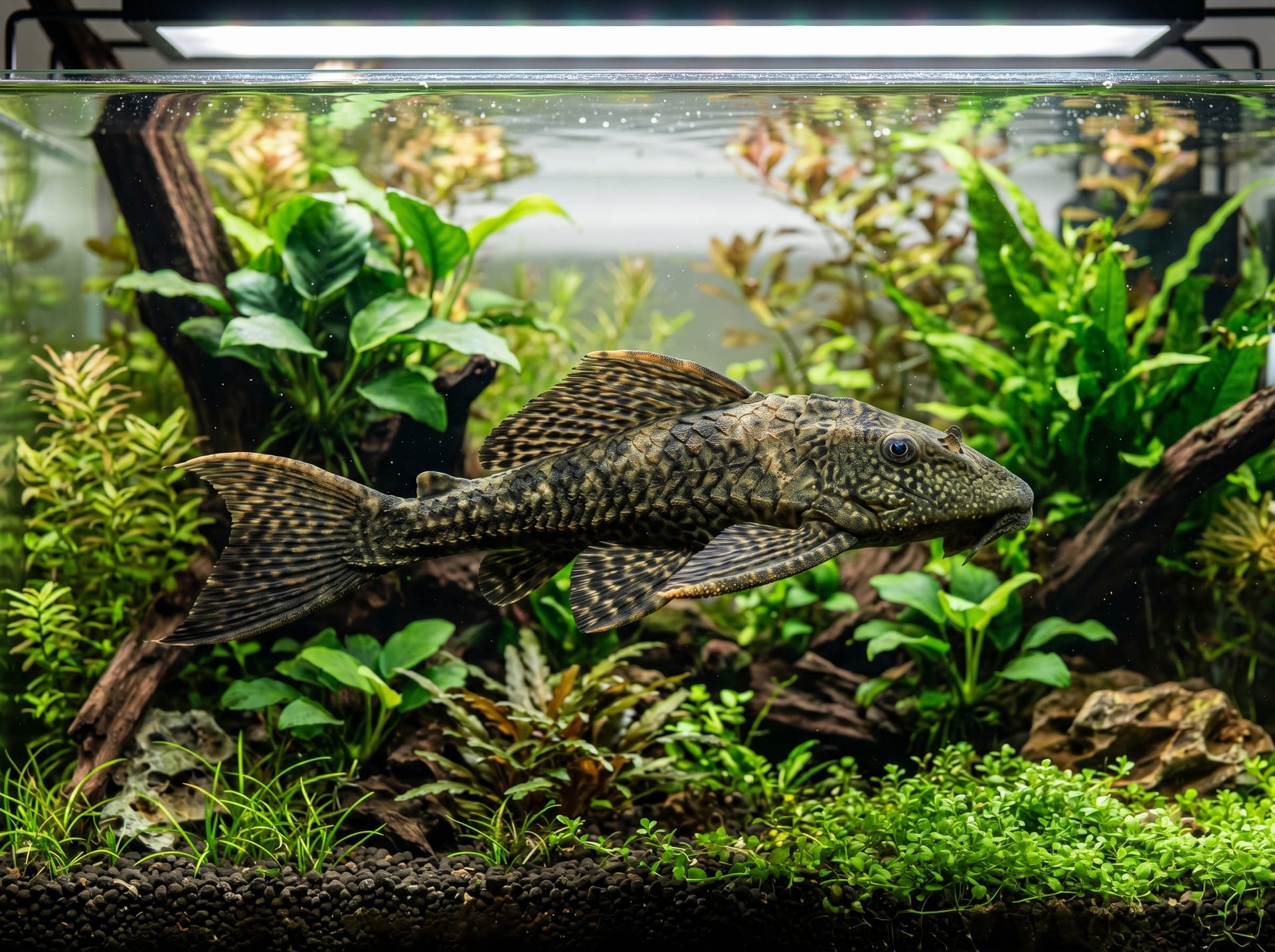
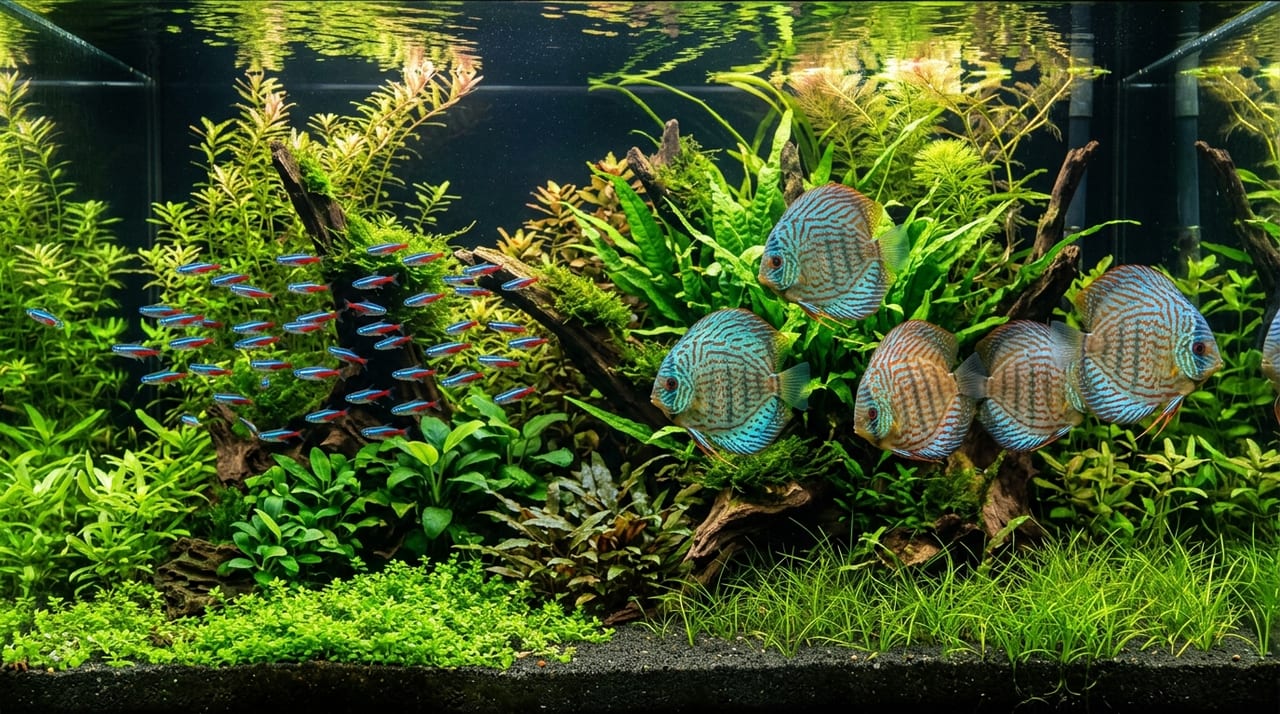
Heat tolerance varies by species. Cichlids such as discus and angelfish can tolerate relatively high temperatures, but bottom-dwelling fish like corydoras and pleco require more oxygen and deteriorate rapidly when temperatures exceed 30°C. Additionally, in planted aquariums, CO₂ supplementation further reduces oxygen concentration, requiring extra caution during summer. The key is to first understand the ideal temperature range and heat tolerance of the species you're keeping, then implement appropriate measures accordingly.
Understanding Cooling Methods | Choosing Between Fans, Chillers, and Air Conditioning
There are three main approaches to managing water temperature during summer. The most effective strategy is to combine them based on cost and your setup. For a comprehensive guide on summer heat mitigation, see Summer Heat Mitigation Guide.
Cooling Fans: The Budget-Friendly Standard Solution
The most convenient and cost-effective option is a cooling fan. It cools the water through evaporative cooling by blowing air across the surface, and you can expect a water temperature reduction of approximately 2–4°C. With unit prices typically in the 1,000–3,000 yen range, they're accessible even for beginners.
The main drawback is water level loss due to evaporation. While using a cooling fan, check the water level daily and top off with dechlorinated water. Additionally, a fan's effectiveness is heavily influenced by humidity—on humid days like during rainy season, evaporation slows and cooling efficiency drops by half. In environments where room temperature exceeds 35°C, a fan alone cannot provide adequate cooling, so combining it with air conditioning is necessary.