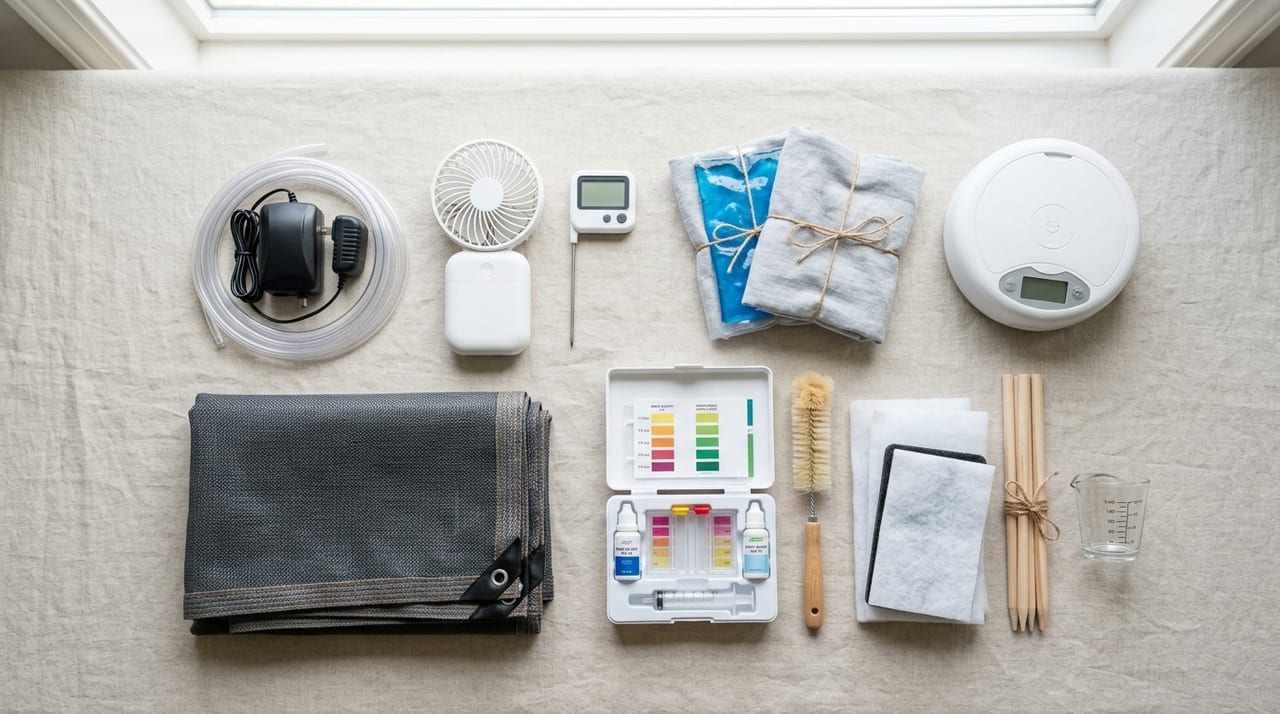
Summer Heat Management Guide | How to Protect Aquatic Animals and Plants from Extreme Heat | ブリちょく
Tips| ✍️ BreederDirect Editorial
Summer Heat Management Guide | How to Protect Aquatic Animals and Plants from Extreme Heat
Comprehensive guide covering water temperature management, cooling fan and chiller selection, shading strategies, and water quality maintenance—everything you need to know for summer breeding and cultivation.
Key Takeaways
Comprehensive guide covering water temperature management, cooling fan and chiller selection, shading strategies, and water quality maintenance—everything you need to know for summer breeding and cultivation.
Summer heat poses significant risks to aquatic animals and cultivated plants. Japan's summers are particularly hot and humid, making this the season when various problems like oxygen depletion from rising water temperatures, heat stress, and root rot from excess moisture occur frequently. This article explains the measures needed to protect your aquatic animals and plants from summer heat.
Water Temperature Management
In aquarium keeping, rising water temperatures during summer is one of the most serious problems.
Risks of Rising Water Temperature
- As water temperature rises, dissolved oxygen decreases, causing animals to suffer from oxygen deprivation
- High temperatures affect bacterial activity, causing water quality to fluctuate rapidly
- The ideal temperature for most tropical fish is 24–28°C; above 30°C becomes dangerous
- Shrimp are particularly sensitive to high temperatures; mortality risk increases above 28°C
Specific Countermeasures
- Installing a cooling fan: Directing air across the water surface uses evaporative cooling to lower temperature by approximately 2–4°C
- Using an aquarium chiller: Reliably controls water temperature, but expensive
- Increasing aeration: Raises dissolved oxygen levels and prevents oxygen depletion
- Reducing lighting duration: Lighting heat also contributes to temperature rise
- Cooling the entire room with air conditioning: Most efficient when maintaining multiple tanks
Choosing Cooling Fans and Chillers
Summer cooling equipment is essential for protecting your animals' lives.
Cooling Fans
- Advantages: Inexpensive (several thousand yen), easy to install, low electricity costs
- Disadvantages: Relies on evaporative cooling so less effective in high humidity; increases water evaporation
- Selection tips: Choose one with airflow appropriate for your tank size; verify noise level
- Caution: Water evaporation increases significantly, requiring frequent water top-ups
Aquarium Chillers
- Advantages: Reliably cools to your set temperature; unaffected by humidity
- Disadvantages: Expensive (tens of thousands of yen and up); produces waste heat that raises room temperature; generates operational noise
- Selection tips: Choose a model with capacity exceeding your tank's volume
- Installation location: Place in a well-ventilated spot where waste heat can dissipate
✍️
BreederDirect Editorial
The BreederDirect editorial team specializes in care information for animals, covering veterinary care and breeding to deliver beginner-friendly guides.
Intense summer sunlight causes rising water temperatures and damages plants.
Shading Aquariums
- If your tank is near a window, block direct sunlight with bamboo blinds or blackout curtains
- Attaching aluminum foil to the back and sides of the tank for insulation is also effective
- For outdoor biotopes and medaka bowls, use bamboo blinds or reed screens to block afternoon sun
Shading Plants
- Use shade cloth (30–50% shading rate) to reduce intense light
- Move potted plants to semi-shaded spots receiving only morning sun
- If leaf scorch appears (leaves turn pale or brown), immediately increase shading
- Note that succulents and cacti can also burn in direct midsummer sun
Preventing Water Quality Decline
Water quality deteriorates much faster during summer.
Causes of Water Quality Decline
- High temperatures disrupt bacterial activity balance
- Decomposition of uneaten food and waste accelerates, ammonia and nitrite spike easily
- Water evaporation reduces volume, concentrating contaminants
Countermeasures
- Increase water change frequency (from weekly to twice weekly)
- Change about one-third of the total volume per change to avoid drastic water quality shifts
- Reduce feeding amount slightly (digestion is slower in high temperatures)
- Clean filters regularly (rinse filter media gently with tank water only)
- Dechlorinate replacement water and match its temperature before adding
Dealing with Power Outages and Extended Absences
Plan ahead for summer power outages and extended absences.
Power Outage Preparation
- Keep a battery-powered air pump on hand (minimum precaution against oxygen depletion)
- Wrap ice packs in towels and place beside the tank (watch for sudden temperature drops)
- Consider installing a UPS (uninterruptible power supply)
Absence Preparation
- Use an automatic feeder
- Install an automatic water top-up system if needed
- If leaving air conditioning on, verify timer settings and temperature settings
- Best option is to ask a trusted person to manage the tanks
Get Through Summer Breeding with Briochoku
Briochoku provides comprehensive information on cooling equipment and supplies needed for summer breeding. You can also receive direct advice from experienced breeders, so if you're uncertain about summer heat management, please consult with a breeder.
Record-Keeping and Analysis to Improve Breeding Quality
Keeping records of daily management dramatically improves breeding precision. The essential items to record are:
Date and time: Precise record of what you did and when
Environmental data: Temperature, humidity, and water quality values (where applicable)
Feeding record: Type and amount of food, appetite level
Animal condition: Activity level, coloration, waste appearance, any abnormalities
Maintenance log: Water changes, substrate replacement, equipment cleaning/replacement
After accumulating records for a month or more, behavior patterns and environmental impacts become visible as numerical data. Using smartphone notes or spreadsheets minimizes the effort to maintain consistency. When problems occur, referencing past data makes identifying causes and solutions much smoother.
How to Choose Reliable Information Sources
Breeding information is abundant online, but not all of it is accurate. Keep these points in mind for identifying reliable sources.
Reliable Information Sources
- Information from breeders with years of experience breeding that species
- Academic papers and articles reviewed by veterinarians
- Information verified by long-time hobbyist communities
- Specialized books (recent publications)
Information to Be Cautious About
- Anonymous forum posts (often unverified)
- Articles with obvious intent to promote specific products
- Outdated information (breeding techniques improve yearly)
Briochoku provides an environment where you can ask specialists directly. Beyond listing information, the messaging feature lets you inquire about breeding methods and management tips, making it reliable for beginners and advanced hobbyists alike.
Common Mistakes and How to Avoid Them
Even experienced breeders make mistakes at first. Knowing common failure patterns helps you avoid the same pitfalls.
Mistake 1: Starting without Adequate Preparation
Starting without proper knowledge and equipment leads to unnecessary costs and delays when fixing problems later. Invest adequate time in preparation and research.
Mistake 2: Missing Environmental Changes
Daily observation makes gradual changes easy to miss. Develop the habit of checking conditions objectively once weekly. Recording numbers helps you catch changes invisible to the eye.
Mistake 3: Ignoring Problems
Waiting to see what happens often leads to deterioration. Quick action is essential when you notice problems. When uncertain, consult the seller or an expert. Early detection and response are key to protecting your animals' health.