Winter Heating Guide | Selecting Heaters and Temperature Management Basics
Explains the fundamentals of winter heating measures for animal care and cultivation, including heater types and selection, use of insulating materials, condensation prevention, and winter protection for plants.
Key Takeaways
Explains the fundamentals of winter heating measures for animal care and cultivation, including heater types and selection, use of insulating materials, condensation prevention, and winter protection for plants.
Winter cold poses a life-threatening risk to many captive animals and plants. Without proper heating measures, low-temperature stress can lead to weakened immunity, digestive issues, and in the worst cases, death from freezing. This article explains the fundamentals of winter heating measures for animal care and cultivation.
Types of Heaters and How to Choose
Selecting a heater suited to your animal's environment is the foundation of winter temperature management.
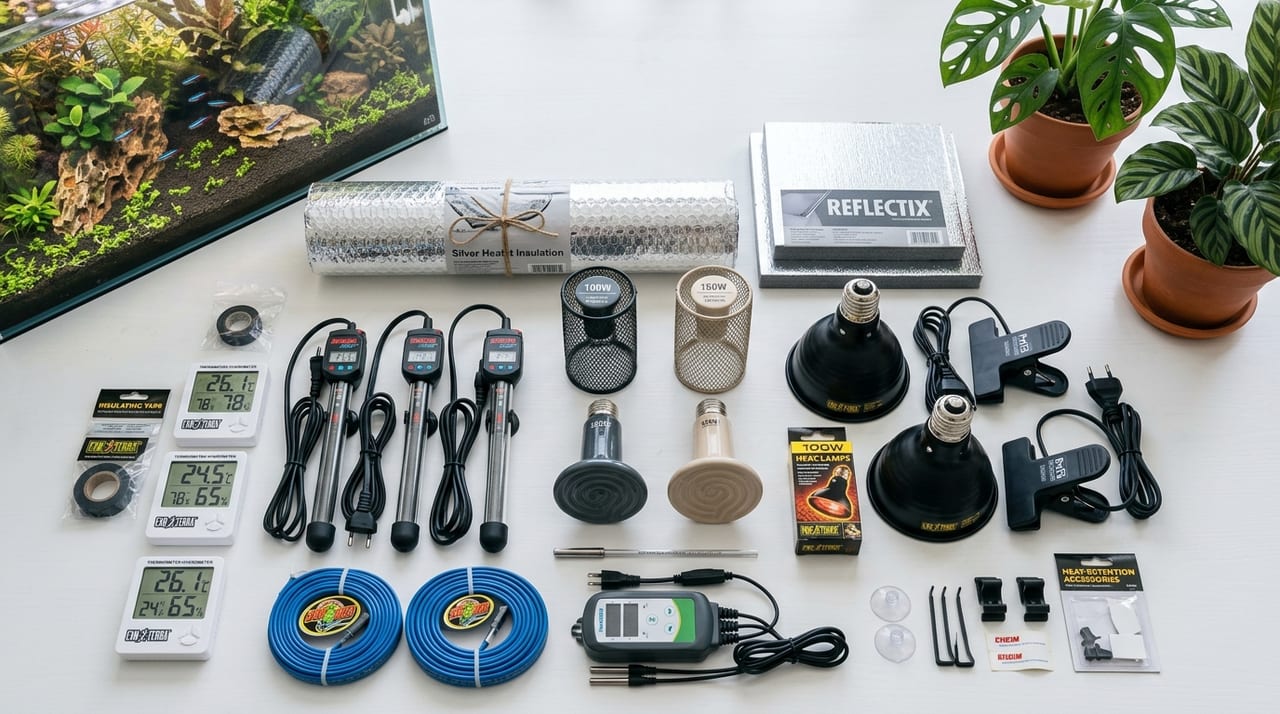
Aquarium Heaters - Auto heaters: Have a fixed set temperature (usually 26°C). Convenient but lack precise temperature control - Thermostat-equipped heaters: Can be set to any desired temperature. Enable temperature control tailored to species-specific breeding needs - Selection guide: Approximately 1-2 watts per liter of water (roughly 150-200 watts for a 60cm tank) - Important note: Heaters are consumables and should be replaced every 1-2 years. When they fail, water temperature can change rapidly, so always have a spare on hand
Reptile and Small Animal Heaters - Panel heaters: Placed under the cage floor to warm from below. Warming the abdomen promotes digestion - Heat lamps (infrared): Gently warm the entire enclosure. Infrared types that can be used at night are convenient - Dantogu panels: Panel-type heaters installed on the cage ceiling. Warm from above via radiant heat - Ceramic heaters: Emit heat without producing light. Ideal for nocturnal animals
Importance of Thermostats - Heaters alone risk overheating, so always use them with a thermostat - Digital thermostats offer high precision control and easy temperature monitoring - Temperature probes (sensors) should be placed where animals cannot directly contact them
Using Insulating Materials
Using insulating materials alongside heaters enables efficient temperature maintenance.
Tank Insulation - Apply insulation (styrofoam or aluminum heat-retaining sheets) to the back and sides of the tank - Laying insulation under the tank stand prevents cooling from the bottom - Keep the tank lid tightly closed to minimize heat loss from the water surface - A simple method of surrounding the tank with cardboard is also effective
Enclosure Insulation - Cover the enclosure with plastic sheets or heat-retaining covers (ensure ventilation holes remain open) - Avoid lowering the room temperature too much where the enclosure is kept - If you have multiple enclosures, grouping them on a metal rack and surrounding them is more efficient - Install a thermohygrometer and regularly check that proper temperature is maintained