Tips for Showcasing Beautiful Tetra Schooling | Species Selection and Layout Techniques
Learn how to create beautiful tetra schooling displays. We introduce species suited to schooling and how to create the right environment.
Key Takeaways
Learn how to create beautiful tetra schooling displays. We introduce species suited to schooling and how to create the right environment.
Related Species
In a planted tank, watching tetras form ranks and shimmer is never boring, no matter how many times you see it. Brilliant neon colors all change direction at once, and the entire tank glows like a living painting—that's the thrill of schooling. However, many hobbyists struggle with problems like "I added tetras, but they just swim around scattered" or "they won't school tightly."
Schooling doesn't happen by chance—it emerges only through careful species selection, proper stocking density, and thoughtful environmental design. This article explains the mechanics of schooling and practical techniques to achieve it, covering methods that beginners and intermediate aquarists can implement with modern equipment.
Understanding how schooling works
Tetras form schools as an innate defensive behavior. In nature, they cluster with their companions to avoid underwater predators—large fish or birds—creating an effect where "individual fish become harder to spot." This is called the "dilution effect," and the larger the school, the lower the risk that any single fish will be targeted.
The key point is that tetras disperse most when they feel secure. If they judge that there are no predators in the tank, plenty of hiding places, and no stress, they'll start swimming individually. Conversely, in an environment with some mild tension, they instinctively maintain the school.
Additionally, a larger number of the same species increases the density and cohesion of schooling. Since different species have difficulty forming schools together, the principle of "many of one species" directly contributes to beautiful schooling. Even within the same species, if fish are introduced at different times, there will be differences in how well they bond; introducing them all at the same time is a key tip for enhancing school cohesion.
Species suited and unsuited to schooling
Although they're lumped together as 'tetras,' there are significant differences in schooling behavior between species. It's important to choose the right species for your goals before adding them to the tank.
Highly schooling species recommended
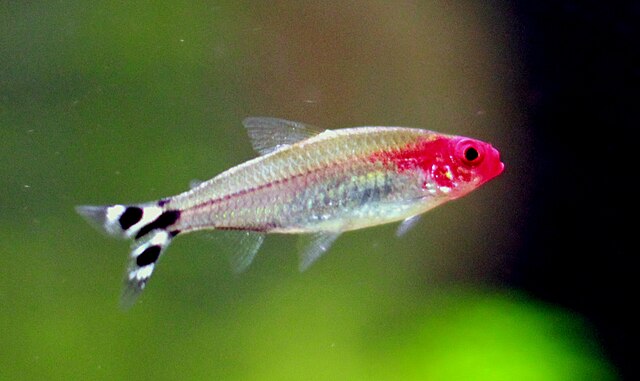
Rummy-nose Tetra One of the most strongly schooling species. The vivid red from nose to cheek creates a striking effect when schooling, as red dots seem to scatter across the entire tank. Relatively tolerant of water quality fluctuations, it's popular as the star of schooling tanks.
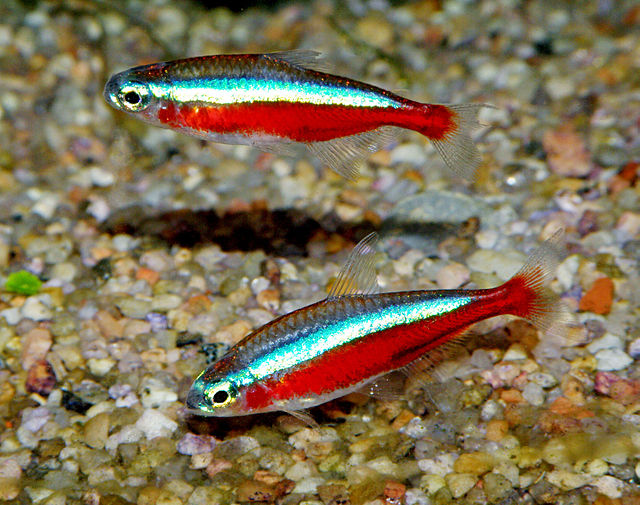
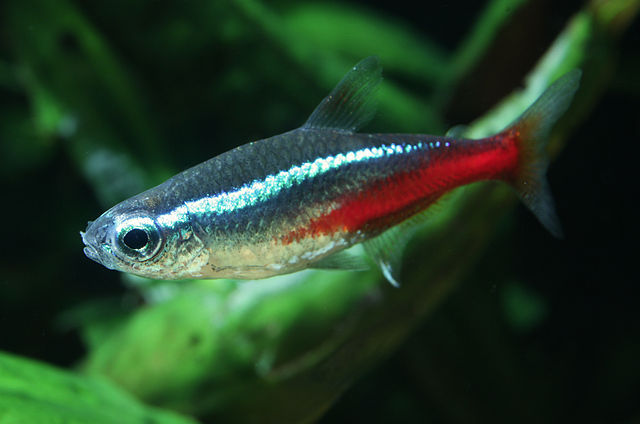
Cardinal Tetra Similar to the neon tetra, but with a red line extending across the entire belly, creating a more vivid display. Schooling 20 or more together creates a spectacular sight of undulating blue and red bands. They prefer weakly acidic, soft water and pair exceptionally well with blackwater plant layouts. In recent years, individuals from Southeast Asian and domestic breeding have become available in the trade, making it easier to find high-quality specimens.
Green Neon Tetra The subtle blue-green line creates an elegant impression. With their small bodies, they form dense schools easily. Though they appear delicate, they'll maintain schooling for long periods once acclimated to stable water conditions.
Red Phantom Tetra The reddish body with black spots adds color accent to subtle-toned layouts. They're somewhat timid, so providing hiding places will stabilize their schooling.
Species that don't school well
- Neon Tetra: Schools tend to disperse as they become comfortable with tank conditions. While their hardiness for beginners is appealing, they're less suitable for schooling displays.
- Black Neon Tetra: Spacing between individuals tends to widen, making dense schooling unlikely.
- Pencilfish: They have a tendency to hover near the water surface, so mid-water schooling isn't reliable.
4 key points for creating an environment that encourages schooling
1. Stock sufficient numbers
A minimum of 10 fish is necessary, but ideally introduce 20–30 or more of the same species simultaneously. With only 5–6 fish, they won't school; instead, each individual acts freely. In a 60 cm tank, keeping 20 or more cardinal tetras won't overcrowd—in fact, it creates an ideal density for schooling. In 90 cm or larger tanks, schooling 40 or more fish produces more dramatic "vortex" displays.
2. Add dither fish to provide mild tension
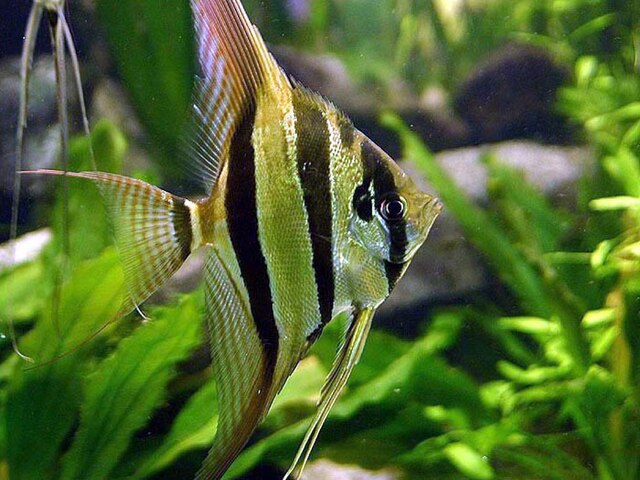
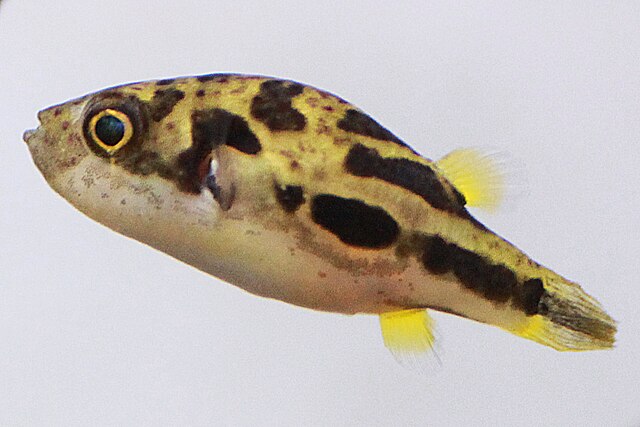
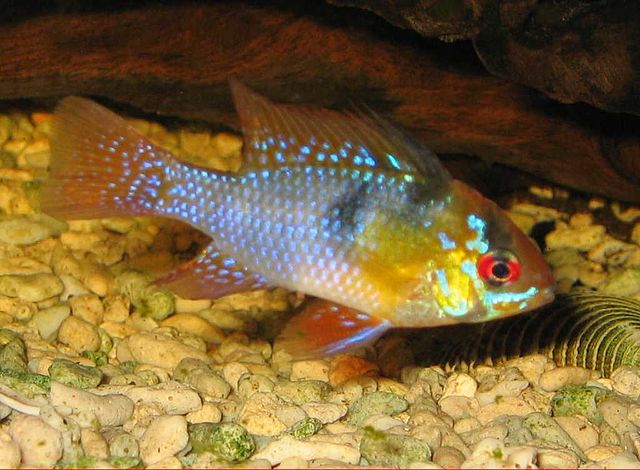
Adding 1–2 medium-sized predator-like fish will cause tetras to instinctively maintain their school. Angelfish and Rams (German Blue Rams) are popular choices. However, carefully select species that won't prey on tetras. Highly aggressive fish like Dwarf Pufferfish are unsuitable for tankmates.
3. Utilize water current
A gentle, unidirectional current causes tetras to face the same direction, swimming against the flow, making schooling appear more orderly and beautiful. Simply point the filter outlet in one direction to achieve this. Strong currents cause stress, so adjust to a strength where tetras swim comfortably. Modern external filters increasingly feature controllers that allow fine adjustments to water current, making it easy to vary flow rates between morning and evening for added visual interest.
4. Create open swimming space through layout
Plant plants on both sides and the back of the tank, leaving a large open space in the center. This 'stage' makes schooling movements easier to see, and plants serve as a backdrop that makes the school stand out. The darker the background (black backing), the more neon colors appear to glow. Arranging driftwood and rocks asymmetrically, creating visual 'exit routes,' allows the school to easily cruise through the full depth of the tank.
Enhance schooling beauty with lighting and water quality
Lighting selection
- Cool white LED: Neon colors appear vivid and sharp. Ideal for cardinal tetras and green neons.
- Warm-toned lighting: Enhances the color of red-toned fish (rummy-nose, red phantoms).
- Dimmable lights: Recreating natural dawn and dusk light changes causes tetras to school actively during prime hours. Many modern fixtures can be scheduled via smartphone apps, making it easy to recreate gradual brightening and dimming that mimics sunrise and sunset.
Lighting angle is also important—angling the light slightly forward from above rather than straight down enhances the fish's luster and adds three-dimensionality to the schooling display.
Water quality management
The beauty of schooling is directly tied to the fish's health. Cardinal tetras and rummy-nose tetras prefer weakly acidic water (pH 6.0–6.8) and soft water. Neglecting regular water changes and substrate cleaning will dull coloration and diminish the schooling display. When water chemistry stabilizes, fish relax and schooling may even disperse—but that's a sign of good health. Make up for it with tension from dither fish. Using sensors and test kits together to monitor pH and hardness helps you quickly spot changes and determine whether school disruption signals illness or environmental factors.
BreederDirect's trusted system
To create beautiful schooling, it's essential to obtain healthy individuals in the necessary quantities all at once. Pet stores and chain shops struggle to stock large numbers of same-batch individuals, making color and health variation a persistent problem.
With BreederDirect, you can buy directly from breeders who specialize in tetras, purchasing exactly the number of consistently healthy individuals you need. Breeders intimately understand the condition of fish they've raised in their own managed environments and can provide direct advice on ideal stocking densities and tankmate compatibility for schooling.
- Easy to verify condition: Listing pages include husbandry environment, diet, and water chemistry information, and you can ask breeders questions before purchase
- Bulk purchases supported: Many breeders accommodate orders for the 20–30 fish needed for schooling
- Transport and arrival guarantee: A reassuring compensation system protects against any mishaps
When searching for a significant quantity of tetras, it's worth browsing the tropical fish category listings to compare different breeders' husbandry conditions and stock. Tetra schooling, once successful, holds a fascination that makes it hard to leave the tank. By carefully selecting species, thoughtfully designing your environment, and sourcing quality individuals from breeders, you'll create your own stunning schooling display.