[Complete Comparison] SPS Coral vs LPS Coral | Differences in Care Difficulty, Cost, and Characteristics
Complete comparison of care difficulty, required equipment, cost, and appearance differences between SPS and LPS corals. Which should beginners start with?
![[Complete Comparison] SPS Coral vs LPS Coral | Differences in Care Difficulty, Cost, and Characteristics](https://img.br-choku.com/column-images/sps-acropora-coloring-husbandry-guide/hero-1778480173209.jpg)
Key Takeaways
Complete comparison of care difficulty, required equipment, cost, and appearance differences between SPS and LPS corals. Which should beginners start with?
Related Species
What's the Difference Between SPS Corals and LPS Corals?
Anyone starting a coral tank inevitably faces the question: "Should I start with SPS or LPS?" Both are beautiful hard corals, but the required equipment, care difficulty, and maintenance costs differ significantly. This article provides a detailed comparison of both, so you can make the choice that's right for you.
Corals are broadly divided into "hard corals" (with a skeleton) and "soft corals" (without a skeleton). Hard corals are further divided into two types.
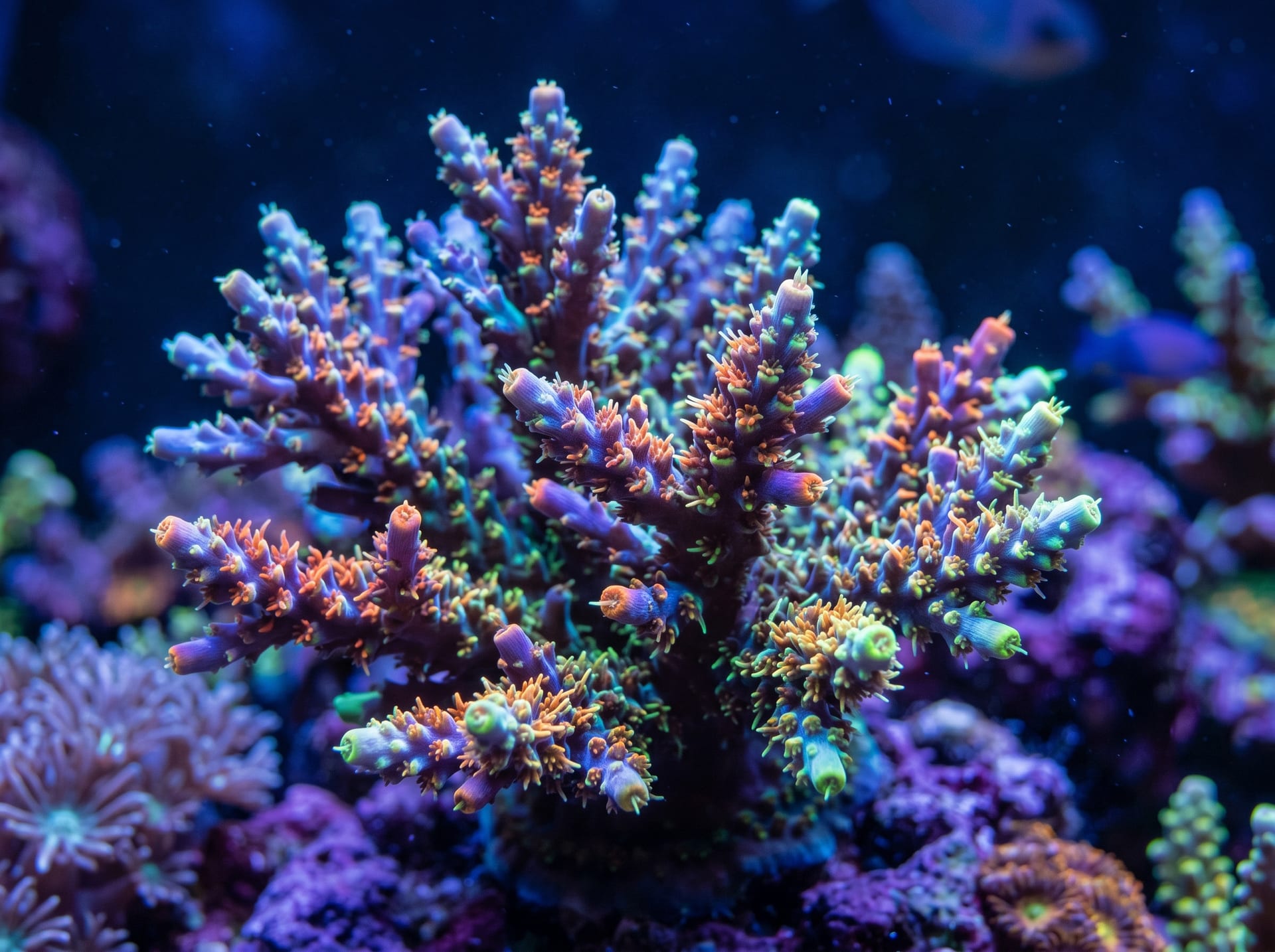
SPS (Small Polyp Stony Coral) is a general term for stony corals with small, densely packed polyps. Representative species include Acropora, Pocillopora, and staghorn coral. They come in diverse forms such as tree-like, plate-like, and branching shapes, and are popular among advanced hobbyists who enjoy color enhancement.
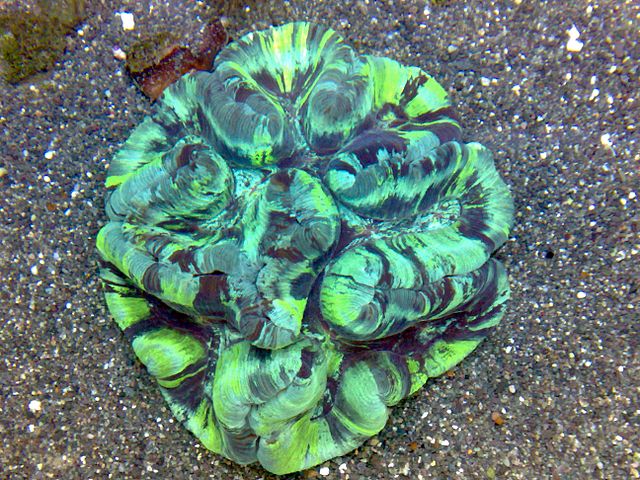
LPS (Large Polyp Stony Coral) is a general term for stony corals with large, fleshy polyps. Representative species include torch corals, favia corals, flowing brain corals, and trumpet corals. Their large, swaying polyps bring movement and elegance to the tank, and they're popular with beginner and intermediate hobbyists due to being relatively easy to maintain.
Both types share the characteristic of forming calcium carbonate skeletons and hosting symbiotic zooxanthellae that provide energy through photosynthesis.
Comparing Care Difficulty
SPS Corals: ★★★★★ (Advanced Level)
SPS corals rank among the most challenging in saltwater aquarium keeping. The main reason is their "sensitivity to water quality fluctuations."
- Water Quality Management: Calcium (420–440 ppm), KH (alkalinity 8–9 dKH), and magnesium (1280–1350 ppm) must be kept constantly stable. Even slight deviations can cause corals to bleach and, in worst cases, die.
- Nitrate and Phosphate: An ultra-low nutrient environment (nitrate below 5 ppm, phosphate below 0.05 ppm) is ideal.
- Water Flow: Strong turbulent flow is necessary to deliver oxygen and nutrients to the entire polyp while removing waste.
- Lighting: Strong light with high PAR values (200–400+) is essential.
Water quality testing must be performed 1–2 times per week, with additives adjusted according to results. This requires the ability to "read the tank's condition"—truly an advanced hobbyist's pursuit.
LPS Corals: ★★★☆☆ (Intermediate Level)
LPS corals are not as demanding as SPS, but they require higher water quality than soft corals.
- Water Quality Management: While calcium and KH maintenance is necessary, many species can thrive without the precision required for SPS.
- Nitrate: Some species tolerate nitrate levels up to 10–20 ppm, making it easier to transition from a standard saltwater fish tank.
- Water Flow: Most species prefer moderate, gentle flow; bottom-dwelling species like torch corals are actually harmed by excessive flow.
- Lighting: Most species can be maintained at moderate light levels (PAR 50–200).
Because of their larger polyps, LPS corals make it easier to notice changes in condition—you can readily observe whether they're retracted or expanded, making them easier to monitor.
Required Equipment and Initial Cost Estimates
Equipment choices differ significantly between SPS and LPS.
| Equipment | SPS | LPS |
|---|---|---|
| Lighting | High-performance LED required (¥50,000–150,000) | Mid-range LED (¥20,000–80,000) |
| Circulation Pumps | Multiple high-flow units (¥30,000–80,000) | 1–2 units (¥10,000–40,000) |
| Calcium Reactor | Essentially required (¥50,000–150,000) | Optional (can use additives) |
| Protein Skimmer | High-performance model needed (¥30,000–100,000) | Mid-range sufficient (¥10,000–50,000) |
| Water Testing Equipment | ICP testing and multi-parameter measurement needed | Basic test kit sufficient |
| Total Initial Cost (Estimate) | ¥300,000–800,000+ | ¥150,000–400,000 |
Getting serious with SPS corals often means spending over ¥100,000 just on a calcium reactor. Monthly maintenance costs can reach tens of thousands of yen, so financial commitment is a serious consideration.
In contrast, if you already maintain a saltwater fish tank, you can start with LPS by upgrading your lighting and adding calcium and KH on a regular schedule.
Which Is Right for You? Type-Based Recommendation
People Suited for SPS Corals
- Have 2+ years of coral-keeping experience with confidence in water quality management
- Want to enjoy color enhancement and morphological changes over time
- View tank management as a serious hobby and want to deepen your knowledge
- Willing to invest substantially in equipment
- Have the mental and financial resilience to recover from setbacks
SPS keeping demands more "technical maintenance" than "growing enjoyment." The sense of achievement when successful is extraordinary, but bleaching incidents are always a lurking risk.
People Suited for LPS Corals
- Currently keeping soft corals and looking for the next step
- Want to create an elegant, vibrant coral display
- Prioritize balance between maintenance effort and visual beauty
- Are attempting hard corals for the first time
- Enjoy watching polyp movement and appreciating color
Flowing brain corals and favia corals are especially vibrant with captivating polyp movement—excellent choices for your first hard corals.
Important Points When Purchasing
Checklist for Identifying Healthy Specimens
General SPS Indicators
- Polyps are extended (persistent retraction is a red flag)
- No bleaching or browning
- Skeleton is intact with no chips or damage
- Confirm how long the specimen has been maintained at the seller's
General LPS Indicators
- Polyps are fully inflated
- No tissue recession or necrosis
- Mouth is fully closed
- Seller's lighting and flow conditions don't drastically differ from your setup
With either coral type, exposing it to strong light immediately after purchase can cause "light shock." It's important to acclimate the coral by placing it in a low-light area of your tank and gradually moving it to brighter areas over several weeks.
BreederDirect's Safe and Reliable System
BreederDirect is a platform where you can purchase corals directly from specialized breeders. By bypassing retail shop channels, transportation stress is minimized, and you can learn about the actual water conditions the breeder maintains.
- Direct Breeder Trading: Cutting out middlemen allows you to source healthy corals at fair prices.
- Transparency of Care Environment: Breeder profiles and product descriptions reveal their water parameters, lighting, and flow conditions, helping you assess compatibility with your setup before purchase.
- Direct Communication: You can ask breeders questions before purchase, making it easy to seek advice on topics like "This is my first SPS" or "I'm transitioning from LPS."
- Captive-Bred Frags: Frags (cut colonies) propagated by breeders tend to be more resilient to environmental changes than wild-collected specimens, making them ideal for beginners.
Even if you're unsure where to start with SPS, gaining experience with LPS while building a relationship with a trusted breeder will illuminate your path forward. Start by exploring the corals currently listed on BreederDirect.