7 Common Mistakes Beginners Make in Reptile Keeping | Solutions Explained
We introduce 7 common mistakes that first-time reptile keepers often encounter. This article explains frequent failures and their solutions, including temperature management errors, insufficient UVB lighting, overfeeding, and neglecting improper shedding.
Key Takeaways
We introduce 7 common mistakes that first-time reptile keepers often encounter. This article explains frequent failures and their solutions, including temperature management errors, insufficient UVB lighting, overfeeding, and neglecting improper shedding.
Related Species
Reptile keeping has become increasingly popular due to their unique appeal, but since their care requirements differ significantly from dogs and cats, first-time keepers often struggle with specific challenges. If you're unsure which species to choose, please also refer to 5 Recommended Reptile Species for First-Time Keepers. This article provides a detailed explanation of 7 common mistakes and how to prevent them.
Mistake 1: Inadequate Temperature Management
Reptiles are ectothermic animals and cannot regulate their body temperature on their own. If temperatures are too low, they suffer from poor digestion, weakened immunity, and anorexia; if too high, heatstroke can be fatal.
Common Mistakes
- Connecting a heater directly without using a thermostat
- Measuring temperature at only one spot in the enclosure and not understanding temperature gradients
- Forgetting to manage air conditioning in summer, causing the enclosure to overheat
Solutions
- Always use a thermostat and set a maximum temperature limit
- Install digital thermometers at both the hot spot and cool spot
- Use air conditioning in summer and ensure the temperature does not exceed 30°C
Mistake 2: Underestimating UVB Lighting
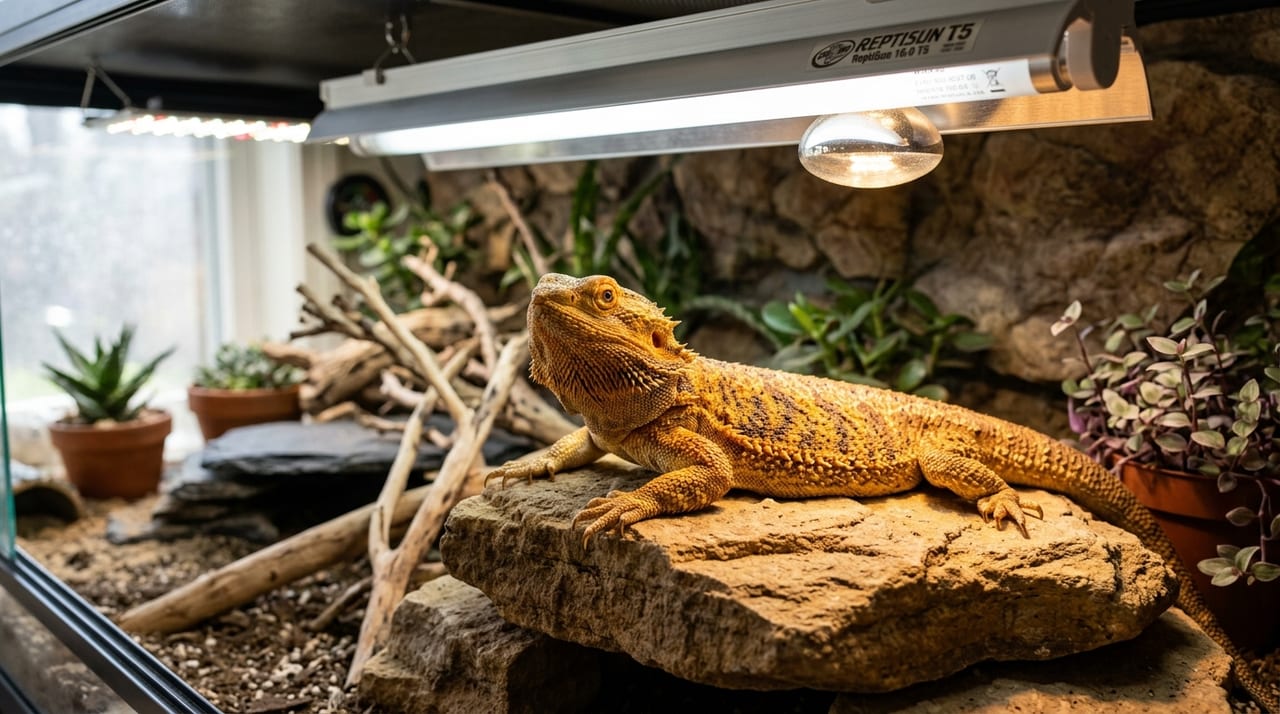
For diurnal reptiles such as Bearded Dragons and Chameleons, UVB is essential for synthesizing critical nutrients (Vitamin D3). Insufficient UVB leads to MBD (Metabolic Bone Disease), which can cause bone deformation and walking difficulties.
Common Mistakes
- Assuming UVB is unnecessary and omitting it