Complete Guide to Keeping Bearded Dragons: Temperature, Feeding, and Handling Tips
Learn how to care for bearded dragons, a popular beginner reptile species. From setting up the enclosure, basking light, and UVB lighting to balancing vegetable and insect feeding and handling techniques, we cover it all.

Key Takeaways
Learn how to care for bearded dragons, a popular beginner reptile species. From setting up the enclosure, basking light, and UVB lighting to balancing vegetable and insect feeding and handling techniques, we cover it all.
Related Species
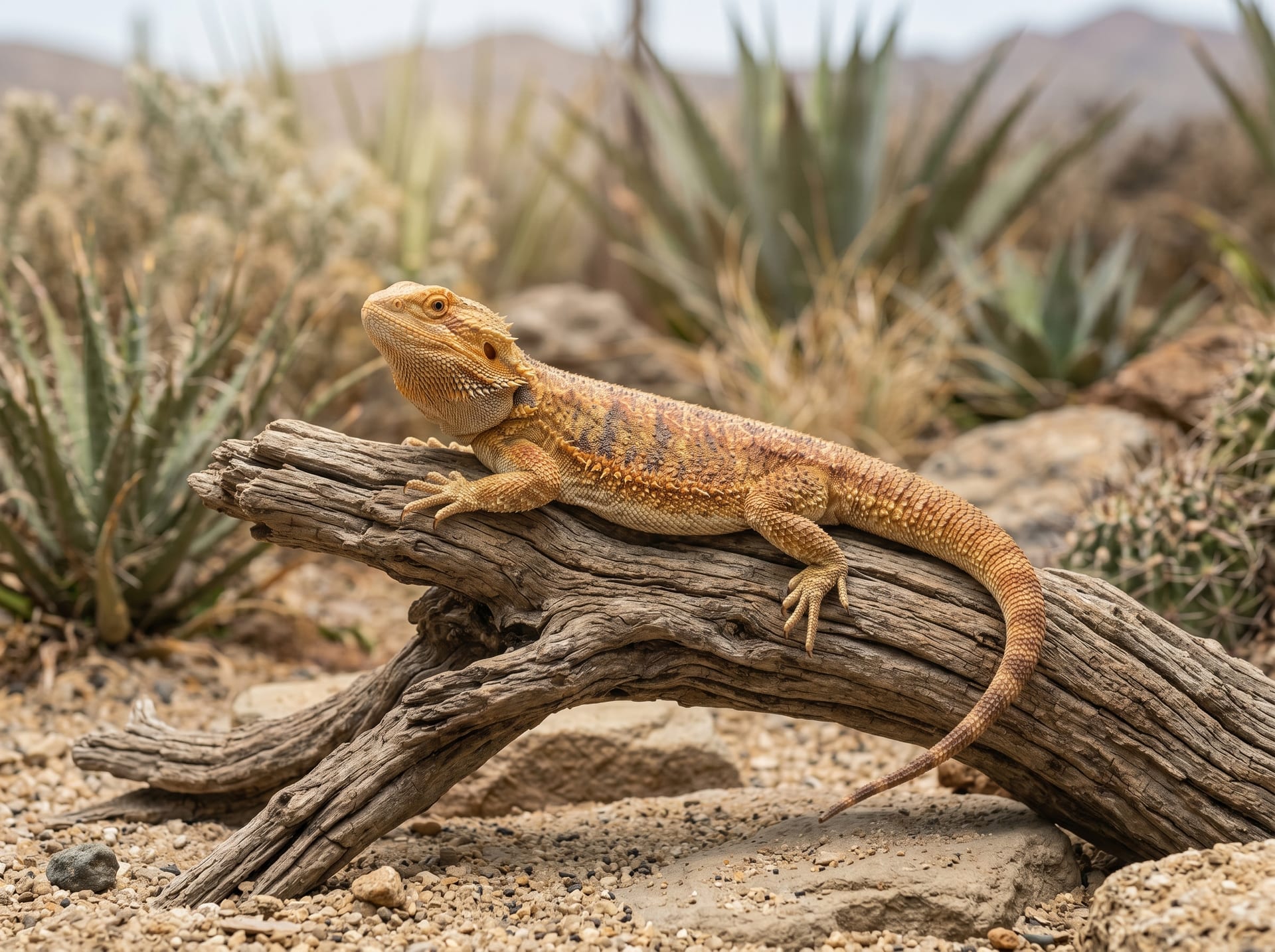
The bearded dragon (Pogona vitticeps) is a medium-sized lizard native to Australia. Thanks to its calm temperament and easy-to-handle nature, it is renowned worldwide as a "beginner reptile." Bearded dragons are easy to handle and are kept by a wide range of reptile enthusiasts, from beginners to advanced keepers. This article provides a comprehensive guide to everything needed to keep a bearded dragon.
Basic Information About Bearded Dragons
- Native Habitat: Australia (arid inland regions)
- Body Length: 40–60 cm as adults (including tail)
- Lifespan: 8–15 years
- Diet: Omnivorous (insects, vegetables, fruit)
- Optimal Temperature: Basking spot 40–45°C, cool spot 25–28°C
Juveniles primarily eat insects, while the proportion of plant-based diet increases as they mature.
Required Equipment
Enclosure Size Adults need an enclosure that is at least 90 cm wide × 45 cm deep × 45 cm tall. An enclosure larger than 120 cm is even more ideal, providing plenty of space for the bearded dragon to move freely.
Wooden or MDF board enclosures and glass enclosures designed for reptiles are standard. Plastic enclosures are not suitable due to their low ultraviolet transmission rate.
Basking Light Bearded dragons are ectothermic and raise their body temperature through basking. Install incandescent bulbs or specialized basking lamps at the basking spot to create a high-temperature zone of 40–45°C. Manage temperature by adjusting the lamp distance.
UVB Light UVB light is essential for bearded dragons. Exposure to UVB allows them to synthesize vitamin D3 and maintain normal calcium metabolism. Deficiency increases the risk of metabolic bone disease (MBD). Use a high-output T5 UVB lamp (UV Index around 4–6) for 10–12 hours daily.
UVB lamps degrade over time and should be replaced every 6–12 months.
Substrate Juveniles: Paper towels or kitchen paper are safe to avoid ingestion risks
Adults: Reptile sand (such as calcium sand), tiles, or artificial turf
Accidentally ingesting large amounts of sand can be dangerous and cause intestinal blockage, so avoid using sand-based substrate for juveniles.
Thermometer and Hygrometer Place multiple digital thermometers to regularly monitor the temperature at the basking spot, cool spot, and floor level.
Feeding Methods and Nutritional Management
Juveniles (0–6 months) A ratio of 70–80% insects to 20–30% vegetables is recommended. Feed 2–3 times daily.
Adults (1 year and older) The ratio shifts to 50–60% vegetables and leafy greens, 30–40% insects, and 10% or less fruit. Feed 1–2 times daily.
Insects Crickets (dubia and European species), dubia roaches, and silkworms (mulberry silkworms) are suitable as staple foods. Limit mealworms due to their high fat content.
Dust with calcium powder (with vitamin D3, 2–3 times weekly) before feeding.
Vegetables Focus on leafy greens such as bok choy, choy sum, kale, radish leaves, and cilantro. Keep spinach and broccoli (which contain oxalates and goitrogens) to minimal amounts.
For hydration, mist with a water spray and let the individual lick the droplets—most bearded dragons do not drink directly from a water bowl.
Handling Tips
Bearded dragons are among the most handleable reptiles. However, a gradual approach is necessary for them to become accustomed to handling.
Gradual Acclimation
- For the first few days, avoid handling and let them acclimate to the new environment
- Bring your hand near the enclosure to familiarize them with your presence
- Hand-feed them so they learn to associate your hand with something positive
- Gradually increase the time you hold them in your hand
Handling Precautions
- Support from underneath (don't grasp)
- Avoid sudden movements and loud noises
- Limit handling sessions to around 30 minutes to 1 hour
- Avoid handling immediately after feeding, during shedding, or when they appear unwell
Health Management and Common Illnesses
Metabolic Bone Disease (MBD) Skeletal abnormalities caused by calcium deficiency or insufficient UVB. Prevention: proper calcium dusting and UVB lamp management.
Digestive Issues and Constipation Caused by low body temperature or dehydration. Treatment: a warm bath (15–20 minutes) is effective.
Stomatitis (Mouth Rot) Bacterial infection caused by stress or immunosuppression. Early detection is important.
Importance of UVB Lighting
UVB light is essential for bearded dragons. Without UVB, they cannot synthesize vitamin D3, and calcium metabolism becomes disrupted, leading to MBD (metabolic bone disease).
- Types of UVB Lamps: Fluorescent (T5 HO is effective) or mercury vapor
- Recommended Intensity: UVI 3–5 (near the basking spot)
- Duration: 10–12 hours daily
- Replacement Schedule: Every 6–12 months (ultraviolet output decreases before visible signs appear)
Important: UVB light does not transmit through glass or clear acrylic. Ensure direct exposure to the lamp.
Breeding Basics
Brumation (Hibernation)
"Brumation" (a pseudo-hibernation state in reptiles) may naturally occur during autumn and winter, during which activity decreases.
- Slightly reduce temperature and lighting to mimic natural seasonal changes
- Return to normal care after 2–3 months
- Ensure adequate nutrition before attempting to breed
Egg-Laying and Incubation
- Females lay eggs 30–45 days after mating (approximately 15–30 eggs per clutch)
- Incubation takes approximately 60–80 days (maintained at 28–30°C)
Summary
With proper equipment and care, bearded dragons are relatively easy for beginners to keep. By maintaining appropriate temperatures, UVB lighting, and nutritional balance, they can be companions for 15 years or more. Before purchasing, confirm care methods with a breeder and start with a healthy individual—this is the first step to long-term success.