Complete Guide to Blue-Tongue Skink Care | Temperature, Diet, and Handling Basics
Comprehensive guide to caring for the popular blue-tongue skink. Introduces beginner-friendly guidance on enclosure setup, temperature management, omnivorous diet menus, and handling tips.

Key Takeaways
Comprehensive guide to caring for the popular blue-tongue skink. Introduces beginner-friendly guidance on enclosure setup, temperature management, omnivorous diet menus, and handling tips.
Related Species
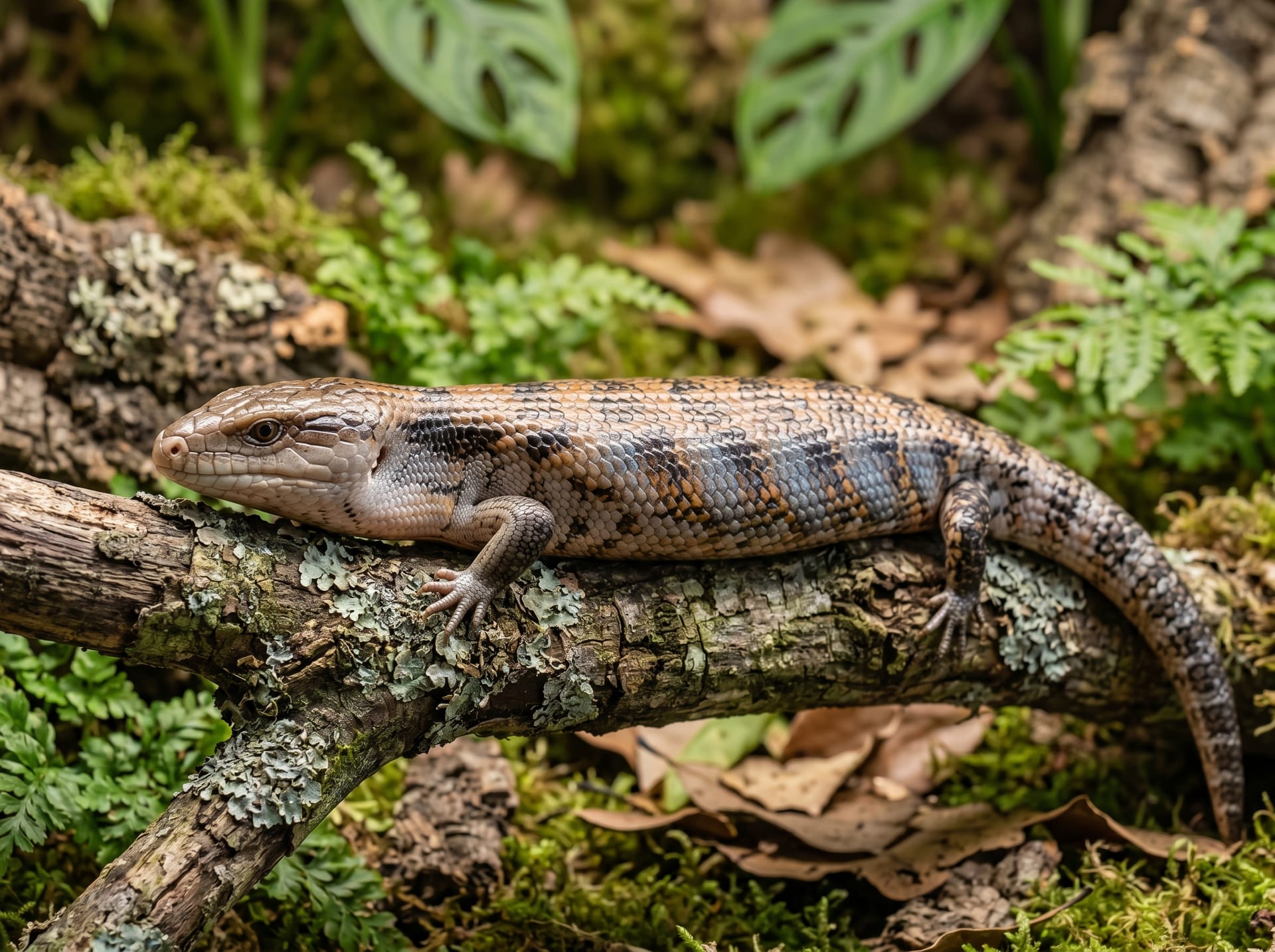
What is a Blue-Tongue Skink
Blue-tongue skinks are medium-sized reptiles native to Australia and New Guinea. Their name comes from the distinctive bright blue tongue they display when threatened, and this impressive defensive behavior captivates many enthusiasts. Adult body length is approximately 40–60 cm, characterized by a stocky build and short limbs.
The two main species in circulation are the Northern Blue-tongue Skink (Tiliqua scincoides) and the Irian Jayan Blue-tongue Skink (T. gigas). The former is Australian-origin with import restrictions, with captive-bred (CB) individuals forming the center of trade. The latter originates from Indonesia and New Guinea and is relatively easy to obtain, widely appreciated by beginners.
Known for their docile temperament and hardy constitution, they are well-established as an "introductory reptile" for beginners. If properly cared for, they can live 15–20 years alongside their keeper. Rather than purchasing impulsively, welcome them with the resolve to be a long-term companion.
Enclosure Setup
Enclosure size should be at least 120×60 cm for adults. A 60 cm-wide enclosure only allows them to "barely fit" and is inadequate for both activity space and temperature gradients. To support their substantial body weight, floor area takes priority. During the juvenile stage, a 60×45 cm enclosure is workable, but plan to upsize early.
Substrate should be moisture-retaining materials such as coconut husk, fine-grain akadama soil, or reptile-specific substrate, laid 5–10 cm deep. Since they burrow naturally, deeper substrate allows observation of natural behaviors. Sandy substrates risk impaction in juveniles and are unsuitable.
Temperature management is one of the most critical factors. As ectothermic animals, blue-tongue skinks require a temperature gradient within the enclosure.
- Basking spot (hot zone): 35–40°C
- Cool zone: 24–28°C
- Nighttime (overall): approximately 20–22°C
Create a hot spot using a basking lamp (incandescent or far-infrared), allowing them to self-regulate body temperature. Using a thermostat to automatically manage nighttime temperature drops is ideal.
UVB lighting is considered optional by some, but for indoor care, using T8 5.0 or T5 5.0 UVB lamps is strongly recommended. Natural vitamin D3 synthesis from UVB directly supports calcium metabolism and prevents metabolic bone disease such as rickets. Verify the product specifications for optimal distance—effects diminish if the lamp is too far away.
Humidity should be around 40–60%. Extended dryness causes improper shedding. Adjust humidity by misting the substrate or placing damp sphagnum moss in one area.
Diet—Balanced Management Using Omnivorous Feeding
Blue-tongue skinks are naturally omnivorous (consuming plants, insects, small animals, and fruits), so maintaining health requires combining diverse food items. Relying on a single food type leads to nutritional deficiency.
Plant-based (target 50–60% of diet):
- Leafy greens: mustard greens, bok choy, kale, leaf lettuce
- Other vegetables: squash, zucchini, carrot, broccoli
- Fruits: strawberry, blueberry, mango (high sugar—offer 1–2 times weekly)
- Avoid: spinach (excessive oxalic acid), onion, leeks (thiosulfates), avocado
Animal protein (target 40–50% of diet):
- Wet dog food: choose grain-free, quality products. Canned varieties are convenient and widely used as a staple
- Live or frozen prey: crickets, dubia roaches, mealworms (high fat—avoid overuse)
- Cooked animal products: chicken hearts, gizzards, boiled egg whites
Supplement feeding with calcium powder dusted on food 2–3 times weekly and multivitamin supplement once weekly. If using UVB lighting, non-D3 calcium is preferable to avoid excessive D3 intake.
Feeding frequency: juveniles (under 1 year) daily, sub-adults (1–2 years) every other day, adults (2+ years) 2–3 times weekly. Since obesity stresses the liver, regularly check body condition and adjust portions accordingly.
Handling and Taming Progression
Although blue-tongue skinks are relatively easy to tame among reptiles, excessive handling from the start is counterproductive. After purchase, allow 1–2 weeks for adaptation to the new environment, refraining from handling until they feed voluntarily.
Proceed with taming in gradual steps. First, place your hand inside the enclosure to acclimate them to your presence, then begin by having them walk onto your palm. Initially, limit handling to 5–10 minutes and gradually extend duration over weeks.
If they display threat behavior (opening their mouth wide, hissing, or freezing with blue tongue extended), return them to the enclosure without forcing contact. Forceful handling damages trust and prolongs the taming process. Conversely, with patience and consistency, most individuals will eventually relax and rest on their keeper's hand.
Always fully support their entire body during handling—never hold by the tail alone or leave them suspended. Due to their body weight, be mindful of fracture risk from falls.
Health Management and Warning Signs
Regular observation enables early disease detection. Make these checkpoints a routine:
- Eyes: Are they always bright and open? Cloudiness or early eye disease appears as a cloudy-looking eye
- Skin: After shedding, are there no remaining skin patches? Toes and tail tips are especially prone to incomplete shedding
- Weight: Record measurements monthly. Sudden weight loss signals parasites or internal disease
- Feces: Can solid urate (white portion) be confirmed? If absent, may indicate insufficient water intake
- Appetite: Appetite naturally decreases during breeding season, pre-shedding, or winter (brumation-like periods), but refusal to eat for 2+ weeks warrants concern
Always provide fresh water. Additionally, first-time keepers should obtain a health check and fecal exam from a reptile veterinarian within 1–2 months of purchase. Parasites often show no symptoms, and early detection is key to successful treatment.
With proper environmental management and attentive care, blue-tongue skinks can thrive for 15–20 years alongside their keeper. Prepare the appropriate environment before bringing one home and approach care with long-term responsibility.