What You Need to Know Before Bringing an Owl Home as a Pet
In recent years, the popularity of owl cafés and cute owl videos on social media have led many people to consider keeping owls at home. However, owls are fundamentally different from common parakeets or parrots—they are "raptors," and keeping them requires specialized knowledge, equipment, and strict adherence to legal regulations.
This article provides a comprehensive guide to understanding owls correctly and welcoming one into your home.
Legal Requirements for Owl Ownership (Essential Knowledge)
Understanding the law is absolutely necessary before keeping an owl.
Species Protection Law & CITES (Convention on International Trade in Endangered Species)
In Japan, most wild owl species are protected by law, and capturing or keeping them is prohibited. Owls sold at pet shops and specialty stores are exclusively legally bred or imported individuals.
Main species available for legal ownership (CITES Appendix II and below):
- Snowy Owl (Nyctea scandiaca)
- Bengal Eagle-Owl (Buffy Fish Owl)
- Pearl-spotted Owlet
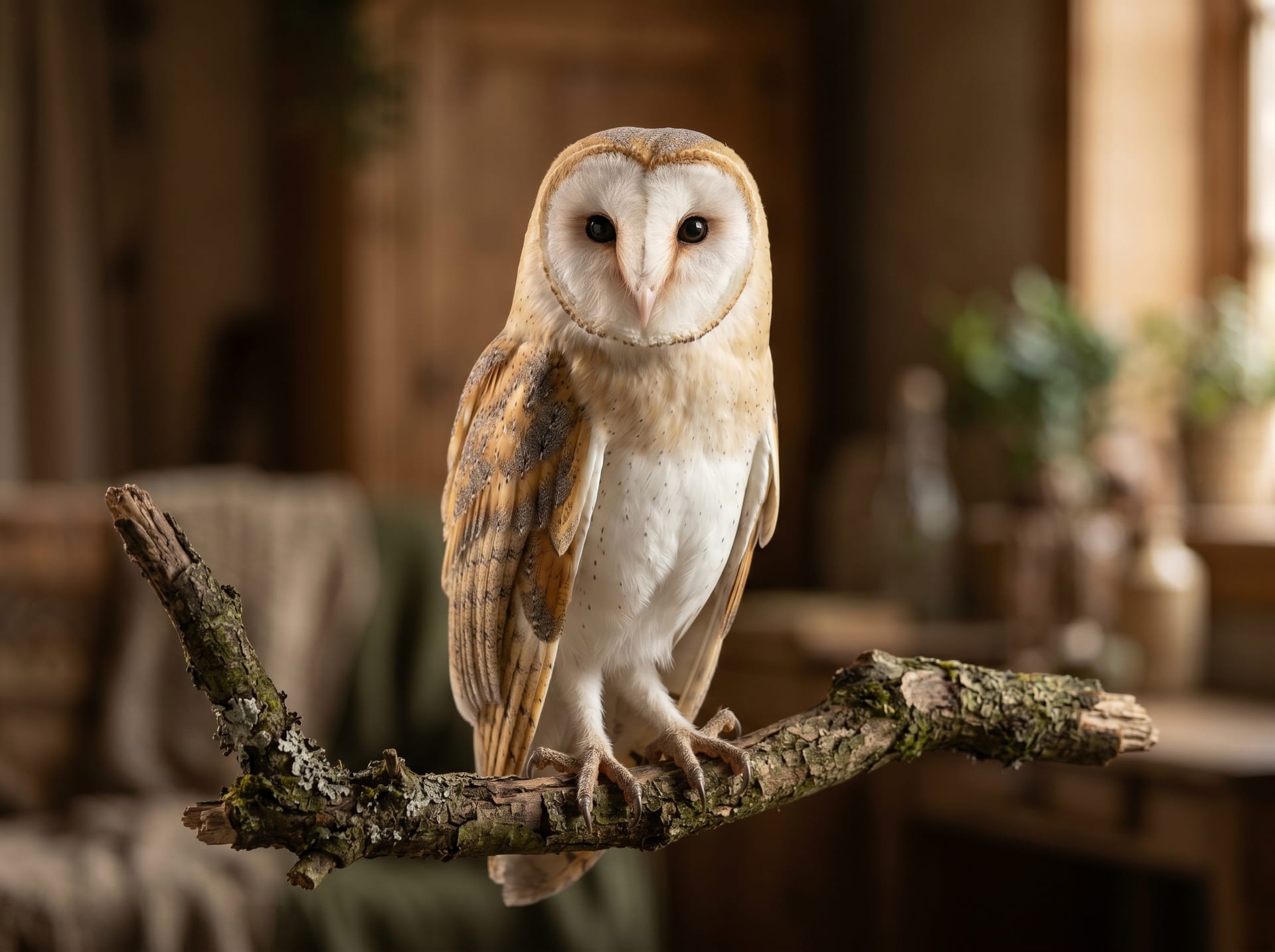
- Barn Owl (European and American subspecies)
- Short-eared Owl (certain imported individuals)
Important: Japanese wild species (Tawny Wood Owl, Japanese Scops Owl, Collared Scops Owl, etc.) are strictly protected from capture and ownership. Before purchasing, always verify the "CITES Permit" and "Animal Business Registration" of the seller.
Animal Business Registration
Pet shops that sell or display owls are required to register as animal dealers. Always verify the animal dealer registration certificate (registration number and responsible party name) before making a purchase.
Owl Temperament and Keeping Challenges
Unlike parakeets or parrots, owls are not animals that "easily form social bonds with humans."
Behavioral characteristics of owls:
- Nocturnal (most active from dusk through midnight)
- Strong territorial instinct; may become aggressive toward unfamiliar people and other pets
- Few species become hand-tamed without falconry training
- Will bite and scratch with talons when stressed
Key challenges in owl ownership:
- Must be capable of feeding live prey (mice, chicks, etc.) or frozen food
- Requires daily care and observation
- Access to a raptor-experienced veterinarian is essential
- Nocturnal nature may conflict with your sleep schedule
- Owls won't become tame without proper falconry knowledge and training
Creating the Proper Keeping Environment
Selecting an Enclosure (Mews)
While owls ideally should be kept in a specialized facility called "mews," indoor housing requires a large cage.
Size guidelines (for indoor cages):
| Body Size | Recommended Cage Size |
|---|
| Small (Pearl-spotted Owlet, etc.) | Width 80cm × Depth 60cm × Height 100cm |
| Medium (Barn Owl, etc.) | Width 120cm × Depth 80cm × Height 150cm |
| Large (Bengal Eagle-Owl, etc.) | Width 150cm × Depth 120cm × Height 180cm or larger |
The ideal setup is an outdoor mews building, but for indoor housing, a minimum of the above sizes is recommended.
Perch (Roosting Branch) Setup
The quality of perches is extremely important for owls.
- Material: Natural wood (birch, elm, etc.) or perches wrapped in artificial turf. Effective for natural claw wear
- Thickness: Approximately two-thirds the width of the owl's foot
- Multiple perches: Install 2-3 perches at different heights to encourage exercise
- Water bath: Provide a shallow water container (replace 2-3 times weekly)
Temperature & Humidity Management
| Item | Recommended Range |
|---|
| Temperature | 10–28°C (varies by species) |
| Humidity | 40–60% |
Northern species like Snowy Owls prefer cool environments, and summer air conditioning is critical.
Diet and Feeding Methods
Owls are carnivorous raptors and cannot be fed plant-based food. They also have the habit of regurgitating indigestible bone, fur, and feather material as "pellets."
Primary Food Options
Frozen Mice (most common)
- Select appropriate sizes (pinky, fuzzy, or adult mice) based on the owl's size
- Thaw naturally or warm to body temperature (approximately 37°C) before feeding
- Feed immediately after thawing; discard any leftovers
Frozen Day-Old Chicks
- Lower in calories than mice; risk of calcium deficiency if used exclusively
- Best rotated with mice in the feeding schedule
Live Prey (mice, crickets, hamsters, etc.)
- The most natural feeding method, stimulating wild instincts
- May be challenging for inexperienced keepers to handle
Feeding Frequency and Quantity
| Body Size | Feeding Frequency | Quantity per Feeding |
|---|
| Small | Daily | 1–2 small-medium mice |
| Medium | Daily to every other day | 1–2 medium-large mice |
| Large | Every other day to 2–3 times weekly | 2–3 large mice or 1 chick |
Falconry Training for Hand-Taming
Hand-taming an owl requires "falconry"—specialized raptor training techniques.
Basic training steps:
- First, acclimate the owl to human presence (several days to weeks)
- Practice landing on a gloved hand (leather falconry glove)
- Practice jumping from perch to glove while calling the owl's name
- Gradually increase distance while reinforcing recall training
Training is most effective when conducted daily at consistent times during periods when the owl is hungry. Unlike parrots that "learn through play," this is a discipline of "building trust through consistent training."
Cost Estimates
Understanding the initial setup costs and ongoing expenses before bringing an owl home is important.
| Item | Cost Estimate |
|---|
| Individual owl purchase | ¥50,000–¥200,000 (varies by species and sex) |
| Initial equipment (cage, perches, etc.) | ¥30,000–¥100,000 |
| Frozen mice (per month) | ¥3,000–¥8,000 |
| Veterinary care (annual checkup) | ¥5,000–¥15,000 |
| Other supplies (gloves, training equipment) | ¥10,000–¥30,000 |
Owls live 15–30+ years depending on species. Long-term commitment is essential.
Conclusion
While owls are certainly mysterious and captivating creatures, keeping them requires significantly greater expertise, maintenance costs, and legal preparation compared to common pet birds. Before bringing an owl home, verify all legal requirements, locate a raptor-experienced veterinarian, and learn the fundamentals of falconry. Your relationship with an owl is closer to a "partnership" than a "pet"—a serious, long-term commitment requiring dedication and respect.