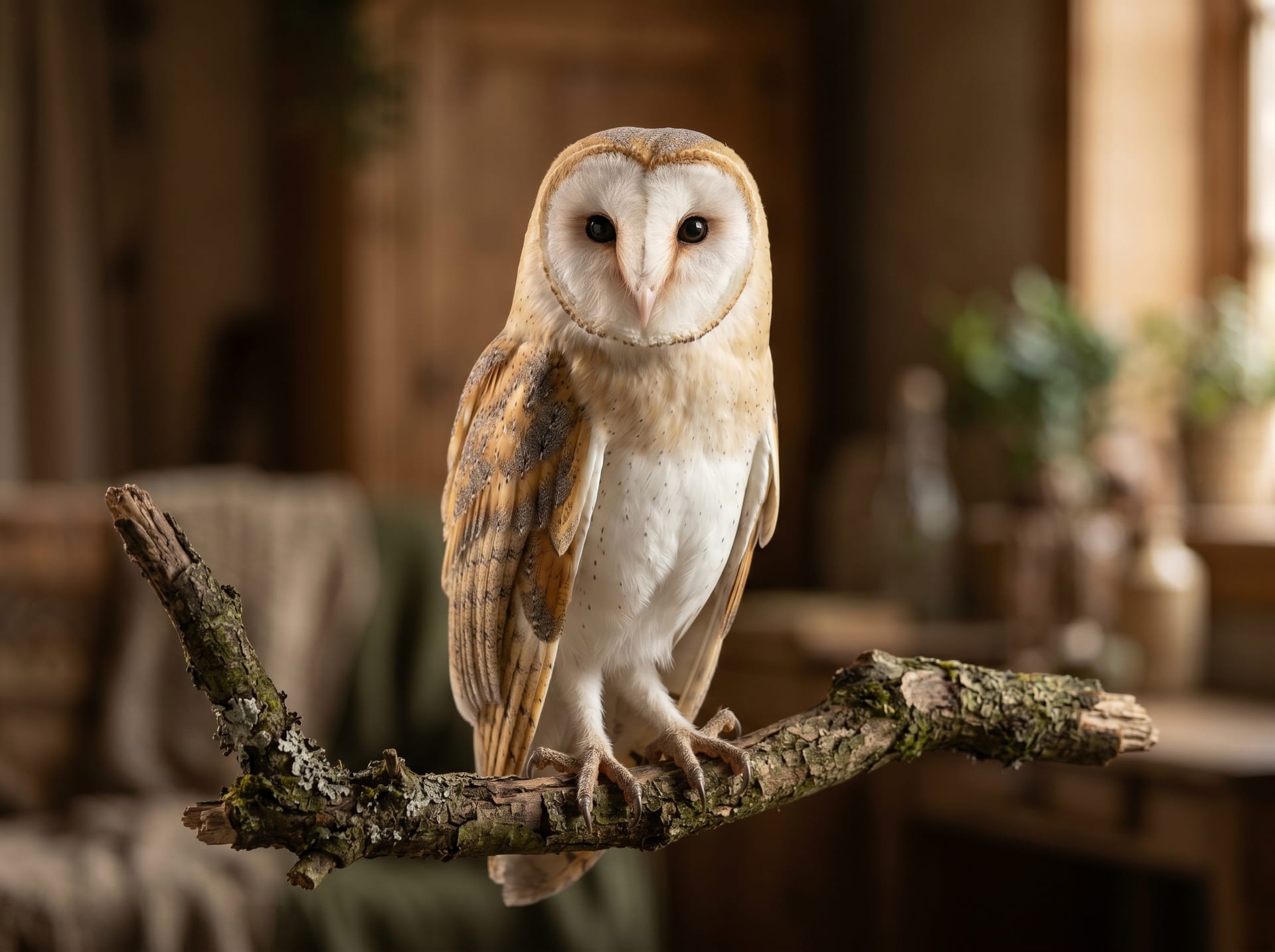
AI-generated image
Barn Owl
IntermediateTyto alba
Owl with a distinctive heart-shaped facial disc. One of the most widespread owl species globally. Nocturnal and silent in flight. Popular as an entry-level raptor.
Difficulty
Intermediate
Temperature
15〜28℃
Lifespan
15-20 years
Size
33-39cm
Humidity
40〜60%
Diet
Mice, chicks, and other animal-based diet
About
The barn owl (Tyto alba) is the most widely distributed species of owl in the world and one of the most widespread of all birds, found almost everywhere except polar and desert regions. It has a distinctive heart-shaped facial disc, pale plumage, and flies silently at night, hunting small mammals such as rodents by sound.
Source: Wikipedia (CC BY-SA 4.0)
Lifespan of the Barn Owl
The Barn Owl lives 15-20 years.
Size of the Barn Owl
The Barn Owl grows to 33-39cm.
Temperature & humidity for the Barn Owl
The ideal temperature for the Barn Owl is 15〜28℃. Ideal humidity is 40〜60%.
Basic Info
Origin
nearly worldwide, except polar regions
Lifespan
15-20 years
Size
33-39cm
Temperature
15〜28℃
Humidity
40〜60%
Calls & Media
Calls / Song
Song · © david m · xeno-canto XC1089705 (CC BY-NC 4.0)
Call · © Mark Pearson · xeno-canto XC1073103 (CC BY-NC 4.0)
Sources: xeno-canto
References & Sources
Edited & verified by: BreederDirect editorial team
The taxonomic, regulatory, and husbandry data on this page are compiled and verified against the authoritative primary sources below.
Taxonomy & Authority
Accepted name: Tyto alba (Scopoli, 1769)
Synonyms: Strix alba, Strix flammea
Authority databases: GBIF
Nomenclature follows global taxonomic authority databases.
Regulations & Conservation Status
CITES Appendix II
Tyto alba. All species in Strigiformes (owls) are listed in CITES Appendix II, except Tyto soumagnei, which is listed in Appendix I.
Sources: CITES Appendices (valid from 25.05.2024)
Regulations may change. Always verify the latest information with the relevant authorities.
Barn Owl Listings
Loading latest listingsFind listings for this species