Saltwater Wrasse Selection Guide | Comparing Species Characteristics and Reef-Safe Ratings
Comparative overview of saltwater wrasse characteristics and reef-safe ratings by species. Featuring Fairy Wrasses, Flasher Wrasses, Six-line Wrasses, and more.
Key Takeaways
Comparative overview of saltwater wrasse characteristics and reef-safe ratings by species. Featuring Fairy Wrasses, Flasher Wrasses, Six-line Wrasses, and more.
Related Species
What Are Saltwater Wrasses? Diverse Species That Color Your Reef Tank
Saltwater wrasses (family Labridae) are widely distributed throughout tropical coral reefs in the Indian and Pacific Oceans, with over 600 species confirmed worldwide. Their beauty is matched only by their active swimming behavior and unique habits—characteristics that make them popular aquarium inhabitants. Some bury themselves in sand to sleep, while others perform cleaning behaviors to remove parasites from other fish, with each species offering its own distinctive personality.
One major reason wrasses command attention in marine aquariums is the wide range of "reef-safe ratings" available. Species vary dramatically—from those that harmlessly coexist with corals and shrimp, to large predatory types that actively hunt crustaceans. Careful consideration of your tank environment (coral-heavy or fish-only) and compatible tankmates is essential for long-term success.
This guide covers major wrasse groups by species type, comparing their reef-safe ratings, temperament, and care requirements. We'll also highlight practical considerations to help first-time wrasse keepers choose wisely.
Fairy Wrasses (Genus Cirrhilabrus) | The Most Reef-Safe Beauties
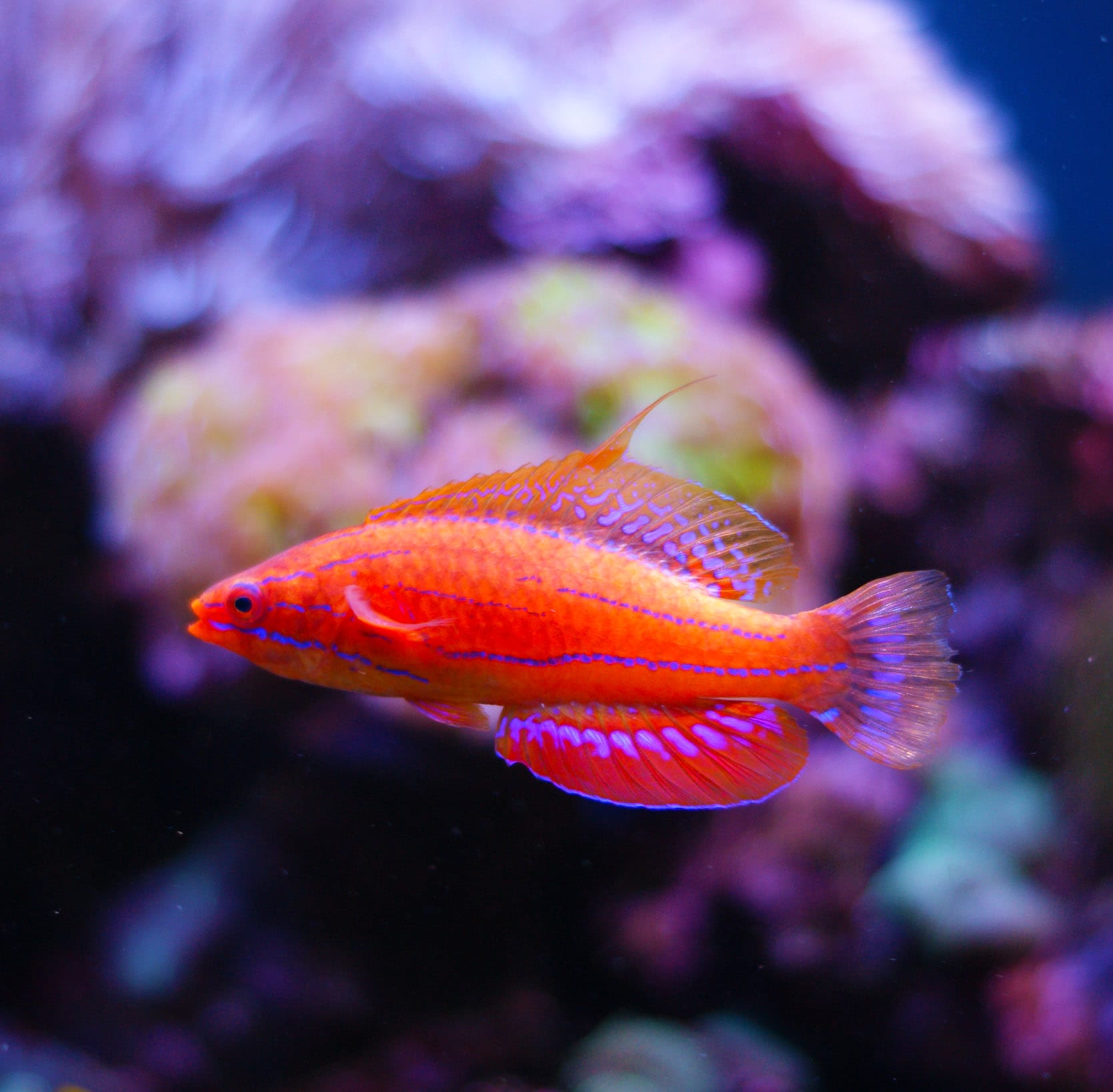
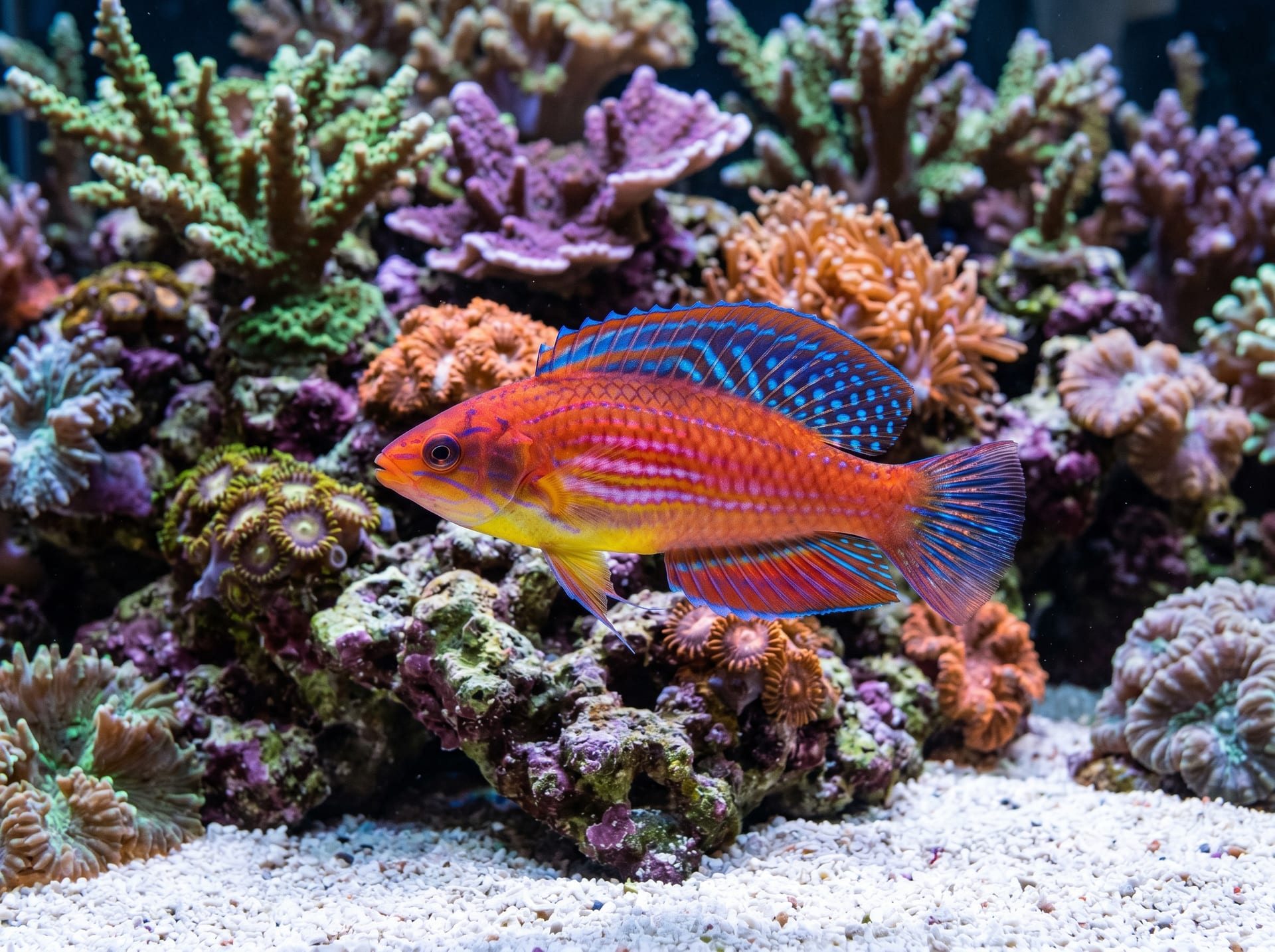
Fairy wrasses are among the most sought-after wrasse groups. Males display jewel-like coloration with intricate combinations of red, blue, purple, and yellow, adding spectacular color to reef tanks. Females are duller, but when males and females form harems in the tank, some females gradually transition to males—an engaging behavior to observe.
- Representative Species: Lubbock's Fairy Wrasse (Cirrhilabrus lubbocki), Threadfin Wrasse (C. temminckii), Exquisite Fairy Wrasse (C. exquisitus), Scott's Fairy Wrasse (C. scottorum)
- Reef-Safe Rating: ★★★★★ (Safe with corals and crustaceans)
- Maximum Size: roughly 8–15 cm (varies by species)
- Care Tips:
- Exceptional jumpers—a secure lid is mandatory
- Multiple males cause intense territorial disputes; keep only one male per tank
- Quick to accept prepared foods, making them beginner-friendly
Flasher Wrasses (Genus Paracheilinus) | Elegant Courtship Displays in Small Species
Flasher wrasses earn their name from the males' dazzling courtship display—spreading their dorsal and caudal fins to flash brilliant colors in what looks like a light show. This "flashing" behavior is the main attraction of these species. They're generally peaceful and compatible with both their own and other species, making them excellent for community tanks.
- Representative Species: McCosker's Flasher Wrasse (Paracheilinus mccoskeri), Carpenter's Flasher Wrasse (P. carpenteri), Angular Flasher Wrasse (P. angulatus)
- Reef-Safe Rating: ★★★★★
- Maximum Size: 6–10 cm
- Care Tips:
- Harem setup (one male plus 2–3 females) is ideal and allows observation of breeding behavior
- Their small size and calm nature make them compatible with anthias and small tangs
- Like Fairy Wrasses, they need a secure lid
- Newly introduced fish may initially refuse prepared foods; acclimate with frozen copepods or live brine shrimp
Six-line and Four-line Wrasses (Genus Pseudocheilinus) | Reliable Pest Controllers
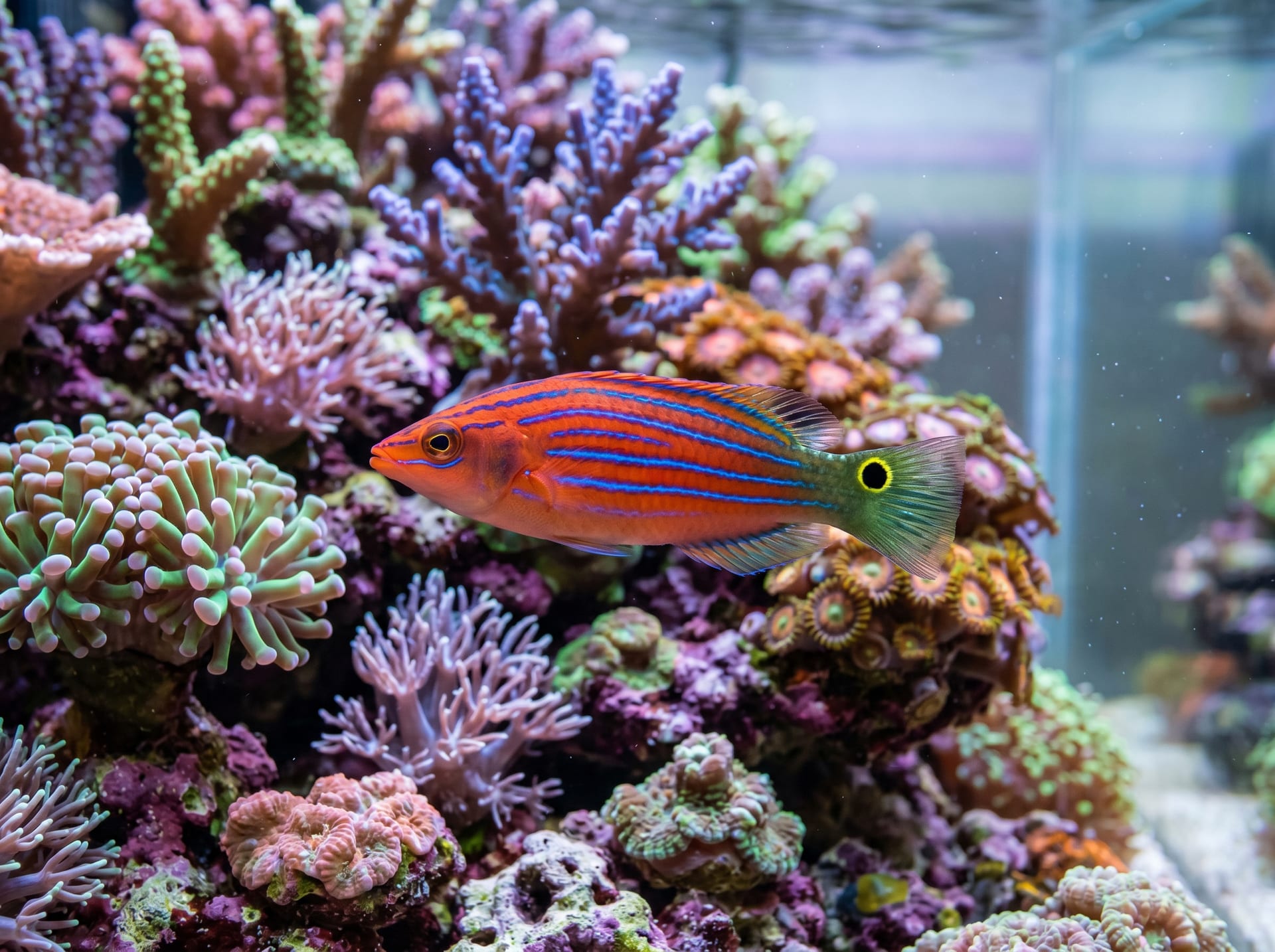
Though somewhat assertive, Six-line and Four-line Wrasses serve as excellent "cleanup crew" for the tank. They consume flatworms, fireworms, and small organisms that damage corals—acting as the aquarium's pest police. Their vigorous swimming adds energy and character to fish-heavy tanks.
- Representative Species: Six-line Wrasse, Four-line Wrasse
- Reef-Safe Rating: ★★★★☆ (May occasionally consume small crustaceans)
- Maximum Size: 7–10 cm
- Care Tips:
- Territorial toward their own species and other wrasses; may harass peaceful fish
- When combining with other fish, introduce passive species first, then add these wrasses last
- Hardy and easy to keep; readily accept prepared foods
- While they won't harm corals directly, small shrimp hiding in live rock crevices may become prey
Cleaner Wrasses & Large Wrasses | Special Behaviors and Advanced Species
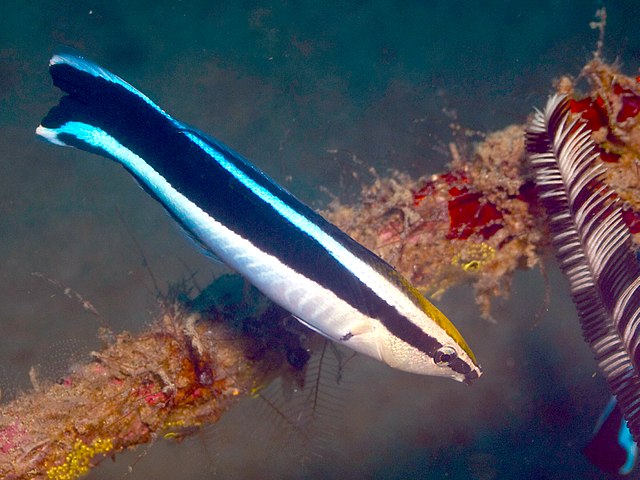
Cleaner Wrasses (Bluestreak Cleaner Wrasse, Labroides dimidiatus)
Cleaner Wrasses establish "cleaning stations" where they remove parasites and dead skin from other fish. In nature, fish far larger than themselves trust them completely—but in captivity, natural cleaning opportunities are limited, requiring a diet transition to frozen and prepared foods. Though they'll eventually eat enthusiastically, patience is needed during acclimation.
- Reef-Safe Rating: ★★★★☆
- Caution: May over-lick the slime coat of tankmates, potentially causing stress
Large Wrasses (Yellowtail Coris, Clown Coris, etc.)
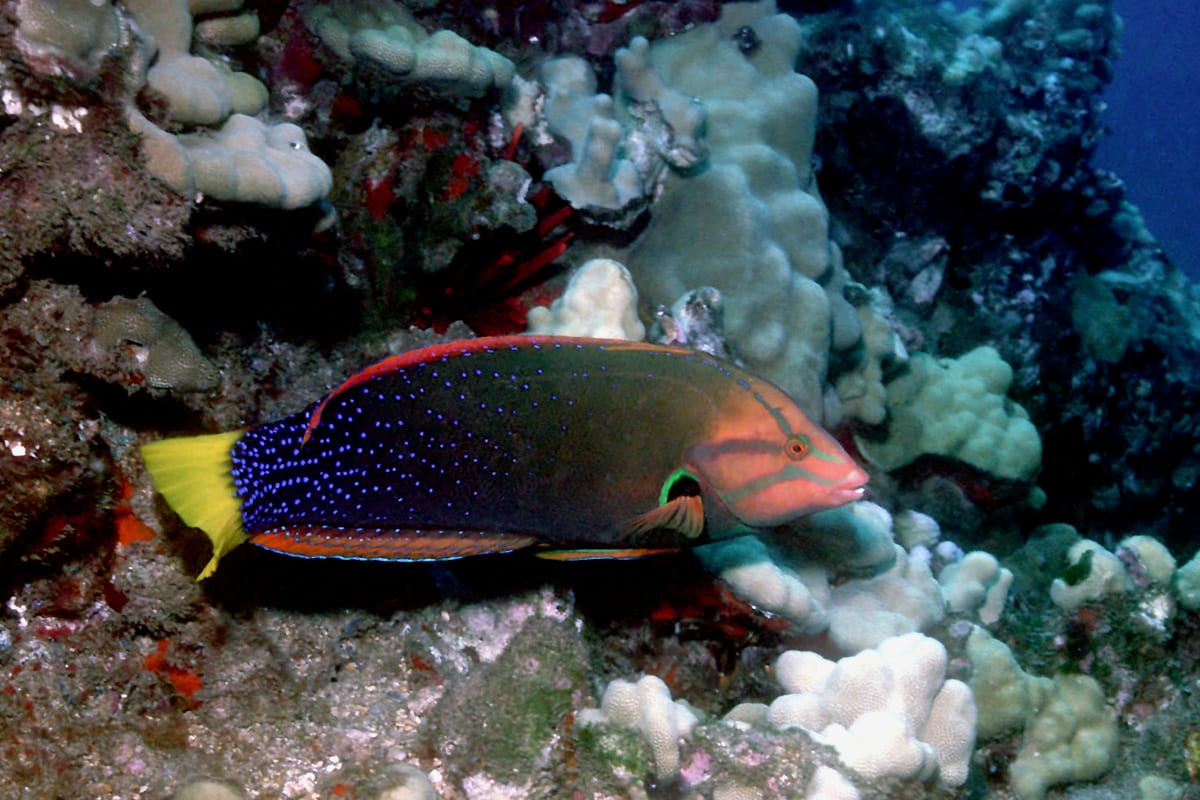
The Yellowtail Coris (Coris gaimard) and Clown Coris (C. aygula) undergo dramatic color changes as they mature; adult coloration is stunning. However, these are large species—the Yellowtail Coris reaches about 40 cm and the Clown Coris grows even larger—and they actively consume shrimp, crabs, and starfish.
- Reef-Safe Rating: ★★☆☆☆ (Dangerous to crustaceans and echinoderms)
- Minimum Tank Size: 120 cm or larger (180 cm+ ideal)
- Caution: Juveniles look completely different; always confirm adult size before purchase
Wrasses are notorious jumpers. Tanks without covers should have nets or acrylic lids to prevent escapes. Small species like Fairy and Flasher Wrasses can slip through tiny gaps, so seal filter intake areas carefully. New arrivals are especially prone to jumping during the first few days—install lids from day one.
How BreederDirect Keeps Your Purchases Safe and Secure
Wrasses are commonly sold in fish stores, but individual temperament and actual reef-safety often remain unclear without firsthand experience. Stories of "the shrimp vanished overnight" or "supposedly peaceful fish now chases everything" are regrettably common.
BreederDirect connects you directly with breeders who raise and maintain wrasses themselves. Breeders observe their animals daily and know specific details: "This individual actively hunts flatworms," or "I've kept it with corals for 6 months with no issues." This intel is available before purchase.
Using BreederDirect's messaging feature, you can share your tank size and existing residents to get personalized advice. First-time wrasse keepers benefit enormously from the guidance of experienced breeders—ensuring your tank's newest member integrates safely. Before welcoming a new companion to your carefully tended aquarium, reach out to a BreederDirect breeder.