Jawfish Care & Breeding Guide | Exploring the Mystery of Mouthbrooding and Life History
Guide to caring for jawfish that burrow in sandy bottoms and the mystery of mouthbrooding reproduction. Learn how to create deep sand beds, compatible tankmates, and key breeding observation points.
Key Takeaways
Guide to caring for jawfish that burrow in sandy bottoms and the mystery of mouthbrooding reproduction. Learn how to create deep sand beds, compatible tankmates, and key breeding observation points.
Related Species
The Charm of Jawfish: Charismatic Marine Fish That Peek Out From Their Burrows
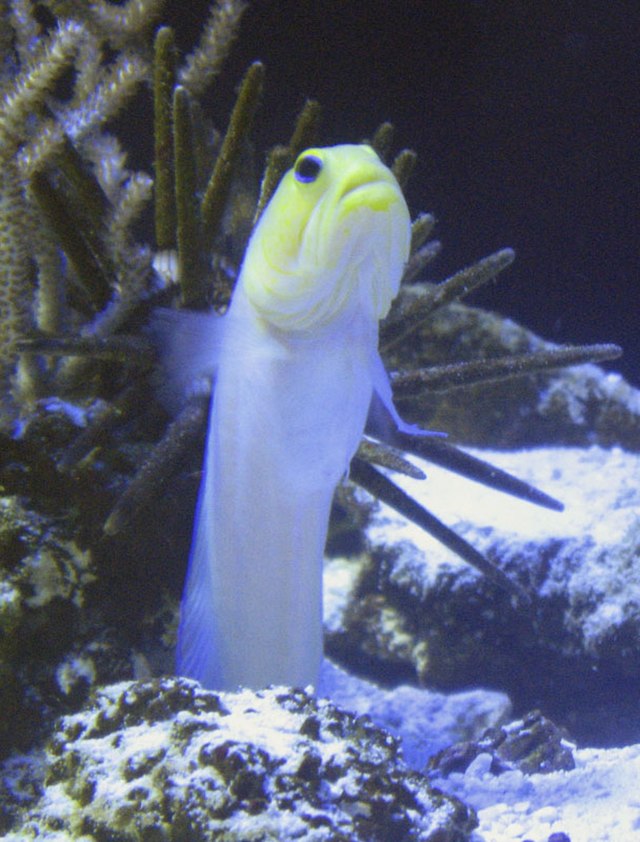
Jawfish (family Opistognathidae) are beloved marine fish known for their unique behavior of burrowing into sandy substrates and hovering with just their heads above the burrow opening. Their large eyes and slightly open mouths give them an endearing charm that never gets old to watch.
The species most commonly available are the Yellow-headed Jawfish (with its striking yellow head) and the Blue-spotted Jawfish, sourced from the Caribbean and Indo-Pacific respectively. Both grow to about 10–12 cm in length and have docile temperaments, making them suitable for beginners to marine aquariums. Beyond that, their fascinating reproductive behavior—mouthbrooding, where males guard fertilized eggs in their mouths—offers aquarists a mesmerizing glimpse into nature's mysteries.
Setting Up the Perfect Environment: Sand Bed and Lid Are Non-Negotiable
Sand Bed Depth and Substrate Selection
The most critical factor in jawfish care is sand bed depth. Since they naturally burrow, maintain a minimum of 12–15 cm of sand bed. If the sand is too shallow, burrows collapse repeatedly, causing stress that weakens their immune system and can lead to shock and death.
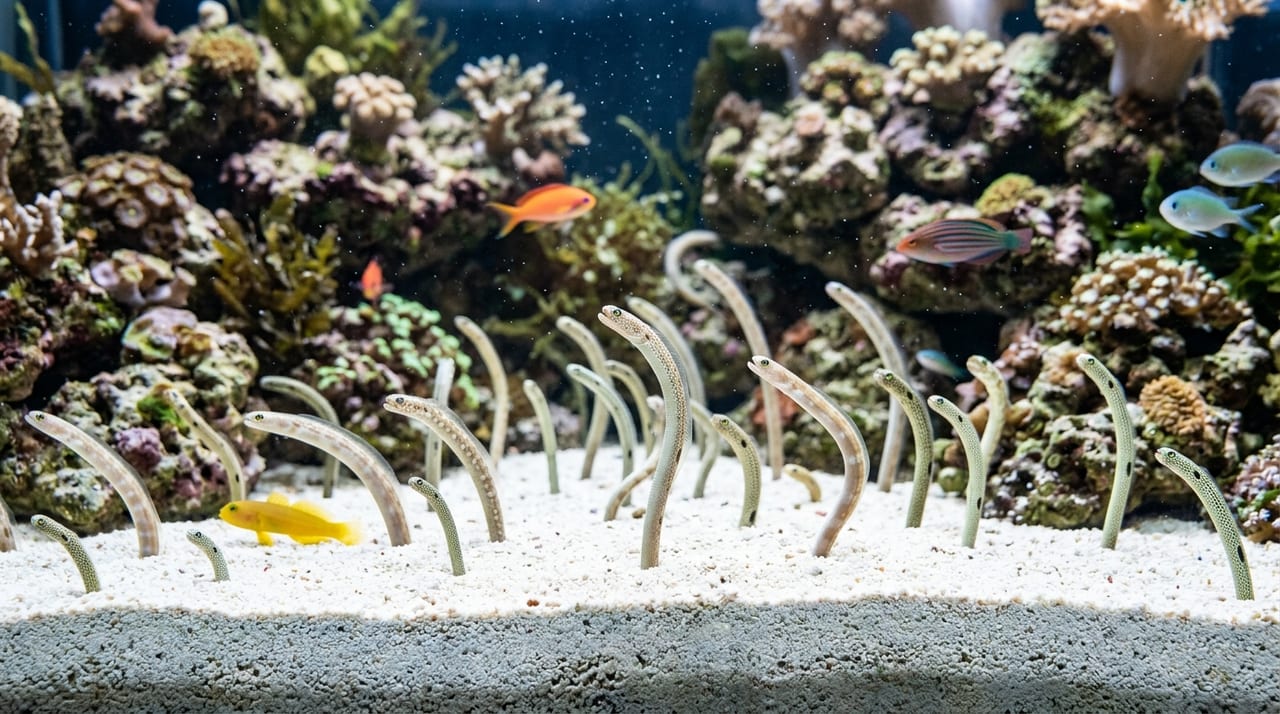
Substrate grain size should be 1–3 mm—fine but not too fine. Sand that is too fine collapses easily, while coarse sand is too heavy to move. Coral sand or aragonite sand works well and also helps stabilize water pH. If maintaining depth across the entire tank floor is impractical, concentrate the deeper sand zone toward the back of the tank.
A Lid Is Essential—Seal Every Gap
Jawfish are surprisingly athletic and will burst through the water surface when startled. Cases of fish jumping 30–50 cm high are not uncommon, so keeping jawfish in an uncovered tank is reckless. Cover the tank with a glass or acrylic lid, and seal any holes for cords or hoses with fine mesh.
Tank Size and Water Quality Management
Individuals around 10 cm long can be kept in a 45–60 cm tank, but 60 cm or larger is recommended for multiple fish or adequate sand beds. Burrows must be spaced at least 15 cm apart to avoid territorial disputes, so don't skimp on space.