Observation Guide to Courtship and Spawning Behavior in Marine Fish | Environmental Setup and Behavioral Mechanisms for Promoting Tank Breeding
Explains the types and mechanisms of courtship and spawning behaviors displayed by marine fish in aquariums. Introduces observation points for breeding behaviors of representative species such as Ocellaris Clownfish, Gobies, and Fairy Basslets, and how to set up environmental conditions to promote breeding.
Key Takeaways
Explains the types and mechanisms of courtship and spawning behaviors displayed by marine fish in aquariums. Introduces observation points for breeding behaviors of representative species such as Ocellaris Clownfish, Gobies, and Fairy Basslets, and how to set up environmental conditions to promote breeding.
Related Species
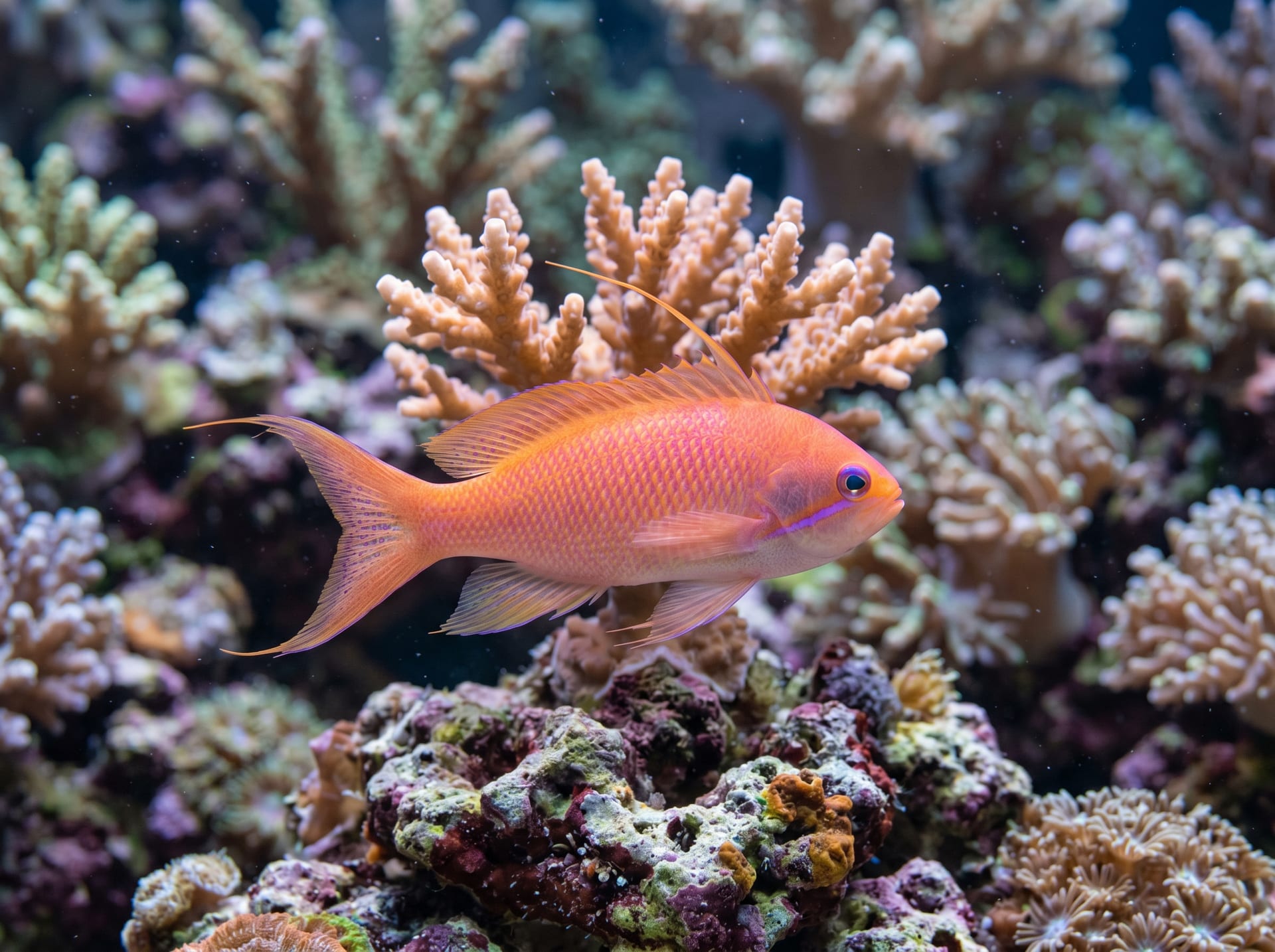
The reproductive behavior of marine fish is a product of sophisticated social behavior evolved in tropical coral reefs. Even in the limited space of an aquarium, with proper environmental conditions, you can observe dramatic breeding behaviors such as courtship dances, spawning, and egg protection. This article explains the mechanisms of representative marine fish breeding behaviors and how to set up the environment to promote breeding in aquariums.
Fundamental Knowledge of Marine Fish Reproductive Patterns
The reproductive patterns of marine fish are broadly classified into three categories.
| Pattern | Characteristics | Representative Species |
|---|---|---|
| Oviparity (Pelagic Spawning) | Eggs and sperm are released into the water for fertilization | Fairy Basslets, Wrasses |
| Oviparity (Substrate Spawning) | Eggs are laid and protected in nests or on rock surfaces | Ocellaris Clownfish, Gobies |
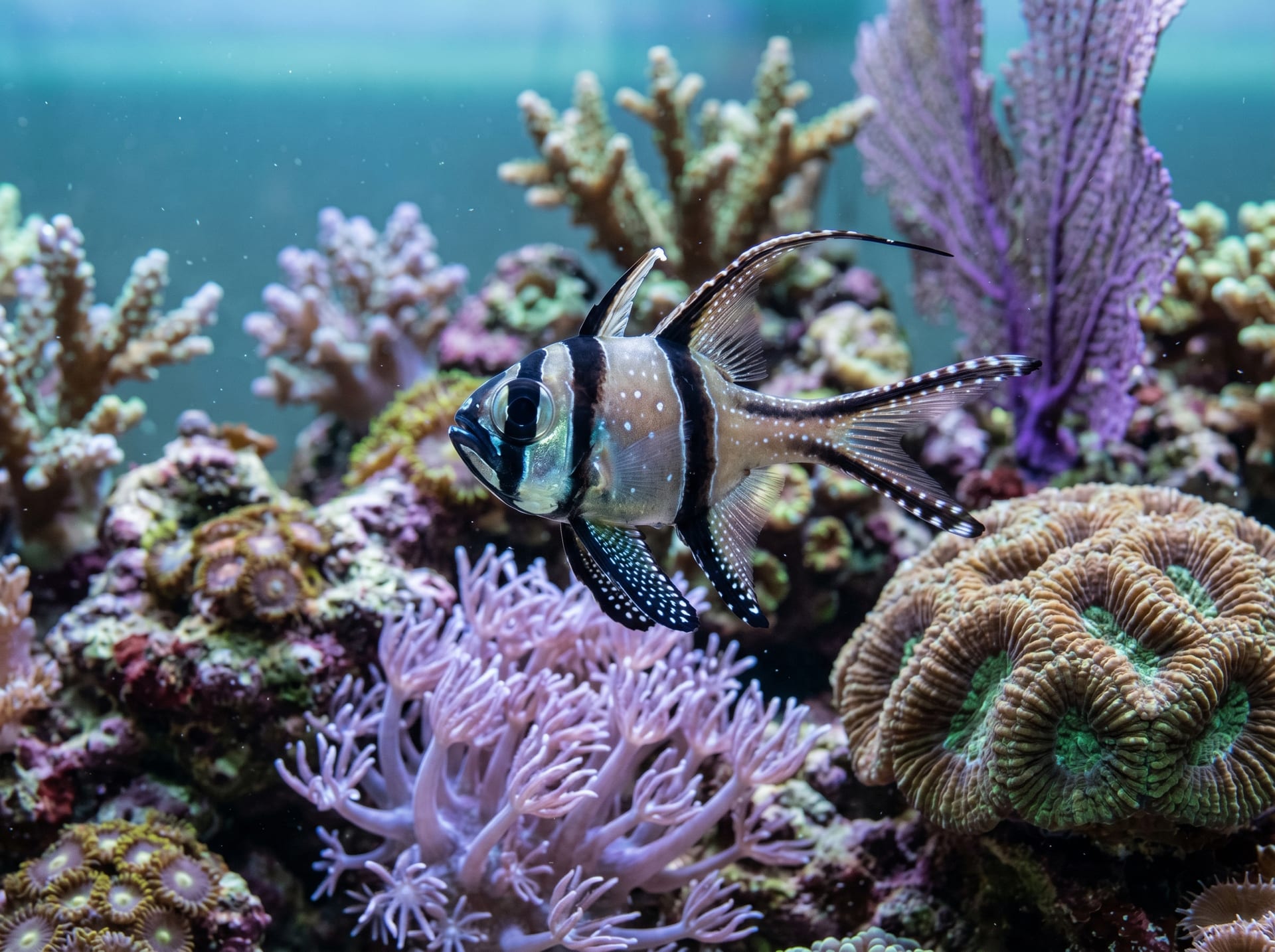
| Mouthbrooding | Parents protect eggs and fry inside their mouths | Banggai Cardinalfish |
The substrate spawning and mouthbrooding types are easiest to observe and breed in aquariums. Since eggs attach to a substrate, their location is easy to track, and parental protection behavior is also easy to observe.
Courtship and Spawning Behavior in Ocellaris Clownfish
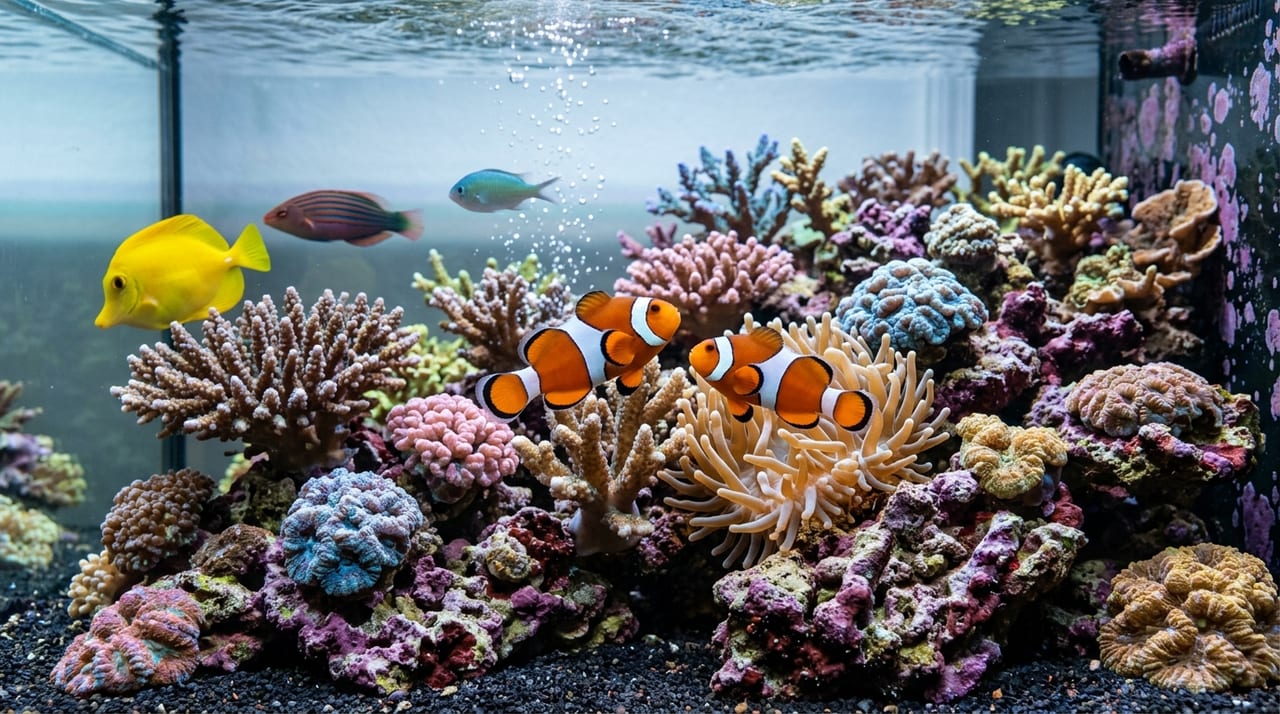
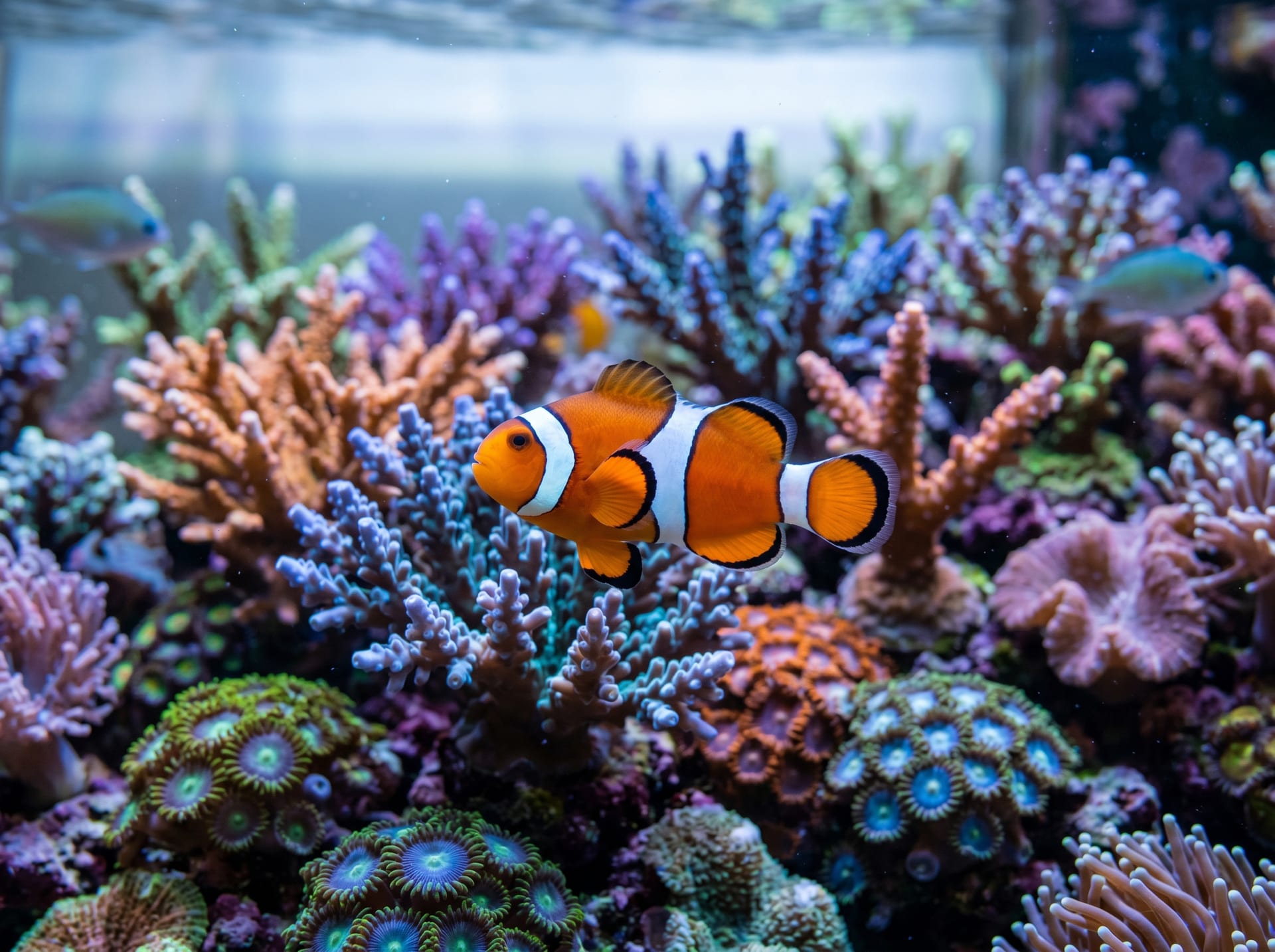
The Ocellaris Clownfish is one of the easiest marine fish to breed.
Pair Formation and Sex Change
The Ocellaris Clownfish exhibits protandry (sequential hermaphroditism, male-first). In the group hierarchy, the largest individual becomes female and the next largest becomes male. When two are raised together, the larger individual becomes female.
Signs of Courtship Behavior
- The male chases around the female, vibrating his body in a "dance"
- Cleaning behavior at potential spawning sites (rocks and the base of anemones)
- Gentle nibbling to guide the female to the spawning site
Spawning to Hatching Cycle
After spawning, the male guards the eggs for 24 hours, fanning water with his fins to supply oxygen. In a water temperature of 26°C, they hatch in 6-8 days. Since the hatched larvae go through a planktonic larval stage, separate tank management is necessary to increase the survival rate of juveniles in the main tank.
Cooperative Spawning and Egg Protection in Gobies
Burrowing gobies such as the Watchman Goby dig holes in sandy substrate and spawn inside the burrows.
Observable Behaviors:
- The male digs and expands the burrow (or repairs existing holes)
- The female enters the burrow and spawns
- The male places his pelvic fins against the eggs and vibrates his body to deliver oxygen
- The male remains in the burrow almost continuously until the eggs hatch
The sight of a pair positioned peacefully at the burrow entrance is a typical scene during the breeding season.
Group Spawning in Fairy Basslets
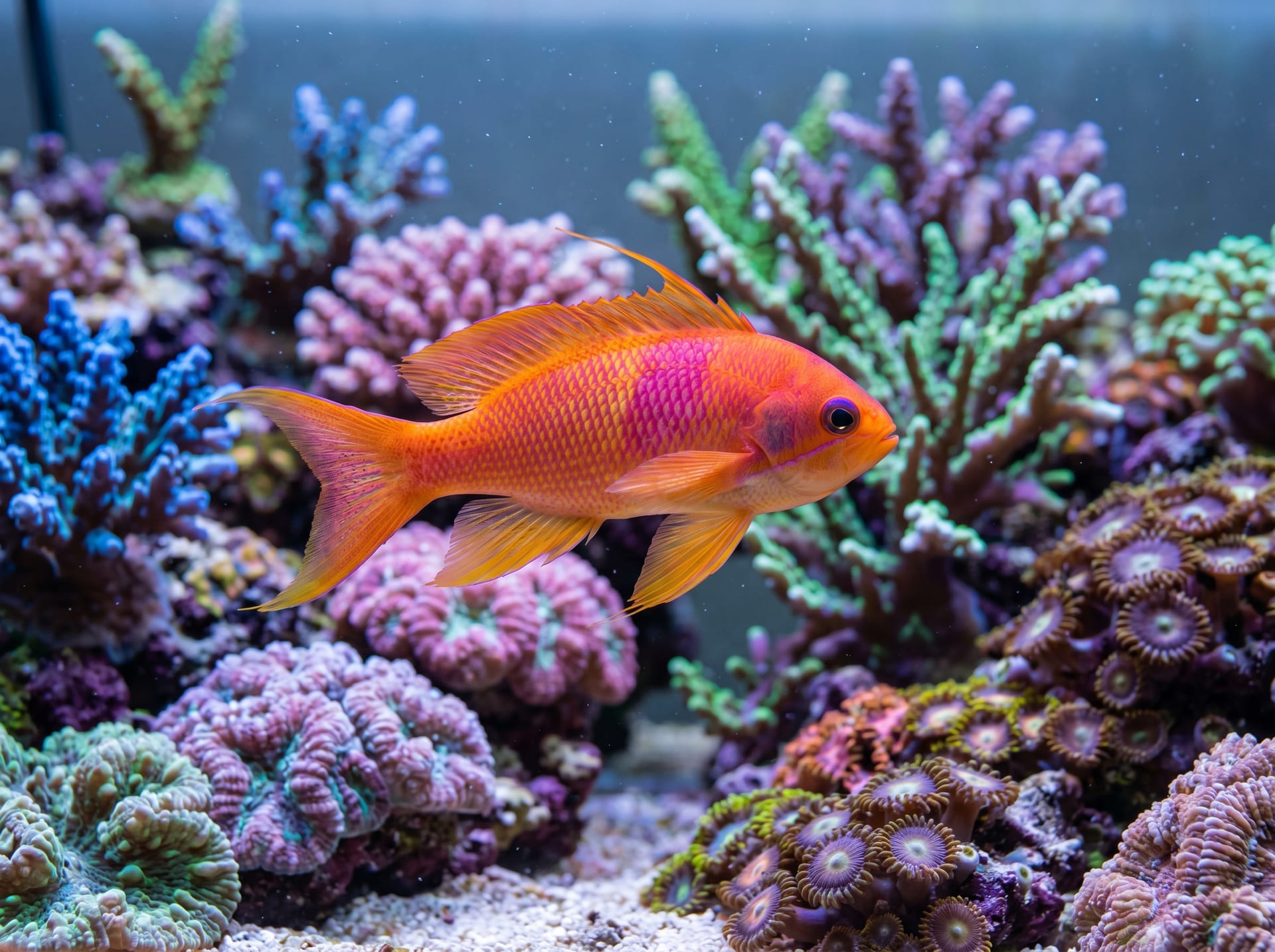
Fairy Basslets such as the Flame Fairy Basslet form harem-type societies and engage in pelagic spawning.
- As evening approaches, the male brightens his coloration and swims around females to entice them
- If courtship is accepted, the pair rapidly ascends toward the water surface (spawning run)
- Near the water surface, they briefly contact each other and release eggs and sperm (pelagic spawning)
- The eggs float and drift, dispersing with the current in the coral reef
Pelagic spawning in aquariums is easy to observe, but collecting the floating eggs and rearing the juveniles after hatching are challenging.
Setting Up Tank Conditions to Promote Breeding
1. Securing a Pair
Accurate sex determination is essential. You can either purchase a pre-bonded pair (pairs that have cohabited in the same tank for an extended period) or introduce two individuals of the same species simultaneously and wait for them to form a pair.
2. Preparing Spawning Sites
| Species | Spawning Site Preparation |
|---|---|
| Ocellaris Clownfish | Anemone, or terracotta dishes and rocks |
| Gobies | Fine sand (at least 10cm deep), pipes, or shells |
| Fairy Basslets | Spacious swimming area (at least 60cm in height) |
3. Water Quality and Temperature Stability
A "pseudo-seasonal shift" of lowering water temperature by 1-2°C and then raising it again can be an effective breeding trigger. Maintain water temperature at 25-27°C, specific gravity of 1.025, pH 8.1-8.3, and NO₃⁻ below 10ppm.
4. Nutritional Management
Before breeding, provide high-nutrition food to females. Feeding frozen copepods, mysis shrimp, and artemia 3-4 times per week promotes ovarian development.
5. Lighting Duration
Spawning is influenced by photoperiod in many species. Maintain a stable 10-12 hour light cycle and avoid sudden changes.
Basics of Fry Rearing
Newly hatched larvae feed on zooplankton during their planktonic larval stage.
Basic Fry Management:
- Transfer to a separate tank the night before hatching (when eyes become visible on the eggs)
- Initial food: SS (small size) rotifers (genus Brachionus)
- 10-15 days later: newly hatched brine shrimp nauplii
- 20-30 days later: transition to powdered micro diet
Use an under-gravel filter or ultra-low-flow airlift filter, designed to prevent fry from being drawn in.
Summary
The courtship and spawning behaviors of marine fish can be readily observed in aquariums with proper environmental setup. The Ocellaris Clownfish is the easiest to breed; with basic water quality management, pairing happens naturally. The joy of successful breeding is incomparable. Start by nurturing the bond between your pair and step into the world of marine fish breeding.