Comprehensive Comparison of Fungal Substrate vs. Fermented Substrate for Rhinoceros Beetle Larvae | How to Choose for Growing Large Specimens
A comprehensive comparison of the differences between fungal substrate bottles and fermented substrate in rhinoceros beetle larva cultivation. Practical guidance on selecting fermented substrate for raising large specimens, temperature management, timing for substrate changes, and cost-effectiveness.
Key Takeaways
A comprehensive comparison of the differences between fungal substrate bottles and fermented substrate in rhinoceros beetle larva cultivation. Practical guidance on selecting fermented substrate for raising large specimens, temperature management, timing for substrate changes, and cost-effectiveness.
Related Species
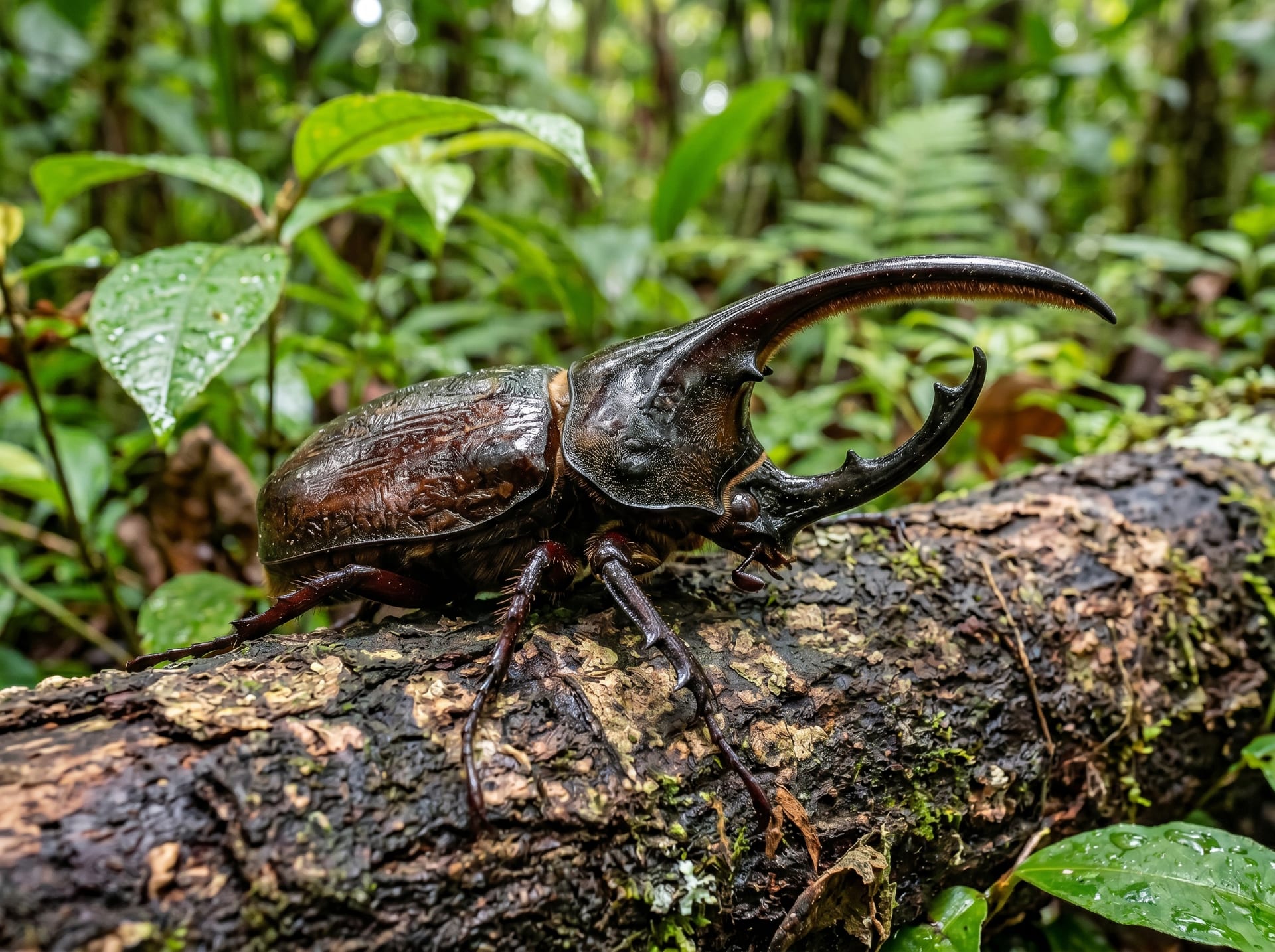
Choosing Cultivation Environments for Rhinoceros Beetle Larvae | Differences Between Fungal Substrate Bottles and Fermented Substrate
When cultivating rhinoceros beetle larvae, many breeders struggle with the choice between "fungal substrate bottles" and "fermented substrate." In conclusion, the basic rule is: use fermented substrate for native Japanese rhinoceros beetles, and choose based on species for exotic rhinoceros beetles. However, even with the same fermented substrate, growth rates vary significantly depending on the presence or absence of additives and the degree of fermentation. Fungal substrate bottles also have varying suitability depending on the type.
This article compares the differences in nutritional value, cost, and management between fungal substrate bottles and fermented substrate with practical data, and explains how breeders aiming to raise large specimens can make optimal choices.
Basic Differences Between Fungal Substrate Bottles and Fermented Substrate
A fungal substrate bottle is sawdust inoculated with white rot fungi (mainly oyster mushroom or polypore fungi) and cultured to create a high-nutrition environment that larvae can easily digest as the mycelium breaks down the lignin in wood. It is primarily used for stag beetle larva cultivation, but effects have also been reported for some rhinoceros beetles (elephant beetles and Caucasus beetles).
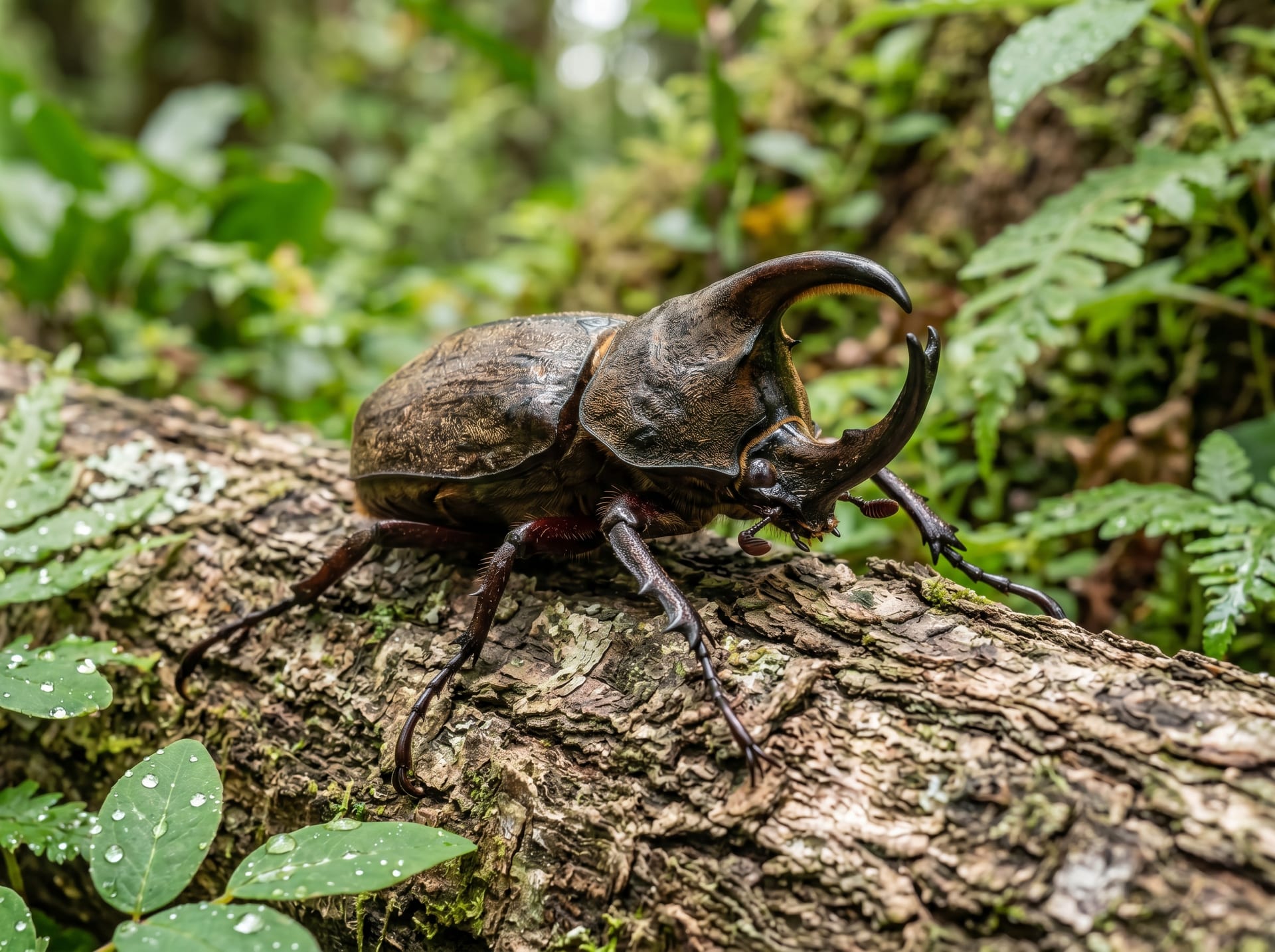
On the other hand, fermented substrate is sawdust from hardwoods or softwoods decomposed and matured by fermentation bacteria and yeast, and is classified into "primary fermentation," "secondary fermentation," and "fully mature" based on the degree of fermentation progress. Native Japanese rhinoceros beetles (Trypoxylus dichotomus) feed on leaf mold and rotting wood in nature, making fermented substrate physiologically suitable.
In nutritional comparison, fungal substrate bottles contain approximately 15-20% protein, fermented substrate contains 8-12% without additives, and high-additive substrate contains about 12-18%. However, many rhinoceros beetle species lack enzymes to directly digest mycelium, so the high nutrition of fungal substrate bottles does not always directly correlate with growth.
Choosing Fermented Substrate for Native Japanese Rhinoceros Beetles
For native Japanese rhinoceros beetle larva cultivation, fully mature to slightly mature fermented substrate is the standard. Immature primary fermentation substrate has a strong ammonia odor and can cause larvae to refuse food. Conversely, over-fermented substrate loses nutritional value and leads to poor growth.
Regarding additive effects, using substrate with additives such as wheat flour, bran, and trehalose added at 5-10% shows data indicating adult body length increases by an average of 5-8mm compared to non-additive substrate. However, when additive levels exceed 15%, risks of overheating and re-fermentation increase, so beginners are safer using commercially available high-additive substrate (such as Tsukiyono Kinoko-en's "Kanshuku Mat" or Fujicon's "Premium Kuro Mat").
The timing for substrate replacement is generally when larval feces exceed 30% of the total. For native Japanese rhinoceros beetles, it is common to replace substrate three times: during the first to second instar (September-November), early third instar (December-January), and late third instar (February-March). Especially during the final substrate change in late third instar, using high-quality substrate ensures nutrients reach the larvae during the rapid growth period before pupation, making it easier to produce large specimens exceeding 80mm.
Suitability of Exotic Rhinoceros Beetles and Fungal Substrate Bottles
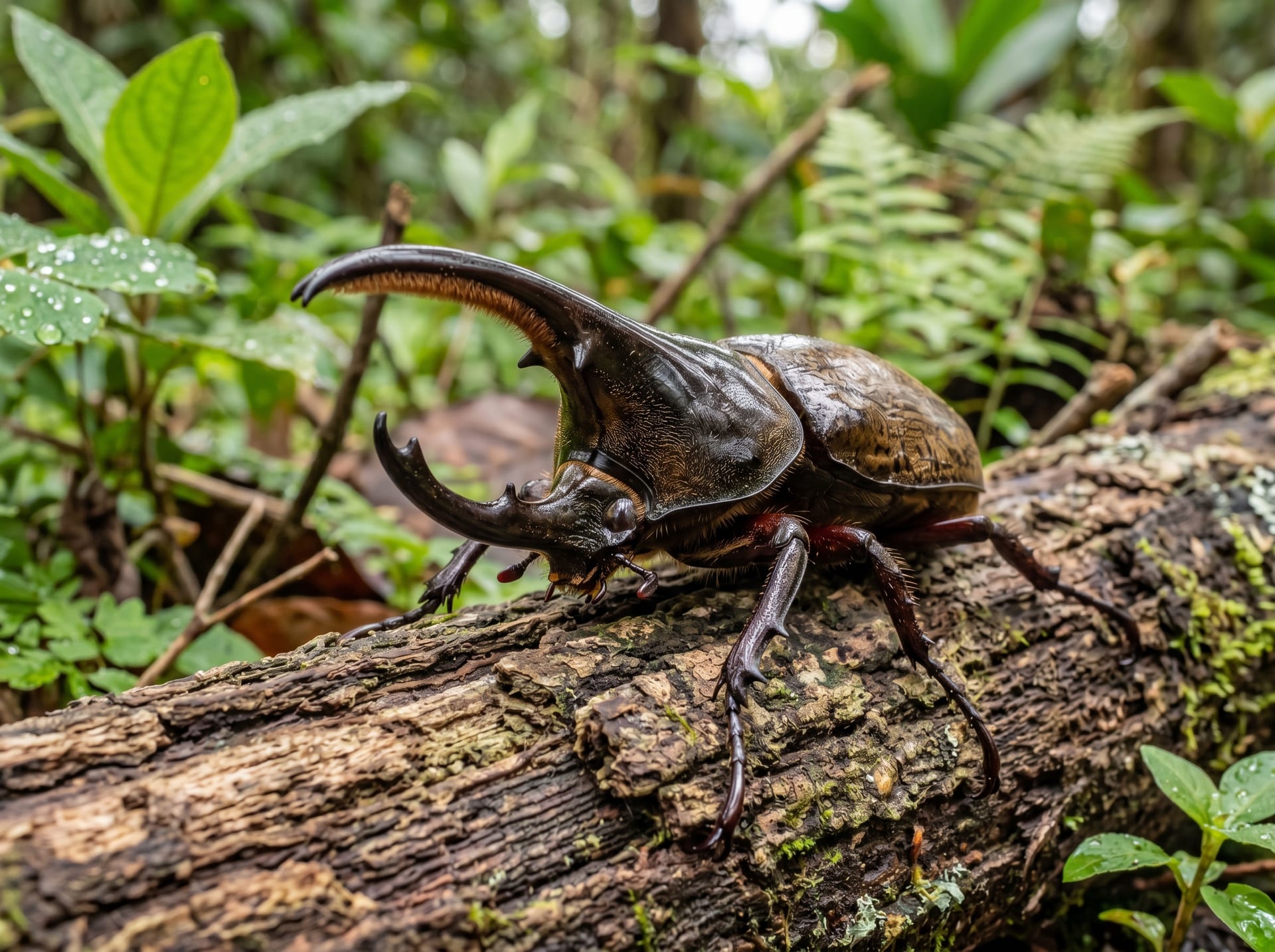
Among exotic rhinoceros beetles, some species show significant size increases with fungal substrate bottles. Representative examples are elephant beetles (genus Megasoma) and Caucasus beetles.
Elephant beetle larvae prefer white rot portions of decaying wood in nature, so the fungal substrate bottle environment is suitable. In fact, reports indicate that larvae of Megasoma elephas and Megasoma actaeon reared on fungal substrate bottles (oyster mushroom type) show adult body length increases of 10-15mm compared to fermented substrate cultivation. However, since fungal substrate bottles are sensitive to high temperatures, summer temperature management (maintaining 20-24°C) is essential.
Caucasus beetles are also prone to growing larger with fungal substrate bottle cultivation, but since larvae are voracious eaters and substrate degrades quickly, bottle replacements are needed every two months, which becomes costly. "Hybrid cultivation," switching to high-additive fermented substrate from late third instar, is also effective.
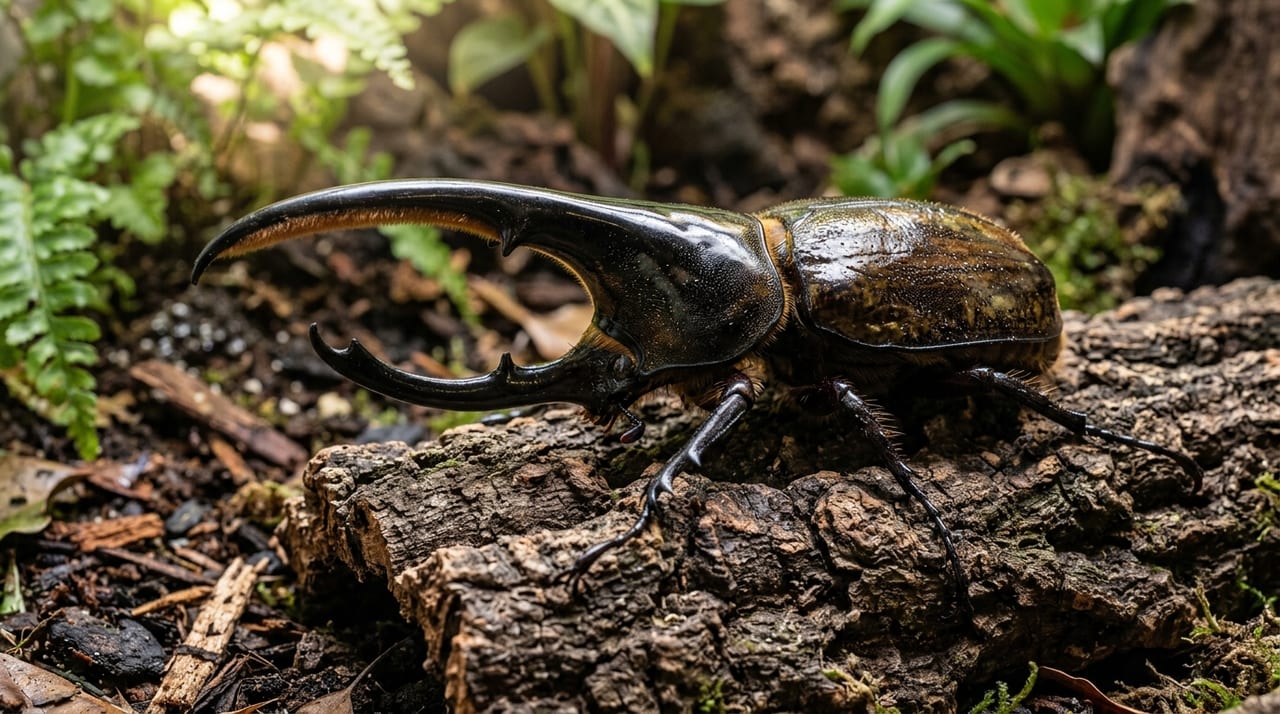
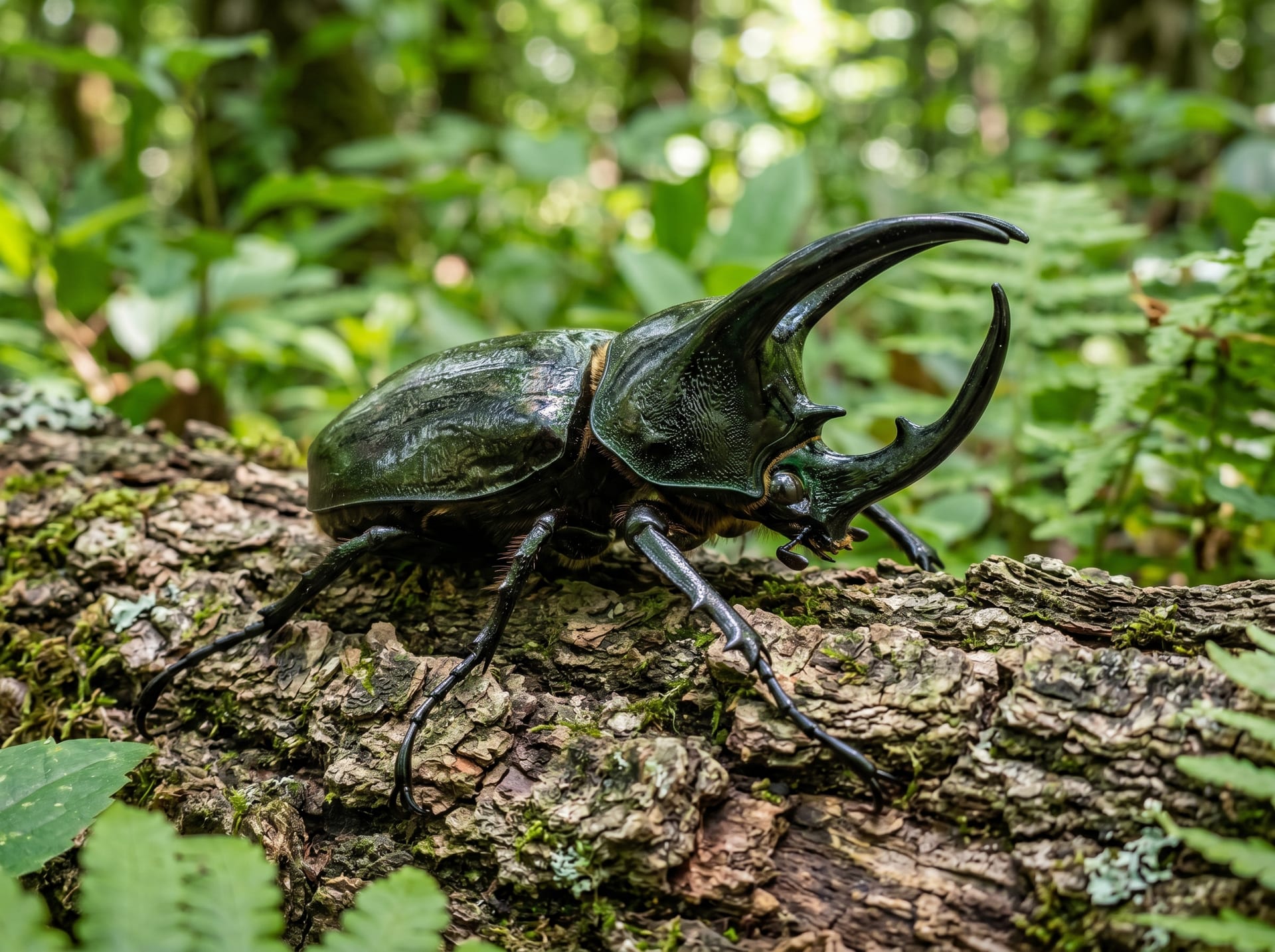
Conversely, Hercules beetles and Neptune beetles are primarily reared with fermented substrate. Since these species consume large quantities of leaf mold in nature, fermented substrate (fully mature to slightly immature) outperforms fungal substrate bottles in both growth rate and eclosion size.
Comparison of Cost and Management
Initial cost ranges from 400-800 yen per fungal substrate bottle (800-1400cc bottle) and 600-1,500 yen for fermented substrate (10L bag). Per individual, fungal substrate bottle cultivation costs approximately 2,000 yen during the third instar stage (1400cc bottle × 3), while fermented substrate cultivation costs about 900 yen for the third instar stage (3L × 3 replacements), making substrate cultivation more economical.
For management effort, fungal substrate bottles have visible signs of degradation (mycelium changes from white to yellow or brown) but are sensitive to temperature fluctuations and require air conditioning management in summer. Fermented substrate has high temperature tolerance (can be cultivated at 15-28°C) but carries risks of fruit fly and fungus gnat infestations, requiring newspaper insertion in containers and periodic sun-drying.
Re-fermentation risk is a problem unique to fermented substrate, where temperatures can exceed 40°C from anaerobic fermentation shortly after packing additive-rich or immature substrate into containers. To prevent this, spread the substrate on newspaper and allow it to off-gas for 3 days before packing into containers, then adjust moisture to approximately 50-60% (to the point where a handful forms a ball).
Practical Techniques for Growing Large Specimens
To aim for native Japanese rhinoceros beetles exceeding 80mm or Hercules beetles exceeding 130mm, follow these key points:
1. Early High-Nutrition Feeding During First Instar Data shows that introducing larvae to high-additive substrate (or fungal substrate bottles for elephant beetles) within one month of hatching increases second-instar body weight by 1.5 times. Since first-instar larvae eat small amounts, individual rearing in 100cc cups without substrate changes until second instar is efficient.
2. Individual Rearing and Large-Capacity Containers During Third Instar Group rearing with multiple larvae causes growth suppression from larval interference. Individual rearing in containers of at least 3L per larva for native Japanese rhinoceros beetles or at least 10L per larva for Hercules beetles improves eclosion size by an average of 10%.
3. Temperature Shock Before Pupation Providing "low-temperature stimulation" by lowering cultivation temperature to around 18°C in late third instar (two months before pupation) and returning to 25°C one month later activates hormone secretion and tends to promote larger size. However, since rapid temperature fluctuations can cause pupation failure, temperature changes should be made gradually at ±3°C per week.
4. Substrate Brand Consistency Changing to different manufacturers' products with each substrate replacement can cause larvae to refuse food for approximately one week while adapting to the new substrate. Consistently using the same brand ensures more stable growth.
Summary | Optimal Solutions Based on Species and Purpose
Choosing cultivation substrate for rhinoceros beetle larvae depends on balancing the ecological characteristics of the species and the breeder's management ability and budget.
- Native Japanese rhinoceros beetles → Fully mature to high-additive fermented substrate (Fujicon for cost focus, Tsukiyono Kinoko-en for size-focused)
- Hercules and Neptune beetles → Slightly immature to fully mature high-additive fermented substrate
- Elephant beetles and Caucasus beetles → Fungal substrate bottles (oyster mushroom type) or hybrid cultivation
- Beginners → Fermented substrate cultivation alone (simple management with fewer failures)
- Maximum size priority → Optimal substrate per species + individual rearing + temperature management
While fungal substrate bottles are certainly high in nutrition, they are not effective for all rhinoceros beetle species. First, research the natural feeding habits of the species you are rearing and recreate an environment similar to that—this is the first step in producing large specimens.