Goldfish Fry Color Change Guide: Breed Fixation and Selection Tips
An explanation of how goldfish fry transition from dark body color to vibrant red or white through a process called "color change" (退色). Discover the timing and breed-specific differences in color development, along with practical selection techniques.
Key Takeaways
An explanation of how goldfish fry transition from dark body color to vibrant red or white through a process called "color change" (退色). Discover the timing and breed-specific differences in color development, along with practical selection techniques.
Related Species
Goldfish fry are nearly transparent immediately after hatching, but within days they develop a dark, crucian-carp coloring, and as they grow they gradually shift to the vibrant colors of their parent fish. This process is called "color change" (退色) or "fading." Color change is one of the great joys of goldfish breeding and represents the most critical selection criterion for breeders aiming to fix breed traits. This article explains the mechanisms of color change, breed-specific differences, factors that accelerate or delay it, and the timing and practical techniques for selective breeding.
The Mechanism and Fundamentals of Color Change
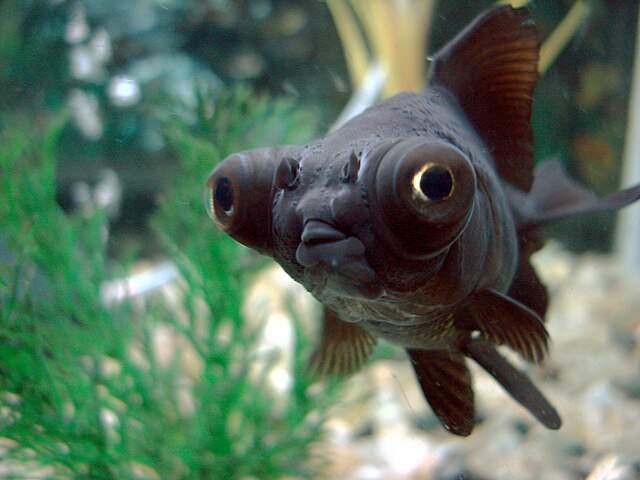
Immediately after hatching, goldfish fry have a skin dominated by pigment cells called "melanophores," which contain melanin pigment. This dark brownish coloring (crucian-carp coloring) is an inherited trait from wild crucian carp and historically functioned as protective camouflage against predators in nature.
Color change is a physiological process in which melanin pigment decreases or disappears, revealing underlying pigments (carotenoid and purine-based pigment cells) such as red, orange, and white that had been latent beneath. At the cellular level, "xanthophores (yellow/orange)," "erythrophores (red)," and "iridophores (white/blue-white)" interact to form the final body color.
Color change typically begins around 2–3 months after hatching. It usually starts with the belly and mid-body losing their dark tone, then gradually spreads to the dorsal region, head, and fins. However, the process is not uniform; depending on the breed and individual, it can take over a year to move through the mottled stage and settle into the final color.
Breed-Specific Color Change Patterns
The speed and final color of the color change vary considerably by breed, and understanding these differences improves selection precision.
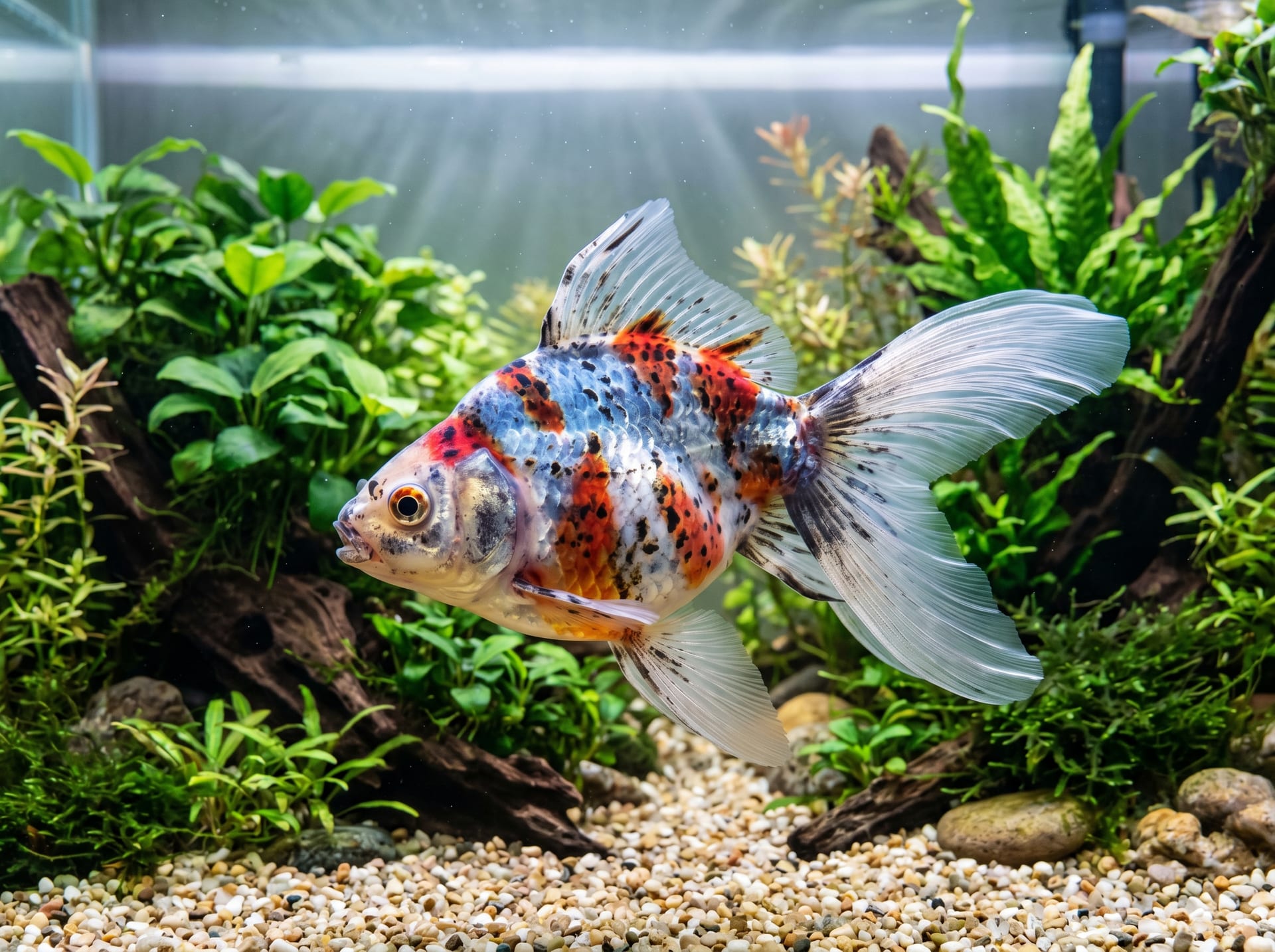
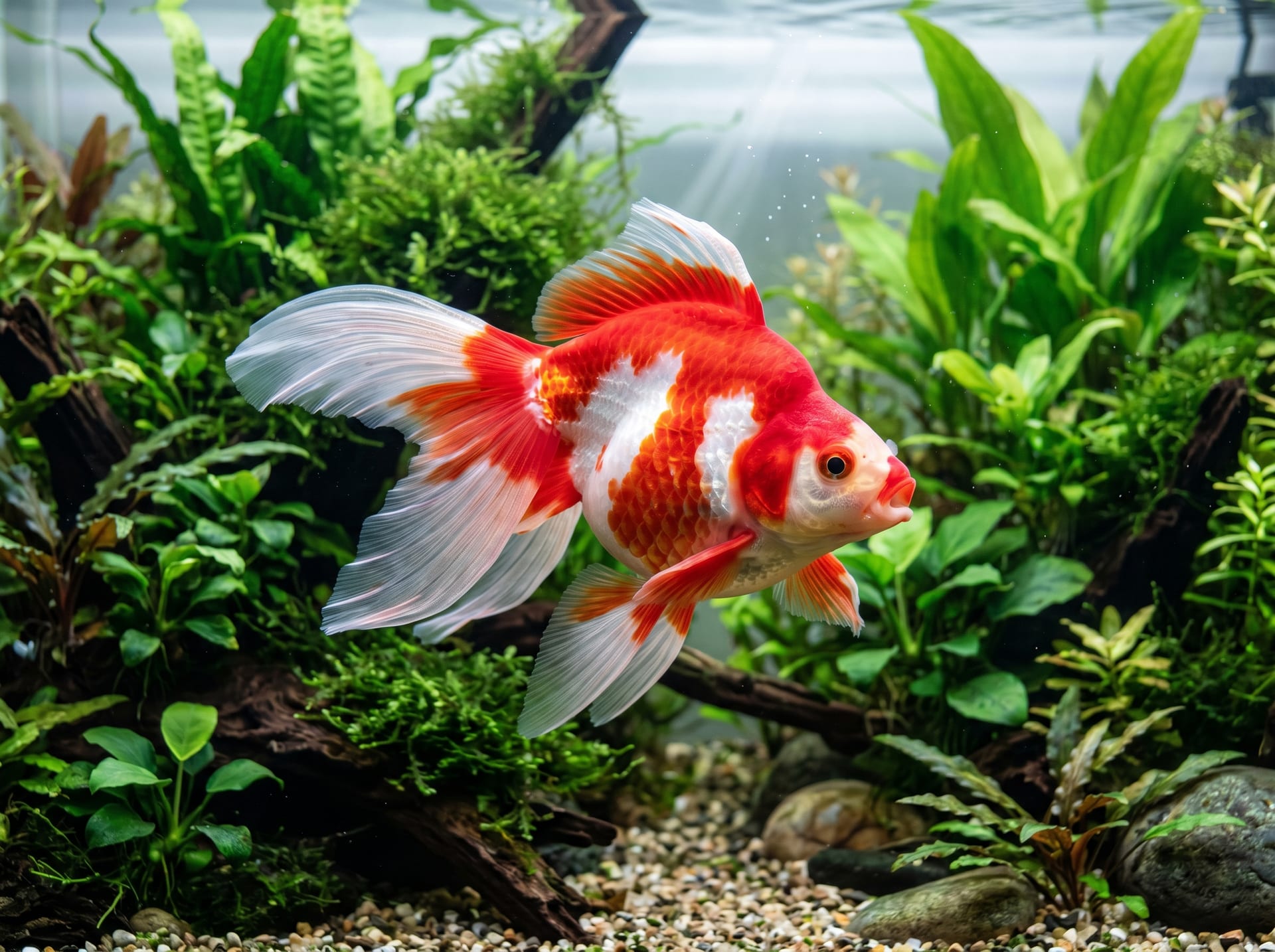
- Wakin and Ryukin varieties (red and calico) Color change is relatively fast, with red tones appearing 3–4 months after hatching. For calico patterns, the progression of color change forms the foundation of the markings, so it is important to identify the stage at which the balance between red and white is developing well.
- Ranchu This breed is a classic example of slow color change, often taking more than six months. The long period of crucian-carp coloring offers the advantage of being able to focus on evaluating body shape. Eliminating individuals with strong crucian-carp characteristics before color change begins simplifies later management.