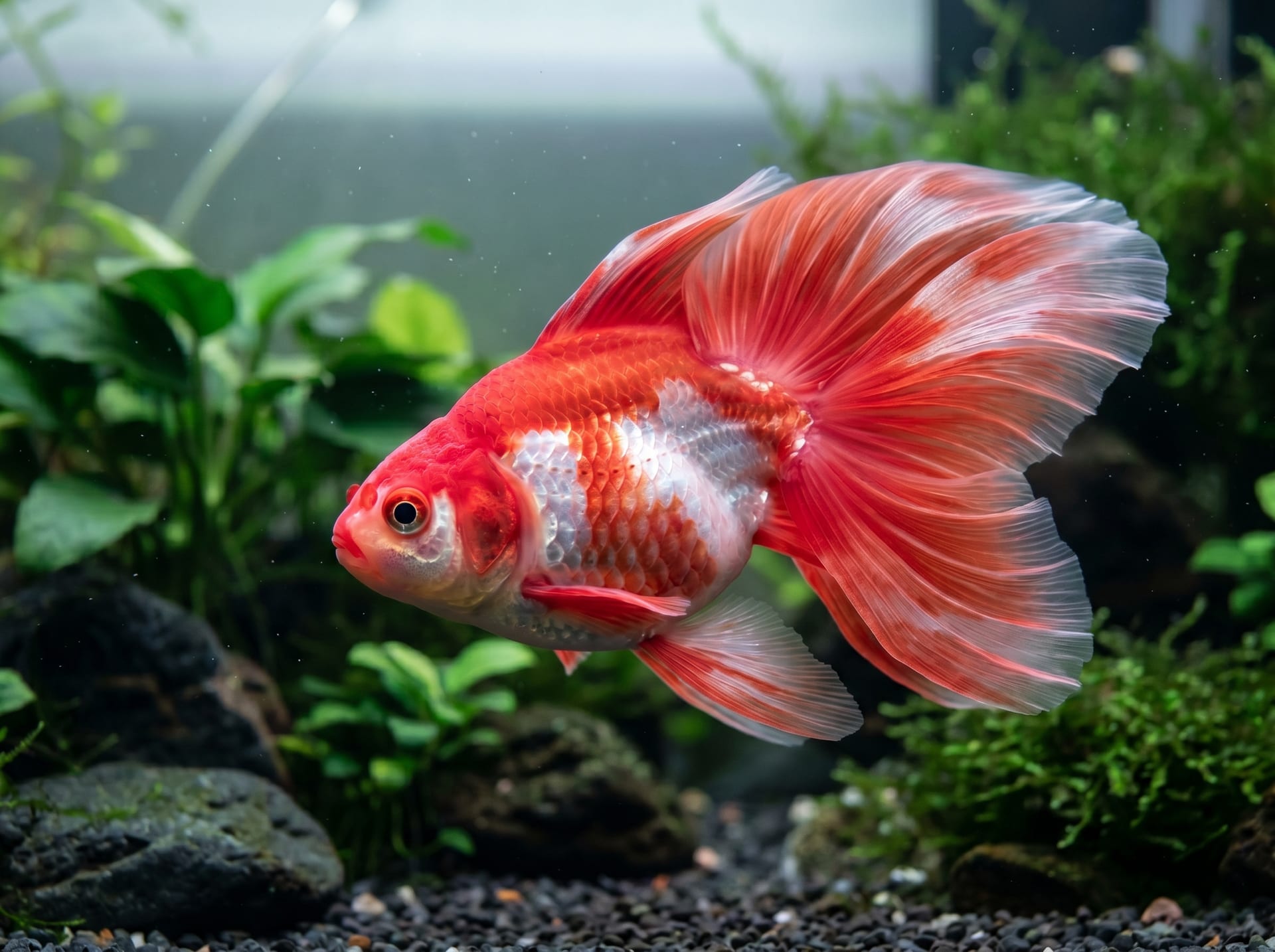
Goldfish Akeni-Sai (Two-Year-Old) Management Guide | Critical Growth Period Tips for Body Development and Show Exhibition
A comprehensive guide to proper management during the akeni-sai (two-year-old) period—the most critical phase in goldfish keeping. Covers body development, head growth formation, color finishing, and breeding strategies for show competition.
Key Takeaways
A comprehensive guide to proper management during the akeni-sai (two-year-old) period—the most critical phase in goldfish keeping. Covers body development, head growth formation, color finishing, and breeding strategies for show competition.
In the goldfish world, fish born in a given year are called "toutsai" (same-year fish), and the following year they are called "akeni-sai" or "two-year-old fish" (ni-sai-gyo). The akeni-sai period is the most important growth phase during which goldfish rapidly complete their body shape, color, fins, and head growth. Whether proper management is achieved during this critical period significantly impacts both show competition results and the fish's lifelong health.
✍️
BreederDirect Editorial
The BreederDirect editorial team specializes in care information for animals, covering veterinary care and breeding to deliver beginner-friendly guides.
Find Goldfish on BreederDirect
Buy directly from verified breeders
Browse Related Listings
Find Goldfish listings related to this article on BreederDirect. Buy directly from verified breeders.
After surviving winter as toutsai fish born in spring and summer, individuals pass through autumn selection and enter the spring akeni-sai phase. This period is characterized by the following:
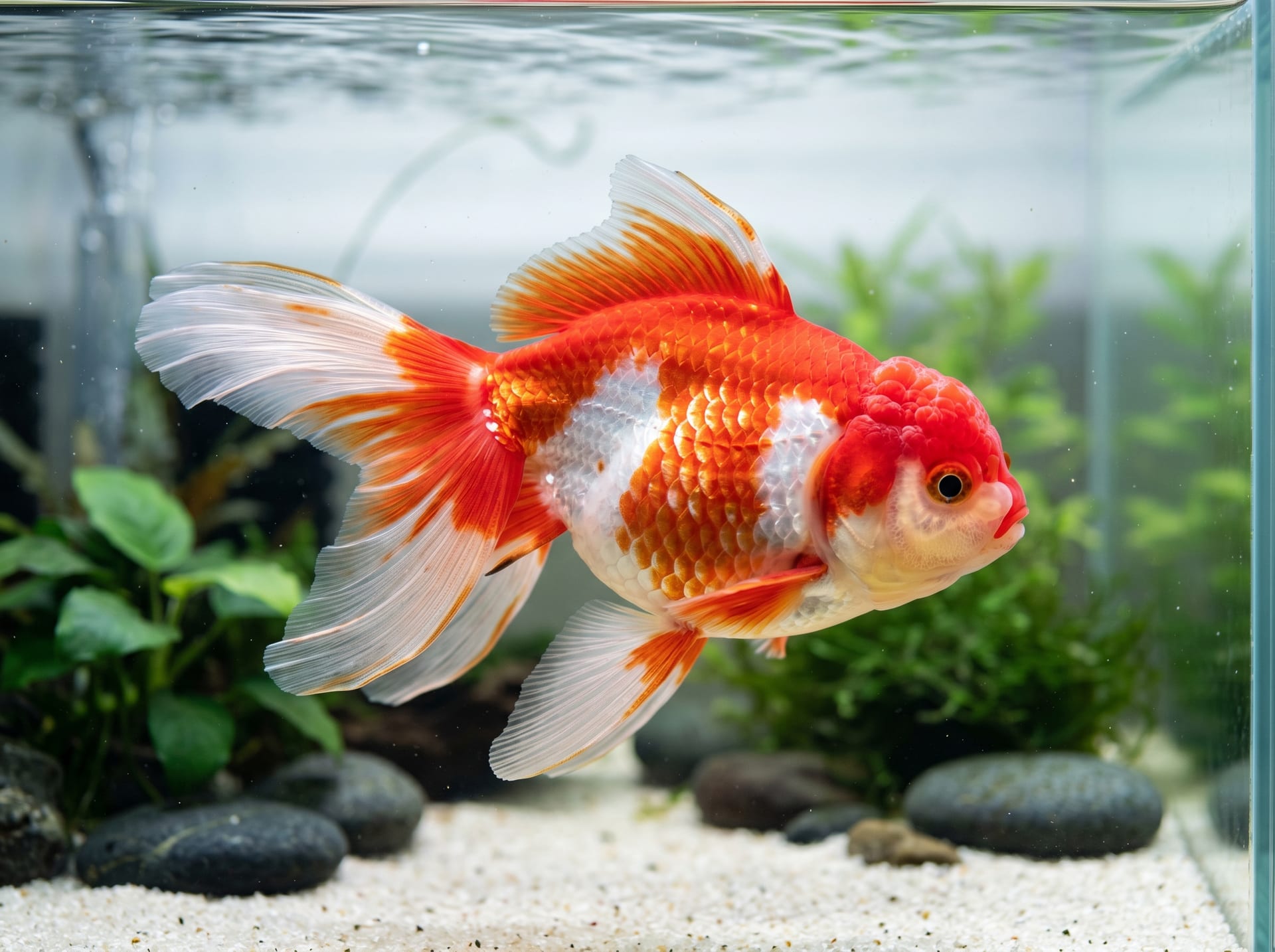
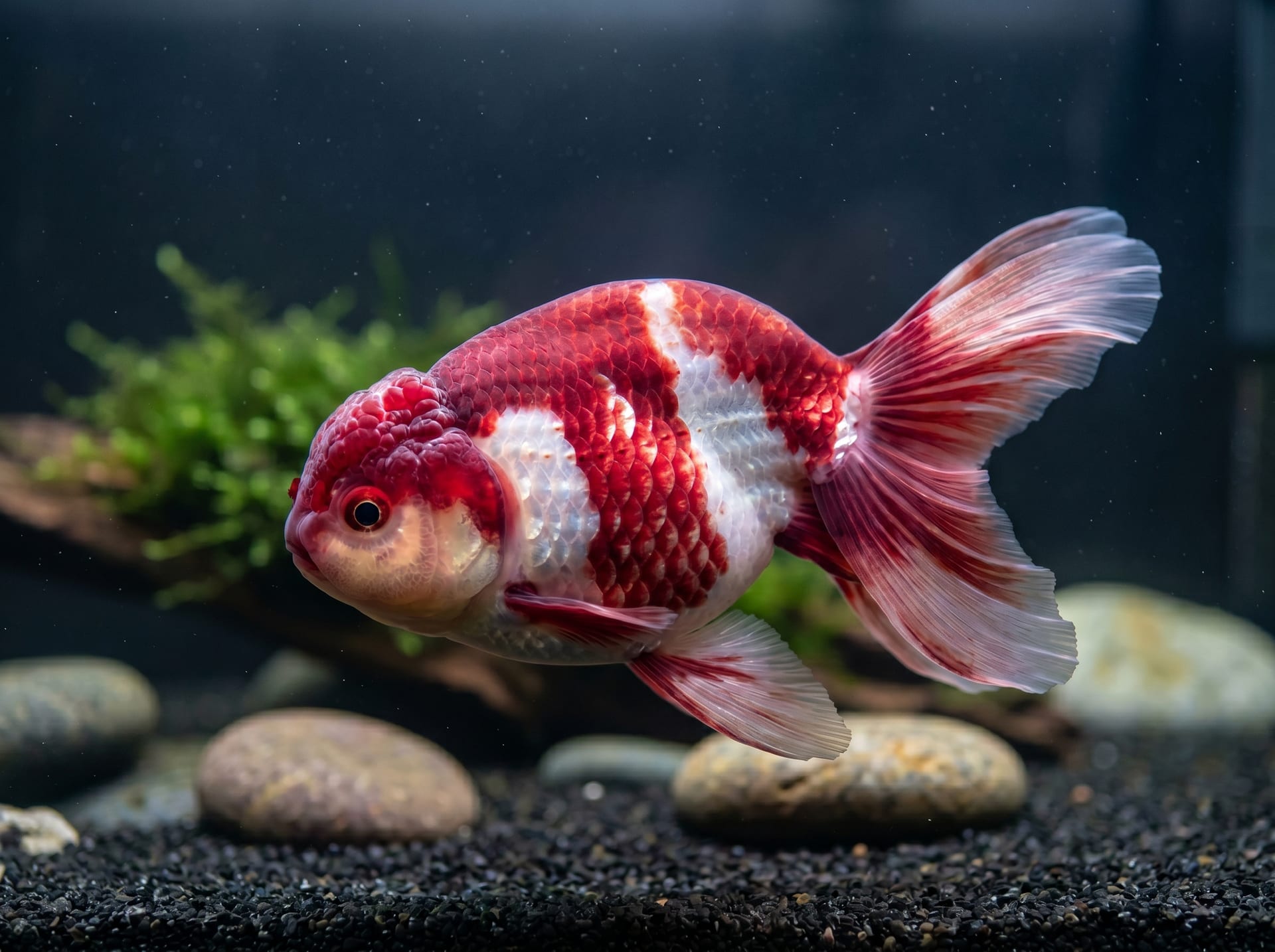
Rapid body shape changes: The skeletal structure solidifies while flesh accumulates. Body width increases especially in ranchus and Edo nishiki varieties
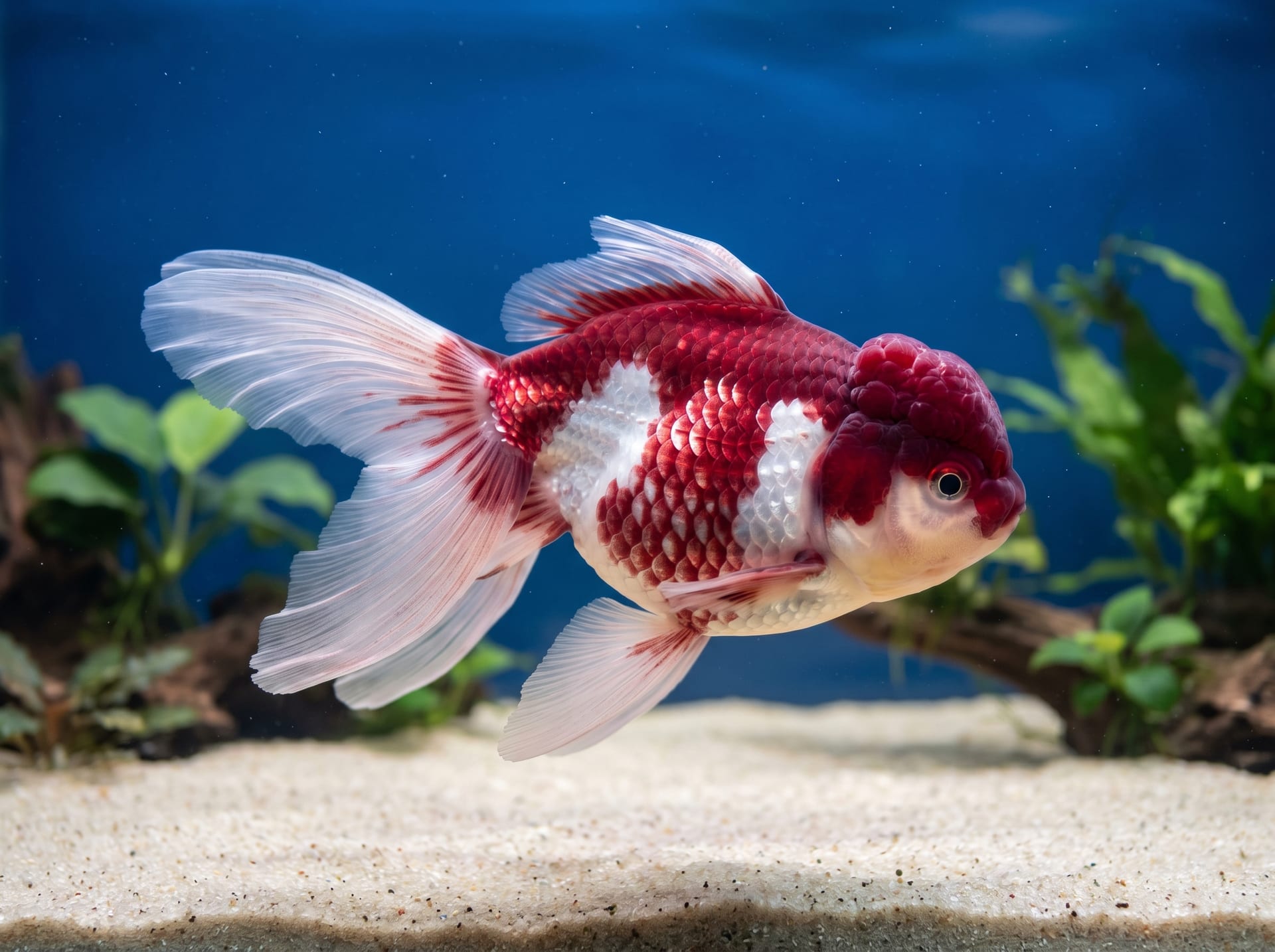
Full head growth development: In varieties with head growth (Oranda, ranchu, Higashi nishiki), this period marks rapid head growth expansion
Color stabilization and finalization: Most individuals transition from the calico and black coloring of toutsai and establish their true body color
Fin elongation: For long-fin varieties (ryukin, tosaki, butterfly-tail), this is the critical period when fin length and shape are determined
Water Temperature Management and Feeding Basics
Spring Transition (March–April)
Post-winter fish have weakened digestive systems. Begin feeding with small amounts of plant-based food (algae or spirulina-based pellets) once temperatures exceed 10°C, gradually increasing portions. Sudden large amounts of high-protein animal-based food risk digestive upset and swim bladder issues.
Active Growth Period (May–August)
Growth is most active at water temperatures of 20–25°C. Feed digestible food 2–3 times daily in amounts the fish can consume completely.
Protein ratio
For varieties requiring head growth development (ranchu, Oranda), high animal-protein feed (42–48%) is effective. Conversely, for varieties like shubunkin and wakin that need to maintain slender silhouettes, lower-protein feed supports proper body shape.
High-temperature caution (above 28°C)
Above 28°C, appetite drops and digestive capacity declines. Reduce feeding to 60–70% of normal and increase water changes to prioritize water quality.
Tips for Head Growth Development (Ranchu and Oranda)
Head growth development is 70% genetic, but the remaining 30% is determined by management.
Ensure adequate light: Outdoor spaces with good sunlight (4–6 hours direct sunlight) promote head growth. For indoor keeping, use bright-spectrum LED lighting (around 6500K) for 10–12 hours daily
Water change frequency: Weekly water changes 2–3 times provide mineral supplementation and boost metabolism. Fish kept in old water tend to develop thinner head growth
Reduce stocking density: Higher water volume per fish typically improves growth. For ranchus, one fish per 30 liters is ideal
Outdoor pond and green water (algae-rich water) keeping: Breeding in green water rich with plant plankton is highly effective for both head growth and color finishing
Body Shape and Fin Management
Swim Bladder Disorder Risk
"Tumbling disease" (where fish flip upside down) commonly appears in two-year-old fish. It develops from a combination of genetic predisposition and husbandry conditions.
Prevention: Avoid sudden temperature changes, choose digestible feed, reduce stocking density
Treatment: Mild cases may improve with 2–3 days of fasting plus raising temperature to 26–28°C
Fin Shape Development
Ryukins and butterfly-tails develop stiff, flowing fins easily in strong current. During the summer growth period, maintain calm water flow. Directing upper filter discharge toward tank walls or using sponge filters to reduce flow velocity are effective strategies.
Autumn Final Selection and Winter Preparation
In August–September, conduct final selection evaluating overall body shape, color, fins, and head growth. Fish passing this selection become foundational stock for the "three-year-old" generation.
Example selection criteria (ranchu):
Dorsal arc slopes gradually with level caudal peduncle connection
Even proportions between head width and head growth development
Tail fin opening angle of 90–180°
Tight, glossy body coloration
Once temperatures drop below 15°C, appetite declines. Bulking up before winter is a race against time—complete this by late October.
Preparing for Show Competition
Akeni-sai is the last chance to exhibit in the "two-year-old division" at shows (the following year, fish enter the three-year-old and older categories).
In the 1–2 months before exhibition, switch to "finishing" care, increasing the proportion of plant-based feed to brighten and refine body color. Maintain water clarity at all times and minimize unnecessary stress for calm, vibrant coloring. Acclimate show candidates to transport bags in advance (practice runs are important).
Summary
Akeni-sai represents the single largest transition point in a goldfish's lifetime. Body shape, color, and head growth are decisively formed during this period. By combining increased water change frequency, adjusted feeding as the fish grows, and strategic use of lighting and stocking density, you can raise excellent broodstock for the next generation. While labor-intensive, the reward of encountering outstanding specimens during autumn selection makes every effort worthwhile.