How to Enjoy Ranchu Fish Shows: Complete Guide from Entry Preparation to Judging Standards
An explanation of how to participate in ranchu fish shows, entry standards, and the flow of the event. Introduces the judging points evaluated (head, body, tail) and breeding management techniques for developing show-quality individuals.
Key Takeaways
An explanation of how to participate in ranchu fish shows, entry standards, and the flow of the event. Introduces the judging points evaluated (head, body, tail) and breeding management techniques for developing show-quality individuals.
Looking for event schedules? Ranchu Fish Shows and Exhibitions Schedule compiles hosting information based on official announcements from organizing bodies. The page lists event dates, venues, organizing groups, and links to official websites, with filtering by prefecture and type (shows, exhibitions, trading meets).
✍️
BreederDirect Editorial
The BreederDirect editorial team specializes in care information for animals, covering veterinary care and breeding to deliver beginner-friendly guides.
Find Goldfish on BreederDirect
Buy directly from verified breeders
Browse Related Listings
Find Goldfish listings related to this article on BreederDirect. Buy directly from verified breeders.
The ranchu fish show—often called the "king of goldfish"—is a special venue where Japan's goldfish culture is concentrated. Held regularly throughout the country by local goldfish clubs, fish farms, and goldfish festivals, these events range from small gatherings of regional enthusiasts to large competitions like the "All Japan Ranchu Championship" and "Osaka Ranchu Show" with hundreds of participants.
Shows are more than competitions; they are places where enthusiasts sharpen their skills, share breeding techniques, and pass down ranchu culture to future generations. Most shows welcome beginners to observe, and starting with a visit allows you to experience the depth of goldfish culture and the philosophy of experienced breeders. In most cases, contacting a local enthusiast club will provide information about viewing opportunities.
Judging Standards: Elements That Define a Beautiful Ranchu
Ranchu fish are judged on a comprehensive evaluation of "head, body, tail, and color." Understanding each element is key to enjoying the show deeply.
Head (Cranial Protuberance)
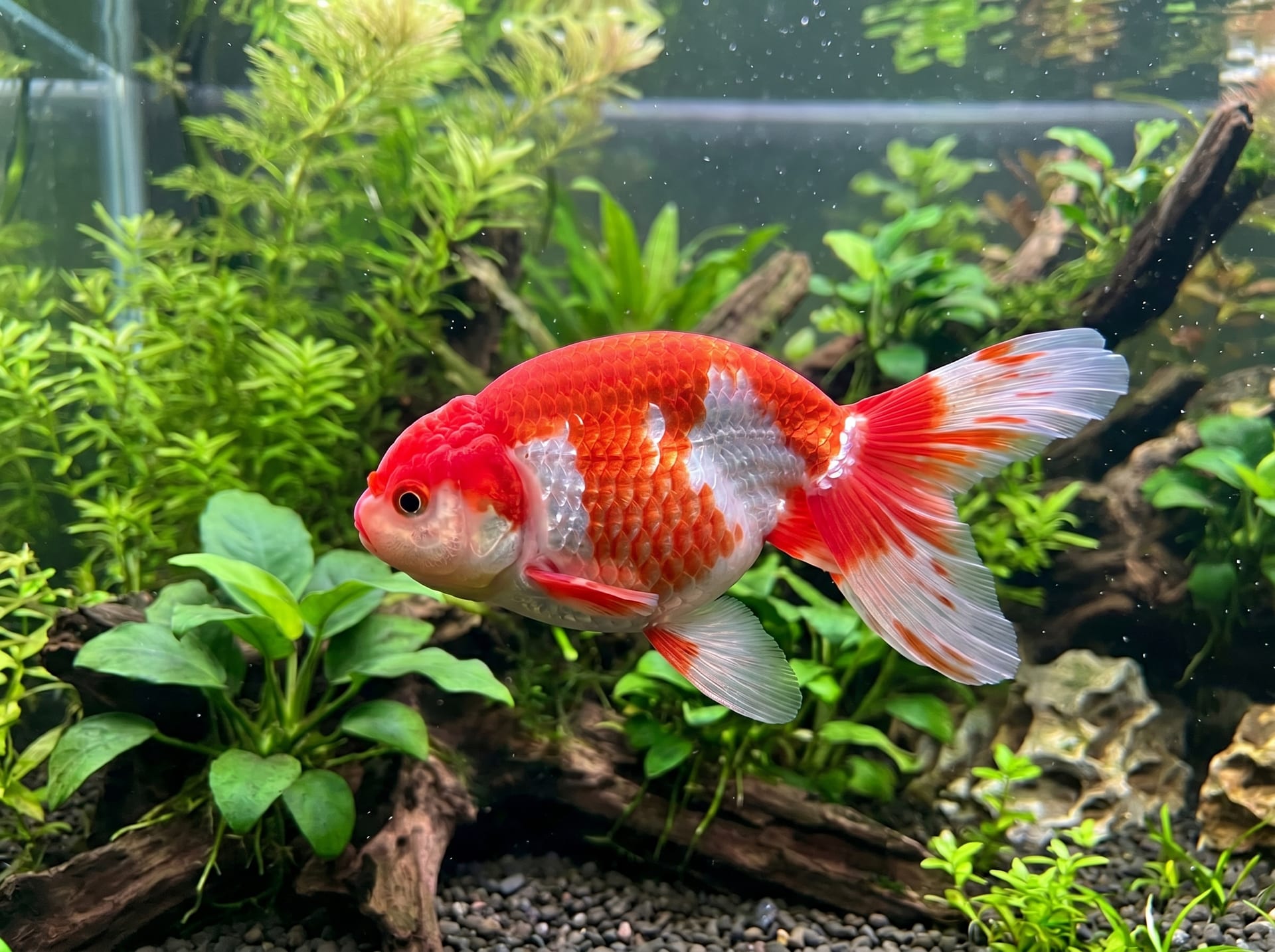
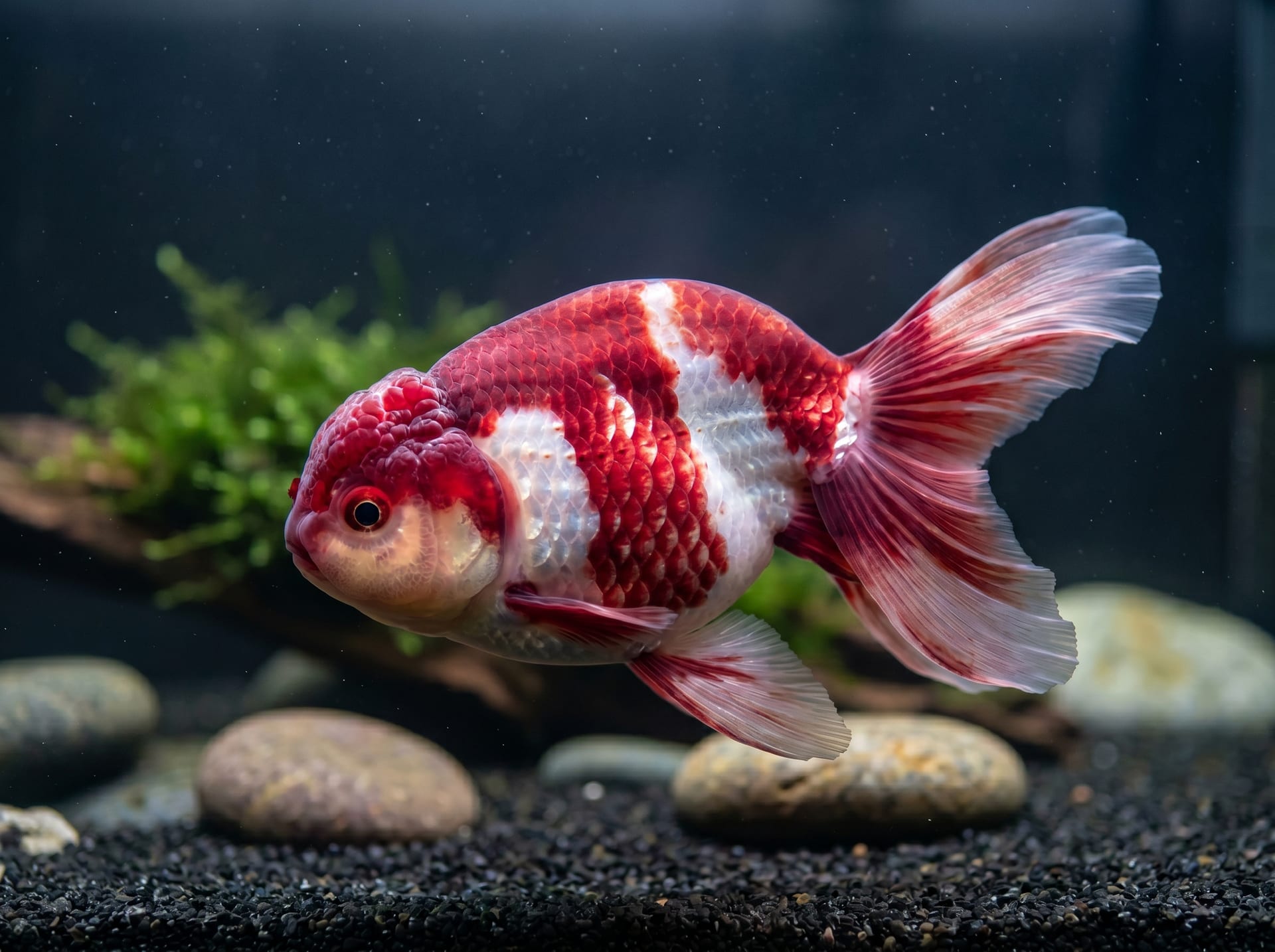
The most critical aspect in judging is the development of the head's cranial protuberance (nikuryu). The ideal is a rich, evenly developed growth that rises symmetrically left and right and covers the entire head. The balance between the "crown (top)" and "cheeks (sides)" is judged particularly strictly. One-sided or asymmetrical development of the protuberance results in significant point deductions. In breeding stock three years or older, full facial coverage of the protuberance—extending to the jaw and around the eyes—receives the highest rating.
Body
The body should have a "barrel shape" (taru-gata): thick, sturdy, and well-rounded. The back should be flat with a smooth line, and the belly should have even fullness. Elongated body shapes or backs with dents and irregularities score lower. The body width relative to length should be sufficient, and the fish should command presence when viewed from the front.
Tail Fin
The ranchu tail is standardly a "four-finned tail" (yotsutsukiré). The upper and lower tail lobes should spread evenly and symmetrically, moving gracefully through the water with elegance. The tail's opening angle (ideally about 45 degrees), the fineness of the edges (sharp edging), and the thickness of the tail stem are all evaluated. "Bud tails" (petals closed) and "cherry blossom tails" (three-finned) are penalized.
Color and Markings
There are many color varieties: kohaku (red and white), self-red, self-white, black, and calico. Color evaluation prioritizes "color vibrancy" and "marking consistency" over pattern type. In kohaku, the boundary between red and white should be crisp, with no muddy coloring. In self-red, uniform, vivid crimson throughout the body earns high marks.
Swimming Style
The "ranchu walk"—a gentle, graceful undulating swim characteristic of ranchu lacking a dorsal fin—is also judged. Fish that tilt while swimming or tend to float belly-up receive lower scores due to concerns about their health.
Show Divisions and Entry Requirements
Shows typically divide entries by fish size and age.
Current-year fish (tousai): Fish born that year; 0 years old. The largest competitive group and ideal for first-time entries.
One-year-old fish (nisai): Individuals raised for one full year. Development of the head protuberance is the core evaluation point.
Breeding stock (oyagyo): Mature fish two years or older. The completion of head development and body presence are the main spectacles.
For first-time entries, starting with the current-year division is the standard approach. Entry limits, size regulations, and health certificate requirements vary by organizer, so always confirm beforehand. Some competitions require membership registration or advance applications.
Pre-Show Preparation: Checklist Through Transport Day
Individual Selection and Conditioning
Fish selected for show typically enter a "conditioning period" at least one month beforehand. Observe body shape, head development, and tail condition daily to ensure they meet standards, then narrow down your final entry by comparing multiple candidates side by side. Many enthusiasts deliberate until the last moment, and this selection process itself is one of the show's pleasures.
Health Management
For the two weeks before entry, maintain strict water quality management to minimize stress. Many experienced hobbyists use salt baths (0.3–0.5% salinity) to condition the fish. Feed lightly or fast the day before transport to reduce digestive strain—this prevents water quality degradation from waste during transport.
Transport
Standard transport uses oxygen-filled bags (vinyl bags with oxygen pumped in). Keep water volume minimal (just enough for the fish to swim) to maximize oxygen, and use double bags to reduce rupture risk. Place bags in a styrofoam box for insulation; depending on season, use hand warmers or cooling packs to maintain appropriate temperature (18–23°C is ideal). For long distances, some enthusiasts use air-pump-equipped buckets or specialized transport containers.
Event Day Flow and Tips for Enjoyment
Check-in and Registration: Register your fish's division and fill out an entry form.
Transport and Placement: Move your fish to the designated tank, bucket, or boat-shaped container. Properly acclimate the water.
Judging: Judges score individuals in each division (typically open to spectators).
Public Judging and Commentary: Some shows present judges' comments on top-placed individuals.
Awards Ceremony: Announcement of winners. Grand prize titles vary by show ("Overall Champion," "Division Best," etc.).
Social Gathering and Discussion: Information exchange among participants. The breeding know-how shared here is extremely valuable.
Even if just observing, asking experienced breeders about their techniques is a shortcut to improvement. Most enthusiasts are happy to share their breeding experience.
Breeding Management for Show-Quality Fish
Achieving top rankings requires precision in daily care and management.
Feeding
Head development requires high-protein, nutrient-rich food. Combine live daphnia, bloodworms, tubifex, and specialized high-nutrient pellets according to growth stage. Current-year fish should be fed 3–5 times daily in summer to promote growth; reduce feeding as water temperature drops in autumn.
Water Quality and Changes
Ranchu are sensitive to water deterioration, and clean water directly affects head development. Maintain 2–3 water changes per week; outdoor "green water" culture—where green algae naturally develops—is known to promote head development. However, green water density is tricky to manage; if too concentrated, it can cause oxygen depletion.
Light and Temperature
Natural light promotes body color vibrancy and head development. Outdoor direct sunlight (shaded with netting in strong summer heat) is ideal. Water temperature should be 25–28°C in summer; some enthusiasts maintain higher temperatures (around 28°C) during peak development periods.
Culling
Early-stage culling of fry is fundamental to raising show-quality fish. Removing individuals with poor body shape, spinal curvature, or deformities allows tank space and food resources to concentrate on superior specimens. Experienced breeders conduct the first cull 2–3 weeks after hatching, then repeat the process multiple times.
Conclusion
The ranchu fish show is a festival of Japan's unique goldfish culture, combining the joy of breeding, the thrill of competition, and camaraderie with fellow enthusiasts. Starting with observation and gradually progressing to entry is the classic path to enjoyment. With a clear goal like a show in mind, your daily care management becomes far more intentional, and your skill in breeding beautiful ranchu sharpens significantly. Joining a local enthusiast club is the first step to opening up a whole new world in ranchu breeding.